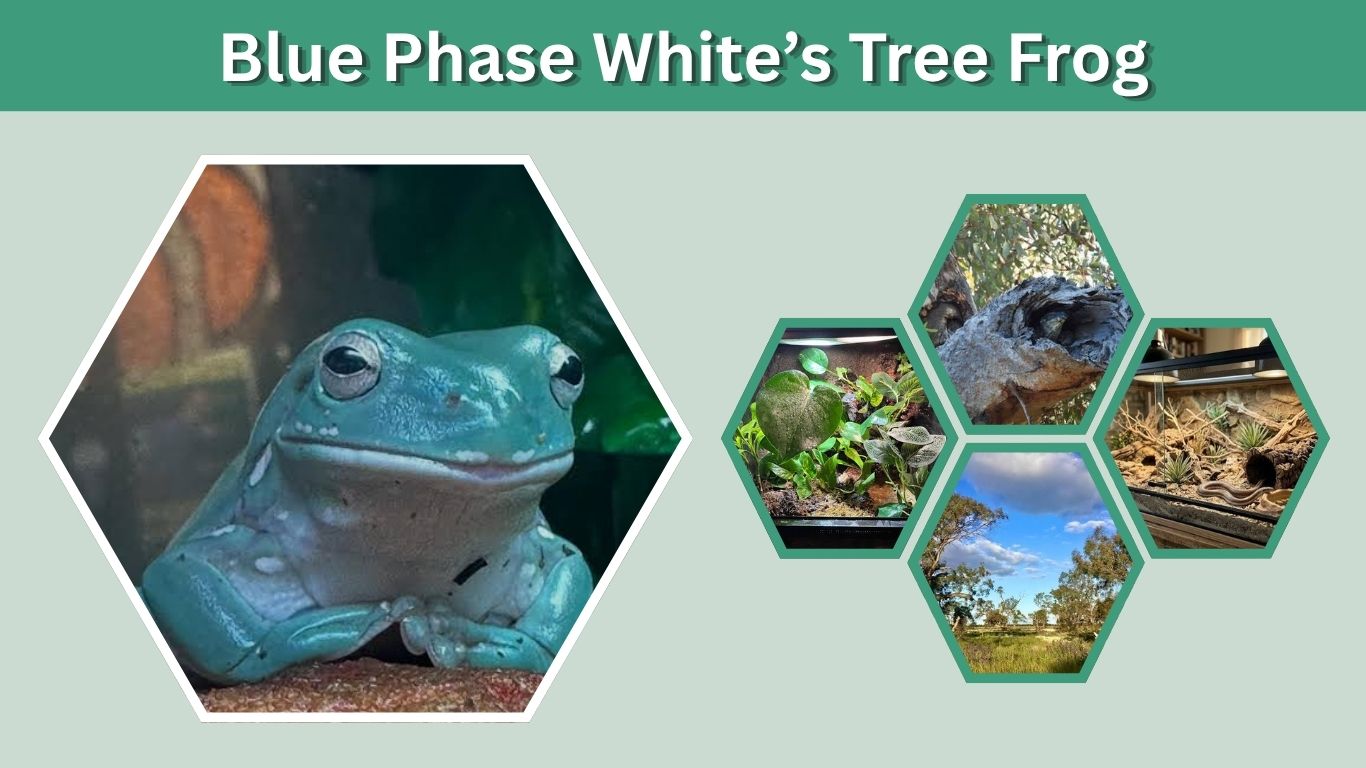
The Blue Phase White’s Tree Frog is a beautiful color variation of the Australian White’s tree frog, famous for its turquoise-blue skin, rounded body, and gentle temperament. Unlike ordinary green White’s tree frogs, this variety displays cool blue-green shades that make it especially attractive to amphibian enthusiasts. Closely related varieties, including Blue-Eyed and Honey Blue-Eyed White’s tree frogs, also feature unusual coloration. This guide explains their appearance, differences, natural habitat, feeding habits, lifespan, and essential care requirements.
What Is a Blue Phase White’s Tree Frog?
The Blue Phase White’s Tree Frog is a color variation of the White’s tree frog, commonly identified as Ranoidea caerulea or Litoria caerulea. It is also called the Australian Blue Phase White’s Tree Frog or Blue White’s Tree Frog. Unlike a separate species, its main distinguishing characteristic is its bluish body coloration.
Identification
- Scientific Name: Ranoidea caerulea
- Common Name: Blue Phase White’s Tree Frog
- Other Names: Blue White’s Tree Frog, Australian Blue Phase White’s Tree Frog
- Color: Turquoise, teal, or bluish-green
- Adult Size: Approximately 3–4.5 inches
- Eye Color: Usually golden or copper-colored
- Lifespan: Often 10–15 years or longer with excellent care
- Native Range: Australia and New Guinea
- Diet: Insects and other small invertebrates
These frogs have rounded heads, broad bodies, and large adhesive toe pads. Their smooth skin and naturally smiling appearance make them popular among amphibian keepers.
What Does a Blue Phase White’s Tree Frog Look Like?
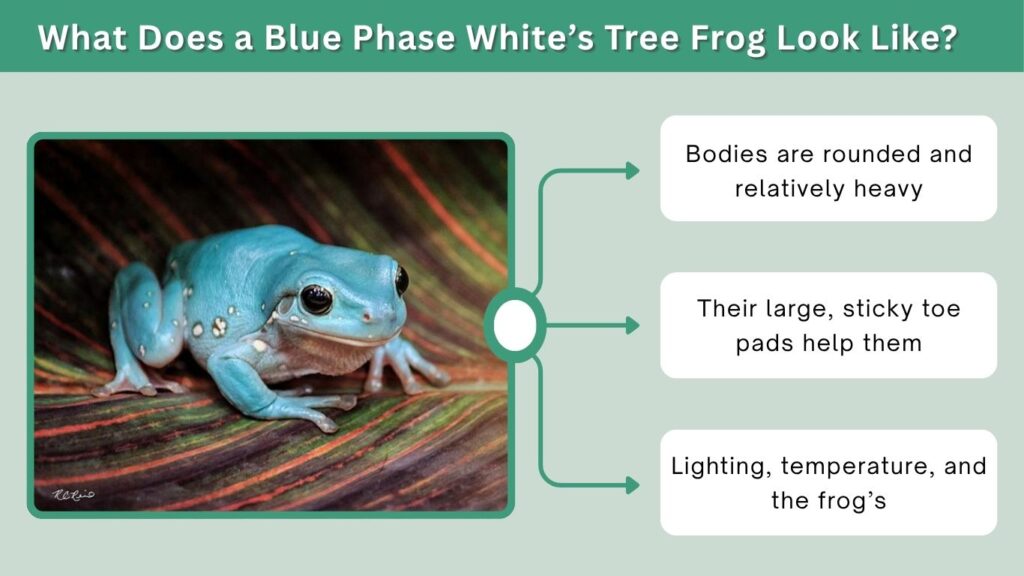
Blue Phase White’s Tree Frogs usually have pale turquoise, teal, or blue-green skin rather than the bright green appearance of normal White’s tree frogs. Some individuals display soft pastel-blue shades, while others look noticeably greener.
Body Color and Physical Features
Their bodies are rounded and relatively heavy, with broad heads and large eyes. The underside is generally creamy white, while the back displays the characteristic blue coloration.
Their large, sticky toe pads help them climb branches, glass, and other vertical surfaces.
Some Blue Phase frogs also have scattered white spots. When these markings are especially noticeable, breeders may describe them as Blue Phase Snowflake White’s Tree Frogs.
Can Blue Phase White’s Tree Frogs Change Color?
Yes. White’s tree frogs can change their visible coloration somewhat in response to environmental and physiological conditions.
A Blue Phase frog might appear more turquoise at certain times and greener or duller at others. Lighting, temperature, and the frog’s condition can influence its appearance.
However, a temporary blue-green appearance does not automatically mean a frog belongs to a selectively bred Blue Phase line.
Why Are Some White’s Tree Frogs Blue?
White’s tree frogs normally appear green because of the interaction of pigments and light-reflecting structures in their skin. Changes affecting their yellow pigmentation can produce an unusually blue appearance.
Rare blue individuals can occur naturally, while captive breeders also select frogs for desirable blue or turquoise coloration.
The Australian Museum documents naturally occurring blue White’s tree frogs. Therefore, blue coloration is not exclusively a product of captive breeding.
Blue Phase vs Normal White’s Tree Frog
Blue Phase and normal White’s tree frogs belong to the same species. Their primary distinction is skin coloration, although individual frogs can differ in color intensity and markings.
Main Differences
| Feature | Normal White’s Tree Frog | Blue Phase White’s Tree Frog |
| Body color | Green or olive-green | Turquoise or blue-green |
| Eye color | Usually golden | Usually golden |
| Body shape | Rounded and broad | Rounded and broad |
| Adult size | Around 3–4.5 inches | Around 3–4.5 inches |
| Care requirements | Standard | Same basic requirements |
| Availability | Widely available | Available through specialist breeders |
Both varieties share similar diets, behaviors, and environmental requirements. Blue Phase frogs do not require special feeding or housing simply because of their coloration.
Blue-Eyed White’s Tree Frog
The Blue-Eyed White’s Tree Frog is another attractive captive-bred variety, distinguished primarily by its unusual eye coloration.
Unlike standard White’s tree frogs, which generally have golden or copper-colored irises, Blue-Eyed individuals display pale blue, silver-blue, or grayish-blue irises.
Blue-Eyed vs Blue Phase White’s Tree Frog
The main difference is the feature used to identify each variety.
A Blue Phase White’s Tree Frog is primarily recognized by its blue-toned body. A Blue-Eyed White’s Tree Frog is recognized by its blue irises.
Blue-Eyed frogs may have green, olive, or honey-colored skin. Therefore, a frog with blue eyes is not automatically a Blue Phase frog.
Both varieties belong to the same species and have similar husbandry requirements.
Honey Blue-Eyed White’s Tree Frog
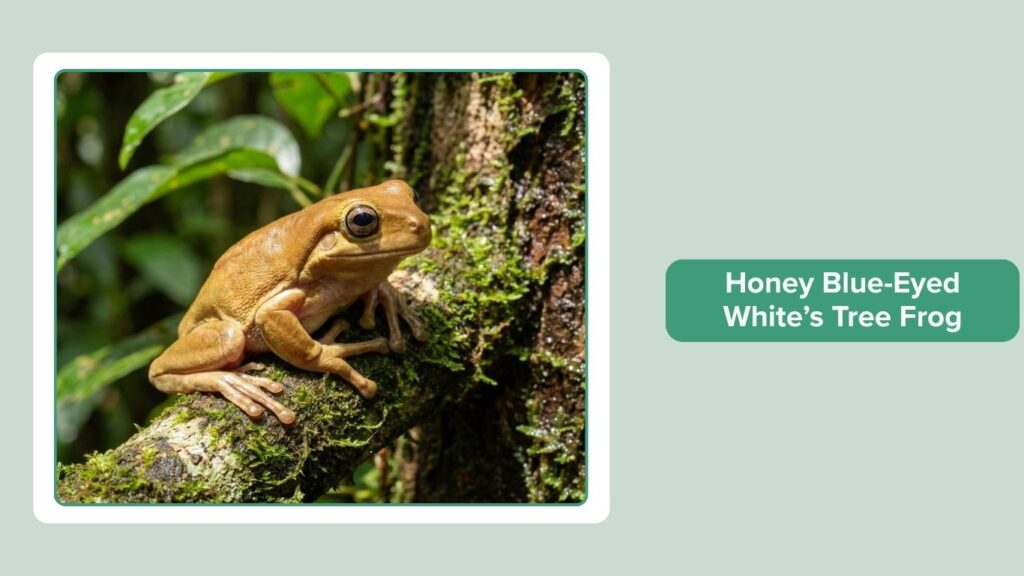
The Honey Blue-Eyed White’s Tree Frog combines warm honey-colored skin with distinctive pale blue eyes. This appearance creates a noticeable contrast between the body and irises.
Its body may display golden-yellow, tan, or caramel-like shades rather than the cooler turquoise appearance of Blue Phase frogs.
How to Identify a Honey Blue-Eyed White’s Tree Frog
Honey Blue-Eyed frogs usually have rounded bodies, broad heads, large adhesive toe pads, and blue-toned irises.
Their honey coloration may vary with age and environmental conditions. Some individuals appear pale yellowish-green, while others display warmer brownish-yellow shades.
Like other White’s tree frog morphs, they are primarily nocturnal and spend much of their time resting on elevated surfaces.
The Honey and Blue-Eyed traits can occur together, but this combination does not create a separate species.
Natural Habitat and Behavior
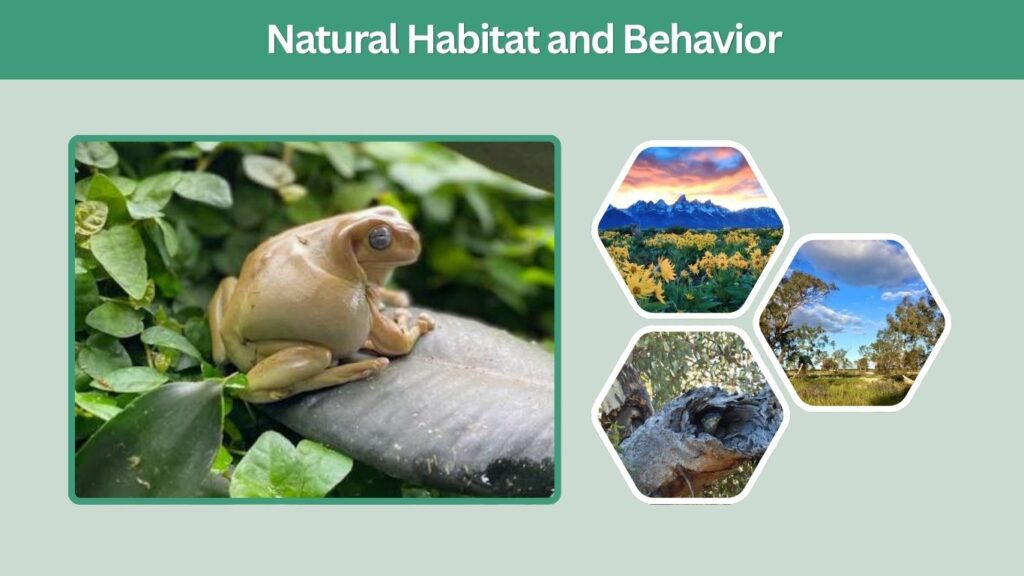
White’s tree frogs naturally inhabit parts of Australia and New Guinea, including tropical and subtropical forests, woodlands, and areas around human settlements.
They commonly shelter in tree hollows, vegetation, and protected spaces around buildings. Their adaptable nature allows them to survive in several different environments.
Activity and Temperament
Blue Phase White’s Tree Frogs are primarily nocturnal. During daylight hours, they often remain motionless on branches or sheltered surfaces.
At night, they become more active, climbing and searching for food.
They are generally considered relatively calm captive amphibians, although individual behavior varies. Their delicate skin means they should be observed rather than frequently handled.
Blue Phase White’s Tree Frog Care Guide

Caring for a Blue Phase White’s Tree Frog is similar to caring for any other White’s tree frog. Proper enclosure design, temperature, humidity, nutrition, and hygiene are essential for maintaining good health.
Tank Size and Enclosure Setup
A single adult generally benefits from a tall terrarium of at least 20 gallons, with additional space preferable.
Because these frogs are arboreal, vertical climbing space is especially important. Their enclosure should contain sturdy branches, broad leaves, elevated resting areas, and secure hiding places.
A tight-fitting lid prevents escapes, while adequate ventilation helps maintain healthy enclosure conditions.
Temperature and Humidity
Recommended general conditions include:
- Daytime Temperature: Approximately 75–80°F (24–27°C)
- Nighttime Temperature: Around 70–72°F (21–22°C)
- Warm Basking Area: Approximately 82–85°F (28–29°C), with a cooler retreat
- Humidity: Generally 50–70%, allowing some drying between mistings
- Lighting: A regular day-night cycle, with appropriate low-output UVB recommended
Temperatures should be monitored with reliable thermometers. Avoid overheating, persistently wet surfaces, and poor ventilation, which can contribute to health problems.
Diet and Feeding Habits
Blue Phase White’s Tree Frogs are insectivores. Their diet should include appropriately sized, gut-loaded crickets, dubia roaches, and other suitable feeder insects.
Juveniles generally require more frequent feeding than adults. Mature frogs often do well with several appropriately portioned meals per week.
Calcium and vitamin supplementation should follow amphibian-specific husbandry guidance.
Overfeeding should be avoided because White’s tree frogs can become overweight in captivity.
Handling and Health Maintenance
White’s tree frogs have sensitive, permeable skin that can absorb substances from human hands.
Handling should be minimized. When necessary, use clean, wet, powder-free gloves or appropriately rinsed, moistened hands.
Always provide fresh, dechlorinated water and clean the water dish regularly. Watch for unusual skin discoloration, persistent inactivity, or loss of appetite, and consult an amphibian-experienced veterinarian if health problems develop.
Where to Buy a Blue Phase White’s Tree Frog
Blue Phase White’s Tree Frogs are commonly offered by captive breeders and specialist amphibian retailers.
When searching for an Australian Blue Phase White’s Tree Frog for sale, prioritize the frog’s health and captive-bred origin rather than purchasing based only on its coloration.
What to Check Before Buying
- Captive-Bred Origin: Choose reputable breeders who provide information about the frog’s background.
- Healthy Appearance: Look for clear eyes, normal body condition, and healthy-looking skin.
- Feeding History: Confirm that the frog eats appropriately sized insects consistently.
- Morph Identification: Ask whether the animal is Blue Phase, Blue-Eyed, or another color variation.
- Current Photographs: Request recent images showing the frog under normal lighting.
Prices and availability vary according to age, coloration, breeder, and location. Always verify local ownership and transport regulations before purchasing.
FAQs
1. Are Blue Phase White’s Tree Frogs Rare?
Blue coloration is less typical than ordinary green coloration in wild White’s tree frogs. However, Blue Phase frogs are established in captive breeding and are available from specialist breeders.
2. Are Blue Phase White’s Tree Frogs Naturally Blue?
Some White’s tree frogs naturally display blue or blue-green coloration. However, captive-bred Blue Phase frogs are often selected for their distinctive blue-toned appearance.
3. Do Blue Phase White’s Tree Frogs Have Blue Eyes?
Not necessarily. Most Blue Phase frogs have golden or copper-colored irises. Blue-Eyed is a separate color-trait designation that specifically describes the eyes.
4. How Long Do Blue Phase White’s Tree Frogs Live?
With excellent captive care, Blue Phase White’s Tree Frogs often live around 10–15 years, and some survive longer. Proper nutrition, environmental conditions, and veterinary care influence longevity.
5. Are Blue Phase White’s Tree Frogs Good Pets for Beginners?
Yes, they are often considered suitable for prepared beginners because of their relatively hardy nature and manageable care requirements. However, they still need appropriate heating, humidity, nutrition, enclosure hygiene, and minimal handling.
