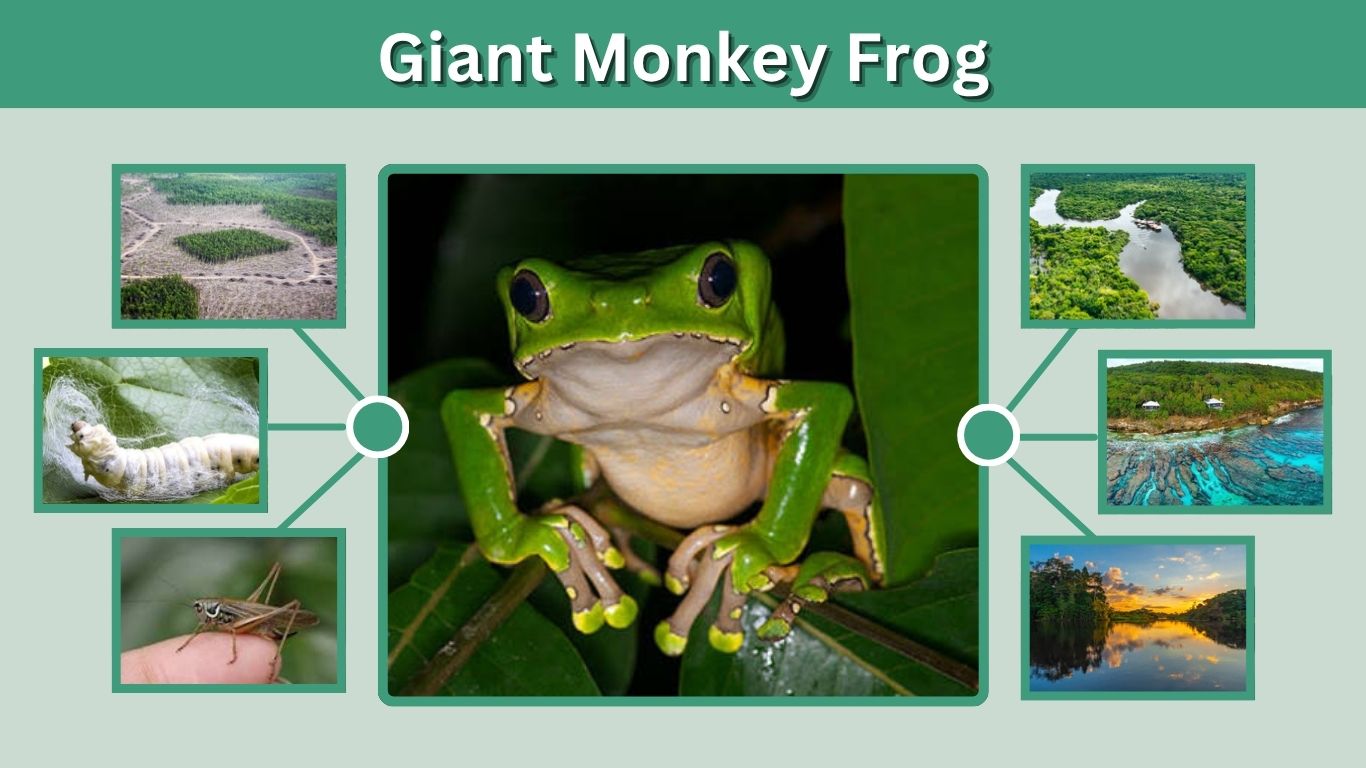
The giant monkey frog (Phyllomedusa bicolor) is one of the most fascinating tree frogs found in South America’s tropical rainforests. Also known as the giant leaf frog or giant waxy monkey tree frog, this amphibian is famous for its bright green body, unusual climbing behavior, and protective skin secretions. Unlike many frogs that rely heavily on jumping, it moves carefully along branches using its specialized toes. Understanding its size, habitat, diet, lifespan, and care requirements reveals what makes this remarkable Amazonian frog so unique.
What Is a Giant Monkey Frog?
The giant monkey frog is a large, tree-dwelling amphibian belonging to the family Phyllomedusidae. Its scientific name is Phyllomedusa bicolor, and it naturally inhabits tropical regions of South America.
This frog is often called the giant leaf frog because its green coloration blends with rainforest vegetation. The name giant waxy monkey tree frog refers to its climbing behavior and the waxy secretions that help protect its skin.
Giant Monkey Frog Quick Facts
- Scientific name: Phyllomedusa bicolor
- Common names: Giant monkey frog, giant leaf frog, giant waxy monkey tree frog
- Family: Phyllomedusidae
- Habitat: Tropical rainforests
- Diet: Primarily insects
- Adult size: Approximately 9–12 cm, sometimes larger
- Activity: Nocturnal
- Lifespan: Around 10 years in captivity, although records are limited
- Conservation status: Least Concern
The giant monkey frog should not be confused with Phyllomedusa sauvagii, another species commonly called the waxy monkey tree frog.
Giant Monkey Frog Size and Appearance
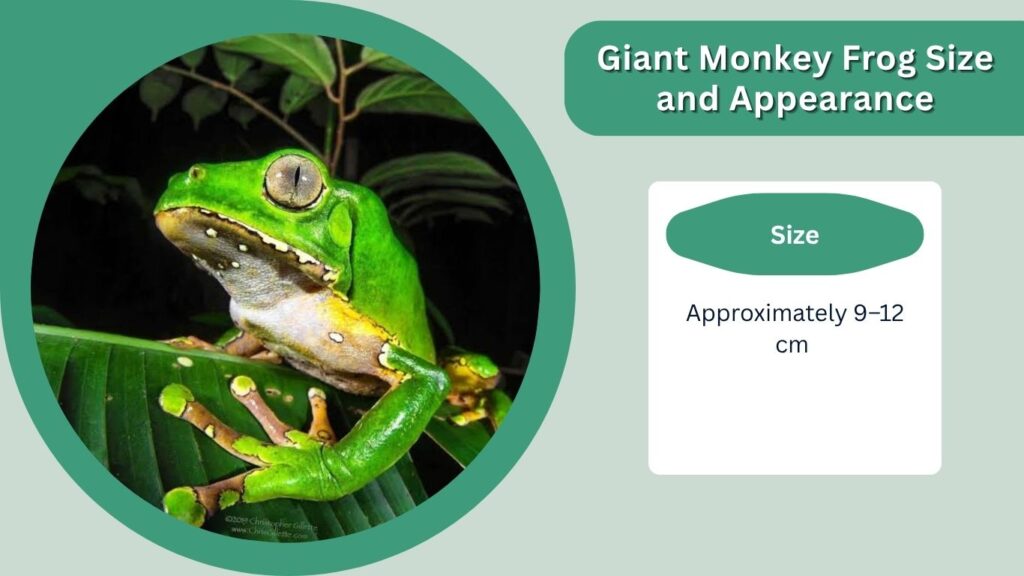
The giant leaf frog is among the larger members of its group. Adult males generally measure approximately 9–12 cm (3.5–4.7 inches), while females are often heavier and more robust.
Its body has a rounded appearance, muscular limbs, and large eyes that help it navigate vegetation. The upper body is predominantly green, while the belly is cream or pale yellow.
How to Identify a Giant Monkey Tree Frog
- Green body: Smooth green skin provides camouflage among leaves.
- Large eyes: Prominent eyes have dark, vertical pupils.
- Pale underside: The belly is usually cream or yellowish-white.
- Distinctive markings: White spots with darker borders appear along the sides and limbs.
- Specialized toes: Large toe pads and grasping digits support climbing.
- Waxy skin: Protective lipid secretions reduce moisture loss.
These characteristics make the giant monkey tree frog distinctive, although accurate identification may require expert examination.
Where Do Giant Monkey Frogs Live?
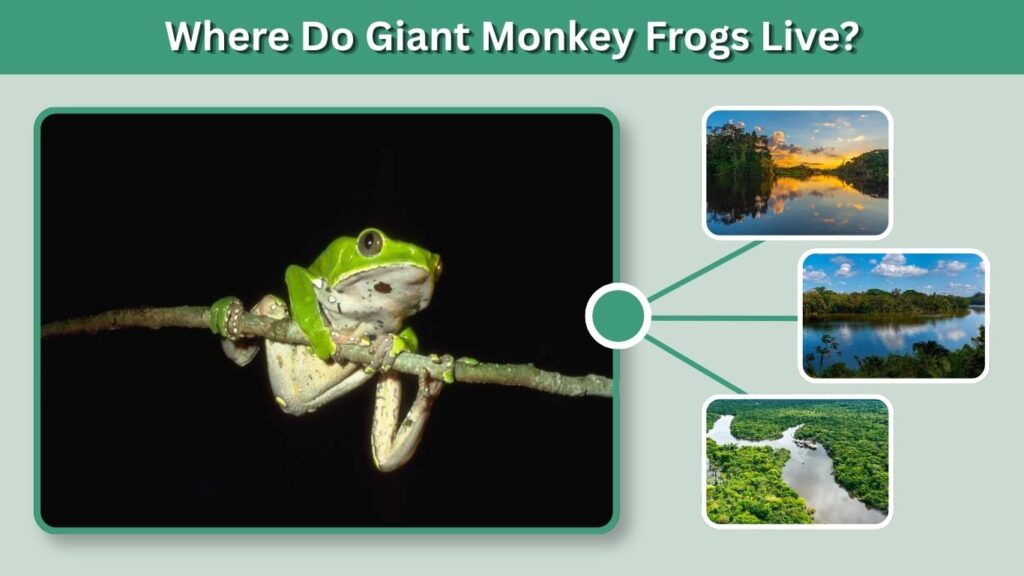
Giant monkey frogs inhabit the Amazon Basin and surrounding tropical regions, including Brazil, Bolivia, Colombia, Peru, Venezuela, Guyana, Suriname, and French Guiana.
They spend much of their lives above the forest floor, resting on branches and leaves. Their arboreal lifestyle provides shelter, camouflage, and access to potential prey.
Warm temperatures, suitable vegetation, and reliable breeding waters are essential parts of their habitat.
Giant Monkey Frog Behavior
These amphibians are primarily nocturnal. During daylight hours, they remain relatively motionless on branches, where their coloration helps conceal them.
At night, they become more active, exploring surrounding vegetation and searching for food.
Rather than constantly leaping between branches, giant monkey frogs frequently walk slowly using their grasping digits. This careful movement gives them their monkey-like appearance.
Another unusual behavior involves spreading protective skin secretions across their bodies using their limbs, helping reduce dehydration.
What Do Giant Monkey Frogs Eat?
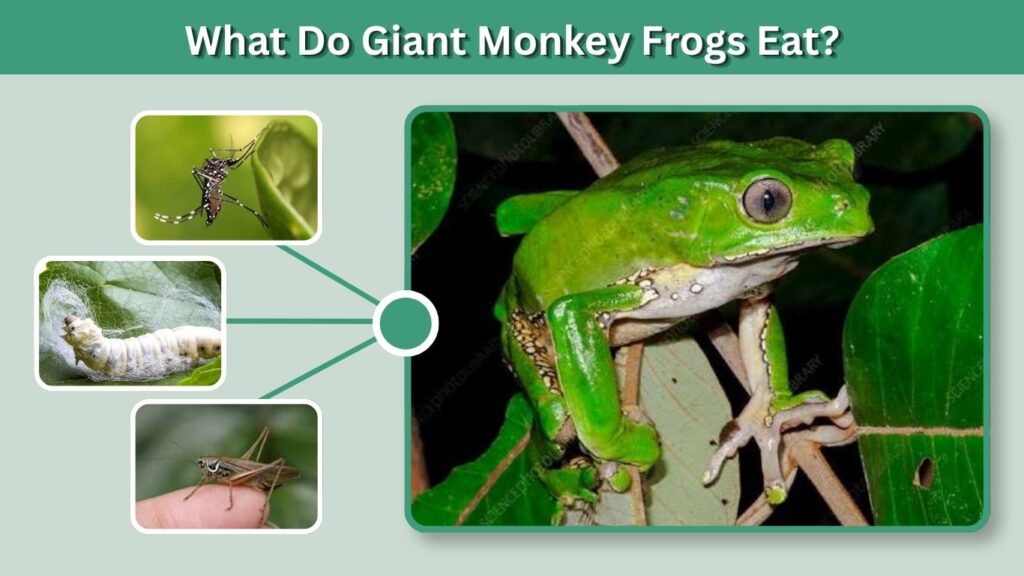
The giant monkey frog is an insect-eating amphibian that captures prey using its tongue. Although detailed studies of its natural diet are limited, related leaf frogs feed on various small invertebrates.
In captivity, an appropriately varied insect diet helps support healthy growth and activity.
Common Foods for Giant Monkey Frogs
- Crickets: A commonly offered source of protein.
- Dubia roaches: Nutrient-rich feeder insects.
- Silkworms: Soft-bodied insects suitable for dietary variety.
- Hornworms: Moisture-rich feeder insects offered occasionally.
- Other suitable insects: Captive-bred feeders selected according to the frog’s size.
Captive insects should be gut-loaded and supplemented with calcium and vitamins according to an amphibian veterinarian’s guidance. Avoid wild-caught insects that might contain pesticides or parasites.
Are Giant Monkey Frogs Poisonous?
Yes. Giant monkey frogs produce powerful defensive skin secretions containing biologically active peptides.
These chemicals help discourage predators and have attracted scientific attention because of their effects on biological systems.
Their secretion is associated with a traditional Amazonian practice known as kambô. However, applying this secretion to human skin, particularly broken skin, can cause serious reactions, including vomiting, cardiovascular complications, and potentially life-threatening illness.
The frog is poisonous through its secretions rather than venomous through a bite or sting.
It is important to avoid unnecessary handling, prevent contact with the eyes or mouth, and never use its secretions for self-treatment.
Giant Waxy Monkey Tree Frog Lifespan and Care
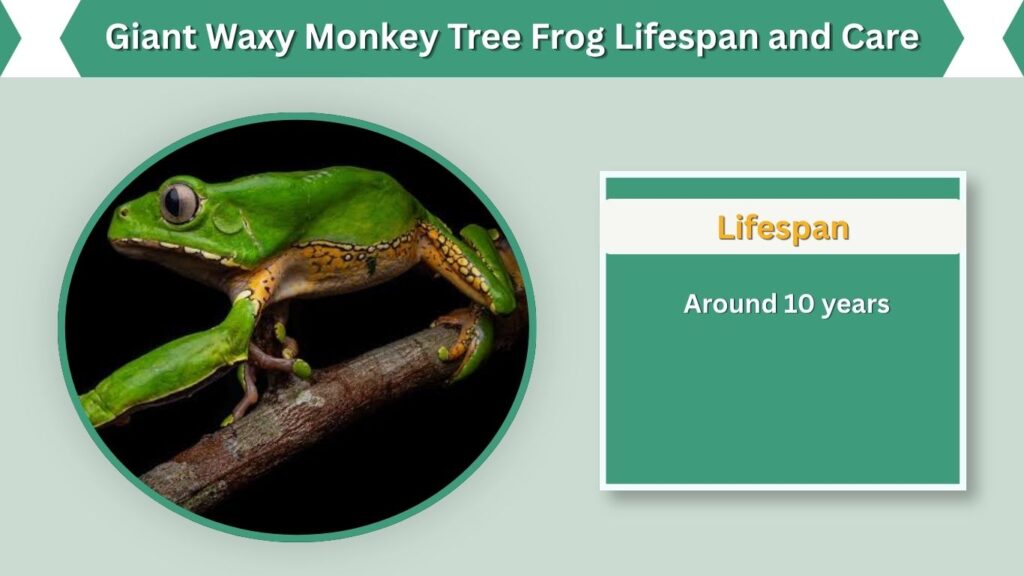
Giant waxy monkey tree frogs can reportedly live around 10 years in captivity, but reliable lifespan information remains limited. Their longevity depends on appropriate housing, nutrition, environmental stability, and veterinary care.
Because these frogs have specialized requirements, they are generally better suited to experienced amphibian keepers than beginners.
Giant Monkey Frog Enclosure Requirements
A spacious, vertically oriented enclosure is necessary because adults spend much of their time climbing and resting above the ground.
The enclosure must include strong branches, broad leaves, ventilation, and easy access to clean water.
Essential Care Requirements
- Enclosure: Provide a tall habitat with generous climbing space, such as approximately 60 × 45 × 90 cm or larger for an adult.
- Temperature: Maintain a suitable warm environment with carefully monitored daytime temperatures and a modest nighttime drop.
- Humidity: Provide moderate, fluctuating humidity without allowing stagnant, constantly wet conditions.
- Lighting: Use an appropriate day-night cycle and species-suitable UVB lighting.
- Water: Supply fresh, dechlorinated water in a shallow, accessible dish.
- Cleanliness: Remove waste and uneaten insects regularly.
Juveniles may require different humidity and enclosure conditions from adults. Keepers should use a care plan specific to Phyllomedusa bicolor and consult an amphibian specialist before obtaining one.
Giant Monkey Frog Breeding and Reproduction
Giant monkey frogs reproduce mainly during the rainy season, when suitable pools and ponds become available for developing tadpoles.
Male frogs produce distinctive calls to attract females from nearby vegetation. After mating, the pair deposits eggs in a gelatinous mass associated with leaves above water.
The leaves help shelter the developing embryos. Once the tadpoles hatch, they fall into the water below, where they continue developing before metamorphosing into young frogs.
Captive breeding is challenging because it requires suitable environmental changes, adequate space, and carefully managed aquatic conditions.
Giant Monkey Frog Conservation Status
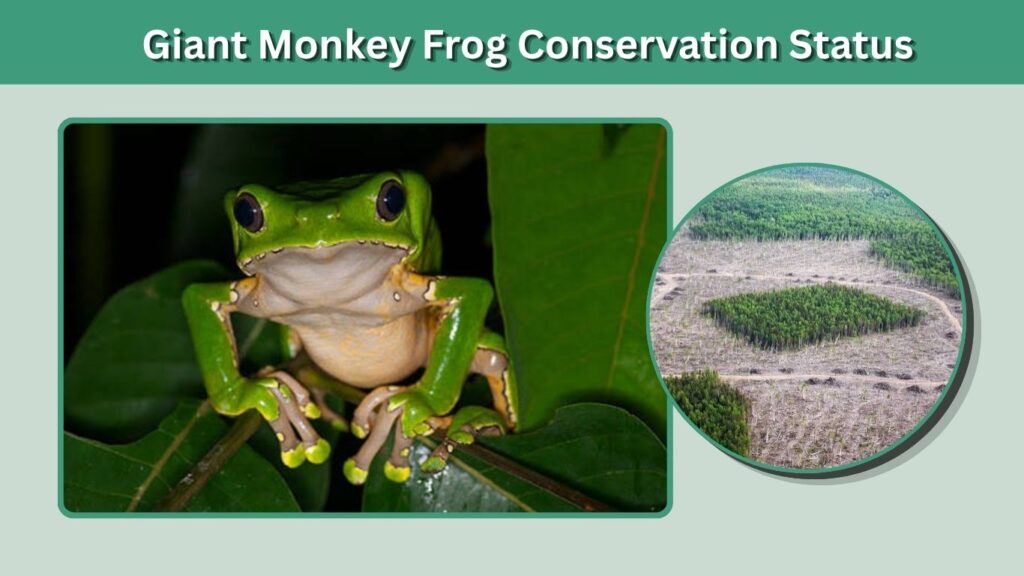
The giant monkey frog is classified as Least Concern by the International Union for Conservation of Nature (IUCN), reflecting its relatively wide geographical distribution.
However, habitat destruction, forest fragmentation, and collection from the wild may threaten populations in certain areas.
Protecting tropical forests and encouraging responsible captive breeding can help reduce pressure on wild populations.
FAQs
1. How Big Does a Giant Monkey Frog Get?
Adult giant monkey frogs typically measure about 9–12 cm in body length, although some individuals grow larger. Females are generally more robust than males. Their relatively large bodies make them distinctive among the leaf frogs found in South American rainforests.
2. Are Giant Monkey Frogs Dangerous to Humans?
Giant monkey frogs are not aggressive toward humans, but their skin secretions contain potent chemicals. Exposure, especially through wounds or mucous membranes, may cause serious health problems. Avoid unnecessary handling and never deliberately apply their secretions to the body.
3. Can You Keep a Giant Monkey Frog as a Pet?
Yes, captive-bred giant monkey frogs are kept by some experienced amphibian enthusiasts where ownership is legal. They require spacious vertical enclosures, appropriate nutrition, stable temperatures, suitable humidity, and excellent ventilation. Their specialized care makes them unsuitable for many beginners.
4. What Is the Difference Between a Giant Monkey Frog and a Waxy Monkey Frog?
The giant monkey frog is Phyllomedusa bicolor, a species associated with the Amazonian region. The waxy monkey tree frog commonly refers to Phyllomedusa sauvagii, which inhabits drier South American environments. They are related but distinct species with different habitat preferences.
5. How Long Do Giant Waxy Monkey Tree Frogs Live?
Giant waxy monkey tree frogs may live around 10 years under suitable captive conditions, although dependable lifespan records are limited. Proper feeding, environmental management, clean water, reduced handling stress, and access to qualified veterinary care can support their long-term health.
