
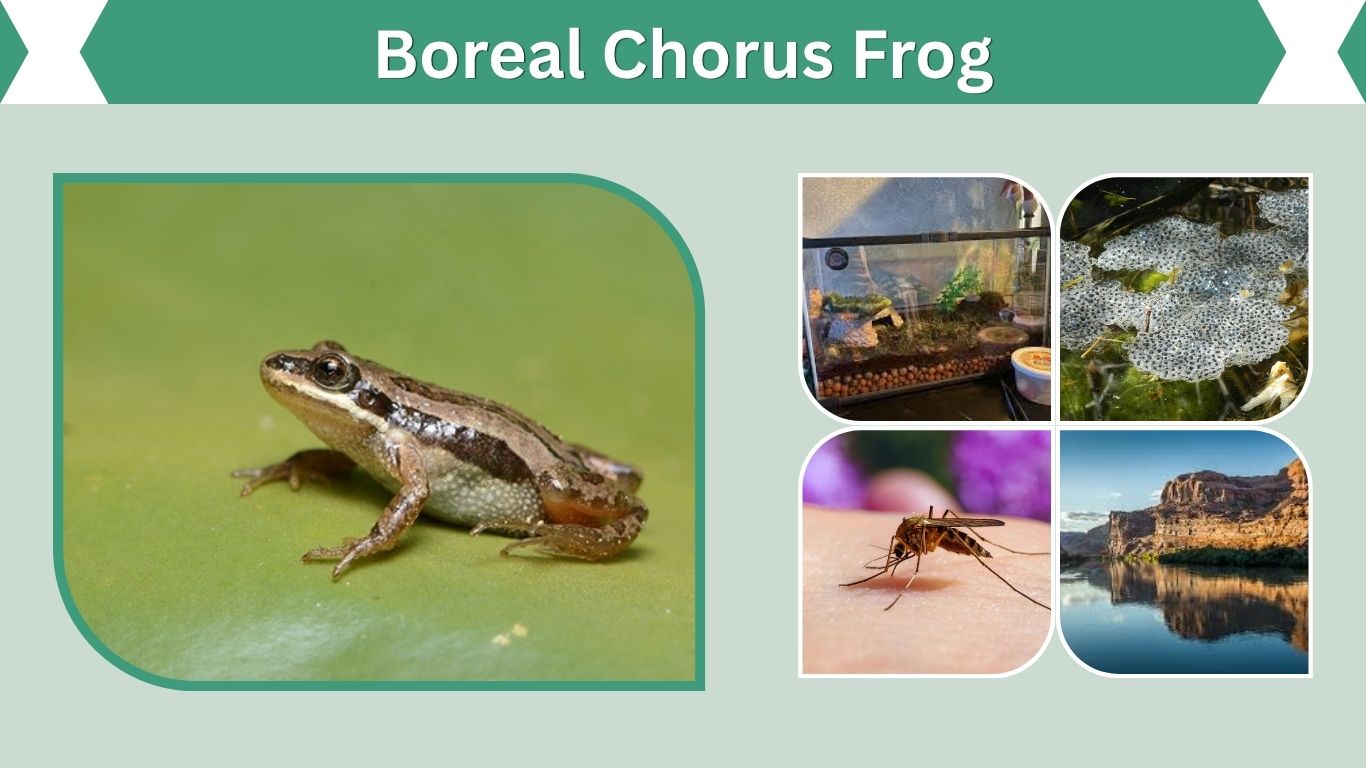
The Boreal Chorus Frog is a small amphibian famous for its loud spring calls and wide distribution across North America. Even though it is tiny, this frog is often heard before it is seen because groups of males create loud choruses near wetlands and temporary ponds. Many people search for information about its sound, habitat, diet, and life cycle because it is one of the earliest frogs to become active after winter. Its ability to survive cold climates also makes this species especially interesting among North American amphibians.
Boreal Chorus Frogs play an important role in ecosystems by controlling insect populations and serving as food for larger animals. They are commonly found in grasslands, wetlands, forest edges, and moist environments where breeding ponds are available during spring.
What Is a Boreal Chorus Frog?
The Boreal Chorus Frog is a small tree frog species known for its distinctive call and ability to survive in cold northern climates. Despite being called a tree frog, it spends much of its time on the ground near wetlands and grassy habitats. This frog belongs to a group of chorus frogs commonly heard during spring breeding seasons.
Scientific Classification
The scientific name of the Boreal Chorus Frog is Pseudacris maculata. It belongs to the Hylidae family, which includes tree frogs and chorus frogs. Scientists classify it as a small amphibian adapted to cool climates and seasonal wetland habitats.
Physical Appearance
Boreal Chorus Frogs are usually green, brown, gray, or tan with darker stripes and spots across the body. A dark stripe often runs from the nose through the eye, helping identify the species. Their smooth skin and small size make them difficult to spot among grass and leaves.
Boreal Chorus Frog Characteristics
- Small compact body
- Smooth moist skin
- Long hind legs for jumping
- Distinct dark facial stripe
- Loud breeding call
Boreal Chorus Frog Identification
Identifying a Boreal Chorus Frog can sometimes be difficult because several chorus frog species look similar. However, certain markings, colors, and sounds help distinguish this frog from other small amphibians found in North America.
Key Identification Features
- Dark stripe through the eye
- Green, brown, or gray coloration
- Small body size
- Dark spots on the back
- Rounded toe pads
Boreal Chorus Frog vs Western Chorus Frog
Although closely related, Boreal Chorus Frogs and Western Chorus Frogs may differ slightly in range and vocal patterns. Their body markings can also vary depending on location. Frog calls are often the easiest way to separate similar chorus frog species in the wild.
Boreal Chorus Frog Size and Weight
Adult Boreal Chorus Frogs are very small and usually measure between 1 and 1.5 inches long. Females are often slightly larger than males. Their lightweight bodies allow them to move quickly through grass, shallow water, and wetland vegetation.
Boreal Chorus Frog Habitat and Range
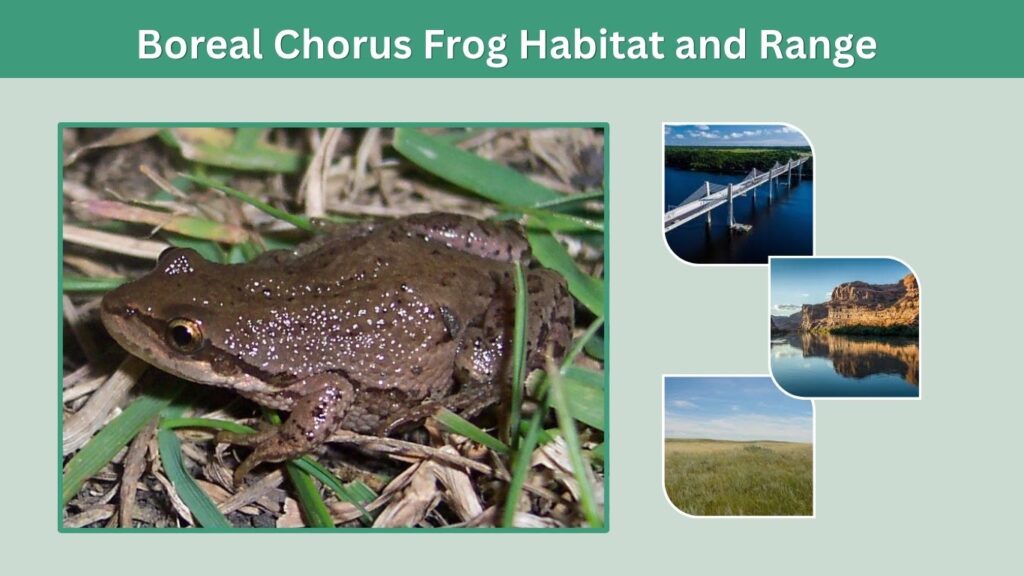
Boreal Chorus Frogs are widely distributed across Canada and the northern United States. They prefer moist habitats with shallow water used for breeding. Temporary ponds, marshes, grasslands, and forest edges are common environments where these frogs thrive during spring and summer.
Boreal Chorus Frog Range
- Alberta and British Columbia
- Ontario and Manitoba
- Minnesota and Wisconsin
- Colorado and Utah
- Northern prairie regions
Preferred Habitat
- Wetlands and marshes
- Temporary breeding ponds
- Moist grasslands
- Forest edges
- Shallow freshwater areas
Boreal Chorus Frog Range Map Areas
The Boreal Chorus Frog is found throughout much of western and central Canada as well as parts of the northern and central United States. Populations are especially common in prairie wetlands and seasonal ponds where breeding conditions are ideal.
Boreal Chorus Frog Call and Sound
The Boreal Chorus Frog is best known for its loud and distinctive spring call. Large groups of males gather near breeding ponds and create choruses that can be heard from long distances. Their sounds are often one of the first signs that spring has arrived in colder regions.
What Does the Boreal Chorus Frog Sound Like?
Many people compare the Boreal Chorus Frog call to the sound of running a finger across the teeth of a comb. The call is rapid, sharp, and repeated many times during breeding season. Groups of frogs calling together create a loud chorus at night.
Why Do Boreal Chorus Frogs Call?
- Attracting females during breeding season
- Defending calling territories
- Communicating with nearby frogs
- Competing with other males
- Signaling healthy breeding conditions
When Can You Hear Boreal Chorus Frogs?
Boreal Chorus Frogs are most active during spring evenings after snowmelt and rain. Their calls are commonly heard at night near shallow ponds and wetlands where breeding takes place.
Boreal Chorus Frog Diet and Feeding
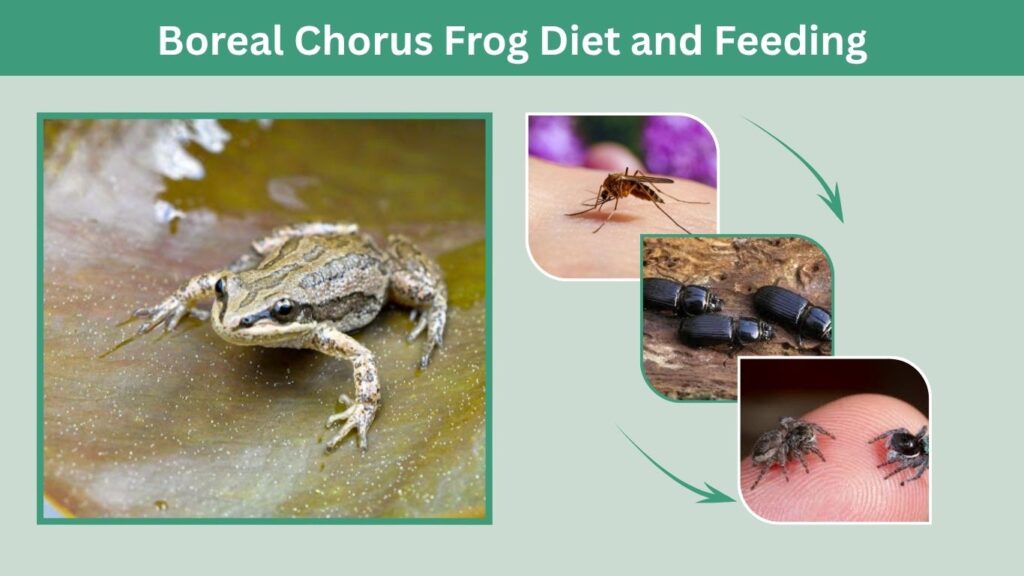
Boreal Chorus Frogs are carnivorous amphibians that mainly eat small insects and other tiny invertebrates. Their diet helps control insect populations in wetlands and grasslands. These frogs use quick tongue movements to capture prey and usually hunt during moist nighttime conditions when insects are most active.
What Do Boreal Chorus Frogs Eat?
- Mosquitoes
- Beetles
- Small spiders
- Ants and flies
- Tiny arthropods
Are Boreal Chorus Frogs Carnivores?
Yes, Boreal Chorus Frogs are carnivores because they feed mainly on insects and small invertebrates. Their sticky tongues help them quickly catch moving prey. Tadpoles, however, usually eat algae and plant material before transforming into adult frogs.
Tadpole Feeding Habits
Young tadpoles feed on algae, plant matter, and tiny organic particles found in shallow ponds. As they grow, they slowly develop legs and lungs before changing into fully terrestrial insect-eating frogs through metamorphosis.
Boreal Chorus Frog Life Cycle
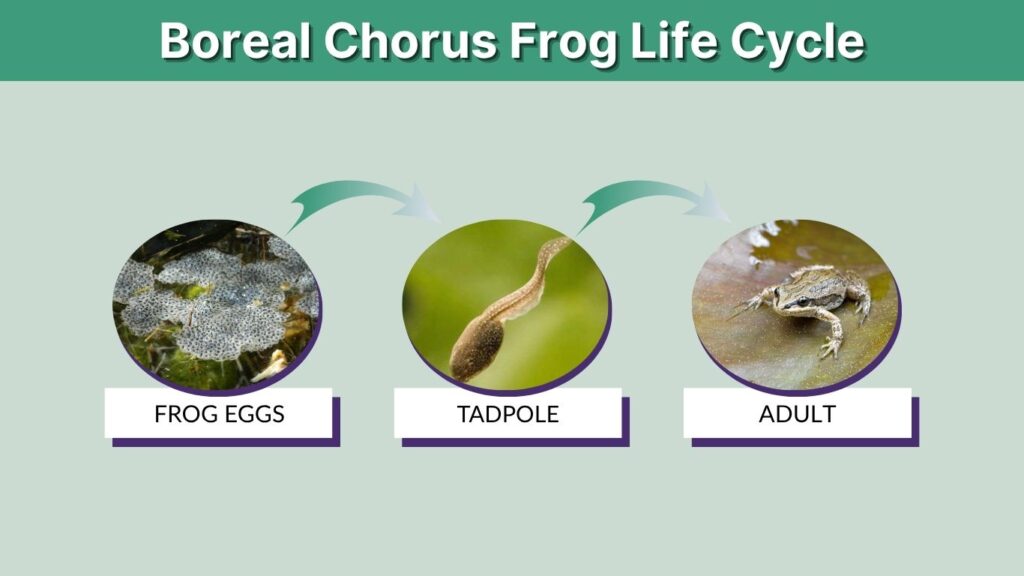
The life cycle of the Boreal Chorus Frog begins in shallow breeding ponds during spring. Males call loudly to attract females, and eggs are laid in clusters attached to underwater vegetation. The young hatch into tadpoles before gradually transforming into small frogs over several weeks.
Boreal Chorus Frog Eggs
- Laid in shallow water
- Attached to vegetation
- Small jelly-like egg clusters
- Deposited during spring breeding
- Protected in temporary ponds
Tadpole Development
Tadpoles hatch from eggs and spend weeks feeding and growing in the water. During metamorphosis, they slowly develop legs, absorb their tails, and begin breathing air before leaving the pond as tiny froglets.
Boreal Chorus Frog Lifespan
Boreal Chorus Frogs usually live several years in the wild, although survival depends on predators, weather, and habitat quality. Many young frogs do not survive to adulthood because wetlands contain many natural dangers.
Boreal Chorus Frog Adaptations
Boreal Chorus Frogs have several important adaptations that help them survive in cold northern climates. Their ability to tolerate freezing temperatures and blend into natural surroundings allows them to survive harsh winters and avoid predators in wetlands and grasslands.
Cold Weather Adaptations
- Partial freeze tolerance
- Winter hibernation behavior
- Ability to survive cold temperatures
- Seasonal breeding after snowmelt
- Moisture retention abilities
Camouflage and Protection
Their green, brown, and gray coloration helps them blend into leaves, grass, and muddy wetlands. This camouflage protects them from birds, snakes, and other predators while they rest during the day.
Nocturnal Behavior
Boreal Chorus Frogs are mostly active at night when temperatures are cooler and humidity is higher. Night activity helps reduce dehydration and improves hunting opportunities because insects are more active after dark.
Boreal Chorus Frog Predators and Threats
Boreal Chorus Frogs face many natural predators throughout their lives. Eggs and tadpoles are especially vulnerable because they develop in shallow water where fish, insects, and larger amphibians hunt regularly. Habitat loss also threatens populations in some regions.
Common Predators
- Snakes
- Birds
- Larger frogs
- Fish
- Small mammals
Habitat Loss and Pollution
Wetland destruction, pesticides, and pollution can reduce breeding habitats and harm frog populations. Climate change may also affect seasonal rainfall patterns needed for temporary ponds where Boreal Chorus Frogs reproduce successfully.
Survival Strategies
Boreal Chorus Frogs survive by using camouflage, quick jumping movements, and breeding in temporary ponds that may contain fewer predators. Their loud breeding choruses also help attract mates quickly during short spring breeding seasons.
Can Boreal Chorus Frogs Be Pets?
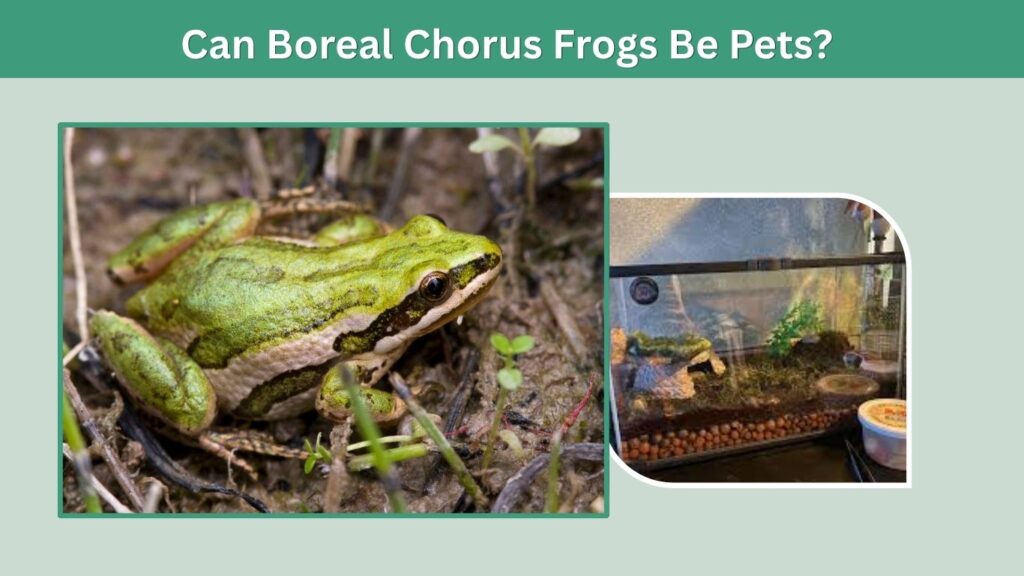
Some people keep Boreal Chorus Frogs as pets because of their small size and interesting calls. However, these frogs require moist habitats, live insects, and proper environmental conditions to remain healthy in captivity.
Boreal Chorus Frog Pet Care
- Moist enclosure setup
- Clean shallow water
- Moderate temperatures
- Hiding places and plants
- High humidity levels
Feeding Pet Boreal Chorus Frogs
Pet Boreal Chorus Frogs eat small live insects such as fruit flies, tiny crickets, and other soft-bodied prey. Feeding should be regular because these frogs have fast metabolisms and active hunting behavior.
Are Boreal Chorus Frogs Good Pets?
Boreal Chorus Frogs can be interesting pets for amphibian enthusiasts, but they are delicate and require careful environmental control. In some areas, collecting wild frogs may also be restricted by local wildlife regulations.
FAQs
What does a Boreal Chorus Frog sound like?
The Boreal Chorus Frog has a loud, rapid call often compared to running a finger across the teeth of a comb. Large groups of males call together during spring evenings near wetlands and breeding ponds, creating one of the most recognizable frog choruses in North America.
What do Boreal Chorus Frogs eat?
Boreal Chorus Frogs mainly eat small insects and other tiny invertebrates. Their diet includes mosquitoes, flies, beetles, spiders, and ants. Tadpoles feed differently and usually consume algae, plant material, and organic matter found in shallow breeding ponds.
Are Boreal Chorus Frogs poisonous?
Boreal Chorus Frogs are not considered poisonous to humans. Like many amphibians, they may produce mild skin secretions for protection, but they are generally harmless when handled carefully. Washing hands after touching frogs is still recommended to protect both humans and the frog.
Where do Boreal Chorus Frogs live?
Boreal Chorus Frogs live across parts of Canada and the northern United States. They prefer wetlands, marshes, temporary ponds, moist grasslands, and forest edges where shallow water is available for breeding during spring and early summer.
Can Boreal Chorus Frogs be kept as pets?
Some amphibian keepers keep Boreal Chorus Frogs as pets, but they require moist habitats, live insects, and proper humidity levels. Local wildlife laws may restrict collecting wild frogs, so captive-bred individuals are usually the better option for responsible pet ownership.
