
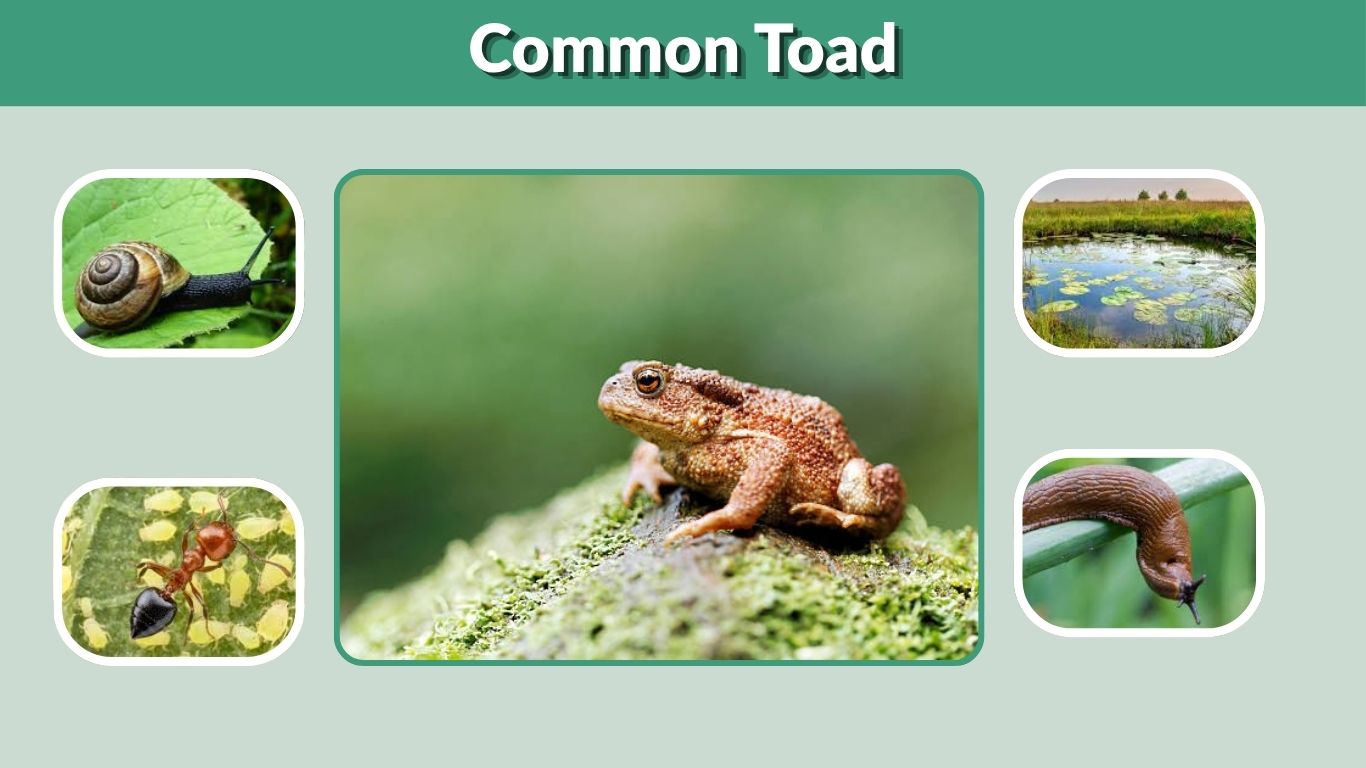
The Common Toad is one of the best-known amphibians in Europe and parts of Asia. Scientifically named Bufo bufo, this hardy species is recognized by its dry warty skin, broad body, and slow hopping movement. It is commonly found in forests, gardens, wetlands, and grasslands where moisture and shelter are available.
Common Toads play an important role in ecosystems because they feed on insects, slugs, and other small invertebrates. Their ability to survive cold winters through hibernation makes them highly adaptable to changing seasons. Understanding their habitat, lifespan, diet, and behavior helps explain why this amphibian remains important in many natural environments.
What Is the Common Toad?
The Common Toad is a terrestrial amphibian belonging to the Bufonidae family. It is one of the most widespread toad species in Europe and is easily recognized by its rough skin and large poison glands behind the eyes. Unlike frogs, Common Toads spend more time on land and move using short hops or crawling movements.
Scientific Classification
- Scientific name: Bufo bufo
- Family: Bufonidae
- Common name: Common Toad
- Type: Terrestrial amphibian
- Native range: Europe and parts of Asia
Physical Appearance
- Dry and warty skin
- Brown, gray, olive, or reddish coloration
- Broad body shape
- Golden or copper-colored eyes
- Large parotoid poison glands
Common Toad Scientific Name Explained
The scientific name Bufo bufo identifies this species within the true toad family. The word “Bufo” has long been associated with classic European toads. Scientific classification helps separate Common Toads from frogs and other amphibians with similar appearances.
Common Toad Habitat and Distribution
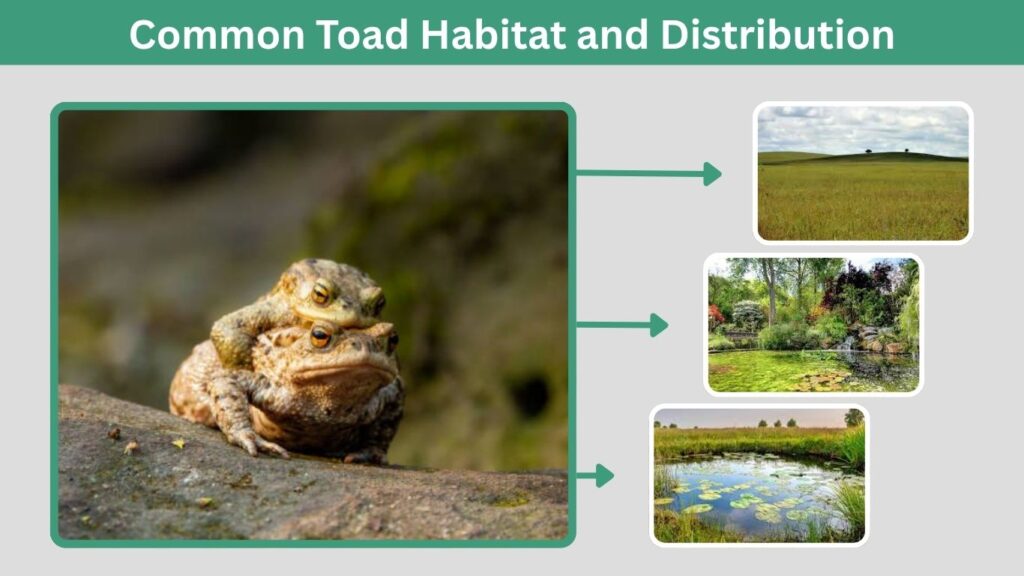
Common Toads are highly adaptable and can survive in many natural and human-altered environments. Moisture is important because amphibians lose water through their skin, so they usually remain close to damp hiding places and breeding ponds.
Natural Habitat
- Forests
- Grasslands
- Gardens
- Wetlands
- Woodland ponds
These environments provide shelter, moisture, and abundant insect prey needed for survival.
Geographic Distribution
The Common Toad occurs across large areas of:
- Europe
- United Kingdom
- Scandinavia
- Parts of western Asia
It is one of the most recognizable amphibians in many European countries.
Habitat Adaptations
Common Toads possess several adaptations that help them survive changing weather conditions. Their rough skin reduces water loss, while camouflage coloration helps them blend into leaves, soil, and forest floors. Burrowing behavior also protects them from predators and extreme temperatures.
Common Toad Size and Lifespan
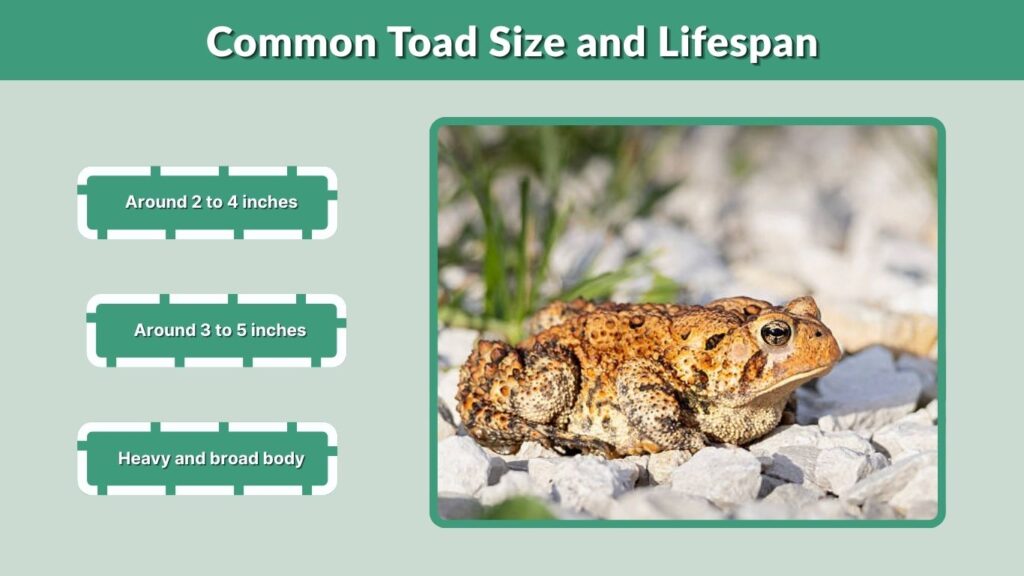
The Common Toad is a medium to large amphibian with a sturdy body structure. Females are generally larger than males and may continue growing for several years under favorable conditions.
Average Size
- Adult males: Around 2 to 4 inches
- Adult females: Around 3 to 5 inches
- Heavy and broad body
- Shorter legs than frogs
Lifespan Expectations
Common Toads are relatively long-lived amphibians. Wild individuals commonly survive for 10 years or more, while protected captive toads may live significantly longer under stable conditions.
Growth and Development
Like most amphibians, Common Toads begin life as aquatic tadpoles. Eggs hatch in ponds and wetlands before tadpoles gradually develop legs and lungs. After metamorphosis, young toads leave the water and begin life on land.
Common Toad Diet and Feeding Habits
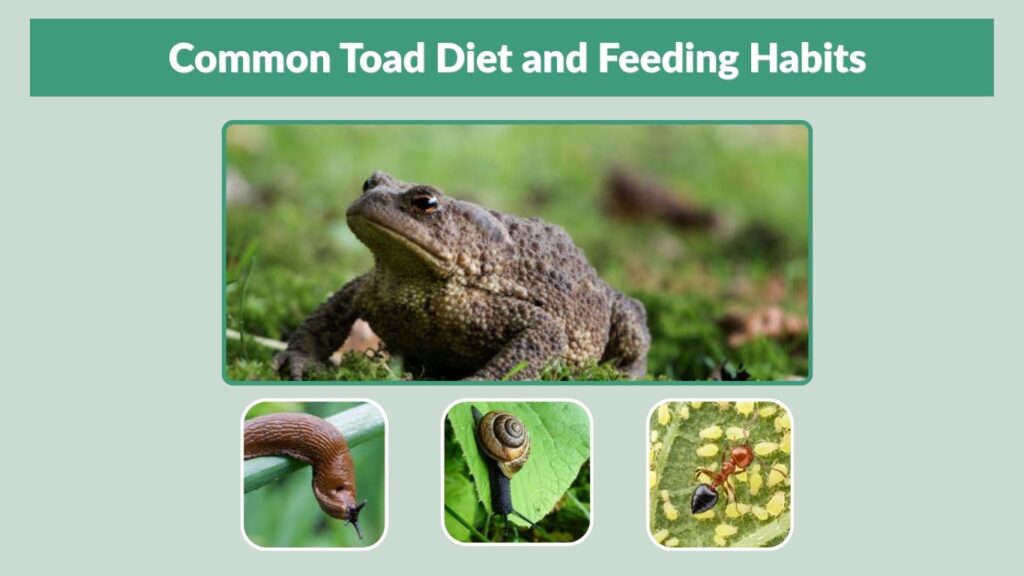
Common Toads are nocturnal predators that help control insect and slug populations in gardens and forests. Their slow movements are balanced by quick tongue strikes used to capture prey.
What Do Common Toads Eat?
- Beetles
- Worms
- Slugs
- Snails
- Ants
- Spiders
Hunting Behavior
Common Toads usually hunt at night when moisture levels are higher and insects are more active. They often remain hidden during the day before emerging after sunset to search for prey among leaves, grass, and damp soil.
Common Toad Hibernation
Common Toads are well adapted to cold climates and survive winter through hibernation. During colder months, they enter a state of reduced activity that helps conserve energy until temperatures rise again in spring. Moist underground shelters are especially important because they prevent dehydration during long inactive periods.
Where Common Toads Hibernate
- Underground burrows
- Compost piles
- Leaf litter
- Tree root systems
- Rock crevices
These protected locations help shield the toads from freezing temperatures and predators.
Hibernation Behavior
During hibernation, the Common Toad’s metabolism slows dramatically. Heart rate and movement decrease, allowing the animal to survive for months without feeding. Moisture retention is extremely important because amphibians can dry out easily if conditions become too warm or dry.
When Hibernation Begins
Common Toads usually begin hibernation during autumn when temperatures drop consistently. They emerge in spring once warmer weather and rainfall return, often traveling to breeding ponds shortly afterward.
Is the Common Toad Poisonous?
Like many true toads, the Common Toad produces mild toxins as a defense against predators. These secretions are released from large glands behind the eyes and help discourage animals from attacking or eating the toad.
Toxin Production
The parotid glands produce chemicals that taste unpleasant and may irritate predators. These toxins are not usually dangerous to humans through normal handling, but they can affect pets and small animals if ingested.
Effects on Humans and Pets
- Mild skin irritation
- Bad taste if touched to the mouth
- Vomiting in pets
- Temporary discomfort in predators
Hands should always be washed after handling amphibians to avoid accidental irritation.
Defensive Behaviors
Common Toads use several defensive strategies besides toxins. They may puff up their bodies to appear larger, remain motionless for camouflage, or hide underground when threatened by predators.
Common Toad Male vs Female
Male and female Common Toads show several physical and behavioral differences, especially during the breeding season. Females are generally larger and heavier because they carry large numbers of eggs.
Comparison Table
| Feature | Male Common Toad | Female Common Toad |
| Size | Smaller | Larger |
| Body Shape | Slimmer | Broader |
| Breeding Pads | Present on fingers | Absent |
| Voice | Calls during breeding | Usually silent |
How to Identify Gender
Males often develop dark breeding pads on their front limbs during mating season. Females usually have broader bodies and larger overall size. During breeding migrations, males may also be more active and vocal near ponds.
Common Toad vs Frog
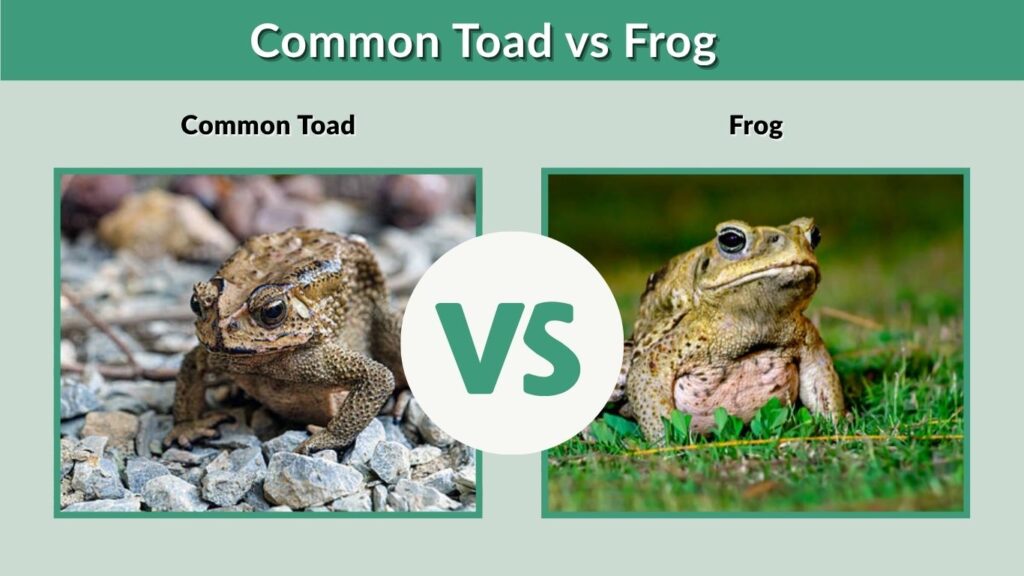
Although frogs and toads are both amphibians, they differ in several important ways. Common Toads are more terrestrial and have rougher skin compared to the smoother and more aquatic frogs.
Comparison Table
| Feature | Common Toad | Frog |
| Skin | Dry and warty | Smooth and moist |
| Legs | Shorter | Longer |
| Movement | Crawling and short hops | Long jumps |
| Habitat | More terrestrial | More aquatic |
Main Differences
Frogs usually stay closer to water and rely on long jumps for movement, while toads move more slowly and tolerate drier conditions. Skin texture is also one of the easiest ways to tell them apart.
Interesting Facts About Common Toads
The Common Toad is one of Europe’s most recognizable amphibians and has adapted well to seasonal environments. Its ability to survive cold winters and control insect populations makes it an important part of many ecosystems.
Amazing Facts
- Can survive harsh winters through hibernation
- Produces toxins for defense
- Active mainly at night
- Excellent natural pest controller
- May live for decades in protected habitats
- Returns to the same breeding ponds each year
FAQs
What do Common Toads eat in gardens?
Common Toads feed on slugs, beetles, worms, ants, spiders, and other small invertebrates commonly found in gardens. Because of this, they are considered helpful natural pest controllers.
Are Common Toads dangerous to dogs or cats?
Common Toad toxins are usually mild but may irritate pets if they bite or lick the toad. Symptoms can include drooling or mouth irritation, though serious poisoning is uncommon.
When are Common Toads most active?
Common Toads are mainly nocturnal and become most active during damp evenings and rainy weather. They usually hide during the daytime to avoid dehydration.
Do Common Toads return to the same pond every year?
Yes, Common Toads often return to the same breeding ponds annually. During spring migration, many adults travel long distances to reach familiar breeding sites.
Can Common Toads climb?
Unlike tree frogs, Common Toads are poor climbers because of their heavy bodies and shorter limbs. They mainly move by crawling or making short hops across the ground.
