
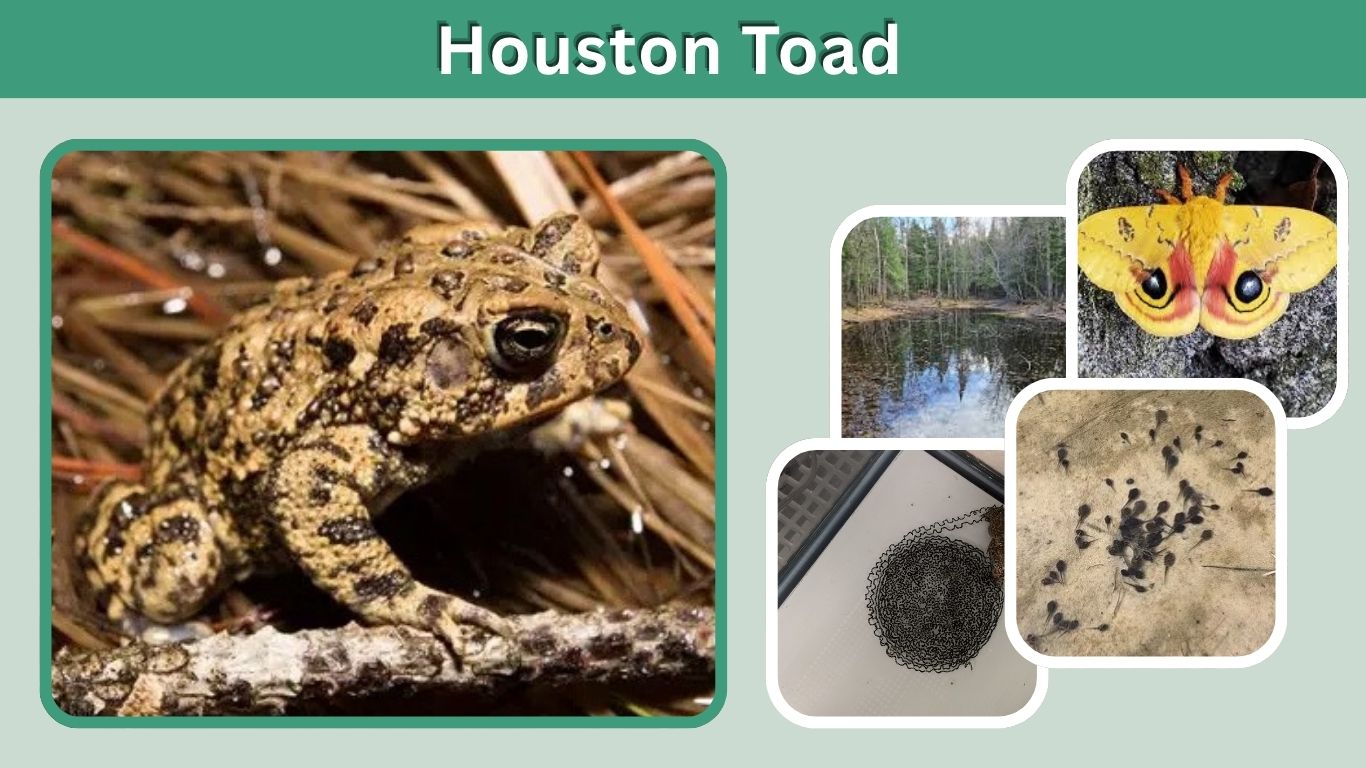
The Houston toad (Anaxyrus houstonensis) is one of the rarest amphibians in Texas and a species that has faced dramatic population declines over the past several decades. Known for its unique breeding call and limited geographic range, this endangered toad has become a symbol of wildlife conservation in the state. Understanding its habitat, biology, and the challenges it faces is essential for appreciating why scientists and conservationists continue working to protect this remarkable amphibian.
What Is the Houston Toad?
The Houston toad is a small amphibian native to Texas and found nowhere else in the world. Once distributed across several counties in eastern and central Texas, the species now survives in only a fraction of its historical range. Its scientific classification and unique characteristics distinguish it from other toads commonly found throughout the region.
Scientific Classification
The Houston toad belongs to the family Bufonidae, a group that includes true toads found worldwide. Although it was formerly classified as Bufo houstonensis, scientists now recognize its accepted scientific name as Anaxyrus houstonensis.
Physical Characteristics
Adult Houston toads typically measure between 2 and 3.5 inches in length. Their skin is rough and covered with small warts, while their coloration ranges from light brown to grayish-brown. Dark spots and subtle striping help them blend into the sandy soils and leaf litter of their habitat.
Quick Facts About the Houston Toad
- Scientific Name: Anaxyrus houstonensis
- Family: Bufonidae
- Conservation Status: Endangered
- Native Range: Texas
- Average Length: 2–3.5 inches
- Primary Habitat: Pine-oak woodlands
- Diet: Insects and small invertebrates
- Breeding Season: January through June
Houston Toad Habitat
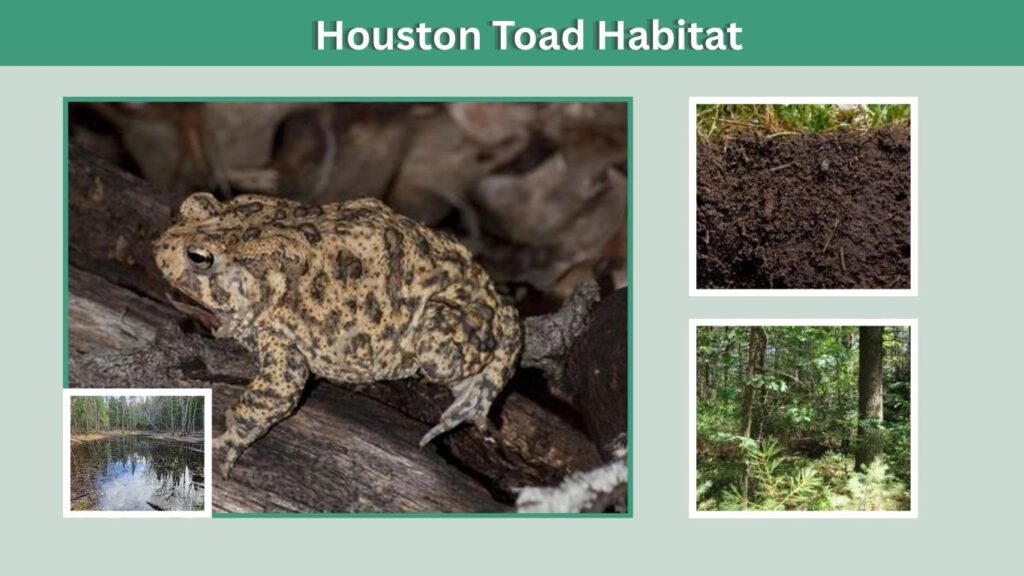
The Houston toad depends on a very specific environment for survival. Suitable habitats provide shelter, food sources, and breeding areas necessary for all stages of its life cycle. Because these requirements are highly specialized, habitat loss has become one of the greatest threats facing the species.
Preferred Habitat Conditions
Houston toads thrive in sandy soils associated with pine and oak woodlands. These areas allow them to burrow underground during dry conditions and seek refuge from predators. The species also depends on temporary ponds and shallow wetlands for breeding.
Where Do Houston Toads Live?
Historically, Houston toads occupied several counties in Texas. Today, most remaining populations occur in Bastrop County and nearby areas. The Lost Pines ecosystem has become one of the most important strongholds for the species.
Key Habitat Features
- Sandy, well-drained soils
- Pine-oak woodland ecosystems
- Seasonal breeding ponds
- Native grasses and shrubs
- Areas with limited human disturbance
- Moist environments during breeding season
Houston Toad Distribution in Texas
The Houston toad once occupied a significantly larger range than it does today. Population declines have caused the species to disappear from many areas where it was historically recorded. Conservationists continue monitoring existing populations to better understand changes in distribution and abundance.
Historical Range
Early records indicate that Houston toads occurred across multiple counties in east-central Texas. Suitable habitat stretched across large areas that contained pine forests, sandy soils, and seasonal wetlands.
Current Distribution
Today, the species is largely restricted to fragmented populations. Bastrop County supports the most well-known population, while smaller groups persist in a few additional locations. Habitat fragmentation has isolated many breeding sites, making recovery more difficult.
Why Is the Houston Toad Endangered?
The Houston toad was listed as an endangered species because its population experienced substantial declines due to habitat destruction and environmental pressures. Multiple threats continue to affect its survival, often interacting in ways that make recovery increasingly challenging.
Habitat Loss and Fragmentation
Urban development, agriculture, road construction, and land conversion have reduced the amount of suitable habitat available to Houston toads. As habitats become fragmented, populations become isolated and less resilient.
Drought and Climate Conditions
Breeding success depends heavily on rainfall. Extended drought periods can dry breeding ponds before tadpoles complete development, leading to poor reproductive success.
Wildfire Impacts
Wildfires have significantly affected Houston toad populations, particularly in Bastrop County. Large fires can destroy vegetation, alter soil conditions, and reduce the availability of breeding and shelter sites.
Additional Threats
Several other factors contribute to population decline:
- Invasive species
- Predation pressure
- Disease outbreaks
- Vehicle mortality
- Climate change
- Reduced genetic diversity
Houston Toad Population and Conservation
Conservation efforts have become critical for preventing further declines in Houston toad numbers. Government agencies, researchers, landowners, and conservation organizations work together to improve habitat conditions and increase breeding success.
How Many Houston Toads Are Left?
Determining exact population numbers is difficult because Houston toads spend much of their lives hidden underground. Scientists often estimate population trends using breeding-call surveys and monitoring programs. Current populations remain significantly lower than historical levels.
Conservation Programs
Recovery initiatives focus on habitat restoration, captive breeding, and population monitoring. These programs aim to improve breeding success while restoring areas capable of supporting future generations.
Major Conservation Actions
- Habitat restoration projects
- Captive breeding programs
- Breeding pond enhancement
- Scientific population monitoring
- Landowner conservation partnerships
- Public education initiatives
What Do Houston Toads Eat?
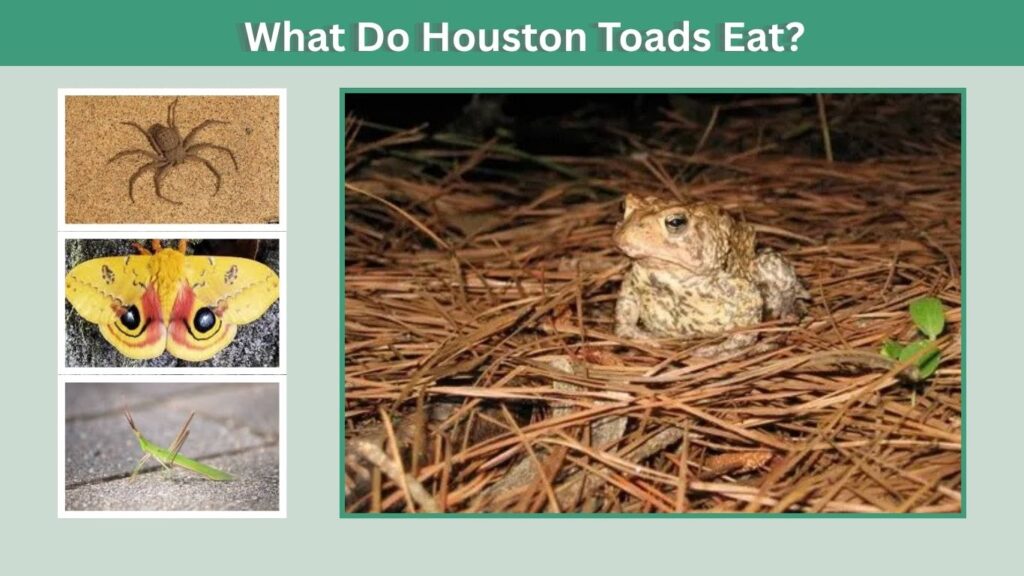
The Houston toad is an opportunistic insectivore that plays an important role in controlling insect populations. Its diet consists mainly of small invertebrates found within its woodland habitat. By consuming a variety of insects, the species contributes to maintaining ecological balance in the ecosystems it inhabits.
Adult Diet
Adult Houston toads feed on a wide range of prey. They typically hunt at night, using their sticky tongues to capture insects and other small creatures.
Common Food Sources
- Ants
- Beetles
- Crickets
- Spiders
- Moths
- Grasshoppers
- Small worms
- Other invertebrates
Juvenile Feeding Habits
Young Houston toads consume smaller prey than adults. Newly transformed juveniles feed on tiny insects and microscopic invertebrates as they grow and develop.
Houston Toad Breeding and Life Cycle
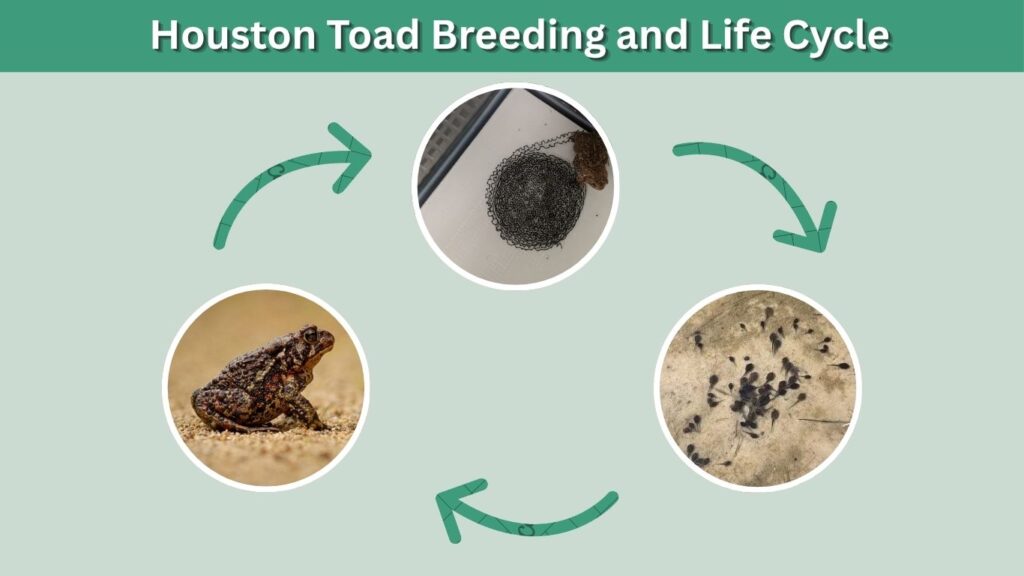
The breeding season is the most active and visible period in the Houston toad’s life. For much of the year, these amphibians remain hidden underground or beneath vegetation. During favorable weather conditions, they emerge to reproduce in temporary ponds and wetlands.
Breeding Season
Houston toads typically breed between January and June, depending on rainfall and temperature. Warm nights accompanied by adequate moisture create ideal breeding conditions.
Mating Behavior
Male Houston toads gather near breeding ponds and call to attract females. Once a female selects a mate, eggs are deposited in shallow water where development begins.
Life Cycle Stages
- Egg
- Tadpole
- Metamorphosis
- Juvenile Toad
- Adult Toad
Development Process
Eggs hatch into aquatic tadpoles that feed and grow in temporary ponds. After several weeks, the tadpoles undergo metamorphosis, developing legs and lungs before leaving the water as juvenile toads.
Houston Toad Call and Communication
The Houston toad is perhaps best known for its distinctive breeding call. Researchers often use these calls to monitor populations because hearing breeding males is one of the most reliable ways to detect the species in the wild.
What Does the Houston Toad Call Sound Like?
The call is often described as a high-pitched musical trill. Unlike some common toad species, the Houston toad produces a unique vocalization that can help experts distinguish it from related amphibians.
Why Do Houston Toads Call?
Male Houston toads call primarily to attract mates. Calling activity usually increases after rainfall when breeding conditions are favorable.
Importance of Call Surveys
Scientists use call surveys to:
- Estimate population trends
- Locate breeding sites
- Monitor conservation success
- Identify active habitats
- Track seasonal activity
Houston Toad vs Gulf Coast Toad
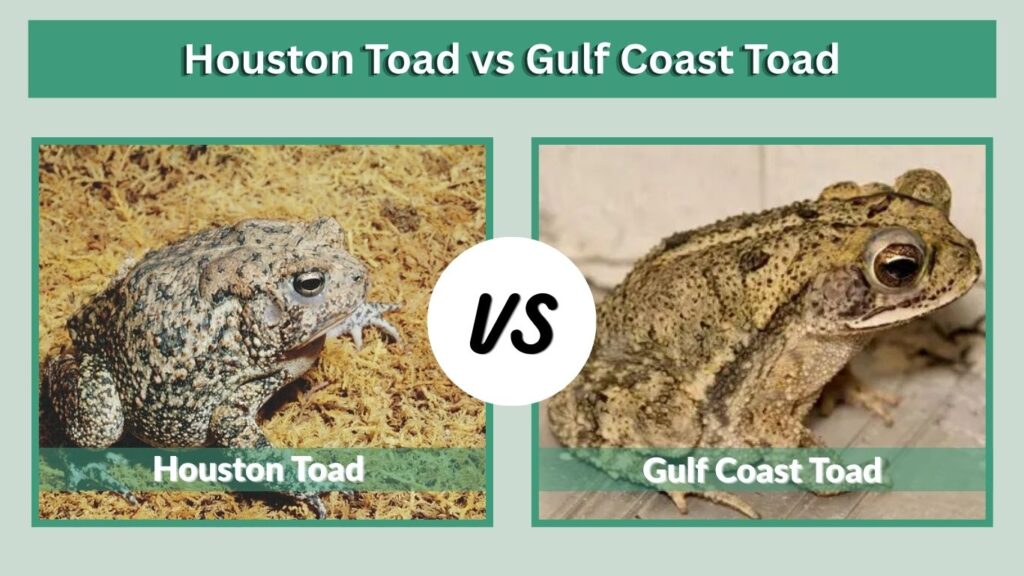
The Houston toad is frequently confused with the Gulf Coast toad because both species occur in parts of Texas. However, several physical and ecological differences can help distinguish them.
Appearance Differences
Houston toads generally have a more subtle coloration and different cranial crest patterns than Gulf Coast toads. They are also associated with more specialized habitats.
Habitat Preferences
The Houston toad requires sandy woodland habitats and seasonal breeding ponds. Gulf Coast toads are far more adaptable and commonly occur in urban, suburban, and agricultural environments.
Conservation Status Comparison
While Houston toads are federally listed as endangered, Gulf Coast toads remain widespread and abundant throughout much of their range.
Are Houston Toads Poisonous?
Like many true toads, Houston toads possess defensive glands that produce mild toxins. These secretions help protect them from predators but are generally not dangerous to humans when handled responsibly.
Defensive Adaptations
Specialized glands located behind the eyes release chemicals that discourage predators from attacking. This defense mechanism is common among many toad species.
Risks to Pets
Dogs are more likely than humans to experience problems after mouthing a toad. Symptoms may include excessive drooling or temporary irritation. Pet owners should discourage animals from interacting with wild amphibians.
Human Safety
Houston toads are not considered dangerous to people. However, washing hands after handling any amphibian is recommended to protect both humans and the animal.
Interesting Houston Toad Facts
The Houston toad is a fascinating species with several unique characteristics that make it an important part of Texas wildlife heritage.
Fun Facts
- The species is found only in Texas.
- It was listed as endangered in 1970.
- Most Houston toads spend much of their lives underground.
- Breeding activity is strongly influenced by rainfall.
- Bastrop County contains some of the most important remaining habitat.
- Scientists use breeding calls to monitor populations.
- The species was formerly known as Bufo houstonensis.
FAQs
Is the Houston Toad a Protected Species?
Yes. The Houston toad is protected under the U.S. Endangered Species Act, making it illegal to harm, capture, or disturb the species without authorization.
Where Is the Houston Toad Found?
The species is primarily found in Bastrop County and a few surrounding areas in Texas where suitable habitat remains.
Why Is the Houston Toad Important?
Houston toads contribute to ecosystem health by controlling insect populations and serving as indicators of environmental quality.
Can Houston Toads Survive in Cities?
Urban environments generally lack the specialized habitat conditions required by Houston toads, making long-term survival difficult.
What Is the Biggest Threat to the Houston Toad?
Habitat loss and fragmentation remain the most significant threats, followed by drought, wildfire, and climate-related challenges.
