
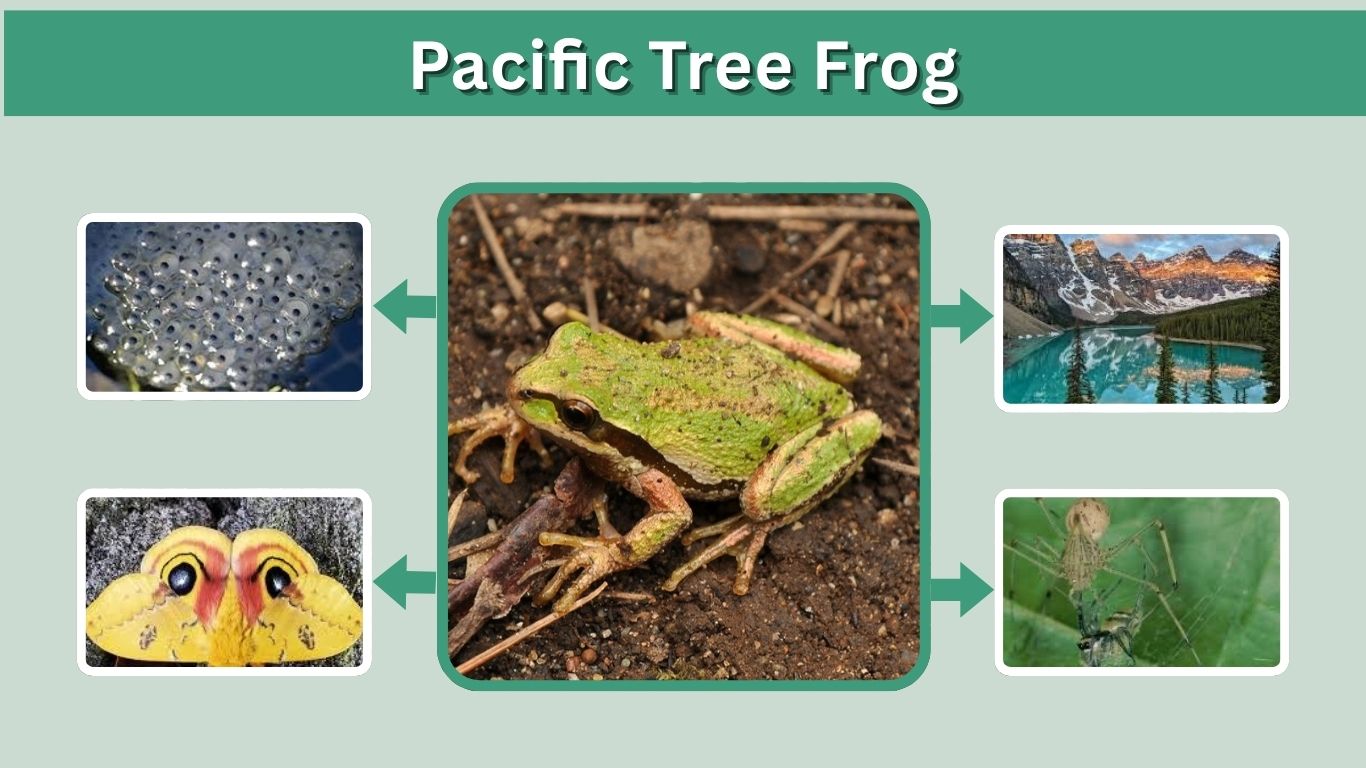
The Pacific Tree Frog (Pseudacris regilla) is one of the most recognizable amphibians in western North America. Known for its distinctive “ribbit” call and remarkable ability to change color, this small frog thrives in a wide range of habitats. It can be found in forests, wetlands, grasslands, and even suburban gardens. Despite its tiny size, the Pacific Tree Frog plays an important ecological role by controlling insect populations and serving as prey for many animals throughout its range.
What Is a Pacific Tree Frog?
The Pacific Tree Frog is a small amphibian belonging to the treefrog family. It is often referred to as the Pacific Chorus Frog because of its loud and frequent breeding calls. This adaptable species can survive in diverse environments and is one of the most widespread frogs in the western United States and Canada.
Scientific Classification
The Pacific Tree Frog is scientifically known as Pseudacris regilla. It belongs to the family Hylidae, which includes numerous treefrog species worldwide. Its scientific classification reflects its close relationship with other chorus frogs found across North America.
Key Characteristics
Several features make this frog easy to recognize:
- Dark stripe running through the eye
- Smooth skin texture
- Large toe pads for climbing
- Compact body shape
- Variable body coloration
These traits help distinguish the Pacific Tree Frog from many other amphibian species.
Pacific Tree Frog Identification
The Pacific Tree Frog is a small amphibian that is easy to recognize thanks to its distinctive eye stripe, color-changing ability, and climbing adaptations. Although individuals may vary in color, several physical features remain consistent and help distinguish this species from other frogs throughout western North America.
Key Identification Features
- Dark stripe running through the eye
- Smooth skin texture
- Large adhesive toe pads
- Compact body shape
- Long hind legs for jumping
- Light-colored belly
- Excellent climbing ability
Common Color Variations
- Bright green
- Olive green
- Brown
- Gray
- Rare blue morph
Male vs Female Identification
- Females are usually larger
- Males have darker throats during breeding season
- Males are more vocal than females
- Females often have broader bodies
How to Identify One in the Wild
- Look for the dark eye stripe
- Check for sticky toe pads on the feet
- Observe color changes that match surroundings
- Listen for its distinctive “ribbit” call
- Search near ponds, wetlands, and vegetation
Pacific Tree Frog Size
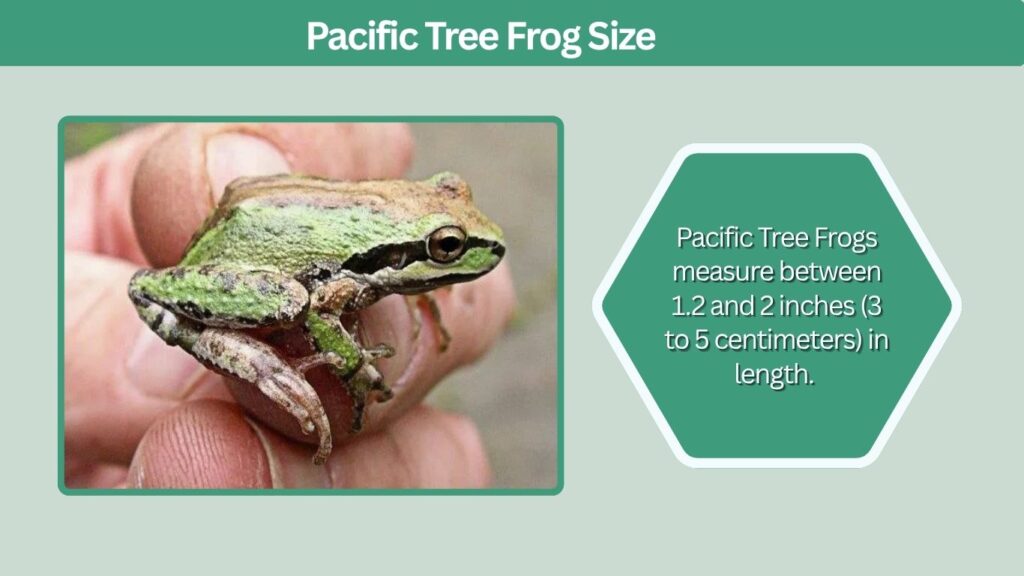
Although small, the Pacific Tree Frog is a highly successful amphibian. Its compact size allows it to move easily through vegetation, climb efficiently, and utilize small shelter sites unavailable to larger species.
Average Size
Most adult Pacific Tree Frogs measure between 1.2 and 2 inches (3 to 5 centimeters) in length. Weight varies depending on age, health, and seasonal conditions.
Growth Stages
Like all frogs, the Pacific Tree Frog undergoes several developmental stages. It begins life as an egg, develops into a tadpole, and eventually transforms into a fully terrestrial adult through metamorphosis.
How Big Do Pacific Tree Frogs Get?
While size varies among individuals, most adults remain relatively small throughout life. Their modest size offers several advantages:
- Easier access to shelter
- Lower food requirements
- Better camouflage opportunities
- Increased climbing efficiency
- Reduced energy demands
These benefits contribute to the species’ widespread success.
Pacific Tree Frog Habitat
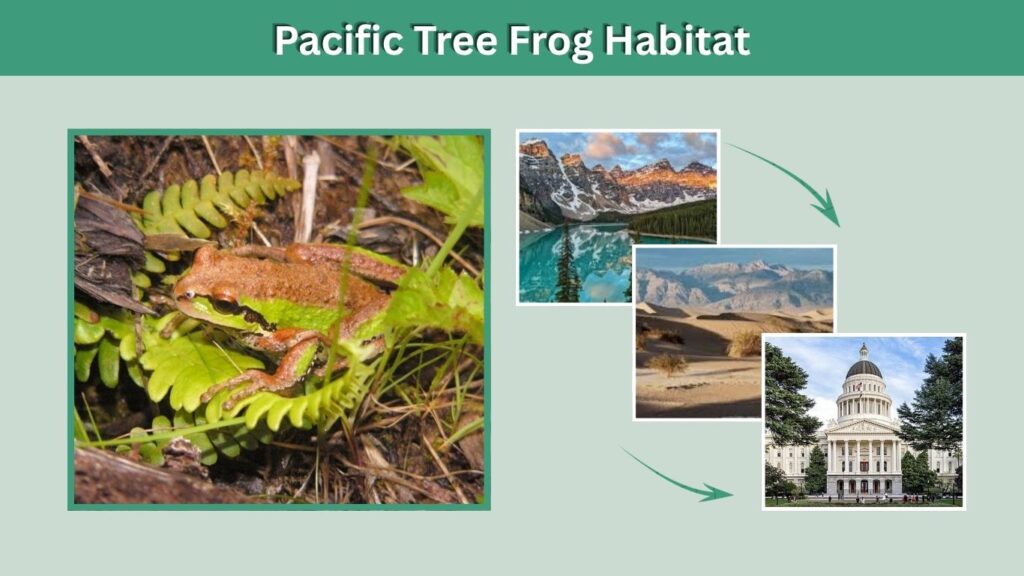
The Pacific Tree Frog occupies one of the broadest habitat ranges of any North American amphibian. It can survive in coastal forests, mountain meadows, wetlands, agricultural areas, and urban environments. Access to breeding water and suitable vegetation are among the most important habitat requirements.
Preferred Habitats
Pacific Tree Frogs commonly inhabit forests, marshes, ponds, grasslands, and suburban landscapes. They are especially abundant in areas with seasonal water sources used for breeding.
Habitat Requirements
Several environmental factors support healthy populations:
- Freshwater ponds or wetlands
- Dense vegetation for cover
- Moist conditions during breeding season
- Insect-rich feeding areas
- Safe overwintering sites
Suitable habitat conditions are essential for reproduction and long-term survival.
Geographic Distribution
The Pacific Tree Frog occurs throughout much of western North America, including California, Oregon, Washington, British Columbia, and portions of Alaska. Its adaptability allows it to thrive from sea level habitats to mountainous regions, making it one of the most widely distributed amphibians in the Pacific Northwest.
Pacific Tree Frog Range and Distribution
The Pacific Tree Frog has an extensive range throughout western North America. Its ability to adapt to different elevations, climates, and habitat types has allowed it to become one of the most widespread amphibians in the region. Populations can be found in coastal forests, inland valleys, mountain regions, and even urban environments where suitable breeding habitats exist.
North American Range
The species occurs across much of the western United States and southwestern Canada. Its distribution extends through California, Oregon, Washington, British Columbia, and parts of Alaska.
Pacific Northwest Distribution
Pacific Tree Frogs are especially abundant throughout the Pacific Northwest. Wetlands, forests, and temporary ponds provide ideal conditions for breeding and development.
California Populations
California supports some of the largest Pacific Tree Frog populations. The species occupies coastal habitats, grasslands, woodlands, and mountain regions throughout much of the state.
Pacific Tree Frog Call and Sounds
The Pacific Tree Frog is famous for producing the classic “ribbit” sound often associated with frogs in movies and television. During breeding season, males gather near water and call repeatedly to attract females. Their vocalizations are among the most recognizable amphibian sounds in North America.
What Does a Pacific Tree Frog Sound Like?
The call consists of a short, sharp “ribbit” repeated at regular intervals. Calls are typically heard during evenings and nights when breeding activity is highest.
Pacific Tree Frog Mating Call
Male frogs use vocalizations to attract females and compete with rival males. Calling intensity often increases following rainfall and during warm spring evenings.
Why They Call at Night
Several factors influence nighttime calling:
- Attracting potential mates
- Establishing breeding territories
- Reducing predator exposure
- Taking advantage of cooler temperatures
- Increasing communication efficiency
These behaviors improve reproductive success during the breeding season.
Pacific Tree Frog Diet
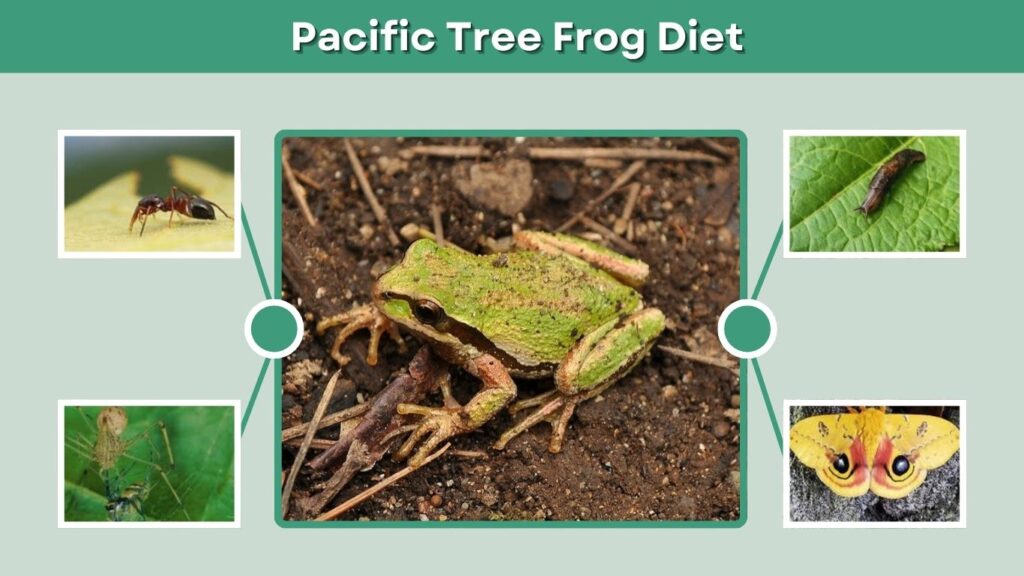
Pacific Tree Frogs are carnivorous amphibians that feed on a wide variety of small invertebrates. Their diet plays an important role in controlling insect populations and maintaining ecological balance in many habitats.
What Do Pacific Tree Frogs Eat?
Common prey items include:
- Flies
- Beetles
- Ants
- Moths
- Spiders
Adults typically hunt at night when insect activity is greatest.
Hunting Behavior
Pacific Tree Frogs are ambush predators. They often remain motionless on vegetation until prey comes within striking distance. Using their sticky tongues and quick reflexes, they capture insects with remarkable accuracy.
Tadpole Diet
Unlike adults, tadpoles primarily consume algae, organic debris, and microscopic aquatic organisms. Their feeding habits help recycle nutrients within freshwater ecosystems.
Pacific Tree Frog Lifecycle
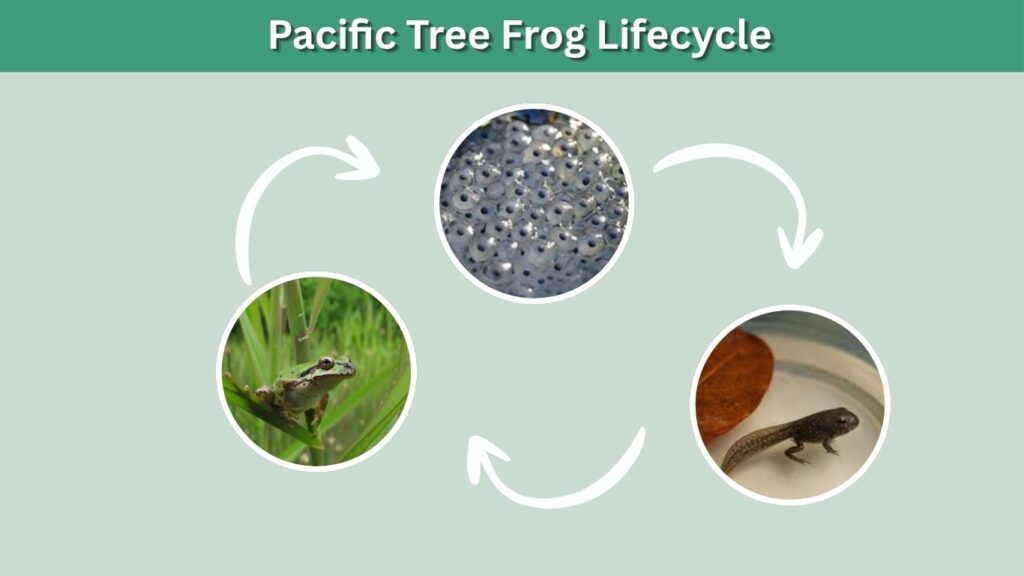
The lifecycle of the Pacific Tree Frog involves a complete transformation from aquatic tadpole to terrestrial adult. This process depends heavily on seasonal weather conditions and access to suitable breeding habitats.
Breeding Season
Breeding generally occurs during late winter and spring. Males gather around ponds, wetlands, and temporary pools where they call to attract females.
Eggs and Egg Masses
After mating, females lay clusters of eggs attached to underwater vegetation. The eggs develop rapidly in favorable environmental conditions.
Tadpoles and Metamorphosis
Tadpoles hatch from eggs and spend several weeks or months developing in water. During metamorphosis, they gradually grow legs, develop lungs, and lose their tails before emerging as juvenile frogs.
Pacific Tree Frog Lifespan and Behavior
Pacific Tree Frogs display fascinating behaviors that contribute to their survival. Their adaptability, climbing skills, and seasonal activity patterns allow them to thrive in diverse environments throughout western North America.
Average Lifespan
Most Pacific Tree Frogs live between 5 and 8 years in the wild. Individuals living in protected conditions may survive even longer.
Daily Activity Patterns
Important behavioral traits include:
- Primarily nocturnal activity
- Frequent climbing behavior
- Seasonal breeding migrations
- Daytime hiding among vegetation
- Increased activity after rainfall
Hibernation Behavior
During colder months, Pacific Tree Frogs seek shelter beneath logs, leaf litter, rocks, and other protected locations. Their ability to tolerate low temperatures helps them survive winter conditions across much of their range.
FAQs
What do Pacific Tree Frogs eat?
Pacific Tree Frogs are carnivores that feed mainly on insects and other small invertebrates. Their diet commonly includes flies, beetles, ants, moths, spiders, and various small arthropods found in their habitat.
Are Pacific Tree Frogs poisonous?
Pacific Tree Frogs are not poisonous to humans. They produce mild skin secretions that help protect them from predators, but these secretions are generally harmless. It is still recommended to wash your hands after handling any amphibian.
How big do Pacific Tree Frogs get?
Adult Pacific Tree Frogs typically grow between 1.2 and 2 inches (3 to 5 centimeters) in length. Females are usually slightly larger than males, especially during the breeding season.
Where do Pacific Tree Frogs live?
Pacific Tree Frogs are found throughout western North America, including California, Oregon, Washington, British Columbia, and parts of Alaska. They inhabit forests, wetlands, grasslands, ponds, marshes, and even suburban gardens.
How long do Pacific Tree Frogs live?
Pacific Tree Frogs generally live between 5 and 8 years in the wild. Factors such as habitat quality, food availability, disease, and predation can influence their lifespan.
