
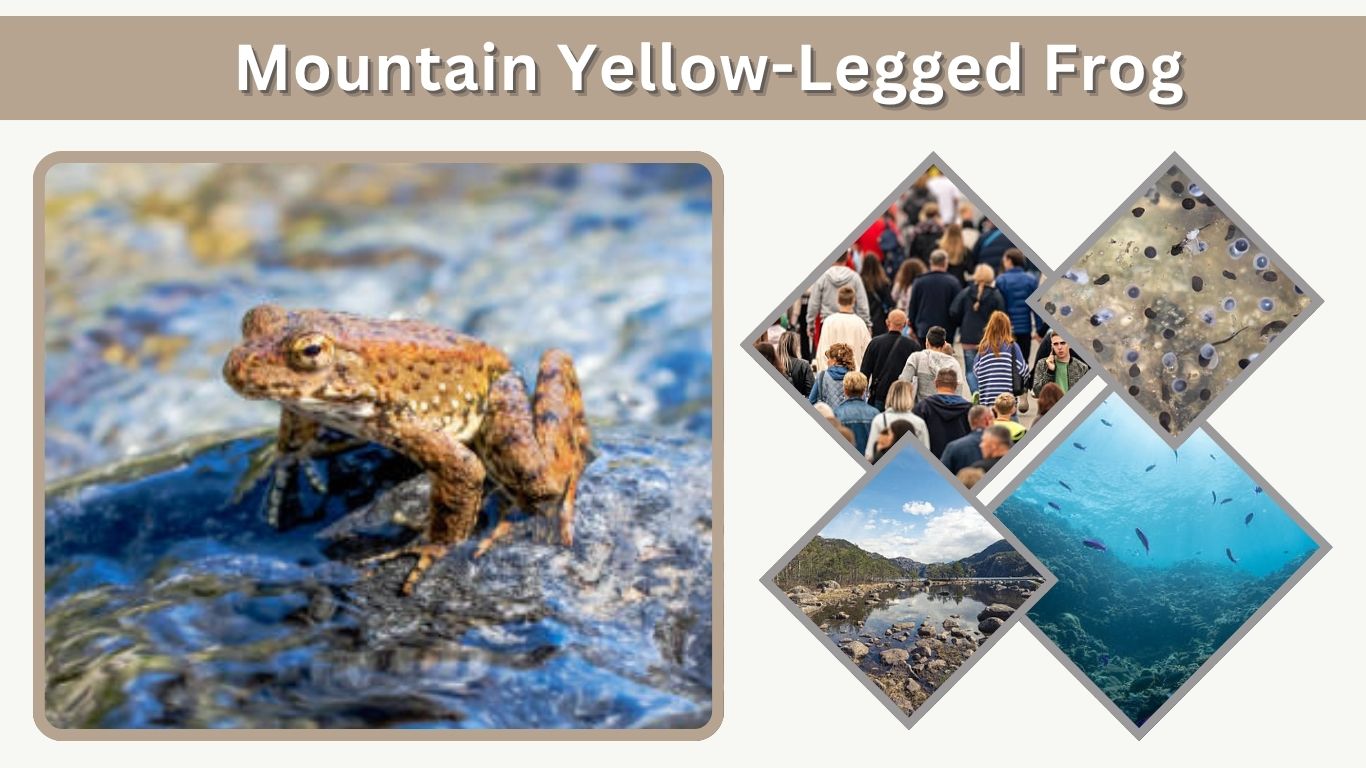
The mountain yellow-legged frog is a rare amphibian native to California’s high mountain regions. Known for its unique yellow coloring and ability to survive in cold environments, this species plays an important role in maintaining ecosystem balance. However, it has faced a dramatic population decline over the past century. Understanding its habitat, physical traits, and behavior is essential for appreciating why conservation efforts are so important for its survival.
What Is the Mountain Yellow-Legged Frog?
The mountain yellow-legged frog refers to two closely related species found in California: Rana muscosa and Rana sierrae. These frogs are specially adapted to live in high-altitude environments where temperatures are low and conditions can be harsh.
Scientific Classification
- Kingdom: Animalia
- Class: Amphibia
- Genus: Rana
- Species: Rana muscosa and Rana sierrae
Common Names
- Mountain yellow-legged frog
- Sierra Nevada yellow-legged frog
- Southern mountain yellow-legged frog
These frogs are considered indicator species, meaning their health reflects the condition of their environment.
Mountain Yellow-Legged Frog Habitat

The mountain yellow-legged frog lives in remote, high-elevation ecosystems. These habitats are often isolated and sensitive to environmental changes, making the species vulnerable.
Where They Are Found
- Sierra Nevada mountain range
- Southern California mountains
- Sequoia and Yosemite National Parks
- Alpine lakes, streams, and ponds
Habitat Characteristics
- Cold, clear freshwater
- Rocky shorelines and open terrain
- Seasonal snowmelt water sources
- High-altitude ecosystems above 4,500 feet
These habitats provide the clean water and shelter necessary for breeding and survival.
Mountain Yellow-Legged Frog Physical Characteristics and Identification
The mountain yellow-legged frog has distinct physical features that help it survive in rugged mountain environments. Its appearance also makes it easier to identify compared to other amphibians.
Key Identification Features
- Yellow or orange coloring on the underside of legs
- Brown, gray, or olive back for camouflage
- Smooth skin with a slightly mottled pattern
- Strong hind legs for swimming and jumping
Size and Appearance
- Medium-sized frog
- Adults typically measure 4 to 8 cm in length
- Large eyes adapted for detecting movement
- Slim body built for both water and land
Their coloration helps them blend into rocky landscapes, protecting them from predators.
Mountain Yellow-Legged Frog Behavior and Adaptations
The behavior of the mountain yellow-legged frog is closely tied to its environment. These frogs have developed unique adaptations that allow them to survive in cold and variable conditions.
Daily and Seasonal Behavior
- Active during the day (diurnal)
- Spend time both in water and on land
- Seasonal movement depending on temperature
Unique Adaptations
- Ability to tolerate cold temperatures
- Slow metabolism in colder months
- Use of both aquatic and terrestrial habitats
- Strong swimming ability in fast-moving water
These adaptations allow them to survive in environments where many other amphibians cannot.
Diet: What Do Mountain Yellow-Legged Frogs Eat?

The mountain yellow-legged frog is a carnivorous amphibian that feeds on a variety of small organisms. Its diet plays an important role in maintaining ecological balance in its habitat.
Main Food Sources
- Insects such as flies and beetles
- Aquatic invertebrates
- Small crustaceans found in water
Feeding Behavior
These frogs are opportunistic feeders, meaning they eat whatever suitable prey is available. They hunt both in water and on land, using their quick reflexes to catch moving prey. Their diet helps control insect populations and supports the overall health of their ecosystem.
Mountain Yellow-Legged Frog Life Cycle and Reproduction

The life cycle of the mountain yellow-legged frog is closely tied to its cold, high-elevation environment. Unlike many amphibians, its development is slower due to lower temperatures, which can extend certain stages.
Reproductive Process
- Breeding occurs in late spring or early summer
- Females lay eggs in shallow, calm water
- Eggs hatch into tadpoles within a few weeks
- Tadpoles may take 1 to 3 years to develop into frogs
Tadpole Development
- Tadpoles live entirely in water
- Feed on algae and organic material
- Gradually develop legs and lungs
- Transition into adult frogs after metamorphosis
Why Is the Mountain Yellow-Legged Frog Endangered?

The mountain yellow-legged frog has experienced a sharp population decline over the past century. Multiple environmental and biological factors have contributed to its endangered status.
Major Threats
- Introduction of non-native trout that prey on tadpoles
- Spread of chytrid fungus, a deadly amphibian disease
- Habitat loss due to environmental changes
- Climate change affecting water availability and temperature
Impact of These Threats
- Reduced survival rates of young frogs
- Fragmentation of populations
- Increased vulnerability to extinction
- Disruption of natural ecosystem balance
Population Status and Conservation Efforts
The current population of the mountain yellow-legged frog remains low, but conservation efforts are helping stabilize and recover some groups. Scientists and environmental organizations are working to protect this species through targeted actions.
Current Population Status
- Listed as endangered in the United States
- Populations exist in isolated mountain regions
- Some areas show gradual recovery
Conservation Actions
- Removal of non-native trout from habitats
- Captive breeding and reintroduction programs
- Habitat restoration and protection
- Ongoing monitoring and research
These efforts aim to rebuild populations and ensure long-term survival.
Ecosystem Importance
The mountain yellow-legged frog plays a vital role in maintaining the balance of its ecosystem. As both predator and prey, it contributes to the stability of aquatic and terrestrial food webs. Its presence indicates a healthy environment, while its decline signals ecological problems. Protecting this species helps preserve biodiversity in fragile mountain ecosystems.
FAQs
What is the scientific name of the mountain yellow-legged frog?
The mountain yellow-legged frog includes two species: Rana muscosa and Rana sierrae. These species were separated based on genetic differences and geographic distribution across California’s mountain regions.
Why is the mountain yellow-legged frog endangered?
It is endangered due to multiple factors, including habitat loss, introduced predators like trout, and disease such as chytrid fungus. Climate change has also contributed by altering water conditions in its natural habitat.
What do mountain yellow-legged frogs eat?
They mainly eat insects and aquatic invertebrates. Their diet includes flies, beetles, and small organisms found in water, helping control insect populations in their ecosystem.
Are mountain yellow-legged frogs poisonous?
No, they are not poisonous. These frogs are harmless to humans and rely on camouflage and habitat conditions for protection rather than toxins.
Where do mountain yellow-legged frogs live?
They live in high-elevation lakes, streams, and ponds in California, especially in the Sierra Nevada and southern mountain ranges where cold, clean water is available.
