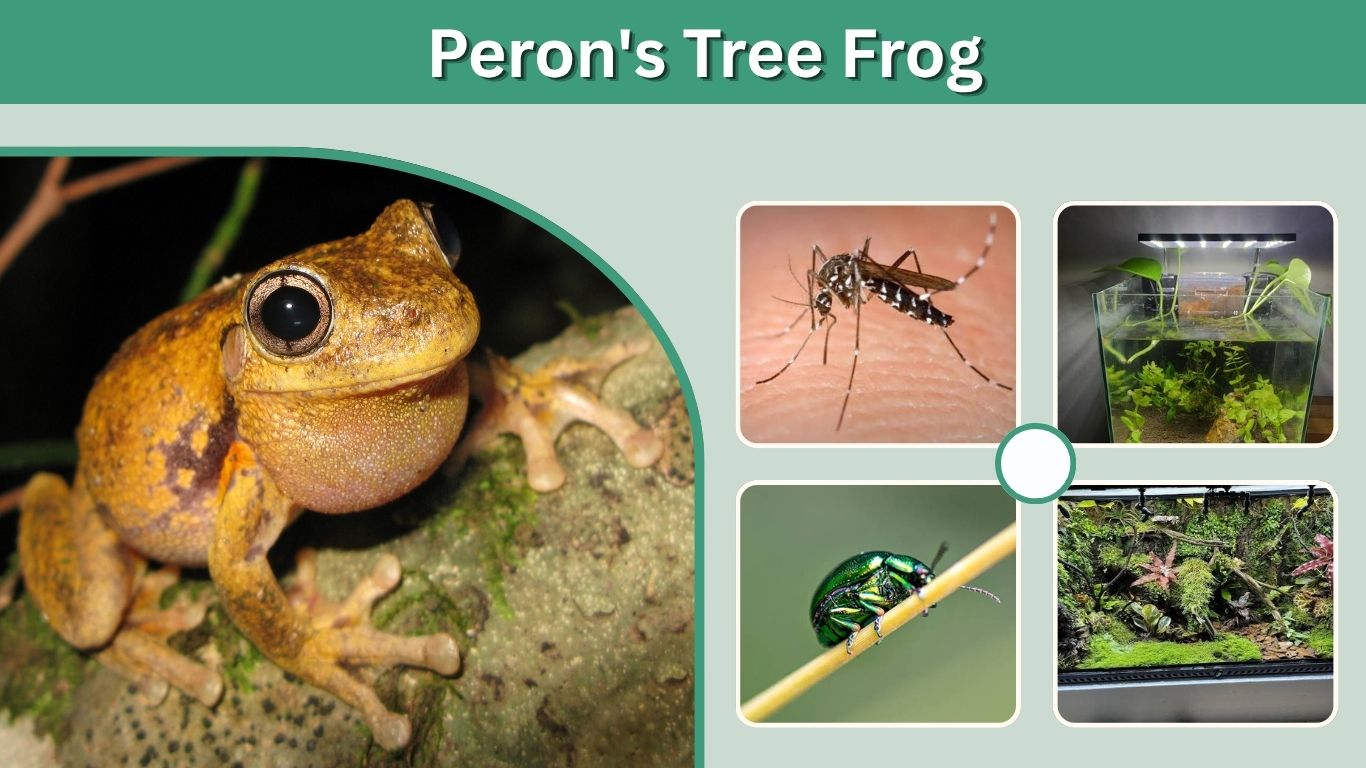
Peron’s tree frog is a fascinating Australian amphibian known for its distinctive cross-shaped pupils, changing body colors, and unusual laughing call. Also called the laughing tree frog or emerald-spotted tree frog, this species commonly inhabits forests, wetlands, and suburban gardens across eastern Australia. Its excellent climbing abilities and unique appearance make it particularly interesting to wildlife enthusiasts. Understanding Peron’s tree frog appearance, habitat, diet, breeding behavior, lifespan, and care requirements helps explain how this remarkable amphibian survives in natural and human-influenced environments.
What Is Peron’s Tree Frog?
Peron’s tree frog (Pengilleyia peronii, formerly Litoria peronii) is a medium-sized Australian tree frog. It belongs to the family Pelodryadidae and is recognized for its distinctive eyes, impressive climbing abilities, and unusual vocalizations.
The species is also known as the laughing tree frog because its call resembles a strange, drawn-out laugh. Although many older wildlife guides use the scientific name Litoria peronii, updated classifications recognize Pengilleyia peronii.
Unlike strictly forest-dwelling amphibians, Peron’s tree frogs adapt to various environments, including suburban gardens, agricultural areas, and woodlands.
What Does Peron’s Tree Frog Look Like?
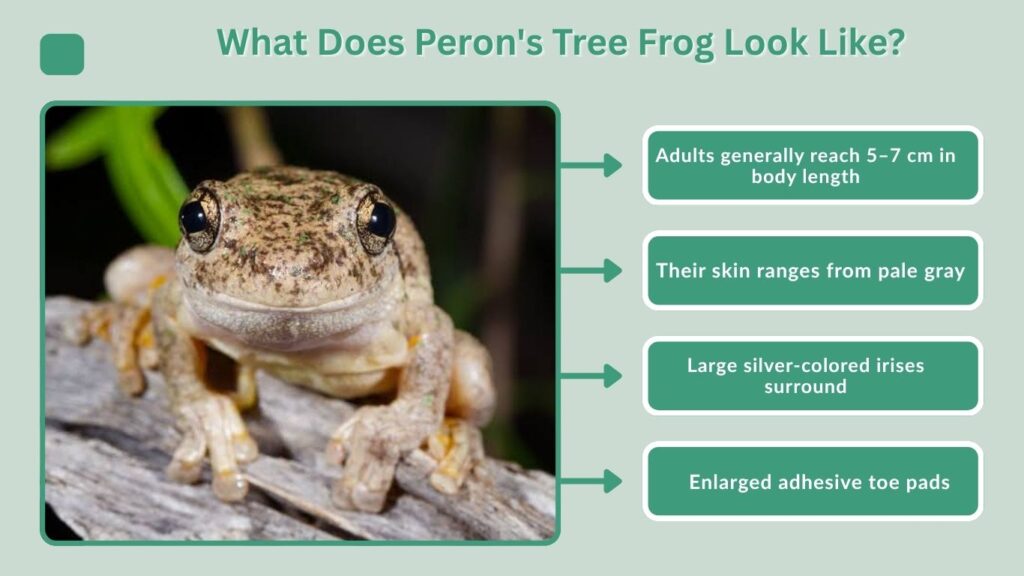
Peron’s tree frogs have an unusual appearance that distinguishes them from many Australian amphibians. Their ability to change coloration helps them blend into bark, leaves, and other natural surroundings.
Identification and Physical Characteristics
- Size: Adults generally reach 5–7 cm in body length.
- Color: Their skin ranges from pale gray and greenish-gray to reddish-brown, often featuring tiny emerald-green spots.
- Eyes: Large silver-colored irises surround distinctive cross-shaped pupils.
- Legs: Bright yellow and black markings appear around the thighs, groin, and armpits.
- Feet: Enlarged adhesive toe pads help these frogs climb trees, walls, and vegetation.
Their bellies are usually cream or white. Male frogs may also display yellowish throat coloration.
The combination of silver eyes and cross-shaped pupils is particularly useful when identifying this species.
Are Peron’s Tree Frogs Poisonous?
Peron’s tree frogs are not considered poisonous or dangerous to humans. Unlike highly toxic amphibians, they are not known to produce harmful defensive secretions that pose a significant poisoning risk through normal contact.
However, handling any wild frog requires precautions. Amphibians can carry bacteria such as Salmonella, which may cause illness if transferred to the mouth or food.
For safe interactions:
- Avoid unnecessary handling of wild frogs.
- Wash your hands after contact.
- Never touch frogs with hands covered in soap, sunscreen, or chemicals.
- Keep frogs away from your mouth and food preparation areas.
Their delicate, absorbent skin makes excessive handling potentially harmful to the frogs themselves.
Peron’s Tree Frog Call and Sound
Peron’s tree frog has one of the most recognizable calls among Australian frogs. Its distinctive vocalization is frequently described as a strange, maniacal laugh or an electrical drilling sound.
Male frogs produce loud, drawn-out, pulsing calls that often increase in intensity before ending abruptly. These sounds serve primarily to attract females during the breeding season.
Calling activity generally increases during spring and summer, particularly after rainfall. Males may call from vegetation, tree cavities, drainpipes, or locations near breeding ponds.
Although primarily active at night, Peron’s tree frogs sometimes call during daylight hours.
Peron’s Tree Frog Habitat and Distribution
Peron’s tree frogs inhabit numerous environments across eastern and southeastern Australia. They occur in southeastern Queensland, New South Wales, the Australian Capital Territory, Victoria, and parts of southeastern South Australia.
Their preferred habitats include forests, woodlands, grasslands, wetlands, and suburban areas.
These adaptable amphibians commonly shelter in tree hollows, loose bark, garden vegetation, and fallen logs during daylight hours. At night, they become active and search for food.
Although adults spend considerable time climbing trees, access to suitable freshwater habitats is essential for reproduction.
Breeding frequently occurs in ponds, dams, swamps, temporary pools, and slow-moving creek environments.
What Do Peron’s Tree Frogs Eat?
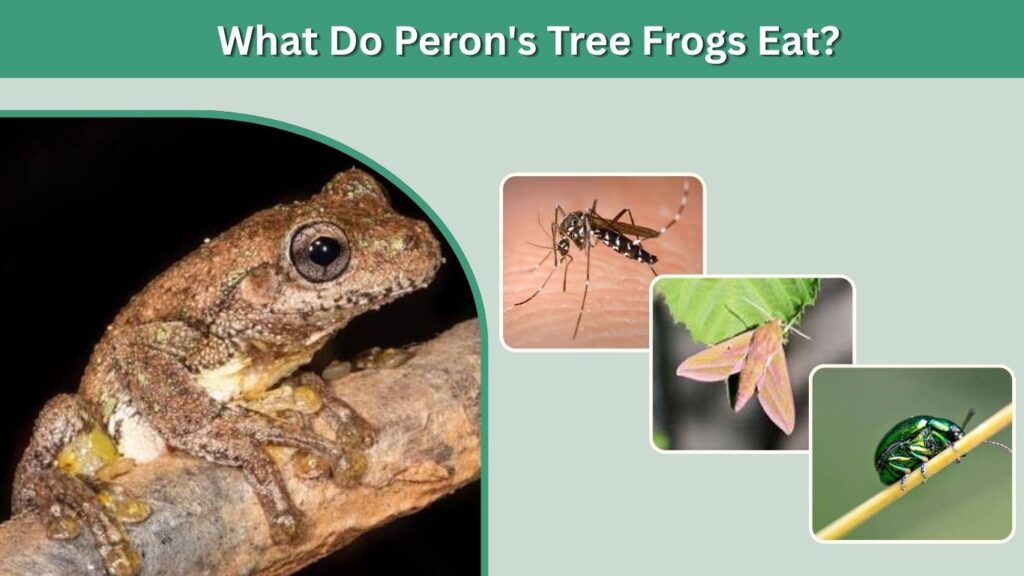
Peron’s tree frogs are carnivorous amphibians that feed primarily on insects and other small invertebrates.
Their natural diet includes:
- Moths and flies
- Crickets and grasshoppers
- Small beetles
- Other suitably sized insects
- Various small invertebrates
These frogs are mainly nocturnal hunters. They remain motionless until suitable prey approaches, then capture it using their sticky tongues.
In suburban environments, they sometimes gather near outdoor lights where insects are abundant.
By feeding on insects, Peron’s tree frogs contribute to natural food-web balance. Captive individuals require appropriately sized live prey rather than ordinary household food.
Peron’s Tree Frog Breeding and Life Cycle
Peron’s tree frogs reproduce primarily during warmer months, especially in spring and summer following rainfall. Breeding activity begins when males gather near freshwater habitats and produce their characteristic calls to attract females.
Eggs and Mating Behavior
After mating, females deposit eggs individually or in small groups, usually attaching them to submerged vegetation or twigs.
Suitable breeding locations include ponds, dams, swamps, creek pools, and temporary water bodies.
The eggs develop underwater, eventually hatching into small aquatic tadpoles.
Tadpoles and Development
Peron’s tree frog tadpoles can reach approximately 8.5 cm in total length, including their tails. They are generally golden-colored with three distinctive dark stripes running lengthwise along their bodies.
They often swim close to the water’s surface and gradually develop legs as they approach metamorphosis.
The transformation from tadpole to young frog usually takes approximately three to four months, depending on environmental conditions.
After metamorphosis, young frogs leave the water and begin their terrestrial and climbing lifestyle.
Peron’s Tree Frog Lifespan and Conservation Status
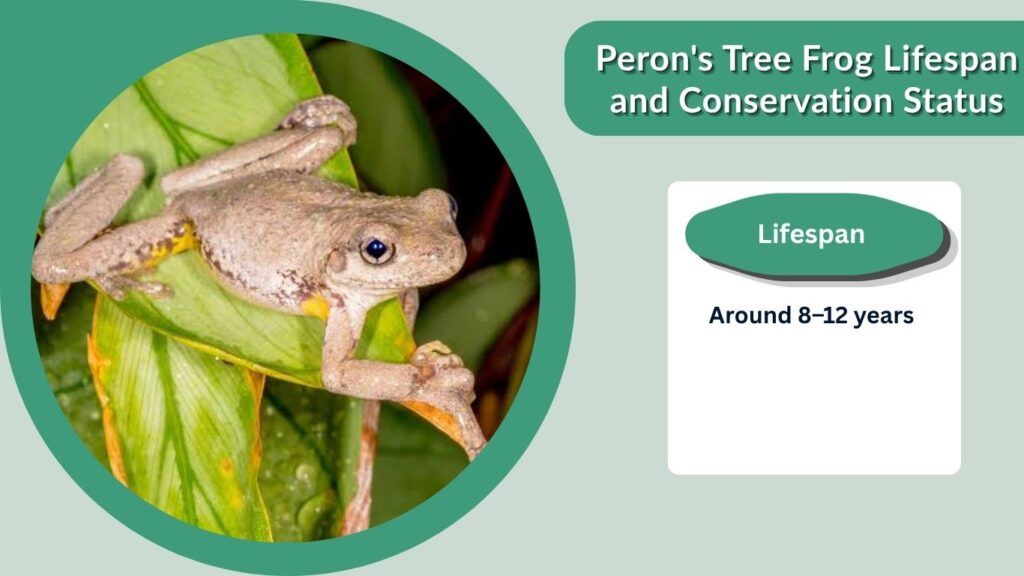
The exact average lifespan of Peron’s tree frogs in the wild is not well documented. Captive-care estimates sometimes suggest around 8–12 years, although this range is not established as a scientifically verified species average.
Their survival depends on suitable habitat, food availability, environmental conditions, and exposure to predators or diseases.
Are Peron’s Tree Frogs Endangered?
Peron’s tree frog is currently classified as Least Concern on the IUCN Red List. The species has a relatively broad distribution and occupies numerous habitat types.
Nevertheless, habitat destruction, polluted waterways, pesticides, and amphibian diseases can threaten local frog populations.
Protecting freshwater habitats and maintaining native vegetation around ponds can support these amphibians and other wildlife.
How to Keep Peron’s Tree Frog as a Pet
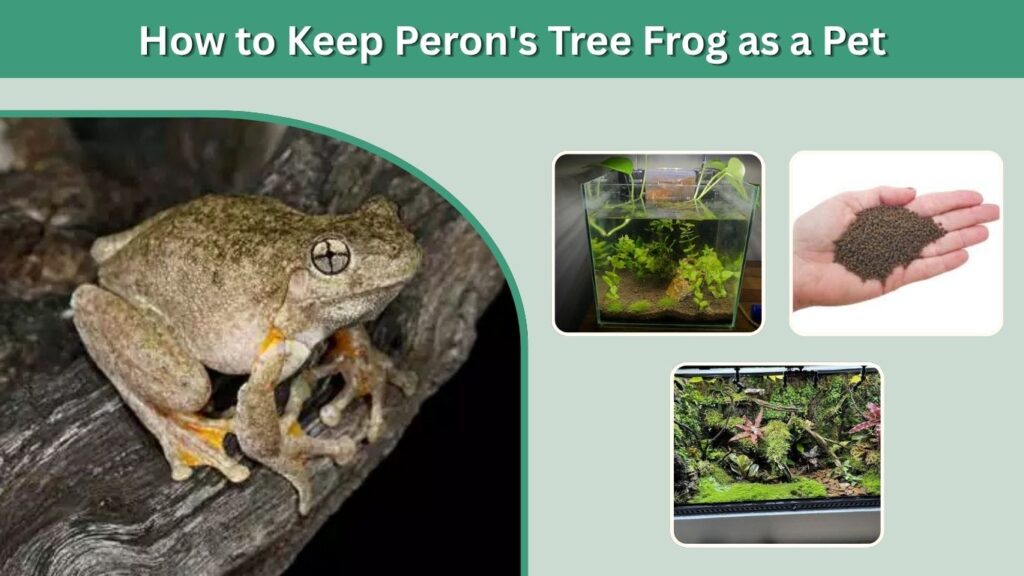
Peron’s tree frogs can be kept in captivity where permitted, but responsible ownership requires suitable housing, regular maintenance, and appropriate feeding.
Their sensitivity to environmental conditions means they are better suited to keepers willing to research amphibian husbandry.
Tank Setup and Care Requirements
A vertically oriented, escape-proof terrarium should provide sufficient room for climbing and movement.
Include sturdy branches, suitable plants, shaded hiding locations, and a shallow container of clean, dechlorinated water.
Maintain appropriate temperature, ventilation, and humidity while avoiding extreme heat and direct sunlight. Requirements should be confirmed with an experienced amphibian keeper or veterinarian.
Feed suitably sized, commercially bred live insects and maintain a clean enclosure. Avoid excessive handling because frogs have sensitive skin.
Important: Australian native frogs are protected. Licensing and permitted species vary by state or territory. In New South Wales, native pet frogs must come from authorized captive-bred sources, and taking wild frogs is prohibited. Always check local regulations before purchasing one.
FAQs
1. Can Peron’s Tree Frogs Change Color?
Yes, Peron’s tree frogs can change their body color from pale gray or greenish-gray to reddish-brown. This ability helps them blend into tree bark, leaves, and surrounding environments. Their coloration may change depending on temperature, lighting, and environmental conditions.
2. Do Peron’s Tree Frogs Bite Humans?
Peron’s tree frogs rarely bite humans because they are naturally shy and non-aggressive amphibians. When disturbed, they usually attempt to escape rather than defend themselves. Although they are generally harmless, unnecessary handling should be avoided to protect their sensitive skin.
3. Are Peron’s Tree Frogs Found in Victoria?
Yes, Peron’s tree frogs are commonly found throughout suitable habitats in Victoria, Australia. They inhabit forests, woodlands, wetlands, and suburban gardens. These adaptable amphibians often shelter in tree hollows, beneath loose bark, and around vegetation near freshwater breeding sites.
4. Can Peron’s Tree Frogs Live in Gardens?
Yes, Peron’s tree frogs can live in suburban gardens that provide suitable shelter, insects, and access to freshwater. Gardens with native plants, trees, ponds, and minimal pesticide use offer favorable conditions. They often become more active during warm, rainy nights.
5. How Big Do Peron’s Tree Frogs Grow?
Adult Peron’s tree frogs typically grow between 5 and 7 centimeters in body length. Females are generally larger than males. Despite their relatively small size, they have long legs and adhesive toe pads that allow them to climb trees and other surfaces.
