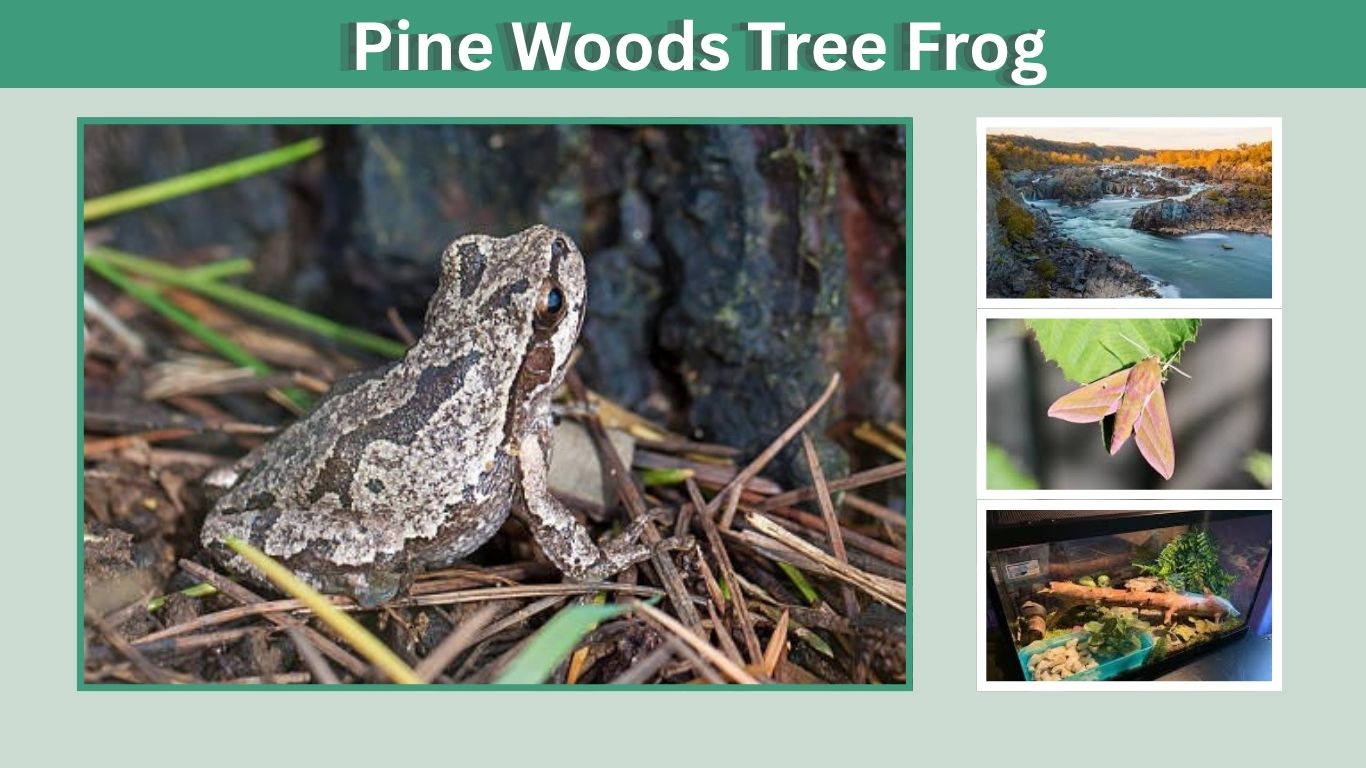
The Pine Woods Tree Frog is a small native frog found across much of the southeastern United States. It is best known for its sharp, clicking call that sounds a little like Morse code. Many people notice this frog in Florida, Louisiana, South Carolina, and other pine-rich areas after warm rain. This guide explains how to identify the Pine Woods Tree Frog, where it lives, what it eats, whether it is poisonous, and how it compares with similar frogs like the Cuban Tree Frog.
What Is a Pine Woods Tree Frog?
The Pine Woods Tree Frog is a small treefrog that lives in pine forests, wetlands, and wooded areas near shallow water. It is often easier to hear than see because its call can be loud during warm, wet nights. This frog is native, useful, and an important part of southeastern wetland ecosystems.
Scientific Name and Family
The Pine Woods Tree Frog is commonly known by the scientific name Hyla femoralis, though some sources may also list it as Dryophytes femoralis. It belongs to the family Hylidae, which includes many treefrogs. Like other treefrogs, it has sticky toe pads that help it climb plants, shrubs, and tree trunks.
Common Names
People use several names for this frog, which can make searches confusing. Common versions include:
- Pine Woods Tree Frog
- Pinewoods Treefrog
- Pine Wood Tree Frog
- Pine Wood’s Tree Frog
- Morse code frog
The “Morse code frog” nickname comes from its fast, tapping call. This sound is one of the easiest ways to recognize the species during breeding season.
Pine Woods Tree Frog Identification
The Pine Woods Tree Frog can be hard to spot because its body color blends well with tree bark, pine needles, and wetland plants. It is a small native treefrog with a slim body, climbing toe pads, and hidden markings on the thighs. These simple clues can help you tell it apart from larger frogs, toads, and invasive Cuban Tree Frogs.
- Size: Small, usually about 1 to 1.5 inches long.
- Body shape: Slim and lightweight, not large or chunky.
- Color: Gray, brown, tan, greenish, or mottled.
- Skin texture: Fairly smooth compared with most toads.
- Toe pads: Rounded toe pads help it climb plants and trees.
- Thigh spots: Pale yellow, whitish, or orange spots may appear on the hidden back of the thighs.
- Leg color: Usually does not have bright red legs.
- Call clue: Fast clicking call that sounds like Morse code.
- Habitat clue: Often found near pine flatwoods, wetlands, ditches, and temporary pools.
- Florida clue: If the frog is very large and bulky, it may be a Cuban Tree Frog instead.
Pine Woods Tree Frog Call and Sound
The call is one of the most searched features of this frog because many people hear it before they ever see it. Pine Woods Tree Frogs often call from wet areas after rain. Their sound can carry through pine woods, swamps, ditches, and temporary pools during the breeding season.
What Does a Pine Woods Tree Frog Sound Like?
The Pine Woods Tree Frog call is a fast, dry, clicking sound. Many people describe it as “kek-kek-kek” or a tapping noise. Because the notes are short and repeated, the call is often compared to Morse code. This makes the frog easier to recognize at night, even when it is hidden in vegetation.
Pine Woods Tree Frogs Call When?
Pine Woods Tree Frogs usually call during warm, humid weather. Calling is most common in spring, summer, and early fall, especially after rain. Males call to attract females and often gather near shallow water where breeding can take place.
They may call from:
- Shrubs near wetlands
- Pine trees and low branches
- Grasses around temporary pools
- Ditches, swamps, and wet flatwoods
- Vegetation near fishless water
Where Do They Call From?
Males usually call close to breeding water, but they do not always sit directly in the water. They may call from plants, tree trunks, shrubs, or low branches nearby. In pine flatwoods, their calls may seem to come from all directions because many frogs can call at the same time after heavy rain.
Pine Woods Tree Frog Range
The Pine Woods Tree Frog is mostly a southeastern species. It is strongly linked with the Atlantic and Gulf Coastal Plain, where pine forests, wet flatwoods, swamps, and temporary wetlands are common. Its range includes several states, and local searches often come from people in Florida, Louisiana, and the Carolinas.
General Range in the United States
This frog occurs across much of the southeastern United States. Its range includes areas from Virginia and the Carolinas south through Georgia and Florida, then west along the Gulf Coast through Alabama, Mississippi, and Louisiana. It is most often associated with warm, moist habitats that have trees, shrubs, and nearby shallow breeding water.
Pine Woods Tree Frog in Florida
The Pine Woods Tree Frog is native to Florida and can be found in many suitable habitats across the state. It may live in pine flatwoods, wet prairies, cypress edges, swamps, roadside ditches, and wooded wetlands. In Florida, people may also see it near homes, porches, gardens, and outdoor lights where insects gather.
Louisiana Pine Wood Tree Frogs
Louisiana is also part of the Pine Woods Tree Frog’s natural range. In Louisiana, it is most likely found around pine woods, wetland edges, temporary pools, and humid forested areas. After rain, males may call loudly from vegetation near shallow water. Like in Florida, these frogs are part of the local native wildlife and should be left in their habitat.
Pine Woods Tree Frog Habitat
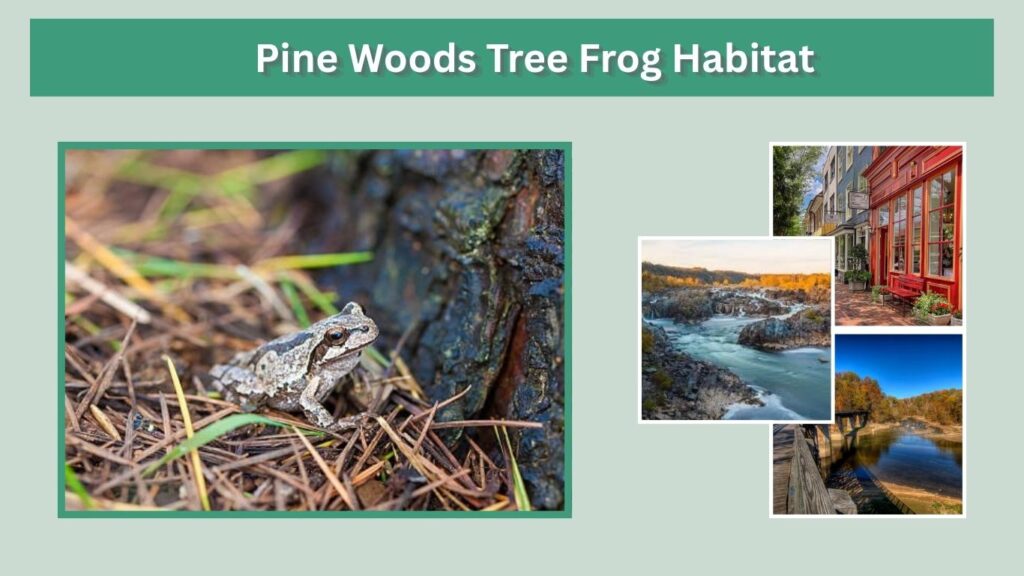
The Pine Woods Tree Frog lives in warm, moist habitats where trees and shallow water are close together. It is strongly linked with pine ecosystems, but it can also appear around swamps, ditches, wet prairies, and wooded wetlands. The best habitat usually has cover, insects, humidity, and temporary water for breeding.
Pine Flatwoods and Pine Forests
Pine flatwoods are one of the most important habitats for this frog. These areas often have pine trees, shrubs, grasses, and seasonal wet spots. The frog can hide on bark, leaves, and low plants during the day, then become more active at night when humidity rises.
Wetlands, Ditches, and Temporary Pools
Breeding usually happens near shallow water. Temporary pools are especially useful because they often have fewer fish that would eat eggs and tadpoles. Pine Woods Tree Frogs may also use roadside ditches, marsh edges, swampy areas, wet prairies, and small rain-filled depressions after storms.
Shelter and Daily Hiding Places
During dry or hot weather, Pine Woods Tree Frogs need protected places where they can avoid drying out. They may hide in bark crevices, under leaves, inside low vegetation, or near moist ground cover. These hiding places protect them from heat, birds, snakes, and other predators.
Pine Woods Tree Frog Diet and Food
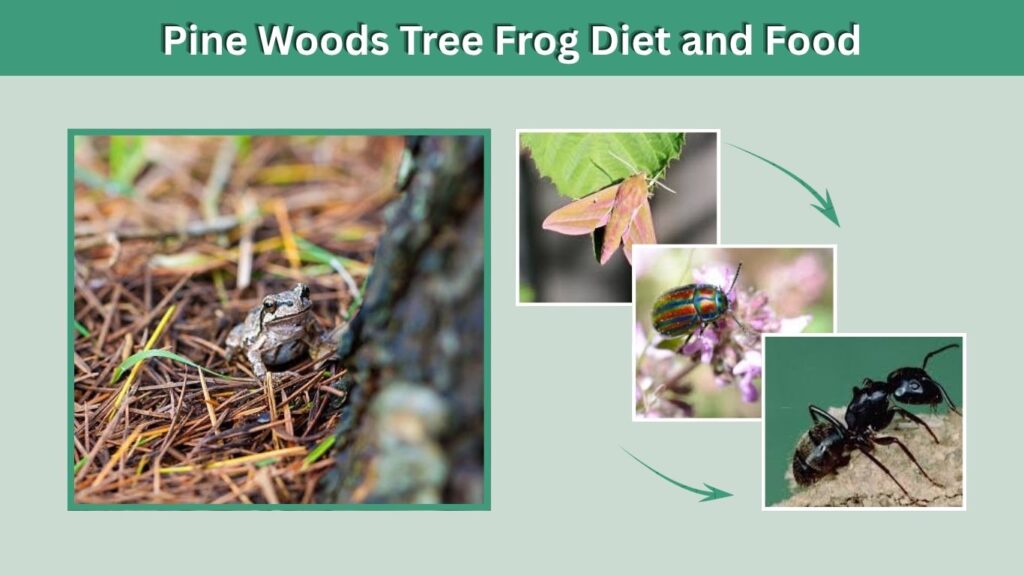
The Pine Woods Tree Frog is a small insect-eating amphibian. Its diet changes slightly by age, but adults mainly hunt tiny moving prey at night. Because they eat many small insects, they are helpful animals in natural areas, gardens, and wetland edges where insects are common.
What Do Pine Woods Tree Frogs Eat?
Adult Pine Woods Tree Frogs eat small insects and other tiny invertebrates. Their food may include:
- Small flies
- Moths
- Beetles
- Ants
- Mosquitoes
- Small crickets
- Soft-bodied insects
- Tiny spiders and other small arthropods
They usually wait on plants, shrubs, or tree surfaces and snap up prey that comes close. Outdoor lights may attract insects, which can also attract small frogs hunting nearby.
Baby Pine Woods Tree Frog Diet
Baby Pine Woods Tree Frogs begin life as tadpoles in water. Tadpoles may feed on algae, tiny organic matter, and small particles in their aquatic habitat. After metamorphosis, young froglets leave the water and begin eating very small live insects. Because they are tiny, they need prey much smaller than adult frogs can handle.
Are Pine Woods Tree Frogs Poisonous?
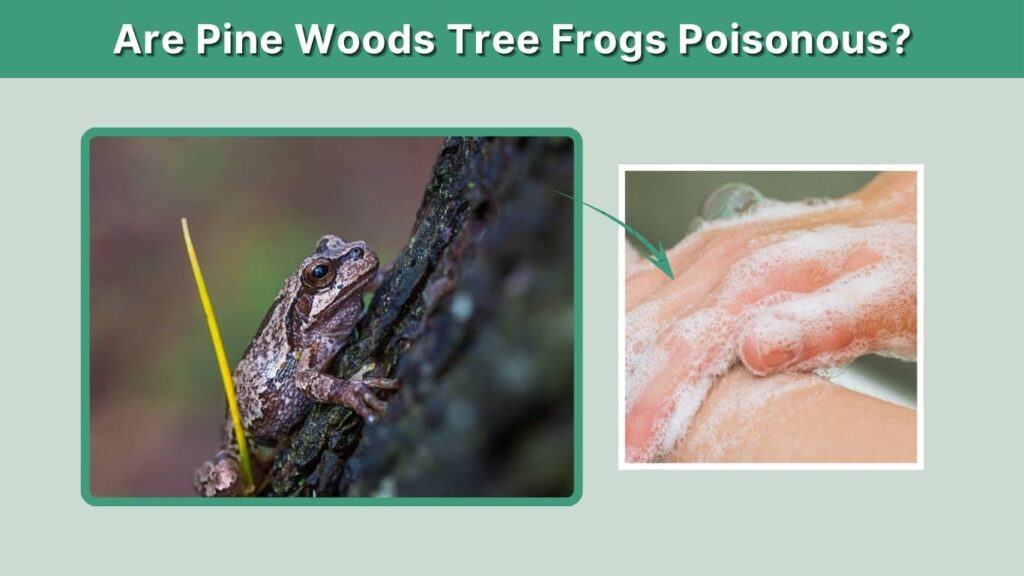
Many people ask whether Pine Woods Tree Frogs are poisonous because they find them near homes, gardens, porches, or pets. These frogs are not considered dangerous to people. However, like many amphibians, they have sensitive skin and may produce mild secretions, so they should be handled carefully or not handled at all.
Are They Dangerous to Humans?
Pine Woods Tree Frogs are not considered dangerously poisonous to humans. Touching one is unlikely to cause serious harm, but it is still better to avoid unnecessary handling. Amphibians absorb chemicals through their skin, so soap, lotion, sunscreen, bug spray, or dirty hands can harm them.
Safe Handling Advice
The safest choice is to observe the frog without touching it. If you must move one out of danger, use clean, wet hands and keep handling brief. Afterward, wash your hands with soap and water. Never pick up a frog with dry hands, and never keep a wild frog as a toy or temporary pet.
Pine Woods Tree Frog vs Cuban Tree Frog
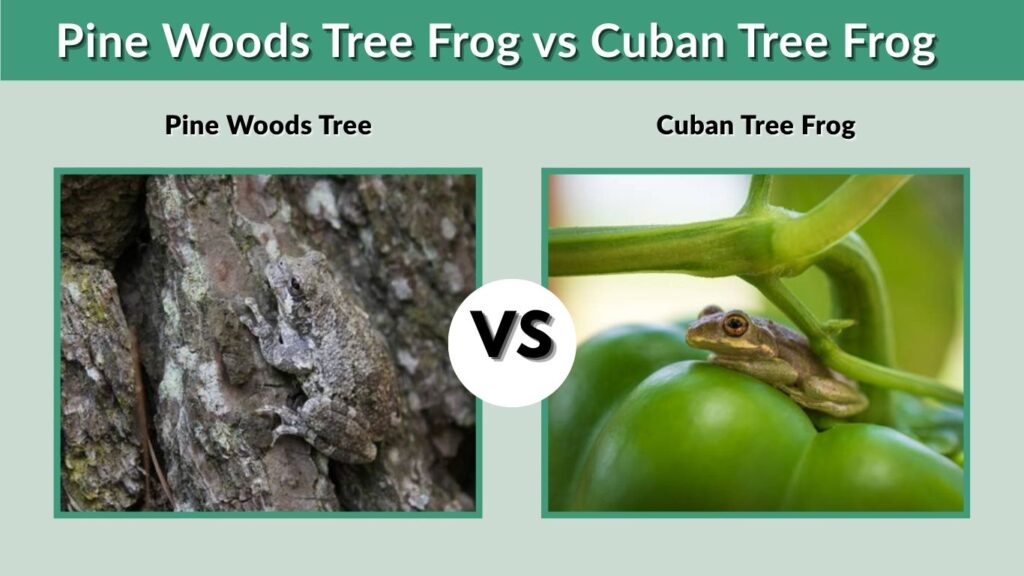
In Florida, many people confuse Pine Woods Tree Frogs with Cuban Tree Frogs. This matters because Pine Woods Tree Frogs are native, while Cuban Tree Frogs are invasive in Florida. Learning the difference helps homeowners protect native frogs and avoid misidentifying harmless local wildlife.
Size and Shape Differences
Pine Woods Tree Frogs are small, slim, and usually about 1 to 1.5 inches long. Cuban Tree Frogs are much larger and bulkier. A Cuban Tree Frog may look oversized compared with most native treefrogs and often has a wider head, bigger toe pads, and a heavier body.
Native vs Invasive
The Pine Woods Tree Frog is native to the southeastern United States. The Cuban Tree Frog is not native to Florida and is considered invasive. Cuban Tree Frogs can eat native frogs, compete for shelter, and spread into human areas such as porches, sheds, bathrooms, and plant pots.
Quick Identification Clues
Use these clues when comparing the two frogs:
- Small and slender body: likely Pine Woods Tree Frog
- Large and chunky body: likely Cuban Tree Frog
- Pale hidden thigh spots: Pine Woods Tree Frog clue
- Very large toe pads and warty skin: Cuban Tree Frog clue
- Found in pine wetlands after rain: often Pine Woods Tree Frog
- Found inside buildings or toilets in Florida: often Cuban Tree Frog
Pine Woods Tree Frog vs Pine Barrens Tree Frog
Pine Woods Tree Frogs and Pine Barrens Tree Frogs are different species, even though their names sound similar. Both can be connected with pine habitats, but they do not look exactly the same and they do not have the same range. This is important for searches related to Weymouth Woods, North Carolina.
Are They the Same Frog?
No, they are not the same frog. The Pine Woods Tree Frog is usually small, mottled, and known for pale spots on the hidden thigh area. The Pine Barrens Tree Frog is usually brighter green and is known for a lavender side stripe and orange coloring on the hidden leg surfaces.
Pine Barrens Tree Frog in Weymouth Woods, NC
Weymouth Woods in North Carolina is often connected with Pine Barrens Tree Frog habitat. People searching for “pine barrens tree frog Weymouth Woods NC” may be looking for that species rather than the Pine Woods Tree Frog. The Pine Barrens Tree Frog is more localized and tied to special habitats such as sandhills, pine barrens, bogs, and Carolina bays.
Pine Woods Tree Frog Care
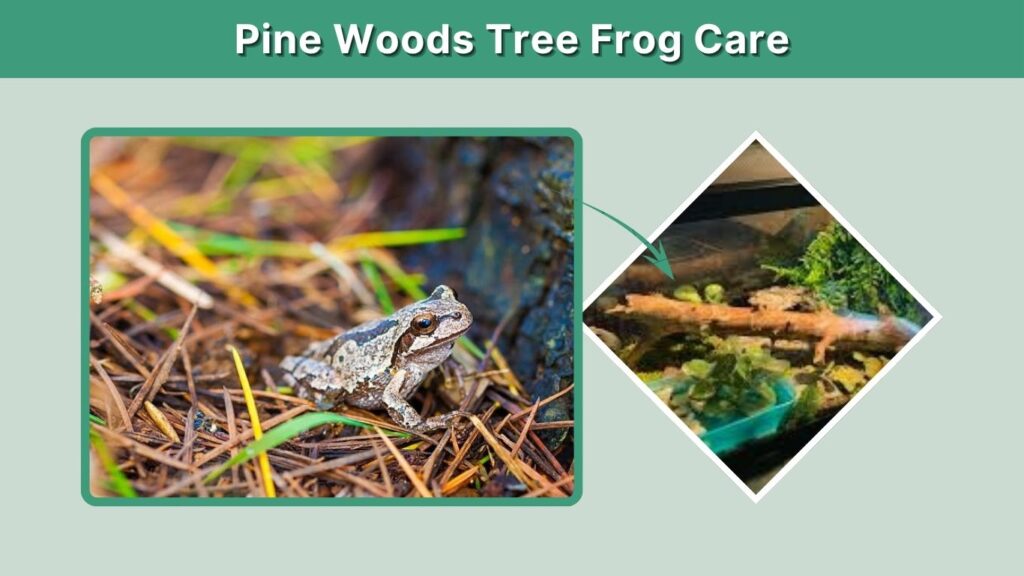
Wild Pine Woods Tree Frogs are best left in nature. Although some people search for care information or frogs for sale, native frogs often do poorly in captivity and may be protected by local rules. A better choice is to protect habitat and make your yard safer for native amphibians.
Can You Keep a Pine Woods Tree Frog as a Pet?
It is not a good idea to collect a Pine Woods Tree Frog from the wild. Wild frogs can become stressed, may carry parasites, and need very specific humidity, temperature, and food conditions. Local wildlife laws may also limit or ban collecting native amphibians.
Pine Woods Tree Frog for Sale
If someone wants a pet frog, they should avoid wild-caught Pine Woods Tree Frogs. A legal, captive-bred species from a responsible breeder is a safer and more ethical option. Native frogs should remain in their ecosystem, where they help control insects and support the food chain.
Better Way to Help Them
You can support Pine Woods Tree Frogs by making outdoor spaces more frog-friendly:
- Avoid pesticides near wetlands and gardens
- Keep native plants and leaf litter
- Protect shallow seasonal water areas
- Do not move frogs far from where you found them
- Keep pets away from breeding pools
- Avoid draining temporary wetlands
FAQs
Are Pine Woods Tree Frogs poisonous?
Pine Woods Tree Frogs are not considered dangerously poisonous to humans. Like many frogs, they may have mild skin secretions, so it is best not to handle them unless necessary. If you touch one, wash your hands afterward and avoid touching your eyes or mouth.
What do Pine Woods Tree Frogs eat?
Pine Woods Tree Frogs mainly eat small insects and tiny invertebrates. Their diet may include flies, moths, beetles, ants, mosquitoes, small crickets, and soft-bodied bugs. Baby froglets eat very tiny live insects after leaving the tadpole stage.
What does a Pine Woods Tree Frog call sound like?
The Pine Woods Tree Frog call sounds like a fast clicking or tapping noise. Many people describe it as “kek-kek-kek” or compare it to Morse code. Males usually call during warm, humid nights, especially after rain near temporary pools or wetlands.
Are Pine Woods Tree Frogs found in Florida?
Yes, Pine Woods Tree Frogs are native to Florida. They can live in pine flatwoods, wet prairies, cypress edges, swamps, wooded wetlands, ditches, and areas near temporary water. In Florida, they may also appear near homes, gardens, porches, and outdoor lights.
How do you tell a Pine Woods Tree Frog from a Cuban Tree Frog?
Pine Woods Tree Frogs are small, slim native frogs with pale hidden thigh spots. Cuban Tree Frogs are usually much larger, bulkier, and invasive in Florida. If the frog is very large, has oversized toe pads, and appears around buildings, it may be a Cuban Tree Frog.
