
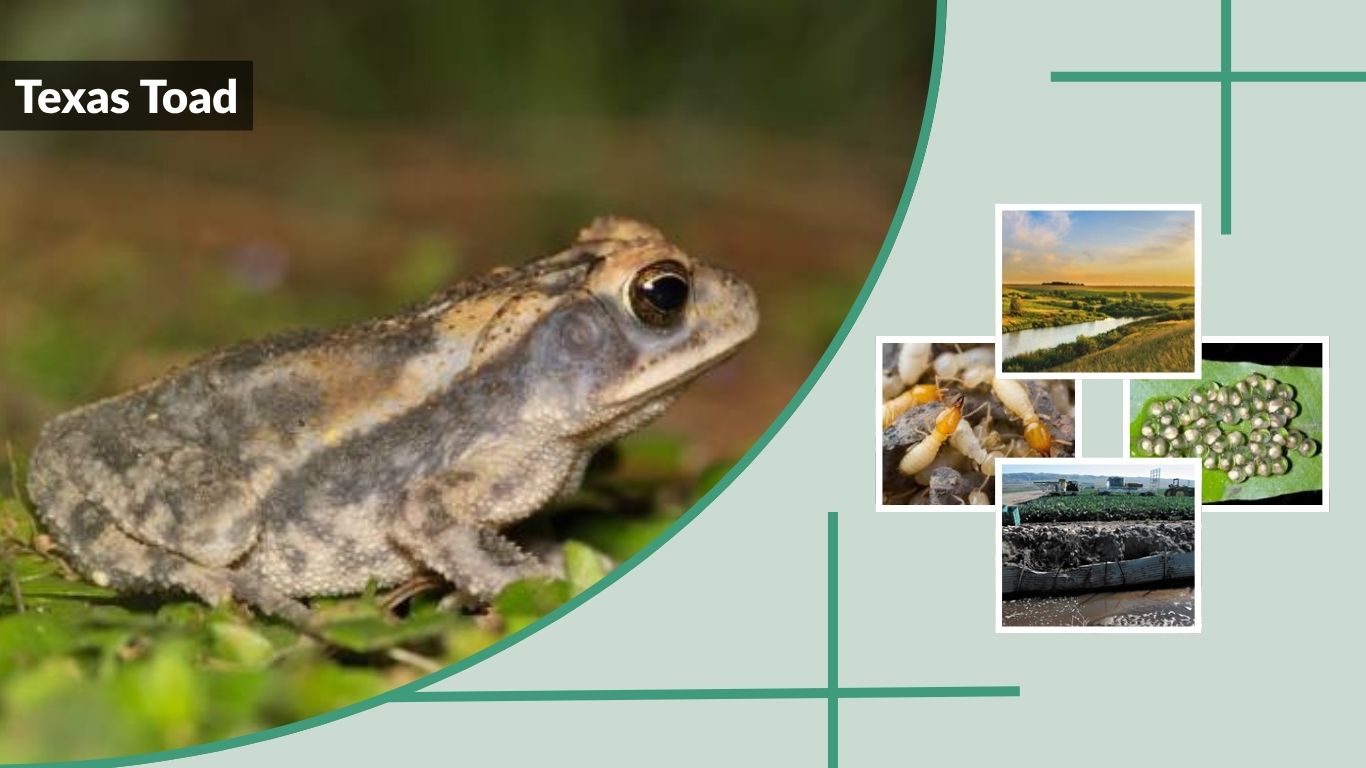
The Texas toad (Anaxyrus speciosus) is a fascinating amphibian native to the southern United States, particularly Texas. Known for its warty skin, nocturnal habits, and important ecological role, this species helps control insect populations and contributes to healthy ecosystems. Although often overlooked, the Texas toad possesses remarkable adaptations that allow it to survive in dry environments. Understanding its habitat, behavior, and feeding habits provides valuable insight into one of Texas’s most common yet interesting amphibians.
What Is a Texas Toad?
The Texas toad is a medium-sized amphibian belonging to the true toad family. It is commonly found throughout much of Texas, where it inhabits grasslands, prairies, and open woodlands. This species is well adapted to warm climates and spends much of its life hidden underground or beneath vegetation to conserve moisture.
Scientific Classification
The Texas toad is scientifically known as Anaxyrus speciosus. It belongs to the Bufonidae family, which includes many species of true toads found throughout the world. Scientists recognize it as one of the most widespread amphibians in Texas.
Physical Description
Texas toads have stout bodies, short legs, and rough, warty skin. Their coloration varies from gray and brown to olive shades, helping them blend into their surroundings. A light stripe often runs down the center of the back, making identification easier.
How It Differs From Other Toads
Several characteristics distinguish the Texas toad from similar species:
- Prominent cranial ridges behind the eyes
- Distinct light-colored stripe along the back
- Relatively compact body shape
- Adaptation to drier habitats
- Unique breeding calls during mating season
Physical Characteristics of the Texas Toad
The Texas toad possesses several physical adaptations that help it survive in challenging environments. Its body structure and skin features provide protection from predators, reduce water loss, and improve camouflage in natural habitats.
Average Size and Weight
Adult Texas toads typically measure between 2 and 4 inches in length. Females are generally larger than males, especially during the breeding season. Their sturdy build helps them thrive in a variety of environmental conditions.
Skin and Coloration
The skin of a Texas toad is covered with small bumps commonly referred to as warts. These bumps do not cause warts in humans but serve important biological functions. Color patterns help the toad remain hidden from predators while resting on soil or among vegetation.
Adaptations for Survival
Several physical traits contribute to the species’ success:
- Warty skin that helps reduce moisture loss
- Camouflaged coloration for concealment
- Powerful hind legs for short bursts of movement
- Parotid glands that produce defensive secretions
- Strong digging ability for burrowing
Texas Toad Habitat and Distribution
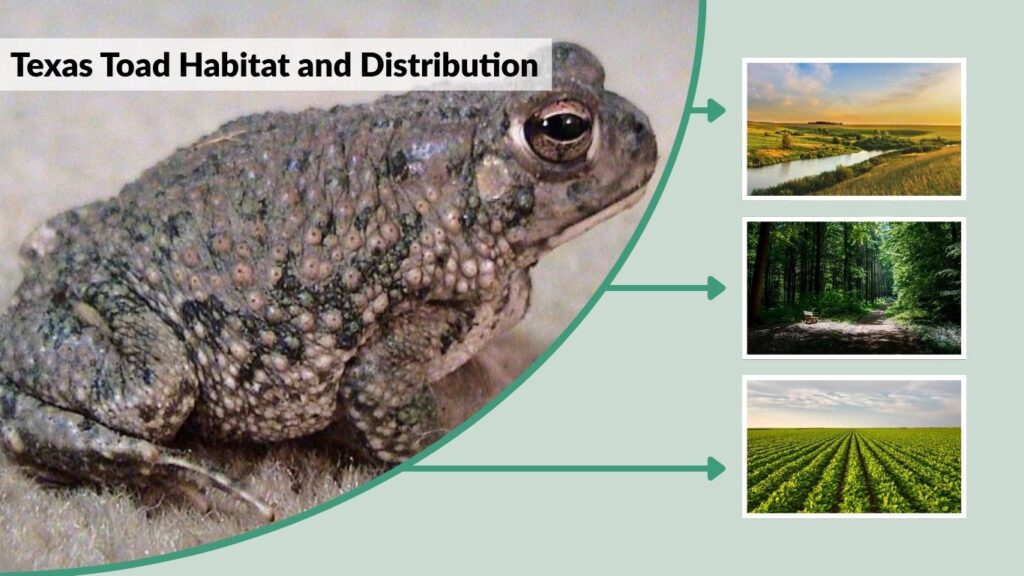
The Texas toad occupies a wide range of habitats across its geographic range. Its ability to tolerate heat and periods of dryness allows it to survive in areas where many amphibians struggle.
Where Texas Toads Live
Texas toads are most commonly found in central and southern Texas, although their range extends into neighboring regions. They favor open habitats with loose soil and adequate shelter.
Preferred Habitat Conditions
Ideal environments for Texas toads include:
- Native grasslands
- Prairies
- Open woodlands
- Agricultural fields
- Suburban landscapes with natural vegetation
These habitats provide access to food, breeding locations, and protection from extreme temperatures.
Seasonal Habitat Changes
Texas toads become more active during warm and rainy periods. During extended dry conditions, they often retreat underground where moisture levels remain higher. This behavior helps them avoid dehydration and extreme heat.
Texas Toad Diet and Feeding Habits
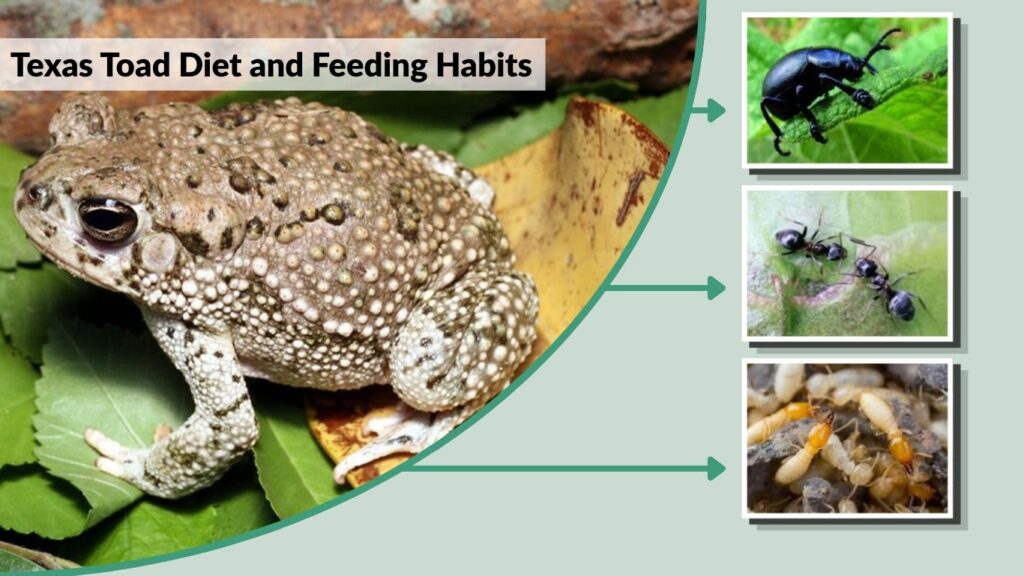
The Texas toad plays an important role in controlling insect populations. As an opportunistic feeder, it consumes a wide variety of small invertebrates and contributes to the ecological balance of its habitat.
What Do Texas Toads Eat?
The Texas toad primarily feeds on insects and other small invertebrates. Common prey items include beetles, ants, termites, spiders, and various crawling insects. Its diet changes depending on seasonal availability and habitat conditions.
Hunting Techniques
Unlike active predators that chase prey, Texas toads typically rely on ambush tactics. They remain motionless and wait for insects to approach before striking quickly with their sticky tongues. This feeding strategy conserves energy while maximizing hunting success.
Benefits to the Ecosystem
Texas toads provide several ecological benefits through their feeding activities:
- Control insect populations naturally
- Reduce agricultural pest numbers
- Support food web stability
- Help maintain ecosystem balance
- Serve as prey for larger wildlife species
Behavior and Daily Activities
The Texas toad exhibits behaviors that help it survive in hot and often unpredictable environments. Its daily routines are closely linked to temperature, humidity, and seasonal rainfall patterns.
Nocturnal Lifestyle
Texas toads are primarily nocturnal, meaning they are most active at night. Cooler nighttime temperatures reduce water loss and increase the availability of insect prey. During the day, they typically remain hidden beneath vegetation, rocks, or loose soil.
Burrowing Behavior
Burrowing is one of the Texas toad’s most important survival strategies. Using its hind legs, it can quickly dig into soft ground to escape predators, avoid extreme heat, and maintain proper moisture levels.
Communication Methods
Male Texas toads produce distinctive calls during the breeding season. These vocalizations attract females and help establish breeding territories. The calls are often heard after heavy rainfall when breeding activity is at its peak.
Texas Toad Reproduction and Life Cycle
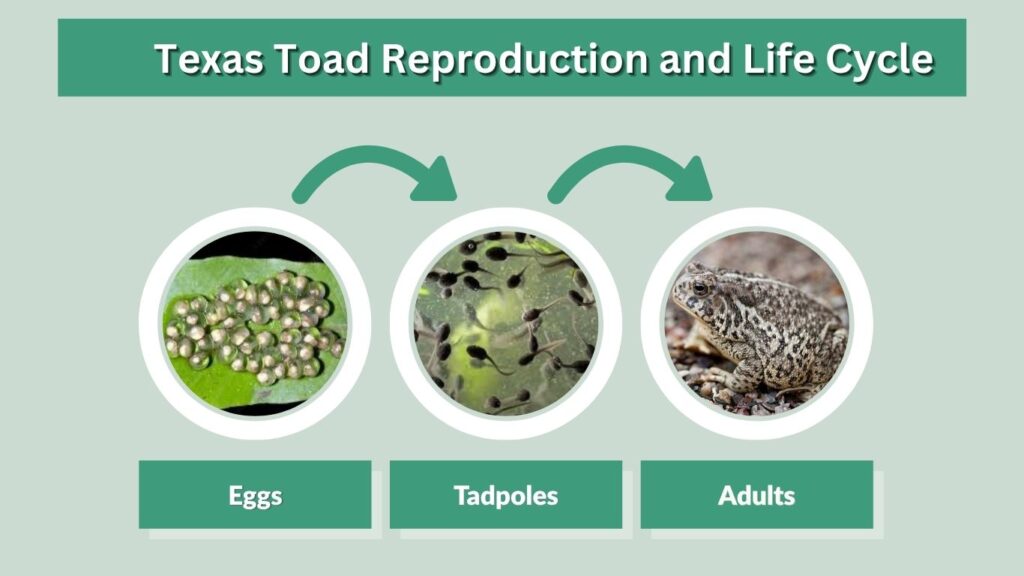
The Texas toad’s life cycle involves several stages, from egg to tadpole and finally to adulthood. Breeding activities are strongly influenced by rainfall and temperature. Seasonal ponds and temporary pools provide ideal environments for reproduction, allowing young to develop before water sources dry up.
Breeding Season
Texas toads typically breed during spring and summer, especially after heavy rains. Males gather near water sources and produce loud calls to attract females. Breeding activity often increases during warm, humid conditions.
Egg Development
After mating, females lay long strings of eggs in shallow water. These eggs are attached to underwater vegetation or other surfaces, where they remain protected until hatching.
Tadpole Stage
Newly hatched tadpoles live entirely in water and feed on algae and organic matter. During this stage, they undergo significant growth and development before transforming into juvenile toads.
Adult Development
As metamorphosis progresses, tadpoles develop legs and lungs while gradually losing their tails. Once transformation is complete, young toads leave the water and begin life on land. Most individuals reach maturity within a few years.
Predators and Defense Mechanisms
Like many amphibians, Texas toads face threats from a variety of predators. To survive, they rely on physical adaptations, camouflage, and chemical defenses that reduce their chances of being captured.
Common Predators
Several animals prey upon Texas toads throughout their lives:
- Snakes
- Birds of prey
- Raccoons
- Coyotes
- Large fish during the tadpole stage
Predation is particularly high among young toads, which are more vulnerable than adults.
Defensive Adaptations
Texas toads possess specialized glands behind their eyes called parotoid glands. These glands produce substances that can discourage predators from eating them. While not dangerous to humans under normal circumstances, these secretions can be irritating to some animals.
Survival Strategies
In addition to chemical defenses, Texas toads use behavioral strategies to avoid danger. Remaining motionless, blending into their surroundings, and quickly burrowing underground help them escape detection by predators.
Ecological Importance
Texas toads contribute significantly to the health of ecosystems. Their role as both predator and prey helps maintain balance within food webs and supports biodiversity across their range.
Role in Insect Population Control
By consuming large numbers of insects, Texas toads help reduce pest populations naturally. Their feeding habits benefit both natural ecosystems and agricultural areas by limiting the spread of harmful insects.
Importance in Food Chains
Texas toads serve as an important food source for many larger animals. Their presence supports a variety of predators and contributes to stable ecological relationships within their habitats.
Environmental Indicators
Because amphibians are sensitive to environmental changes, Texas toads often serve as indicators of ecosystem health. Population declines may signal habitat degradation, pollution, or other environmental problems.
Threats Facing Texas Toads
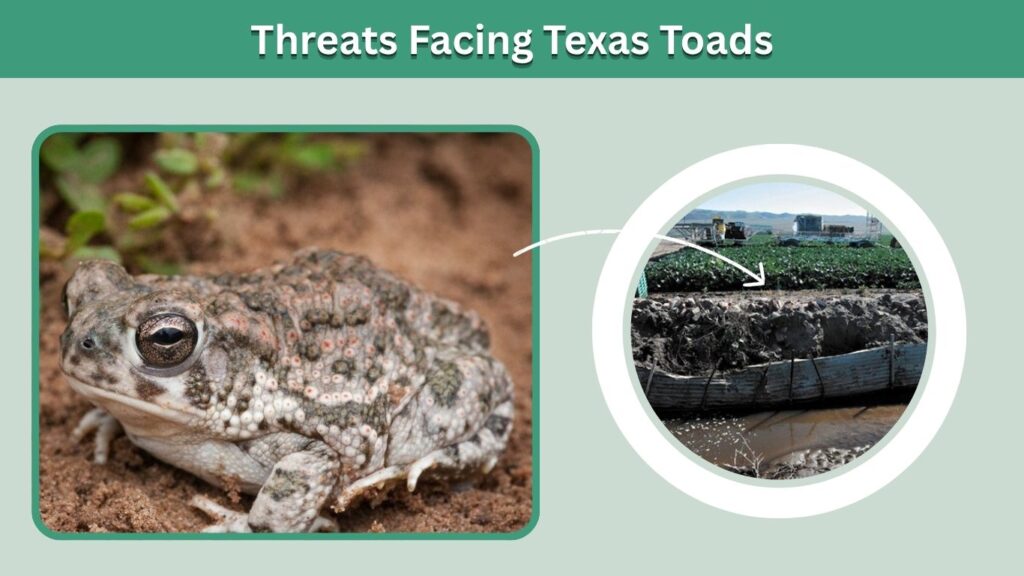
Although the Texas toad remains relatively common in some regions, several challenges threaten local populations. Human activities and environmental changes continue to impact amphibian habitats across Texas.
Habitat Loss
Urban development and land conversion have reduced the availability of suitable habitats. As natural areas disappear, Texas toads lose access to breeding sites, shelter, and food resources.
Pollution
Various forms of pollution can negatively affect amphibian populations:
- Pesticide exposure
- Water contamination
- Chemical runoff from agriculture
- Industrial pollutants
- Habitat degradation
These factors may reduce survival rates and interfere with successful reproduction.
Climate Change
Changing weather patterns can alter breeding cycles and reduce the availability of temporary water sources. Extended droughts are particularly harmful because they limit reproductive opportunities and increase stress on populations.
Conservation Efforts
Conservation programs help protect Texas toads and the habitats they depend upon. Scientists and wildlife organizations continue to monitor populations and promote sustainable land management practices.
Wildlife Protection Programs
State agencies and conservation groups conduct surveys and research projects to better understand population trends. This information supports effective management strategies and habitat protection efforts.
Habitat Restoration
Restoration projects focus on preserving wetlands, grasslands, and breeding areas that support amphibian populations. Healthy habitats increase survival rates and improve long-term population stability.
How People Can Help
Individuals can support Texas toad conservation through simple actions:
- Reduce pesticide use
- Protect natural vegetation
- Preserve backyard water sources
- Avoid disturbing breeding habitats
- Support local conservation initiatives
FAQs
Are Texas Toads Poisonous?
Texas toads are not poisonous to humans, but they produce mild defensive secretions from glands behind their eyes that may irritate predators and pets.
How Long Do Texas Toads Live?
In the wild, Texas toads typically live between 5 and 10 years, depending on habitat quality, food availability, and predator pressure.
What Do Texas Toads Eat?
Their diet mainly consists of insects, spiders, beetles, ants, termites, and other small invertebrates that they capture at night.
Are Texas Toads Dangerous to Pets?
Most encounters are not serious, but dogs and cats may experience irritation or excessive drooling if they bite or mouth a Texas toad.
When Are Texas Toads Most Active?
Texas toads are primarily nocturnal and become most active during warm nights, especially after rainfall when insects are abundant.
