
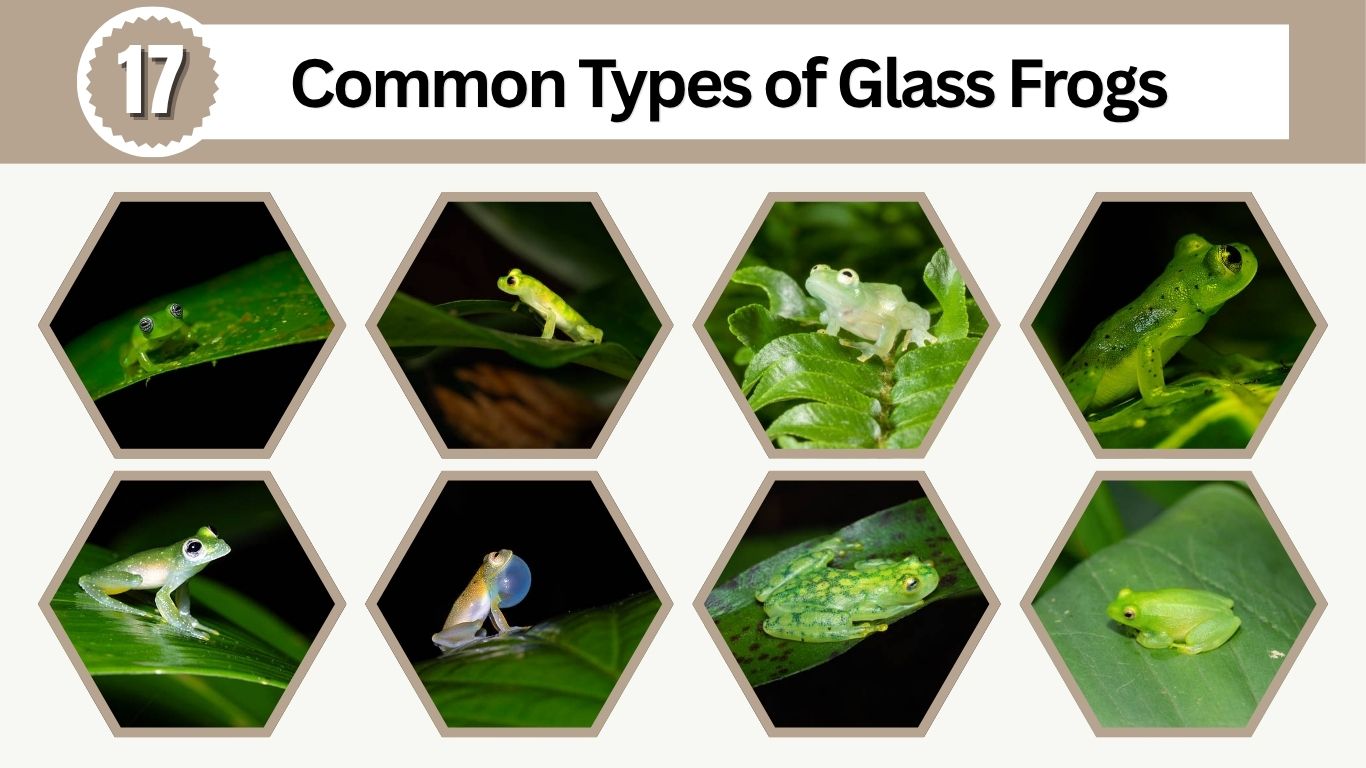
Glass frogs are among the most fascinating amphibians in the world, known for their translucent skin that allows a glimpse of their internal organs. Found mainly in Central and South American rainforests, these delicate creatures thrive in humid environments near clean, flowing streams.
This guide introduces 17 common types of glass frogs, highlighting their unique identification features, habitats, and behaviors. Whether you are a nature enthusiast, student, or researcher, this list will help you better recognize and understand the diversity within this remarkable group of frogs.
1. Fleischmann’s Glass Frog

Fleischmann’s Glass Frog is one of the most well-known glass frog species, recognized for its translucent skin and bright green coloration. It is commonly found near streams in tropical forests and is especially noted for its visible internal organs through the belly.
Identification
- Bright lime-green body with small yellow or white spots
- Transparent underside revealing internal organs
- Large forward-facing eyes with horizontal pupils
- Slender limbs with expanded toe pads for climbing
Habitat
This species typically inhabits lowland and montane tropical rainforests. It prefers areas with clean, fast-flowing streams where vegetation overhangs the water, providing ideal breeding and resting spots.
Behavior
Fleischmann’s Glass Frog is primarily nocturnal. Males are known for guarding eggs laid on leaves above streams, protecting them from predators and environmental threats until they hatch.
Distribution
It is widely distributed across Central America, including countries such as Costa Rica, Panama, Honduras, and Nicaragua.
2. La Palma Glass Frog

La Palma Glass Frog is a delicate and lesser-known species of glass frog, admired for its semi-transparent body and soft green coloration. Like other glass frogs, it is closely associated with forest streams and relies on clean, humid environments to thrive.
Identification
- Light green body with subtle translucent skin
- Partially visible internal organs through the underside
- Smooth skin with minimal markings
- Large eyes adapted for night vision
Habitat
This species is typically found in humid tropical and subtropical forests. It prefers vegetation near flowing streams, especially leaves and branches that hang over water, which are essential for reproduction.
Behavior
La Palma Glass Frog is nocturnal and becomes active at night. Males call softly to attract females and often guard egg clutches laid on leaves above streams, ensuring higher survival rates for offspring.
Distribution
It is primarily found in parts of Central America, especially in regions of Costa Rica and Panama, where suitable rainforest habitats are available.
3. Gold-spotted Glass Frog

The Gold-spotted Glass Frog is a striking species known for its bright green body decorated with distinctive golden spots. Its semi-transparent underside, like other glass frogs, allows a glimpse of internal organs, making it both unique and fascinating.
Identification
- Bright green body with noticeable golden or yellow spots
- Semi-transparent belly showing internal structures
- Smooth skin texture with a slightly glossy appearance
- Large eyes adapted for nocturnal activity
Habitat
This species inhabits tropical rainforests, particularly near fast-flowing streams. It prefers dense vegetation where leaves extend over water, providing safe locations for resting and breeding.
Lifecycle & Diet
The lifecycle begins when females lay eggs on leaves above streams. After hatching, tadpoles drop into the water to continue development. Their diet mainly consists of small insects such as ants, flies, and other tiny arthropods found in their environment.
Behavior
Gold-spotted Glass Frogs are nocturnal and spend most of the day resting under leaves. Males often guard egg clutches and use soft calls during the night to attract females.
4. Chirripó Glass Frog

The Chirripó Glass Frog is a highland species known for its soft green coloration and delicate, semi-transparent body. It is typically found in cooler, mountainous forest environments where moisture levels remain consistently high.
Identification
- Pale to medium green body with faint spotting
- Transparent underside revealing internal organs
- Slender body with long limbs
- Prominent eyes with a horizontal pupil
Habitat
This species prefers montane cloud forests, especially near clean, fast-flowing streams. It is commonly seen resting on leaves that hang over water, which serve as important breeding sites.
Lifecycle & Diet
Females lay eggs on vegetation above streams. Once hatched, tadpoles fall into the water where they grow until metamorphosis. Their diet consists mainly of small insects like flies, ants, and other tiny invertebrates.
Behavior
Chirripó Glass Frogs are nocturnal and relatively quiet. Males guard eggs and remain close to breeding sites, ensuring protection from predators and environmental risks.
5. Emerald Glass Frog

The Emerald Glass Frog is admired for its vivid green coloration and smooth, glass-like skin. Its partially transparent underside and calm behavior make it a fascinating species among glass frogs.
Identification
- Bright emerald-green body with smooth skin
- Semi-transparent belly with visible internal organs
- Rounded snout and large eyes
- Thin limbs with adhesive toe pads
Habitat
This species inhabits humid tropical forests, especially around streams and rivers. It favors dense vegetation where it can remain hidden during the day and active at night.
Lifecycle & Diet
Eggs are laid on leaves above water, allowing tadpoles to drop into streams after hatching. The diet mainly includes small insects such as beetles, flies, and ants, which are captured during nighttime activity.
Behavior
Emerald Glass Frogs are nocturnal and spend daylight hours resting under leaves. Males are known to guard eggs and produce soft calls to attract females during the breeding season.
6. Gecko Glass Frog

The Gecko Glass Frog is named for its slightly textured skin and strong climbing ability. It is a unique species among glass frogs, often recognized by its sturdy build and subtle coloration.
Identification
- Green body with a slightly rough or granular texture
- Semi-transparent underside
- Strong limbs with well-developed toe pads
- Large eyes suited for night activity
Habitat
This species is found in tropical forests, especially near rocky streams and riverbanks. It prefers areas with dense vegetation and moisture, where it can easily climb and hide among leaves.
Lifecycle & Diet
Eggs are deposited on leaves above flowing water. After hatching, tadpoles fall into streams and develop in aquatic environments. Adults feed on small insects such as ants, flies, and other tiny invertebrates.
Behavior
Gecko Glass Frogs are nocturnal and agile climbers. Males often remain near egg clutches, guarding them and calling softly to attract mates during breeding periods.
7. Common Glass Frog

The Common Glass Frog is one of the most widespread and frequently observed species. It is known for its classic glass frog appearance, including a green body and transparent belly.
Identification
- Bright green body with small yellowish spots
- Fully or partially transparent underside
- Slender limbs with expanded toe pads
- Large eyes with horizontal pupils
Habitat
This species thrives in tropical and subtropical forests near streams. It is commonly found on leaves and branches overhanging water bodies, which are essential for reproduction.
Lifecycle & Diet
Females lay eggs on leaves above streams, allowing tadpoles to drop into water after hatching. The diet mainly consists of small insects like flies, ants, and beetles.
Behavior
Common Glass Frogs are nocturnal and active at night. Males produce soft calls to attract females and often guard egg masses until they hatch, increasing survival chances.
8. Buckley’s Glass Frog

Buckley’s Glass Frog is a fascinating species known for its soft green coloration and semi-transparent body. It is often found in higher elevation forests, where cooler temperatures and high humidity support its survival.
Identification
- Light green body with faint yellow or white speckles
- Transparent underside showing internal organs
- Slender frame with long limbs
- Large eyes adapted for low-light conditions
Habitat
This species prefers montane and cloud forests, especially near clear, fast-flowing streams. It is commonly seen resting on leaves that extend over water, providing safe breeding locations.
Lifecycle & Diet
Eggs are laid on vegetation above streams. After hatching, tadpoles drop into the water to develop. Adults feed mainly on small insects such as flies, ants, and other tiny arthropods.
Behavior
Buckley’s Glass Frog is nocturnal and relatively secretive. Males guard egg clutches and remain close to breeding areas, using soft calls to attract females.
9. Ecuadorian Glass Frog

The Ecuadorian Glass Frog is a delicate species with a smooth, translucent appearance. It is well adapted to humid forest environments and is often admired for its subtle beauty.
Identification
- Bright to pale green body with smooth skin
- Semi-transparent belly with visible organs
- Rounded snout and large forward-facing eyes
- Thin limbs with adhesive toe pads
Habitat
This species inhabits tropical and subtropical forests, particularly near streams and rivers. Dense vegetation provides shelter and ideal sites for reproduction.
Lifecycle & Diet
Females lay eggs on leaves above water, allowing tadpoles to drop into streams after hatching. Their diet consists mainly of small insects like flies, ants, and beetles.
Behavior
Ecuadorian Glass Frogs are nocturnal and spend daytime hidden under leaves. Males guard eggs and produce soft calls during the breeding season to attract mates.
10. Savage’s Glass Frog

Savage’s Glass Frog is a well-known species recognized for its bright coloration and highly transparent underside. It is often studied due to its distinctive parental care behavior and visibility of internal organs.
Identification
- Bright green body with small yellow or white spots
- Highly transparent belly showing internal organs clearly
- Smooth skin with a glossy appearance
- Large eyes with horizontal pupils
Habitat
This species is commonly found in tropical rainforests near clean, flowing streams. It prefers leaves and branches that hang over water, which serve as ideal resting and breeding sites.
Lifecycle & Diet
Eggs are laid on leaves above streams. After hatching, tadpoles drop into the water where they continue development. Adults feed on small insects such as ants, flies, and other tiny invertebrates.
Behavior
Savage’s Glass Frog is nocturnal and active at night. Males guard egg clutches and produce soft calls to attract females, often staying close to breeding sites.
11. Granular Glass Frog

The Granular Glass Frog is named for its slightly rough, textured skin. It is a subtle yet distinctive species that blends well into its forest surroundings.
Identification
- Green body with a granular or rough skin texture
- Semi-transparent underside
- Slender limbs with expanded toe pads
- Prominent eyes adapted for night vision
Habitat
This species inhabits humid tropical forests, especially near streams and small rivers. It prefers dense vegetation where it can remain concealed during the day.
Lifecycle & Diet
Females lay eggs on leaves above water. Tadpoles fall into streams after hatching and develop in aquatic environments. Their diet mainly consists of small insects like flies, ants, and beetles.
Behavior
Granular Glass Frogs are nocturnal and relatively quiet. Males guard egg masses and remain near breeding areas, calling softly to attract females.
12. Forest Glass Frog

The Forest Glass Frog is a subtle and adaptable species that thrives in dense, humid environments. It is known for its soft green coloration and semi-transparent body, which allows it to blend effortlessly into the surrounding foliage. This species is less flashy than some others but plays an important role in its ecosystem as both predator and prey.
Identification
- Soft green body with faint or minimal spotting
- Semi-transparent underside with partially visible internal organs
- Smooth skin with a slightly matte appearance
- Slender limbs with rounded toe pads for climbing
Habitat
This species is commonly found in tropical and subtropical forests, especially in areas with dense vegetation and consistent humidity. It prefers locations near streams or small rivers, where leaves and branches hang over water. These environments provide both protection from predators and suitable breeding sites.
Lifecycle & Diet
The reproductive cycle begins when females lay eggs on the underside of leaves above flowing water. Males often guard these eggs to protect them from predators such as insects. Once the eggs hatch, tadpoles fall into the stream below, where they continue their development in an aquatic environment until metamorphosis. As adults, Forest Glass Frogs feed primarily on small insects, including ants, flies, beetles, and other tiny arthropods they encounter during nighttime activity.
Behavior
Forest Glass Frogs are nocturnal and spend most of the day resting motionless on the underside of leaves. Their coloration provides excellent camouflage, making them difficult to detect. At night, they become active, moving through vegetation in search of food. Males are known to produce soft, high-pitched calls to attract females during the breeding season. They also display parental care by guarding egg clutches, which increases the survival rate of their offspring.
13. White-spotted Glass Frog

The White-spotted Glass Frog is easily recognized by the small white or pale spots scattered across its green body. This species is visually striking while still maintaining the characteristic transparency seen in glass frogs. Its combination of pattern and translucency makes it one of the more distinctive members of the group.
Identification
- Bright green body with noticeable white or pale spots
- Semi-transparent belly revealing internal structures
- Smooth skin with a glossy finish
- Large eyes adapted for low-light conditions
Habitat
This species inhabits tropical rainforests with high humidity levels. It is most often found near clear, flowing streams where vegetation overhangs the water. These areas provide the necessary moisture and breeding conditions required for survival. It tends to remain in well-shaded regions of the forest to avoid dehydration.
Lifecycle & Diet
White-spotted Glass Frogs reproduce by laying eggs on leaves above streams. Males frequently guard these eggs, protecting them from predators and environmental hazards. After hatching, tadpoles drop into the water and continue their growth in the stream. The adult diet mainly consists of small insects such as flies, ants, and beetles, which are captured during nighttime foraging.
Behavior
This species is primarily nocturnal and exhibits calm, cautious movements. During the day, it rests under leaves, relying on its coloration and spotting for camouflage. At night, it becomes active, hunting for food and engaging in breeding activities. Males call softly to attract females and remain near egg clutches, demonstrating a notable level of parental care compared to many other amphibians.
14. Emerald Glass Frog

The Emerald Glass Frog is admired for its vivid green coloration and smooth, glass-like appearance. Its semi-transparent underside and calm nature make it one of the more visually appealing species among glass frogs. It is well adapted to humid forest environments and relies heavily on clean water sources.
Identification
- Bright emerald-green body with smooth skin
- Semi-transparent belly with visible internal organs
- Rounded snout with large forward-facing eyes
- Slender limbs with adhesive toe pads
Habitat
This species inhabits tropical rainforests, especially in areas close to streams and rivers. It prefers dense vegetation where leaves hang over water, offering both protection and suitable breeding sites.
Lifecycle & Diet
Females lay eggs on leaves above streams. Once hatched, tadpoles drop into the water and continue developing until metamorphosis. Adults feed mainly on small insects such as ants, flies, and beetles found in their environment.
Behavior
Emerald Glass Frogs are nocturnal and remain hidden during the day. At night, they become active, foraging for food and engaging in breeding activities. Males guard egg clutches and produce soft calls to attract females.
15. Beautiful Glass Frog

The Beautiful Glass Frog lives up to its name with its attractive coloration and delicate body structure. It is a lesser-known species but stands out due to its smooth texture and subtle patterns that enhance its camouflage.
Identification
- Light to bright green body with faint markings
- Semi-transparent underside
- Smooth, glossy skin
- Large eyes suited for night vision
Habitat
This species is found in humid tropical forests, particularly near streams and small rivers. It prefers shaded vegetation where moisture levels remain high throughout the day.
Lifecycle & Diet
Eggs are laid on leaves above water, allowing tadpoles to drop into streams after hatching. The diet consists mainly of small insects like flies, ants, and other tiny arthropods captured during nighttime activity.
Behavior
Beautiful Glass Frogs are nocturnal and relatively shy. They spend the daytime resting under leaves and become active at night. Males call softly to attract females and often guard egg masses to increase survival rates.
16. Ghost Glass Frog

The Ghost Glass Frog is a unique species known for its pale coloration and highly translucent body, giving it a ghost-like appearance. Its subtle features and near-invisible underside make it especially fascinating among glass frogs.
Identification
- Pale green to whitish body coloration
- Highly transparent underside with clearly visible organs
- Smooth skin with a delicate appearance
- Large eyes adapted for nocturnal vision
Habitat
This species inhabits humid tropical forests, particularly in areas near clean, flowing streams. It prefers shaded vegetation and is often found resting on the underside of leaves above water.
Lifecycle & Diet
Females lay eggs on leaves hanging over streams. After hatching, tadpoles fall into the water and develop in aquatic conditions. Adults primarily feed on small insects such as flies, ants, and tiny arthropods.
Behavior
Ghost Glass Frogs are nocturnal and very elusive. During the day, they remain motionless under leaves for camouflage. At night, they become active, foraging and calling softly to attract mates while males guard egg clutches.
17. Powdered Glass Frog

The Powdered Glass Frog is named for its slightly dusty or powdery appearance on its green skin. It is a small yet distinctive species, blending well into its environment while maintaining the classic glass frog traits.
Identification
- Green body with a powdery or frosted appearance
- Semi-transparent underside
- Smooth to slightly textured skin
- Slender limbs with expanded toe pads
Habitat
This species is found in tropical forests with high humidity, especially near streams and small rivers. It prefers dense vegetation where it can stay hidden during the day.
Lifecycle & Diet
Eggs are laid on leaves above water, allowing tadpoles to drop into streams after hatching. Their diet mainly includes small insects such as flies, ants, and beetles captured at night.
Behavior
Powdered Glass Frogs are nocturnal and quiet. They rest under leaves during the day and become active at night. Males call gently to attract females and often guard eggs, increasing the chances of successful development.
FAQs
What makes glass frogs unique?
Glass frogs are unique بسبب their translucent underside, which allows internal organs like the heart and liver to be visible. This feature helps them blend into their environment, making it harder for predators to detect them from below.
Where are glass frogs commonly found?
Glass frogs are mainly found in Central and South America. They live in tropical and subtropical forests, especially near clean, fast-flowing streams where they breed and spend most of their time.
Are glass frogs dangerous to humans?
Glass frogs are completely harmless to humans. They do not produce dangerous toxins and are non-aggressive. Their primary defense is camouflage, not attack, making them safe to observe in the wild.
Why do glass frogs guard their eggs?
Male glass frogs guard their eggs to protect them from predators, parasites, and environmental threats. This behavior increases the chances of survival, as the eggs are often exposed on leaves above streams.
What do glass frogs eat?
Glass frogs mainly eat small insects such as ants, flies, beetles, and other tiny invertebrates. They hunt at night, using their excellent vision to locate and capture prey.
