
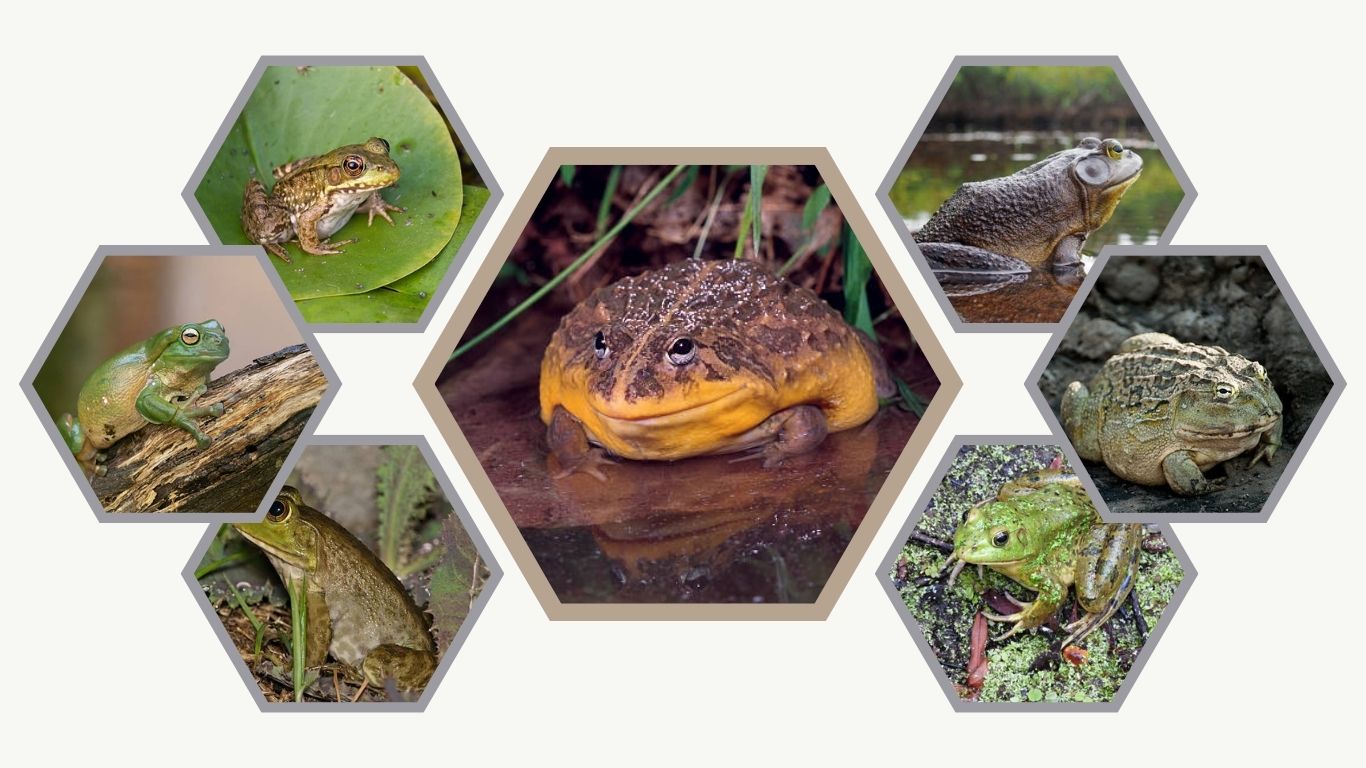
Bullfrogs are large, powerful amphibians known for their deep calls, strong legs, and impressive adaptability. Found across various parts of the world, they inhabit freshwater environments such as ponds, lakes, marshes, and wetlands. Their ability to thrive in different climates and ecosystems makes them one of the most widespread frog groups.
This guide explores 15 common types of bullfrogs, focusing on their identification features, habitats, and behaviors. Whether you are a wildlife enthusiast, student, or researcher, this list will help you better recognize and understand the diversity of bullfrog species.
1. American Bullfrog

The American Bullfrog is the largest and most well-known bullfrog species in North America. It is famous for its deep, resonant call that sounds like a low-pitched “jug-o-rum,” often heard near ponds and wetlands during warm evenings.
Identification
- Large, robust body with smooth, moist skin
- Green to olive coloration, sometimes with brown tones
- Prominent tympanum (eardrum) behind the eyes
- Long hind legs adapted for powerful jumping and swimming
Habitat
American Bullfrogs thrive in permanent water bodies such as ponds, lakes, marshes, and slow-moving streams. They prefer warm, still waters with abundant vegetation for cover and breeding.
Lifecycle & Diet
Females lay thousands of eggs in water, which hatch into tadpoles. Tadpoles may take one to two years to fully develop into adult frogs. Their diet is highly varied, including insects, fish, small mammals, birds, and even other frogs.
Behavior
This species is mostly nocturnal but can also be active during the day. It is highly territorial, especially during breeding season, when males call loudly to attract females and defend their space.
2. African Bullfrog

The African Bullfrog is one of the largest frog species in the world, known for its powerful build and aggressive nature. It is highly adaptable and can survive in harsh environments, including dry regions.
Identification
- Very large, heavy-bodied frog
- Olive-green to brown coloration with lighter underside
- Wide mouth with strong jaws
- Thick limbs suited for digging and defense
Habitat
This species is found in savannas, grasslands, and semi-arid regions. It prefers temporary water bodies such as rain pools, where it breeds during the rainy season.
Lifecycle & Diet
Eggs are laid in shallow water, and tadpoles develop quickly before pools dry up. Adults are carnivorous, feeding on insects, reptiles, small mammals, birds, and even other frogs.
Behavior
African Bullfrogs are known for their aggressive temperament. Males guard tadpoles and may even dig channels to help them reach deeper water as pools dry.
3. Indian Bullfrog

The Indian Bullfrog is a brightly colored species commonly found across South Asia. It is especially noticeable during the breeding season when males turn vivid yellow.
Identification
- Medium to large body size
- Greenish or brown coloration, turning bright yellow in breeding males
- Dark patches or stripes along the body
- Strong hind legs for jumping
Habitat
This species inhabits wetlands, ponds, rice fields, and slow-moving water bodies. It thrives in both natural and human-modified environments.
Lifecycle & Diet
Eggs are laid in water, and tadpoles develop over several weeks before transforming into frogs. Their diet mainly includes insects, worms, and small invertebrates.
Behavior
Indian Bullfrogs are mostly nocturnal and become highly active during the monsoon season. Males produce loud calls to attract females and compete for breeding territory.
4. Chinese Bullfrog

The Chinese Bullfrog is a medium to large-sized species widely known for its adaptability and use in local food markets. It has a strong build and thrives in a variety of wetland environments.
Identification
- Robust body with smooth skin
- Greenish-brown coloration with darker spots
- Broad head with a wide mouth
- Strong hind legs for jumping and swimming
Habitat
This species is commonly found in ponds, rice fields, marshes, and slow-moving streams. It prefers warm, freshwater environments with plenty of vegetation.
Lifecycle & Diet
Eggs are laid in water, where tadpoles develop before transforming into adults. Their diet consists mainly of insects, worms, and small aquatic animals.
Behavior
Chinese Bullfrogs are mostly nocturnal and remain hidden during the day. They become active at night, hunting for food and producing calls during the breeding season.
5. Japanese Bullfrog

The Japanese Bullfrog is closely related to the American Bullfrog and has been introduced to parts of Japan. It is known for its loud call and ability to adapt to different environments.
Identification
- Large body with smooth, moist skin
- Olive-green to brown coloration
- Prominent eardrum behind the eyes
- Long, muscular hind legs
Habitat
This species inhabits ponds, lakes, wetlands, and agricultural areas. It prefers permanent water bodies with dense vegetation.
Lifecycle & Diet
Females lay eggs in water, and tadpoles develop over an extended period before metamorphosis. Adults feed on insects, fish, and small animals.
Behavior
Japanese Bullfrogs are active both day and night but are most vocal during evening hours. Males produce deep calls to attract females and defend their territory.
6. Korean Bullfrog

The Korean Bullfrog is a hardy species known for its adaptability to different environments. It shares similarities with other large bullfrogs but has distinct regional traits suited to its native habitat.
Identification
- Medium to large body with smooth skin
- Green to brown coloration with darker markings
- Broad head and wide mouth
- Strong hind legs for jumping and swimming
Habitat
This species is commonly found in wetlands, rice fields, ponds, and slow-moving streams. It prefers freshwater habitats with abundant vegetation for shelter and breeding.
Lifecycle & Diet
Eggs are laid in water, where tadpoles develop before transforming into adult frogs. The diet mainly consists of insects, worms, and small aquatic creatures.
Behavior
Korean Bullfrogs are mostly nocturnal and stay hidden during the day. They become active at night, especially during the breeding season when males produce calls to attract females.
7. Pig Frog

The Pig Frog gets its name from its distinctive call, which resembles the grunting of a pig. It is a large aquatic species commonly found in the southeastern United States.
Identification
- Large, heavy-bodied frog
- Olive-green to brown coloration with mottled patterns
- Fully webbed hind feet for swimming
- No distinct dorsolateral ridges on the back
Habitat
Pig Frogs inhabit permanent water bodies such as lakes, swamps, and marshes. They prefer warm, slow-moving waters with dense vegetation.
Lifecycle & Diet
Eggs are laid in water, and tadpoles develop before becoming adults. Their diet includes insects, fish, crayfish, and other small aquatic animals.
Behavior
Pig Frogs are primarily aquatic and rarely leave the water. They are most active at night, producing low grunting calls and foraging for food in and around water.
8. Lowland Bullfrog

The Lowland Bullfrog is a lesser-known species that thrives in warm, low-altitude environments. It is well adapted to life in wetlands and is often found in regions where water is available year-round. Its sturdy build and subtle coloration help it blend into muddy and vegetated surroundings, making it difficult for predators to detect.
Identification
- Medium to large body with a robust structure
- Brownish-green coloration with darker patches
- Smooth, moist skin
- Strong hind legs designed for swimming and jumping
Habitat
This species prefers lowland wetlands, including marshes, ponds, floodplains, and slow-moving rivers. It is commonly found in areas with dense aquatic vegetation, which provides shelter and breeding sites. Warm temperatures and consistent moisture are essential for its survival, and it tends to avoid colder, high-altitude regions.
Lifecycle & Diet
The breeding cycle begins during warm, wet seasons when females lay eggs in shallow water. Tadpoles develop in aquatic environments and undergo metamorphosis over time. The diet of the Lowland Bullfrog includes a variety of small animals such as insects, worms, and aquatic invertebrates. Larger individuals may also consume small fish or amphibians, showing opportunistic feeding behavior.
Behavior
Lowland Bullfrogs are primarily nocturnal and spend the daytime hidden among vegetation or submerged near water edges. At night, they become active hunters, using their strong legs and quick reflexes to capture prey. Males produce low, resonant calls during the breeding season to attract females and establish territory.
9. Northern Bullfrog

The Northern Bullfrog is a widely recognized and adaptable species, closely associated with freshwater ecosystems. It is known for its powerful call and ability to survive in a wide range of environmental conditions, making it one of the more resilient bullfrog types.
Identification
- Large, muscular body with smooth skin
- Green to olive coloration, often with darker mottling
- Prominent tympanum behind the eyes
- Long, powerful hind legs for strong jumps
Habitat
This species is commonly found in ponds, lakes, marshes, and slow-moving streams. It prefers permanent water bodies with abundant vegetation and is capable of tolerating a variety of environmental conditions, including cooler climates.
Lifecycle & Diet
Females lay large clusters of eggs in water during the breeding season. Tadpoles may take an extended period to develop, depending on environmental conditions. The Northern Bullfrog has a highly varied diet, feeding on insects, fish, small mammals, birds, and other amphibians, making it an opportunistic predator.
Behavior
Northern Bullfrogs are active both day and night but are most vocal during evening hours. Males produce deep, booming calls to attract mates and defend territory. They are also known for their aggressive feeding habits and ability to dominate local ecosystems where they are present.
10. Southern Bullfrog

The Southern Bullfrog is a large and adaptable species commonly found in warmer regions. It is known for its deep call and strong presence in freshwater ecosystems, where it often plays the role of a top amphibian predator.
Identification
- Large, heavy-bodied frog with smooth skin
- Olive-green to brown coloration with darker mottling
- Prominent tympanum behind the eyes
- Long, muscular hind legs for powerful movement
Habitat
This species thrives in warm freshwater habitats such as ponds, lakes, swamps, and marshes. It prefers areas with dense vegetation and slow-moving or still water, which provide shelter and breeding grounds.
Lifecycle & Diet
Eggs are laid in shallow water, forming large floating masses. Tadpoles develop over time before transforming into adults. The diet is highly varied, including insects, fish, small reptiles, birds, and even other frogs.
Behavior
Southern Bullfrogs are mostly nocturnal but can be active during the day. Males produce loud, deep calls during the breeding season and defend their territory aggressively against rivals.
11. Giant African Bullfrog

The Giant African Bullfrog is one of the largest frog species in the world, known for its massive size and powerful build. It is highly resilient and capable of surviving in extreme conditions, including seasonal droughts.
Identification
- Extremely large, bulky body
- Olive-green to brown coloration with lighter underside
- Very wide mouth with strong jaws
- Thick limbs built for digging and defense
Habitat
This species is found in savannas, grasslands, and semi-arid regions. It relies on temporary water bodies such as rain pools for breeding and may burrow underground during dry periods.
Lifecycle & Diet
Breeding occurs during rainy seasons when water becomes available. Eggs are laid in shallow pools, and tadpoles develop quickly. Adults are voracious predators, feeding on insects, reptiles, birds, small mammals, and other amphibians.
Behavior
Giant African Bullfrogs are known for their aggressive nature. Males guard tadpoles and may dig channels to help them reach deeper water as pools dry. They can also burrow underground to survive dry conditions.
12. Asian Bullfrog

The Asian Bullfrog is a widely distributed species known for its adaptability and presence in both natural and agricultural environments. It is valued for its ecological role in controlling insect populations and is often found in wetland regions.
Identification
- Medium to large body with smooth skin
- Green to brown coloration with darker spots or patches
- Broad head with a wide mouth
- Strong hind legs for jumping and swimming
Habitat
This species inhabits ponds, rice fields, marshes, and slow-moving streams. It prefers warm, humid environments with abundant vegetation, often thriving in areas influenced by human activity.
Lifecycle & Diet
Eggs are laid in water during the breeding season, forming clusters that float on the surface. Tadpoles develop in aquatic environments before metamorphosing into adults. Their diet mainly includes insects, worms, and small aquatic animals.
Behavior
Asian Bullfrogs are mostly nocturnal and remain hidden during the day. They become active at night, foraging for food and producing calls to attract mates during the breeding season.
13. Green Bullfrog

The Green Bullfrog is recognized for its vibrant coloration and active behavior. It is a versatile species that can adapt to a variety of freshwater environments and is often seen near the edges of water bodies.
Identification
- Bright green body with smooth, moist skin
- Sometimes marked with darker spots or patterns
- Prominent tympanum behind the eyes
- Long, muscular hind legs
Habitat
This species is commonly found in ponds, lakes, wetlands, and marshes. It prefers areas with plenty of vegetation and access to open water for feeding and breeding.
Lifecycle & Diet
Females lay eggs in water, and tadpoles develop over time before transforming into adult frogs. The diet consists of insects, small fish, and other tiny animals, making it an opportunistic feeder.
Behavior
Green Bullfrogs are active both during the day and night. Males produce deep calls to attract females and defend their territory, especially during the breeding season.
14. Brown Bullfrog

The Brown Bullfrog is a hardy and adaptable species, known for its earthy coloration that helps it blend into muddy and vegetated environments. It is commonly found in a variety of freshwater habitats and is well suited to both natural and human-influenced areas.
Identification
- Brown to dark olive body with smooth skin
- Subtle mottling or darker patches across the back
- Broad head with a wide mouth
- Strong hind legs for jumping and swimming
Habitat
This species inhabits ponds, marshes, swamps, and slow-moving streams. It prefers areas with muddy bottoms and dense vegetation, which provide shelter and suitable breeding conditions.
Lifecycle & Diet
Eggs are laid in shallow water during the breeding season. Tadpoles develop in aquatic environments before metamorphosing into adults. The diet mainly includes insects, worms, small fish, and other aquatic organisms.
Behavior
Brown Bullfrogs are mostly nocturnal and spend the day hidden in vegetation or mud. At night, they become active hunters and may produce low calls during the breeding season.
15. Marsh Bullfrog

The Marsh Bullfrog is a water-dependent species that thrives in wetland ecosystems. It is known for its strong swimming ability and close association with aquatic vegetation.
Identification
- Medium to large body with smooth, moist skin
- Greenish-brown coloration with darker markings
- Prominent eyes and wide mouth
- Fully webbed hind feet for efficient swimming
Habitat
This species is typically found in marshes, swamps, ponds, and shallow wetlands. It prefers areas with standing or slow-moving water and abundant plant cover.
Lifecycle & Diet
Females lay eggs in water, where tadpoles develop before becoming adults. Their diet consists mainly of insects, small fish, and other aquatic invertebrates.
Behavior
Marsh Bullfrogs are highly aquatic and rarely stray far from water. They are most active at night, foraging and producing calls during the breeding season while remaining hidden among vegetation.
FAQs
What is a bullfrog?
A bullfrog is a large species of frog known for its deep, booming call and strong, muscular body. They are typically found in freshwater habitats and are among the largest frogs in their respective regions.
Where do bullfrogs live?
Bullfrogs live in freshwater environments such as ponds, lakes, marshes, and slow-moving streams. They prefer warm, humid areas with plenty of vegetation for shelter and breeding.
What do bullfrogs eat?
Bullfrogs are opportunistic predators. Their diet includes insects, fish, small mammals, birds, and even other frogs. Larger individuals can consume surprisingly large prey compared to their size.
Are bullfrogs dangerous to humans?
Bullfrogs are not dangerous to humans. They are non-venomous and generally avoid human interaction. However, they may bite if handled, but it is not harmful.
How long do bullfrogs live?
Bullfrogs can live for several years in the wild, typically around 7 to 10 years. In controlled environments like captivity, they may live even longer with proper care.
