
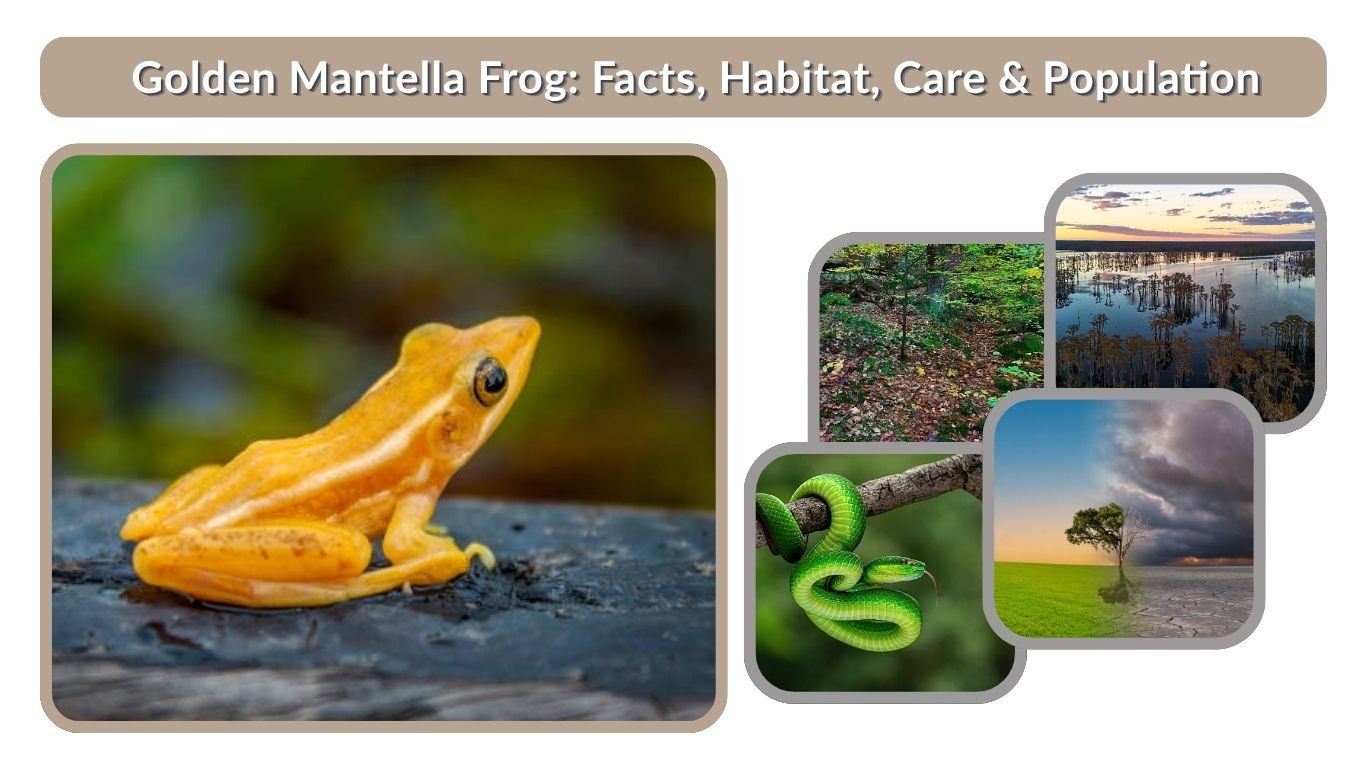
The golden mantella frog (Mantella aurantiaca) is a small, brightly colored amphibian native to Madagascar. Known for its vivid orange appearance and toxic skin secretions, this species is both fascinating and endangered. Its limited habitat and popularity in the pet trade make it an important focus of conservation efforts worldwide.
What Is a Golden Mantella Frog?
The golden mantella is a tiny frog species belonging to the Mantellidae family. It is often compared to poison dart frogs due to its bright coloration and toxicity, although it is found only in Madagascar.
- Scientific name: Mantella aurantiaca
- Common names: golden mantella, gold mantella frog
- Family: Mantellidae
- Native region: Madagascar
Golden Mantella Frog Facts

Golden mantella frogs are known for their striking appearance and unique biological traits. Despite their small size, they play an important role in their ecosystem.
- Bright orange color warns predators of toxicity
- Active during the day (diurnal behavior)
- Secretes mild toxins through its skin
- Communicates using soft calls
- Often mistaken for poison dart frogs
Golden Mantella Habitat & Distribution

Golden mantellas have a very limited natural range, making them highly vulnerable to environmental changes.
Natural Habitat
These frogs prefer moist environments with plenty of cover and access to water.
- Swampy forests and marshlands
- Moist leaf litter for shelter
- Shallow pools for breeding
- High humidity conditions
Geographic Range
The species is endemic to Madagascar, meaning it is found nowhere else in the world.
- Located in eastern Madagascar
- Restricted to small, fragmented areas
- Sensitive to habitat destruction
Where Do Golden Mantella Frogs Live?
Golden mantella frogs live in central-eastern Madagascar, particularly in regions with dense vegetation and seasonal water sources. They are commonly found near breeding ponds, where moisture levels remain high. Their dependence on such specific environments makes them especially vulnerable to deforestation and climate changes.
Golden Mantella Diet
The diet of golden mantella frogs plays a key role in their health and toxicity.
Diet in the Wild
In their natural environment, these frogs consume a variety of tiny insects.
- Ants and termites
- Small beetles and larvae
- Other micro-invertebrates
- Diet contributes to their toxicity
Diet in Captivity
In captivity, their diet changes, which affects their toxin levels.
- Fruit flies and pinhead crickets
- Occasional supplements (calcium, vitamins)
- Non-toxic due to controlled diet
Are Golden Mantella Frogs Poisonous?
Golden mantella frogs are indeed poisonous, but their toxicity is often misunderstood.
Nature of Their Poison
They produce alkaloid toxins through their skin, which serve as a defense mechanism against predators. These toxins are derived from their diet in the wild.
Are They Dangerous to Humans?
While they are toxic, golden mantella frogs are not considered dangerous to humans under normal circumstances. Handling them carefully and washing hands afterward is generally sufficient to avoid any issues.
Golden Mantella Size, Weight & Lifespan
Golden mantellas are extremely small frogs, but they can live surprisingly long in the right conditions.
- Size: 20–26 mm (less than an inch)
- Weight: under 1 gram
- Lifespan: 5–10 years in captivity
Golden Mantella Behavior & Adaptations
These frogs have developed unique behaviors and adaptations that help them survive in their environment.
Behavioral Traits
Golden mantellas are active during the day and are often seen moving in small groups. They use soft vocalizations to communicate, especially during the breeding season.
Key Adaptations
Their bright orange coloration is a classic example of aposematism, warning predators of their toxicity. They also have moist skin that allows them to absorb oxygen and strong hind legs for quick movement and escape.
Golden Mantella Life Cycle & Reproduction
The life cycle of the golden mantella frog is closely tied to seasonal changes in its environment.
Breeding Process
Breeding typically occurs during the rainy season when water is abundant. Females lay eggs in moist areas close to water sources rather than directly in water.
Development Stages
After hatching, tadpoles are carried or washed into shallow pools where they continue developing. Over time, they undergo metamorphosis into froglets, eventually becoming fully grown adults.
Golden Mantella Predators & Threats

Golden mantella frogs face a variety of natural and human-induced threats that have significantly reduced their population.
- Predators include birds, snakes, and larger amphibians
- Habitat destruction due to agriculture and deforestation
- Illegal collection for the pet trade
- Pollution and environmental changes
- Climate change affecting breeding cycles
How Many Golden Mantella Frogs Are Left?
The golden mantella frog is currently classified as Critically Endangered, meaning it faces a very high risk of extinction in the wild.
- Population numbers are estimated to be in the low thousands
- Populations are fragmented and declining
- Restricted to a very small geographic area
- Ongoing threats continue to reduce numbers
Because of these factors, conservation efforts are essential to ensure the species survives in the future.
Golden Mantella Conservation Efforts
Several conservation initiatives are underway to protect this species from extinction.
Protection Measures
Efforts in Madagascar focus on preserving the frog’s natural habitat.
- Establishment of protected forest areas
- Habitat restoration projects
- Monitoring wild populations
Captive Breeding Programs
Captive breeding plays a key role in conservation.
- Programs in zoos and research centers
- Breeding frogs in controlled environments
- Reintroduction into protected habitats
Golden Mantella Care (Pet Guide)
Golden mantella frogs can be kept as pets, but they require specific care conditions.
Tank Setup
A proper enclosure is essential for their health.
- High-humidity terrarium
- Use moss, plants, and leaf litter
- Provide hiding spots and shallow water
Temperature & Environment
Maintaining the right climate is critical.
- Ideal temperature: 20–25°C
- High humidity levels
- Regular misting required
Feeding & Maintenance
Proper feeding ensures long-term health.
- Feed small live insects
- Add calcium and vitamin supplements
- Clean enclosure regularly
Golden Mantella Frog for Sale (Legal & Ethical Considerations)
While golden mantella frogs are available in the pet trade, it is important to consider ethical and legal factors.
- Only purchase captive-bred frogs
- Avoid wild-caught individuals
- Check local wildlife laws and permits
- Buy from reputable breeders
Responsible purchasing helps reduce pressure on wild populations.
Golden Mantella Classification
The golden mantella belongs to a well-defined group of amphibians.
- Kingdom: Animalia
- Phylum: Chordata
- Class: Amphibia
- Order: Anura
- Family: Mantellidae
Fun Facts About the Golden Mantella Frog
These small frogs have some fascinating characteristics.
- Their bright color acts as a warning signal to predators
- They are one of Madagascar’s most iconic amphibians
- Despite their toxicity, they are harmless when handled properly
- They play a role in controlling insect populations
FAQs
Are golden mantella frogs poisonous to humans?
Golden mantella frogs produce mild toxins through their skin, mainly as a defense against predators. While they are not dangerous to humans, it is best to avoid excessive handling and always wash your hands afterward to prevent irritation or accidental exposure.
Where does the golden mantella frog live?
Golden mantella frogs live in eastern Madagascar, particularly in swampy forests with high humidity and dense vegetation. They are usually found near shallow breeding pools, where they rely on moist conditions for survival and reproduction.
How many golden mantella frogs are left in the world?
The species is critically endangered, with populations estimated to be in the low thousands. Habitat destruction and illegal collection have caused significant declines, leaving them in small, isolated populations across limited areas of Madagascar.
What do golden mantella frogs eat?
Golden mantella frogs primarily eat small insects such as ants, termites, and fruit flies. Their diet in the wild contributes to their toxicity, while captive frogs require a controlled diet with proper nutritional supplements.
Can golden mantella frogs be kept as pets?
Yes, they can be kept as pets, but only captive-bred individuals should be purchased. They require a carefully maintained environment with proper humidity, temperature, and diet, making them better suited for experienced amphibian keepers.
