
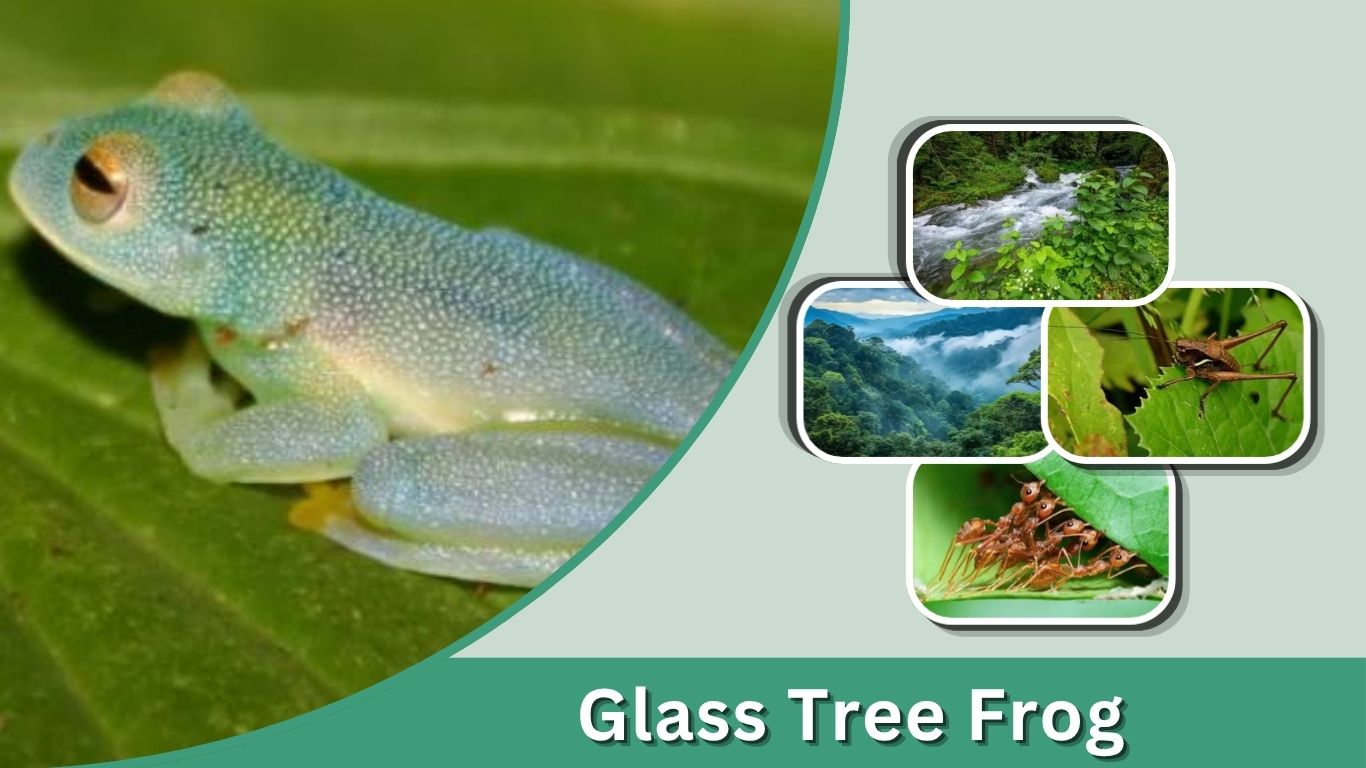
The glass tree frog is one of the most extraordinary amphibians living in tropical forests. Famous for its translucent belly, this tiny green frog can reveal parts of its heart, digestive system, bones, and other internal organs. Glass frogs spend much of their lives on vegetation near clear forest streams, where they hunt insects and reproduce. Although their delicate appearance has made them popular among exotic-animal enthusiasts, they have specialized environmental needs and are not ideal pets for inexperienced keepers.
What Is a Glass Tree Frog?
The term glass tree frog generally describes arboreal frogs belonging to the family Centrolenidae. They are more commonly called glass frogs because the abdominal skin of many species is transparent or translucent.
Glass frogs are genuine tree-dwelling frogs, but they are not members of just one species. The family contains numerous species with differences in size, markings, transparency, behavior, and geographic range.
Scientific Classification
| Classification | Details |
| Kingdom | Animalia |
| Class | Amphibia |
| Order | Anura |
| Family | Centrolenidae |
| Common names | Glass frog, glass tree frog, leaf frog |
| Native range | Central and South America |
Species in this family occur from Central America into South America, particularly in humid forests containing streams. Their greatest diversity is associated with tropical regions, including parts of the Andes, Costa Rica, and Panama.
Glass Tree Frog Appearance
Most glass tree frogs have green backs that help them blend into living leaves. Depending on the species, the body may be lime green, yellowish-green, emerald, or olive, with spots or markings in yellow, white, blue, or darker green.
Identification Features
A glass tree frog can usually be recognized by the following characteristics:
- Small, slender body
- Green upper surface
- Translucent or transparent belly
- Large eyes with horizontal pupils
- Long legs adapted for climbing
- Rounded or expanded toe pads
- Delicate bones that may appear green or white
- Yellow, white, or dark spots in some species
The transparent belly may expose the heart, liver, intestines, lungs, or blood vessels. However, the degree of transparency varies. Some species have clear abdominal skin, while others have white tissue covering part of their organs.
Why Is Its Belly Transparent?
Transparency provides camouflage rather than making the frog completely invisible. When a glass frog rests on a leaf, its translucent tissues reduce the sharp contrast between its body and the surrounding vegetation.
This softened outline can make it harder for predators to identify the frog’s shape. The green upper body blends with the leaf, while the more translucent legs help the edges of the frog merge with the background.
Glass Tree Frog Size
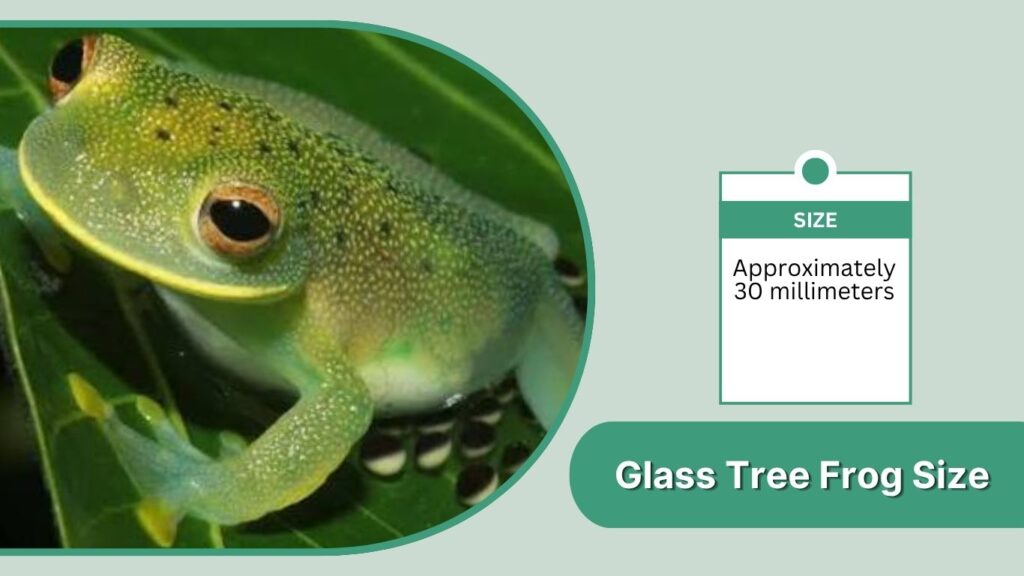
Glass tree frogs are generally very small. Many species remain below 1.2 inches, or approximately 30 millimeters, in body length. However, size depends on the species.
For example, adult Fleischmann’s glass frogs commonly reach approximately 22 to 25 millimeters. In another species, Hyalinobatrachium valerioi, males measure around 19.5 to 24 millimeters, while females may reach 22.5 to 26 millimeters.
Females are often slightly larger than males because their bodies must accommodate developing eggs.
Where Do Glass Tree Frogs Live?
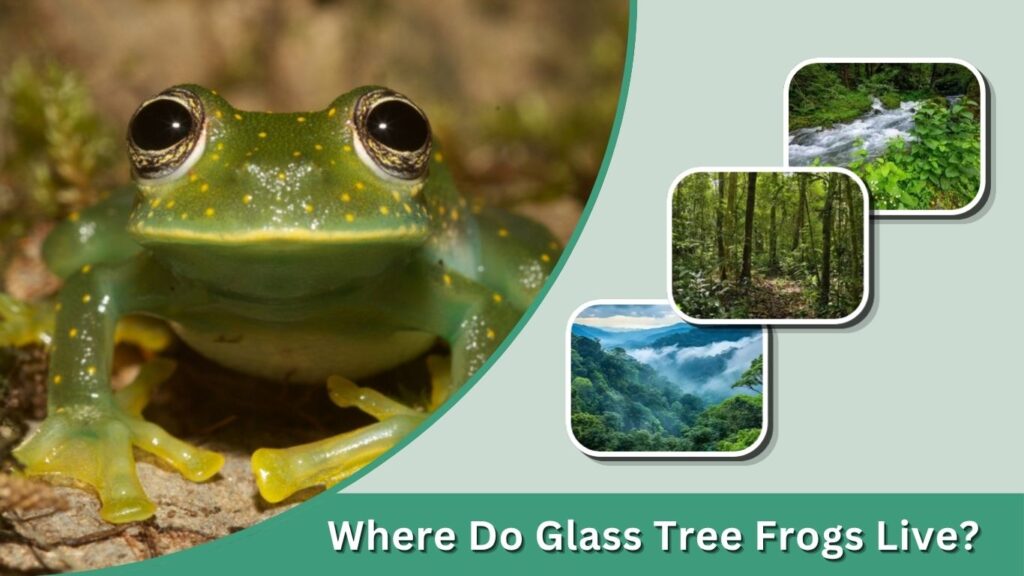
Glass tree frogs are native to humid regions of Central and South America. They may be found from southern Mexico through Central America and across countries such as Colombia, Ecuador, Venezuela, Peru, Bolivia, Brazil, and Argentina.
Natural Habitat
They usually inhabit:
- Tropical rainforests
- Humid mountain forests
- Cloud forests
- Secondary forests
- Vegetation beside streams
- Plants near waterfalls
Glass frogs are closely associated with permanent running water. Adults live on leaves, shrubs, and tree branches, while their tadpoles develop in streams below.
Some species rest on vegetation only a few feet above the water. Others may move higher into the canopy outside the breeding season.
Glass Tree Frog Behavior
Most glass tree frogs are nocturnal. They spend the daytime resting beneath leaves, where their green coloration and translucent bodies provide protection from predators.
After dark, they become active and begin hunting or searching for mates.
Calls and Communication
Male glass frogs call from leaves and branches near streams. The sound varies by species and may resemble:
- A high whistle
- A metallic chirp
- A short beep
- A clear peeping sound
Calls attract females and warn competing males to stay away. For example, male emerald glass frogs produce high-pitched sequences of approximately three chirps, although they may use longer sequences when defending a territory.
Territorial Fighting
Despite their fragile appearance, some male glass frogs are territorial. Males may wrestle, kick, or use small arm spines during confrontations.
These contests usually occur over calling locations, breeding territories, or suitable leaves above streams. In some species, males also defend egg clutches from rival frogs and predators.
What Do Glass Tree Frogs Eat?
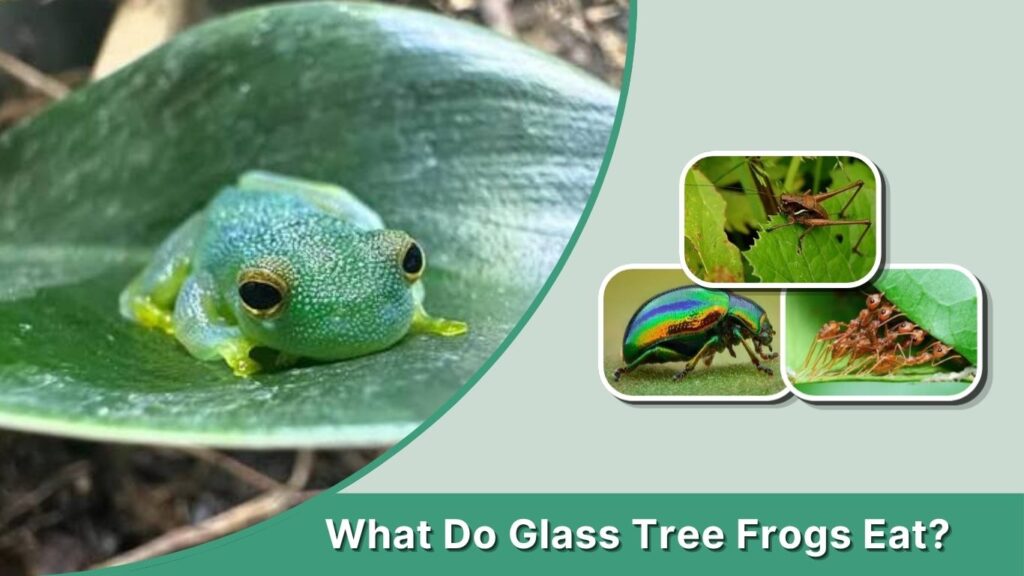
Adult glass tree frogs are carnivorous insect hunters. Their diet consists mainly of small invertebrates that live among rainforest plants.
Common foods include:
- Flies
- Moths
- Mosquitoes
- Crickets
- Beetles
- Ants
- Spiders
- Other tiny insects
A glass frog generally waits quietly until suitable prey approaches. It then captures the animal with a rapid movement of its body and sticky tongue.
Emerald glass frogs are known to feed primarily on small insects, including beetles and members of the grasshopper and cricket group.
Glass Tree Frog Breeding
Breeding normally occurs around streams, particularly during wet or rainy conditions. Males choose leaves hanging above the water and call to attract females.
After a female approaches, the male holds her while she deposits a gelatinous mass of eggs on a leaf, branch, rock, or another surface above the stream.
Eggs and Tadpoles
Laying eggs above water protects them from many aquatic predators. However, the eggs remain vulnerable to dehydration, insects, snakes, fungal growth, and other threats.
When the embryos are sufficiently developed, the tadpoles hatch and drop into the stream below. They then hide among rocks, sediment, leaf litter, and debris while completing their aquatic development.
Parental Care
Parental care is unusually common among glass frogs. A parent may:
- Guard the eggs
- Keep the clutch moist
- Remove damaged eggs
- Defend against predators
- Protect several clutches simultaneously
In many species, the male remains near the eggs after the female leaves. This behavior can significantly improve the survival of the embryos.
Are Glass Tree Frogs Poisonous?
Glass tree frogs are not generally considered poisonous or medically dangerous to humans. They do not possess the potent defensive toxins associated with poison dart frogs.
Their main defenses are camouflage, remaining motionless, hiding beneath leaves, and escaping through vegetation.
Even though they are not considered dangerous, wild frogs should not be handled unnecessarily. Amphibians have delicate, permeable skin that can absorb oils, soap, chemicals, and other substances from human hands.
Glass Tree Frog Care
Glass tree frogs occasionally appear in the exotic-pet trade, but they require carefully managed conditions. Their sensitivity to temperature, humidity, water quality, stress, and disease makes them better suited to experienced amphibian keepers.
Terrarium Setup
A glass tree frog terrarium should be vertically oriented because these frogs spend most of their time climbing. It should provide:
- Live, broad-leaved plants
- Thin branches and vines
- Good ventilation
- High but controlled humidity
- Clean water
- Suitable drainage
- Numerous hiding places
- A secure lid
Plants should create natural resting surfaces at different heights. The enclosure must also be escape-proof because small frogs can fit through narrow openings.
Temperature and Humidity
Exact requirements depend on the species and its natural elevation. A tropical lowland species may need different temperatures from a glass frog found in a cool mountain forest.
The enclosure should imitate the conditions experienced by the specific species rather than relying on one general setting. Excessively hot, stagnant, or constantly waterlogged conditions can be dangerous.
Feeding in Captivity
Captive glass frogs require appropriately sized live prey. Suitable foods may include fruit flies, pinhead crickets, small roaches, and other tiny feeder insects.
Prey should be varied and properly supplemented according to professional amphibian-care guidance. Large insects should not be offered because they can injure or intimidate such a small frog.
Handling
Glass frogs should be observed rather than regularly handled. Their skin is delicate, and handling can cause stress or expose them to harmful substances.
Any necessary contact should be kept brief and performed using amphibian-safe methods.
Glass Tree Frogs for Sale
People searching for a glass tree frog for sale should carefully investigate where the animal originated. Wild collection can damage small populations, and transported amphibians may carry infectious diseases.
All glass frog species are regulated under CITES Appendix II, which controls international trade to help prevent collection from threatening wild populations. Habitat loss, climate change, disease, pollution, and international wildlife trade affect various glass frog species.
A prospective keeper should choose only a legally obtained, captive-bred animal from a reputable specialist. The scientific name should be confirmed because different species can have different environmental requirements.
Glass Tree Frog Lifespan
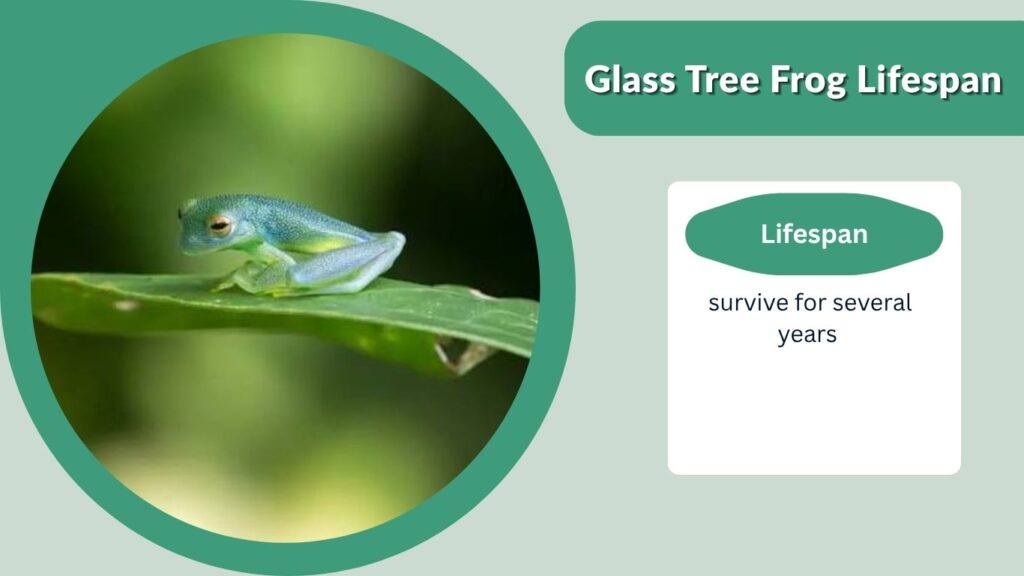
The lifespan of glass frogs is not thoroughly documented for every species. They may survive for several years when protected from predators, disease, dehydration, and habitat disruption.
Captive lifespan depends strongly on proper species identification and husbandry. Incorrect temperature, poor water quality, nutritional deficiencies, overcrowding, and chronic stress can shorten a frog’s life.
Claims that every glass tree frog has one exact lifespan should therefore be treated cautiously.
Threats and Conservation
Glass frogs depend on both healthy forests and clean waterways. Damage to either environment can prevent them from feeding, breeding, or completing their life cycle.
Major threats include:
- Deforestation
- Habitat fragmentation
- Water pollution
- Climate change
- Infectious disease
- Collection for wildlife trade
- Changes to stream flow
- Invasive species
Some species remain relatively widespread, while others occupy extremely small geographic ranges. Restricted species may be especially vulnerable because the destruction of one forest or watershed can affect a large portion of their population.
FAQs
Is a glass frog a type of tree frog?
A glass frog is an arboreal frog adapted for living on leaves, branches, and other vegetation. Glass frogs belong to the family Centrolenidae. Although people commonly call them glass tree frogs, this name describes a group of related species rather than one particular frog.
Can glass tree frogs climb glass?
Yes. Glass frogs have expanded toe pads that help them grip leaves, branches, and smooth surfaces. The pads use a combination of mucus, microscopic structures, and close surface contact to produce adhesion. A captive frog may therefore climb the glass walls of its enclosure.
How large does a glass tree frog grow?
Most glass tree frogs are tiny, commonly measuring around 0.7 to 1.2 inches in body length. Size varies among species, and females may be slightly larger than males. A few members of the glass frog family can grow considerably larger than the typical species.
Can glass tree frogs be kept as pets?
They can be maintained by experienced amphibian keepers, but they are not beginner-friendly pets. Glass frogs need a carefully planted enclosure, excellent water quality, stable humidity, appropriate temperatures, small live insects, and minimal handling. Only legally obtained, captive-bred frogs should be considered.
Why can you see a glass frog’s organs?
The abdominal skin and underlying tissues of many glass frog species contain relatively little pigment. Light can pass through these tissues, allowing parts of the heart, liver, digestive tract, and blood vessels to be seen. The amount of visible detail differs among species.
