
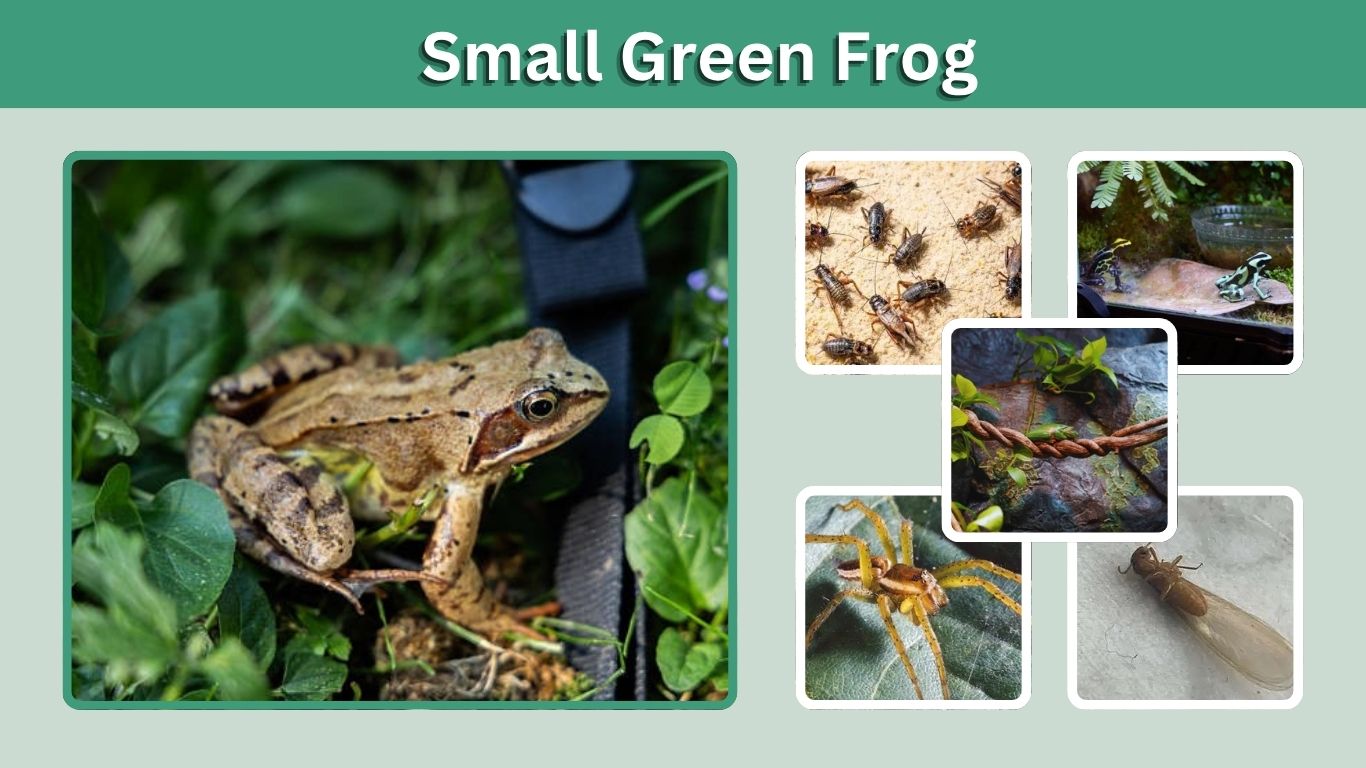
Finding a small green frog in your garden, house, or near a pond can be exciting. However, “small green frog” is a general description rather than the name of one species. The frog could be an American green treefrog, squirrel treefrog, gray treefrog, Pacific treefrog, or a young green frog. Its location, body markings, skin texture, size, and toe shape are the best clues for identification.
What Is a Small Green Frog?
Several frog species can appear green. Some remain bright lime green, while others change between green, gray, tan, and brown. Treefrogs usually have rounded toe pads that help them climb vegetation, windows, walls, and outdoor furniture.
Color alone is not enough for a reliable identification. Temperature, moisture, age, lighting, and natural variation can affect a frog’s appearance.
| Possible species | Typical appearance | Common range |
| American green treefrog | Smooth, bright green, often with a white side stripe | Southeastern and south-central United States |
| Squirrel treefrog | Small and slender; green, brown, gray, or spotted | Florida and other southeastern states |
| Gray treefrog | Green or mottled gray with orange-yellow inner thighs | Eastern and Midwestern North America |
| Pacific treefrog | Green or brown with a dark eye mask | Washington, Oregon, and the Pacific Northwest |
| Green frog | Green face, larger body, ridges along the back | Eastern and Midwestern North America |
Common Small Green Frog Species
American Green Treefrog
The American green treefrog, scientifically known as Hyla cinerea, is one of the most recognizable green frogs. Adults are generally about 1.25 to 2.25 inches long. They have slender legs, smooth skin, rounded toe pads, and bright green coloring.
A white, cream, or yellow stripe commonly runs from the upper lip along each side of the body. Small yellow or golden flecks may also appear on the back. However, the stripe can be short or absent in some individuals.
These frogs live around ponds, marshes, swamps, lakes, and wet gardens. They are native throughout Florida and occur across much of the southeastern United States, extending west toward Texas and north toward Maryland and Delaware.
Squirrel Treefrog
A small green frog in Florida may be a squirrel treefrog. This species normally measures only 1 to 1.5 inches and has a smooth, slender body. Its color is highly variable. One frog may be lime green, while another may be gray, brown, tan, or lightly spotted.
Some squirrel treefrogs have a pale side stripe, but it is usually less clear than the stripe of an American green treefrog. Green individuals often have a yellowish upper lip. They are common around homes, where they hunt insects near outdoor lights at night.
Squirrel treefrogs occur throughout Florida and across parts of the Southeast, from Texas northward into Virginia.
Gray and Cope’s Gray Treefrogs
Despite their names, gray treefrogs and Cope’s gray treefrogs can be solid green. They may also appear creamy white, brown, gray, or mottled. Their color can change according to environmental conditions.
A useful identification feature is the bright yellow or orange coloring hidden on the inner surfaces of the hind legs. These frogs also have noticeable toe pads and slightly granular skin. They are common possibilities in Michigan, Ohio, Illinois, Indiana, Minnesota, Wisconsin, Ontario, and other eastern or Midwestern regions.
The two species look nearly identical, and their calls or scientific testing are often needed to separate them confidently.
Pacific Treefrog
A small green frog in Washington State or the Pacific Northwest is often a Pacific treefrog. Adults are about two inches long and can be light lime green, dark green, brown, copper, gray, or a mixture of colors.
The easiest clue is a sharply defined dark mask that runs from the nose through the eye toward the shoulder. Some individuals also have stripes, spots, or a Y-shaped marking between the eyes.
Pacific treefrogs are adaptable and may live in forests, gardens, grasslands, wetlands, and developed neighborhoods where water is available.
Young Green Frog
The American green frog is not a treefrog. It spends much of its time beside ponds, streams, and lakes. Adults can reach approximately three inches, but juveniles may look like small green frogs.
Green frogs often have a green head, bronze or brown body, visible eardrums, and raised ridges running from behind the eyes along the back. These ridges help distinguish them from bullfrogs.
They are likely possibilities in Michigan, Minnesota, Wisconsin, Ohio, Pennsylvania, Massachusetts, and other eastern areas.
How to Identify a Small Green Frog
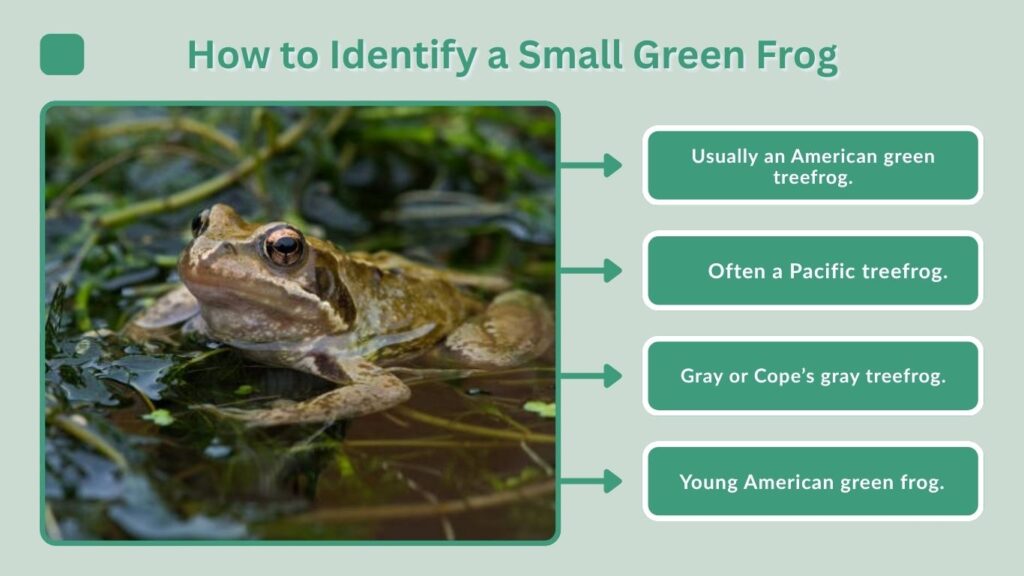
Check Its Body Markings
Look carefully without disturbing the frog.
- White stripe along each side: Usually an American green treefrog.
- Dark mask through the eye: Often a Pacific treefrog.
- Orange or yellow inner thighs: Gray or Cope’s gray treefrog.
- Green face with long back ridges: Young American green frog.
- Smooth body with weak or absent stripe: Possibly a squirrel treefrog.
- Large toe pads and irregularly bumpy skin in Florida: Could be an invasive Cuban treefrog.
A frog with black spots is not automatically a separate species. Gray treefrogs, Pacific treefrogs, and young green frogs can all display dark spots or mottling.
Examine the Feet and Skin
Treefrogs have expanded, rounded toe pads for climbing. Frogs that spend most of their time on the ground or in water usually have narrower toes and stronger webbing.
Smooth skin is common in American green and squirrel treefrogs. Gray treefrogs have more granular skin. A large Florida frog with rough, warty skin, bulging eyes, and unusually large toe pads should be checked carefully because it may be a Cuban treefrog. Native frogs should never be killed based only on color.
Are Small Green Frogs Poisonous?
Most small green frogs commonly encountered in North America are not dangerously poisonous to people. They do not attack humans, and their bites are not normally a concern.
However, frog skin may produce defensive secretions that irritate the eyes, lips, open wounds, or other sensitive areas. Cuban treefrogs produce particularly irritating mucus that can cause burning eyes and allergy-like reactions.
Frogs and their habitats may also carry Salmonella, even when the animals look healthy. Avoid touching your face after handling one and wash your hands thoroughly with soap and running water. Young children should not handle wild or pet amphibians.
What Do Small Green Frogs Eat?
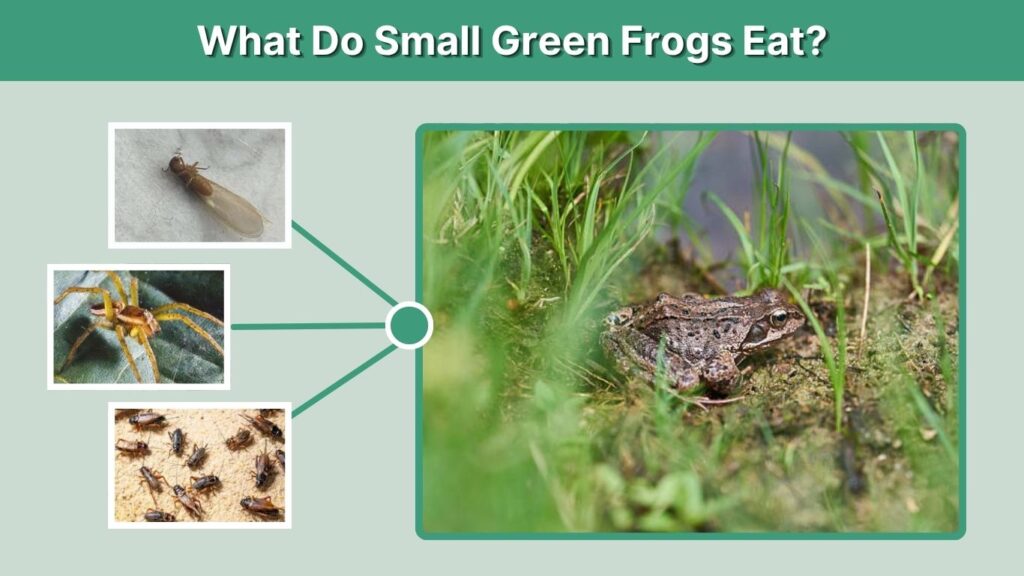
Small green frogs are primarily insect eaters. Their prey depends on the frog’s size and habitat.
Common foods include:
- Flies
- Mosquitoes
- Moths
- Beetles
- Crickets
- Spiders
- Termites
- Small caterpillars
- Other tiny invertebrates
American green treefrogs frequently hunt flies, mosquitoes, and insects attracted to porch lights. Squirrel treefrogs commonly consume spiders, termites, beetles, and other small insects.
Because they eat garden pests, native frogs are usually beneficial visitors rather than animals that need to be removed.
Why Are Small Green Frogs Around the House?
Treefrogs may appear on windows, doors, patios, and exterior walls because lights attract insects. They may also shelter inside plant pots, umbrellas, pipes, gutters, loose bark, outdoor furniture, and other cool, damp spaces.
Finding one indoors usually means it entered through an open door, damaged screen, roof vent, or gap around a pipe. It is not normally trying to establish a permanent indoor home.
How to Remove One Humanely
Place a container over the frog and carefully slide a piece of cardboard underneath. Carry it outside and release it in a sheltered, damp area close to where it was found.
To reduce repeated visits:
- Repair window and door screens.
- Seal gaps around pipes and vents.
- Move bright outdoor lights away from doors.
- Turn off unnecessary lights at night.
- Check plant pots and furniture before bringing them indoors.
- Reduce artificial standing water where frogs are breeding.
Do not use salt, bleach, pesticides, boiling water, or sticky traps. In Florida, confirm the species with UF/IFAS or a local wildlife specialist before taking action against a suspected invasive frog.
Can a Small Green Frog Be Kept as a Pet?
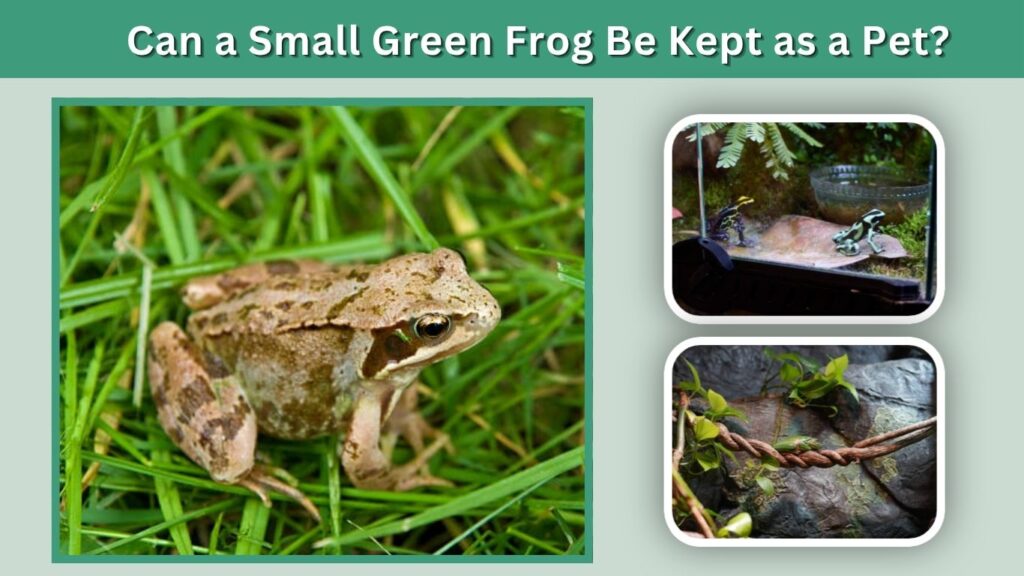
American green treefrogs are sometimes maintained as pets, but a wild frog should not be collected from the yard. Wild capture may be restricted by local laws, can spread diseases, and removes an animal from its natural population. The CDC recommends obtaining amphibians responsibly and researching their specialized care before adopting one.
A captive-bred green treefrog generally requires a tall, secure terrarium with climbing branches, suitable humidity, clean water, ventilation, hiding places, and correctly sized live insects. Handling should be kept to a minimum because frogs have delicate, absorbent skin.
Small Green Frog Spiritual Meaning
In folklore and personal symbolism, a small green frog is commonly connected with renewal, growth, fertility, transformation, rain, and good fortune. These meanings are cultural interpretations rather than scientific facts. Seeing a frog may also simply indicate that the surrounding habitat has moisture, vegetation, insects, and suitable shelter.
FAQs
What is the most common small bright green frog?
In the southeastern United States, it is often an American green treefrog or squirrel treefrog. The American green treefrog commonly has a clear white stripe along its side, while the smaller squirrel treefrog has more variable colors and markings.
Are small green treefrogs dangerous to dogs?
Most native green treefrogs are not seriously dangerous, although their skin secretions may cause temporary drooling or irritation if a dog mouths one. Cuban treefrogs can produce stronger irritation. Contact a veterinarian when a pet shows persistent drooling, vomiting, weakness, or breathing problems.
Why does a small green frog turn brown?
Some treefrogs naturally change between green, gray, tan, and brown. Temperature, humidity, activity, and other environmental conditions can influence the change. A brown frog is therefore not necessarily sick or a different species.
What is the small green frog with a white stripe?
A smooth green frog with a white or cream stripe running from its jaw along the body is probably an American green treefrog. Squirrel treefrogs may also have light stripes, but their stripes are usually less distinct or shorter.
What should I do after touching a small green frog?
Wash your hands thoroughly with soap and running water. Avoid touching your eyes, mouth, food, or kitchen surfaces beforehand. Seek medical advice when secretions enter the eyes and severe burning, swelling, breathing difficulty, or an allergic reaction develops.
