
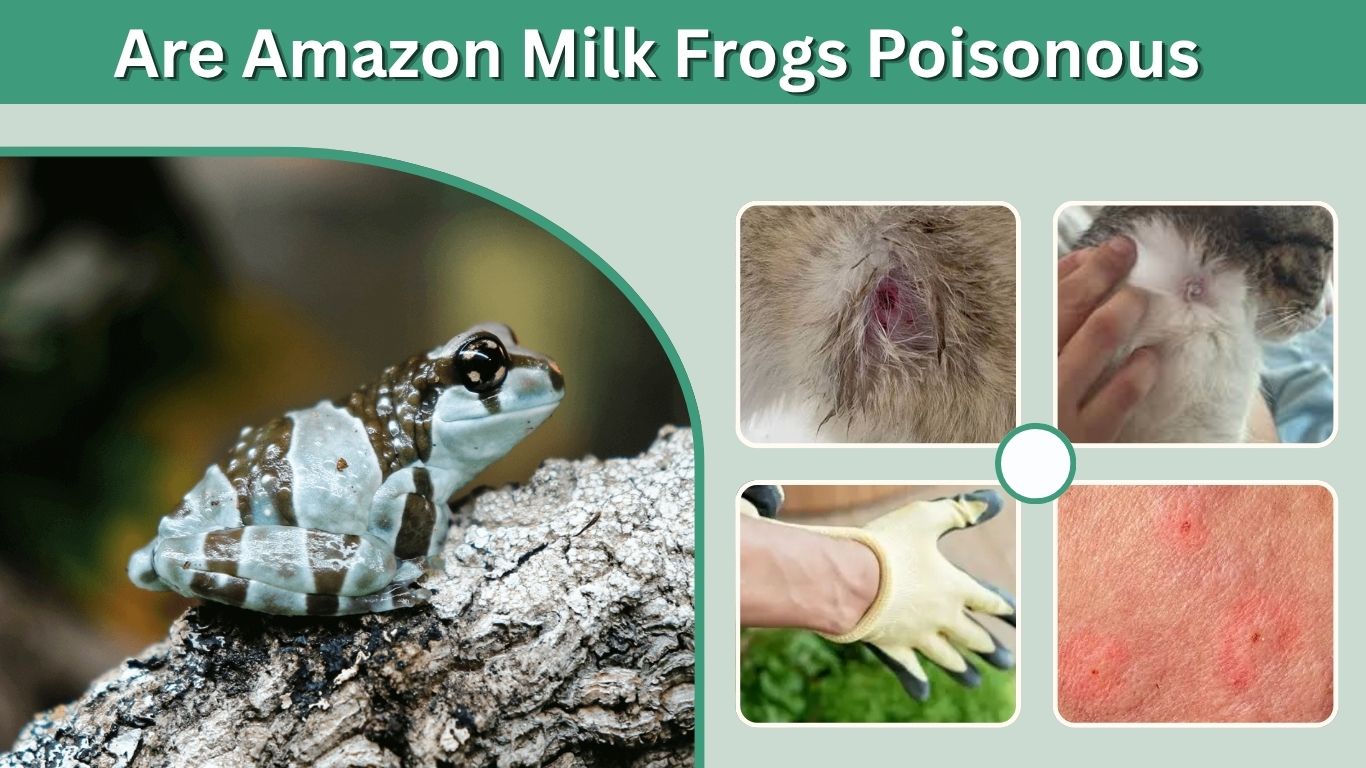
Yes, Amazon milk frogs are mildly poisonous. When frightened or stressed, they can release a sticky, milky-white secretion through their skin. This defensive substance can make potential predators sick and gives the species its common name. However, Amazon milk frogs are not considered dangerously toxic to humans like some poison dart frogs. Their secretion is more likely to cause irritation if it reaches the eyes, mouth, broken skin, or another sensitive area.
Amazon Milk Frog Poison at a Glance
The Amazon milk frog, scientifically known as Trachycephalus resinifictrix, is an arboreal frog from South American rainforests. Its defensive secretion is produced through the skin rather than injected through teeth or a stinger.
| Question | Answer |
| Are Amazon milk frogs poisonous? | Yes, mildly |
| Are they venomous? | No |
| Are they usually dangerous to humans? | No, but the secretion may irritate sensitive tissue |
| Can captive frogs produce the secretion? | Yes |
| Should they be handled? | Only when necessary |
| Main human concern | Eye, mouth, wound and skin irritation |
| Additional concern | Amphibians may carry Salmonella |
Why Are Amazon Milk Frogs Called “Milk Frogs”?
The name does not refer to the frog’s diet or its pale coloration. It comes from the sticky, milk-colored material released from the skin when the animal feels threatened.
A defensive skin secretion
When approached by a predator, the frog may cover its body with a white substance that tastes unpleasant or causes sickness. This chemical defense can persuade a predator to release the frog or avoid attacking it again. Smithsonian’s National Zoo describes the secretion as poisonous to potential predators, while several zoos note that it is less powerful than the toxins of many better-known poisonous frogs.
The secretion may also help reduce moisture loss from the frog’s skin. Amazon milk frogs have been observed spreading the substance over their bodies, providing another possible benefit in warm conditions.
Poisonous, not venomous
Amazon milk frogs are poisonous rather than venomous. A poisonous animal causes exposure when its toxin is touched, swallowed or transferred to sensitive tissue. A venomous animal actively injects venom through fangs, spines or a stinger.
Amazon milk frogs cannot inject their secretion. They do not have venomous fangs, and their defensive material is released from the skin.
Are Amazon Milk Frogs Poisonous to Humans?
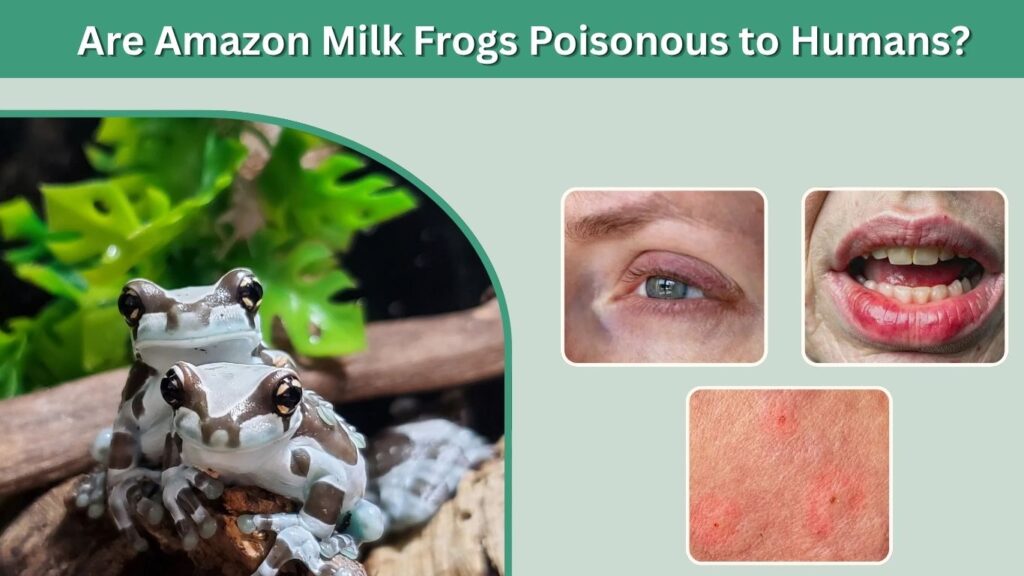
Their secretion should be treated carefully, but these frogs are not generally associated with severe human poisoning. Practical husbandry guidance focuses mainly on preventing irritation to the eyes, mouth, wounds and sensitive skin.
Possible effects on people
Contact with the secretion may potentially cause:
- Burning or stinging eyes
- Red or irritated skin
- Discomfort in an open cut
- Irritation of the lips or mouth
- Temporary burning after touching the face
- An allergic-type reaction in a sensitive person
The severity can vary according to the amount of secretion, where it makes contact and the person’s individual sensitivity. People with cuts, eczema or other damaged skin should be especially cautious.
Can touching one kill you?
Normal accidental skin contact is not expected to be fatal. Zoo sources describe the secretion as less poisonous than many other frog toxins and primarily useful for making predators sick. Nevertheless, it should never be intentionally tasted, swallowed or rubbed into the eyes.
Medical attention is appropriate if exposure causes severe pain, persistent eye irritation, facial swelling, breathing difficulty, repeated vomiting or other worsening symptoms.
Are Amazon Milk Frogs Poisonous in Captivity?
Captive Amazon milk frogs retain the ability to produce their defensive secretion. Captivity does not automatically make them completely non-toxic.
However, a calm captive frog may rarely release visible “milk” because the secretion is primarily a defensive response to stress. Rough handling, restraint, transport or an attempted escape may make a frog more likely to produce it. Zoo Boise notes that captive frogs rarely release the substance, although they remain capable of doing so.
Different from many poison dart frogs
Amazon milk frogs should not be treated as harmless simply because they were captive-bred. Their secretion is part of their natural defense system. Avoid assuming that captive breeding has removed it, and follow the same handling precautions with both wild and captive individuals.
Is It Safe to Handle an Amazon Milk Frog?
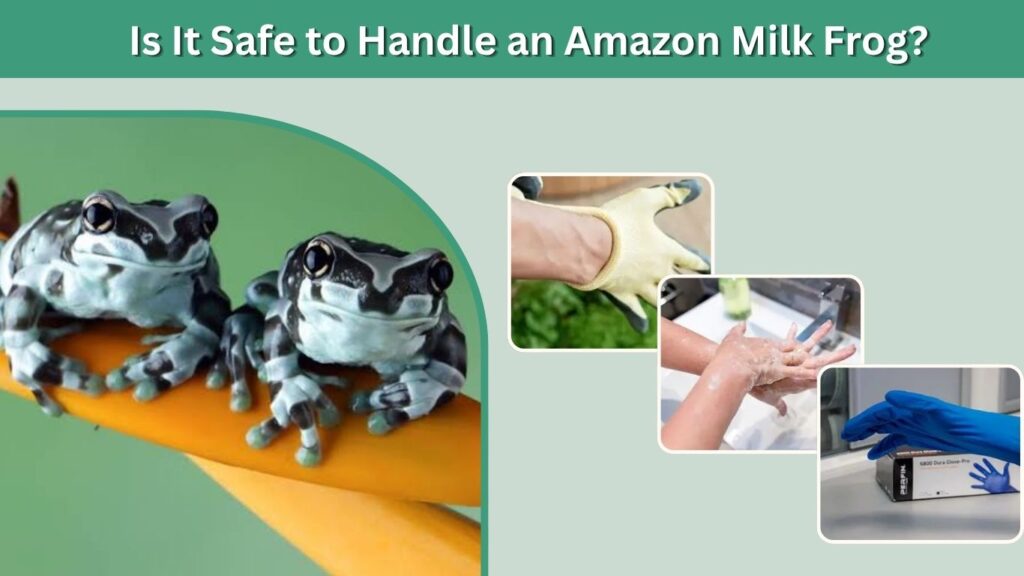
Amazon milk frogs are display animals and should not be handled recreationally. Handling can stress the frog, trigger defensive secretion and damage its delicate, absorbent skin.
Human hands may carry soap, lotion, sanitizer, perfume, salt and other residues that can be harmful to an amphibian. The frog’s welfare is therefore another important reason to minimize direct contact.
Safe handling practices
When movement is necessary for cleaning, relocation or a health examination:
- Wash and thoroughly rinse your hands before contact.
- Use clean, powder-free disposable gloves when possible.
- Lightly dampen appropriate gloves with clean, treated water.
- Keep handling time as brief as possible.
- Do not squeeze or tightly restrain the frog.
- Keep your hands away from your eyes and mouth.
- Wash your hands with soap and water afterward.
Care guidance recommends minimizing handling and using gloves because the secretion may irritate the skin and eyes.
What Should You Do After Contact with the Secretion?
Accidental contact can usually be managed by quickly removing the substance and avoiding further exposure.
Skin exposure
Rinse the affected skin thoroughly with clean water and wash gently with soap. Remove contaminated gloves or clothing and avoid spreading the secretion to your face.
Monitor the area for increasing redness, pain, swelling or blistering. Seek medical advice when irritation is severe or does not improve.
Eye exposure
Immediately rinse the eye thoroughly with clean, lukewarm water. Remove contact lenses when they can be taken out easily, and do not rub the eye. Husbandry guidance warns that amphibian skin substances may cause a burning sensation following eye contact.
Obtain urgent medical assistance if pain, redness, blurred vision or light sensitivity continues after rinsing.
Mouth or accidental ingestion
Rinse the mouth with water and do not intentionally induce vomiting. Medical advice should be obtained if any secretion was swallowed or symptoms such as nausea, mouth irritation or vomiting develop.
The Separate Risk of Salmonella
The defensive secretion is not the only reason to wash your hands. Frogs and other amphibians can carry Salmonella bacteria even when they look clean and healthy. People may become infected by touching the frog, enclosure water, substrate, feeding equipment or contaminated surfaces.
Keep the frog and its equipment away from kitchens and food-preparation areas. Children should be supervised, and anyone who handles the animal or cleans its habitat should wash their hands thoroughly with soap and water afterward.
Are Amazon Milk Frogs Dangerous to Other Pets?
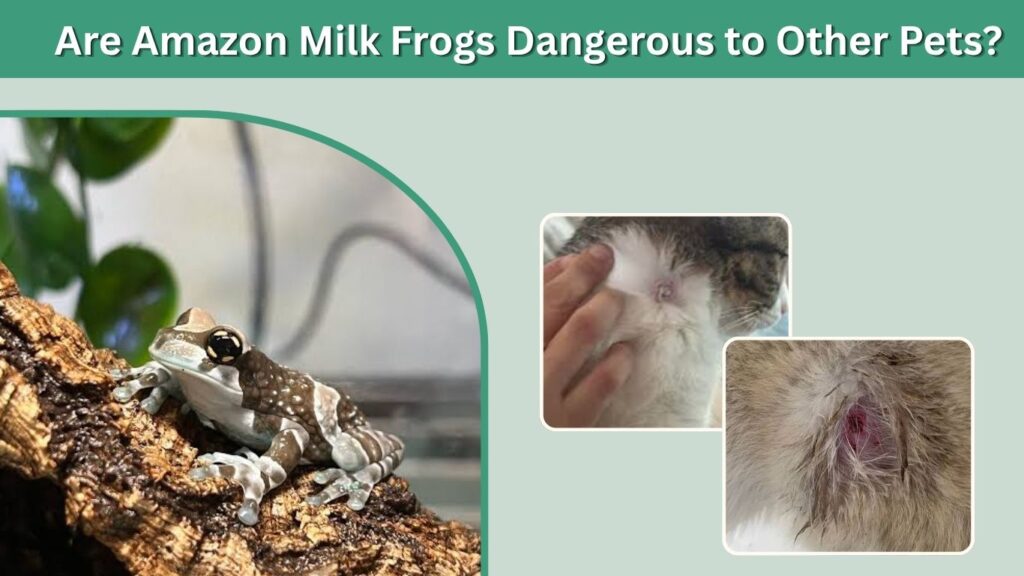
A dog, cat or other animal that bites or mouths an Amazon milk frog could be exposed to its defensive secretion. Zoo sources indicate that the material can make predators sick. It may also irritate an animal’s mouth, eyes or digestive system.
Keep the enclosure securely closed and inaccessible to other pets. Contact a veterinarian promptly if another animal bites the frog, develops excessive drooling, paws at its mouth, vomits, becomes weak or experiences breathing difficulty.
The frog may also be seriously injured during the encounter, even when the other animal releases it immediately.
Common Misunderstandings
They are not poison dart frogs
Amazon milk frogs possess a defensive skin secretion, but they are not members of the poison dart frog family. Their toxin is generally described as less potent than the powerful chemical defenses associated with certain wild poison frogs.
The white substance is not actual milk
The frog does not produce dairy milk. “Milk” is simply a descriptive name for the color and appearance of its sticky defensive secretion.
Their normal skin pattern is not poison
The frog’s white, gray, blue-green and brown coloration does not itself indicate that toxin is being released. The defensive material is a separate sticky secretion that may appear when the animal is stressed.
FAQs
Are Amazon milk frogs safe to keep as pets?
They can be safely kept when housed securely and handled only when necessary. Owners should prevent contact between the frog’s secretion and their eyes, mouth or wounds. Washing hands afterward also reduces the risk of exposure to Salmonella carried by amphibians.
Do Amazon milk frogs bite?
They are not known for using biting as their main defense. Their primary protection is the sticky skin secretion. A frightened frog may struggle or attempt to escape, so handling should remain brief and gentle rather than forcing the animal to stay still.
Are baby Amazon milk frogs poisonous?
Young Amazon milk frogs should still be treated as animals capable of producing defensive skin substances. Their smaller size does not make unnecessary handling advisable. Babies are delicate, easily stressed and particularly vulnerable to oils, chemicals and residues on human hands.
Can you touch an Amazon milk frog with bare hands?
Direct bare-hand contact is best avoided. Necessary handling should be performed with clean, powder-free gloves or carefully cleaned and rinsed hands, depending on professional care guidance. Never handle the frog after applying lotion, sanitizer, soap, perfume or household chemicals.
What happens if an Amazon milk frog secretes white liquid?
The frog is probably feeling threatened or stressed. Return it to a secure enclosure, stop unnecessary handling and wash any exposed skin. Rinse immediately if the material reaches the eyes or mouth, and seek medical help if significant or persistent symptoms develop.
