
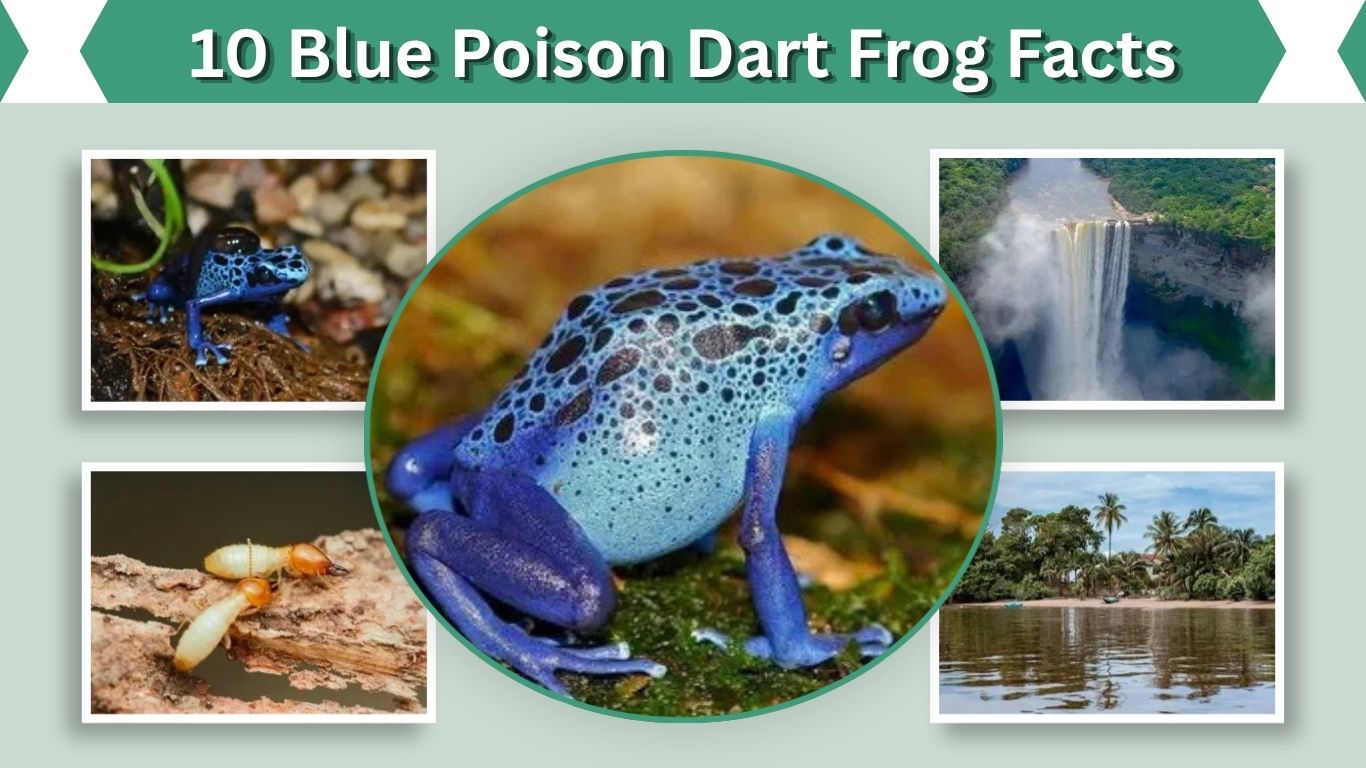
The blue poison dart frog is a small but unforgettable amphibian with brilliant blue skin and irregular black spots. Native to a limited part of South America, it spends its days searching the humid forest floor for tiny insects. Its vivid appearance warns predators about toxic chemicals stored in its skin. However, its poison, scientific classification and connection to hunting darts are often misunderstood. The following blue poison dart frog facts explain its size, habitat, diet, behavior, reproduction and unusual defenses.
Blue Poison Dart Frog Quick Facts
| Feature | Information |
| Scientific name | Dendrobates tinctorius “azureus” |
| Family | Dendrobatidae |
| Size | Approximately 3–4.5 cm |
| Native region | Primarily southern Suriname |
| Habitat | Humid forest islands near savanna |
| Diet | Ants, mites and other tiny arthropods |
| Activity | Diurnal |
| Reproduction | Egg-laying |
| Captive lifespan | Commonly around 10 years |
The blue form was originally described as Dendrobates azureus, but modern taxonomic references generally include it within Dendrobates tinctorius.
1. It Is Usually Considered a Color Form, Not a Separate Species
The blue poison dart frog was described as Dendrobates azureus in 1969. Later genetic and taxonomic research placed it within the highly variable dyeing poison frog, Dendrobates tinctorius. It is now commonly written as Dendrobates tinctorius “azureus,” with quotation marks indicating a geographic color form or morph rather than a formally recognized subspecies. Some zoos and older references still use Dendrobates azureus.
2. Its Blue Color Is a Warning to Predators
The frog’s brilliant coloration is an example of aposematism, in which an animal displays conspicuous colors that advertise an unpleasant taste or harmful chemical defense. Its legs may appear deep royal blue, while its back ranges from pale sky blue to cobalt. Black spots break up the blue surface and make the frog even more noticeable against brown leaves and green vegetation.
3. Every Frog Has a Different Spot Pattern
The irregular black spots on a blue poison dart frog are not arranged identically on every individual. Researchers and animal keepers can therefore use the pattern to distinguish one frog from another, much like using fingerprints to identify people. The markings may include tiny dots, large rounded patches or connected dark areas across the head, back and limbs.
4. Blue Poison Dart Frogs Are Very Small
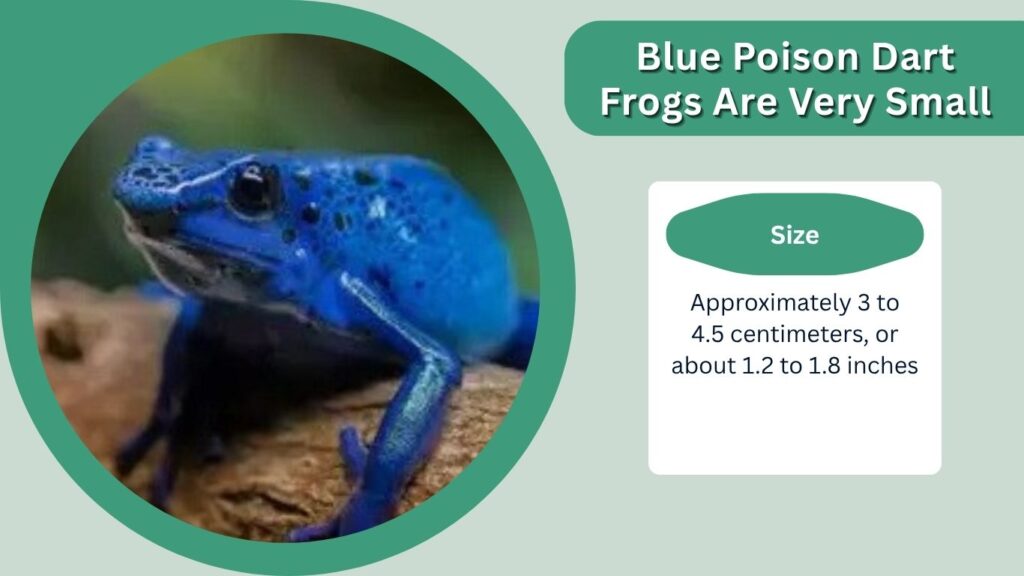
Adults generally measure approximately 3 to 4.5 centimeters, or about 1.2 to 1.8 inches, from the snout to the rear of the body. Females tend to be slightly larger and more heavily built than males. Despite their small size, they have strong legs, widened toe pads and enough agility to travel across wet rocks, roots and forest leaf litter.
5. They Live in a Very Limited Wild Habitat
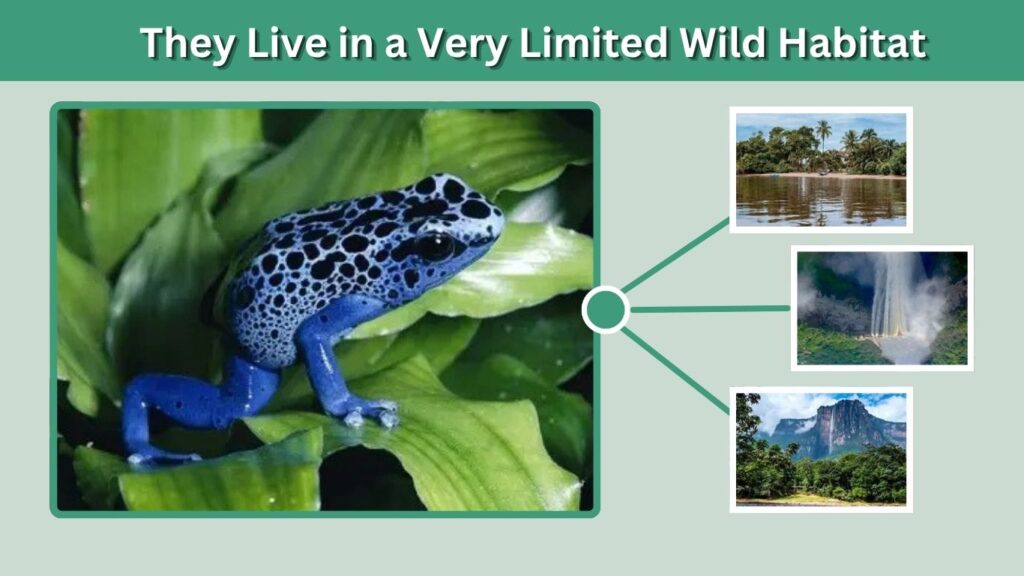
The best-known blue population occurs in isolated forest patches near the Sipaliwini Savanna of southern Suriname. These moist forest islands are surrounded by comparatively dry, grass-dominated land. Within them, the frogs favor humid, shaded places near small streams, moss-covered rocks and abundant ground vegetation. The wider species, Dendrobates tinctorius, occurs across parts of Guyana, Suriname, French Guiana and Brazil.
6. Their Poison Comes From Their Food
Blue poison dart frogs do not create all their defensive alkaloids entirely by themselves. In the wild, they obtain chemical compounds by eating certain ants, mites and other tiny arthropods. These alkaloids are stored in glands beneath the skin and can be released when the frog is threatened. Captive-bred frogs eating fruit flies and non-toxic feeder insects normally lack the powerful chemical defenses found in wild individuals.
7. The “Dart Frog” Name Can Be Misleading
Poison frogs are commonly said to have been used for coating hunting darts, but this practice has been reliably documented for only a few species. Those species belong to the genus Phyllobates, not Dendrobates. Therefore, the blue poison dart frog is part of the group that received the common name, but it is not one of the species clearly documented as a traditional source of dart poison.
8. They Hunt During the Day
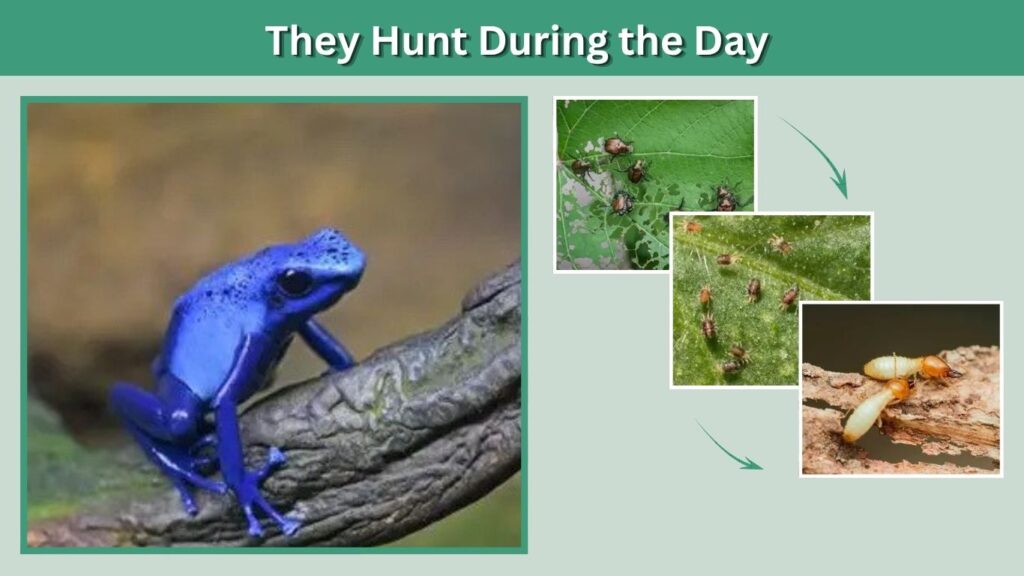
Unlike many frogs that become most active after sunset, blue poison dart frogs are diurnal. They spend daylight hours moving across the forest floor and searching for ants, mites, termites, beetles, flies and other small invertebrates. They capture prey using quick movements and a sticky tongue. Their daytime activity also makes their bright warning coloration visible to birds, snakes and other potential predators.
9. They Can Be Surprisingly Territorial
Blue poison dart frogs may be small, but they are bold and defensive around valuable feeding and breeding areas. Males advertise their presence with quiet calls and may chase or wrestle rival males. Females can also behave aggressively, particularly when competing for a mate. Wrestling frogs may press against one another and attempt to force their opponent away without using teeth or claws.
10. Fathers Carry Their Tadpoles to Water
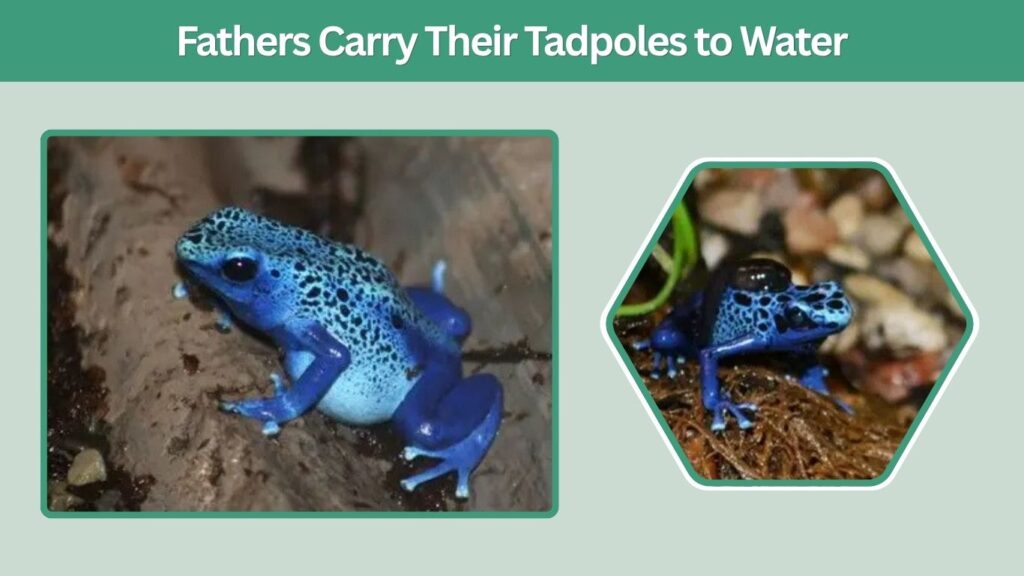
Females place a small clutch of eggs in a moist location on land. The male helps care for the developing eggs, and after they hatch, he carries the tadpoles on his back to small pools of water. These nurseries may form inside tree holes, leaf axils or other water-holding spaces. Carrying the tadpoles prevents them from drying out and gives them a suitable place to complete metamorphosis.
Additional Fun Facts
Blue poison dart frogs are poor swimmers because their toes are not extensively webbed. They are primarily terrestrial, although their adhesive toe pads help them grip wet surfaces and climb when necessary. In human care, poison frogs may live for more than ten years when provided with suitable environmental conditions and nutrition.
FAQs
Are blue poison dart frogs deadly to humans?
Wild frogs can carry toxic alkaloids in their skin, so they should not be handled casually. However, captive-bred frogs eating ordinary feeder insects generally lack strong toxins. Their sensitive skin can also absorb oils, soap and chemicals from human hands, making unnecessary handling harmful to the frog.
What do blue poison dart frogs eat?
They eat tiny arthropods, including ants, mites, termites, beetles and flies. Their wild diet provides the alkaloids used in their chemical defenses. Frogs in managed care usually receive small fruit flies, pinhead crickets and similarly sized feeder insects.
Where do blue poison dart frogs live?
The well-known azure-blue population inhabits humid forest islands surrounded by the Sipaliwini Savanna in southern Suriname. It stays mainly near the ground in shaded places with moist leaf litter, rocks, vegetation and access to small water sources.
How long do blue poison dart frogs live?
Toronto Zoo reports a lifespan of roughly four to six years in the wild and an average of around ten years in captivity. Some individuals in managed care may survive for as long as 12 years when maintained under appropriate conditions.
Can blue poison dart frogs swim?
They can move through shallow water when necessary, but they are not strong swimmers. Their toes lack the extensive webbing found in many aquatic frogs. They spend most of their lives walking and hopping across the humid forest floor rather than living in ponds.
