
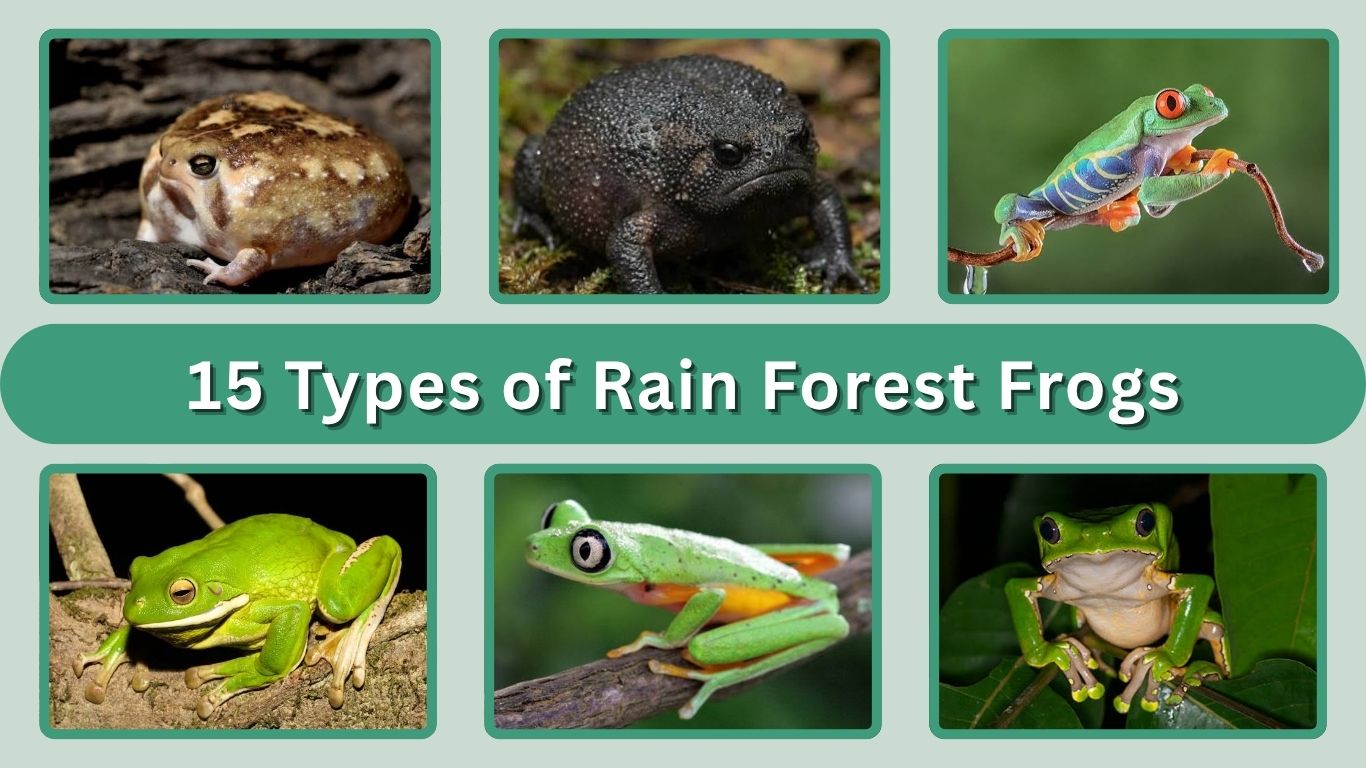
Rain forests are home to some of the most colorful, unusual, and highly adapted frogs in the world. From tiny poison dart frogs and transparent glass frogs to large horned frogs and tree-dwelling species, each has unique features that help it survive in humid forest environments. Some live high in the canopy, while others remain hidden in leaf litter or underground. This guide covers 15 types of rain forest frogs, including their identification, habitat, behavior, diet, lifespan, and life cycle.
1. Forest Rain Frog
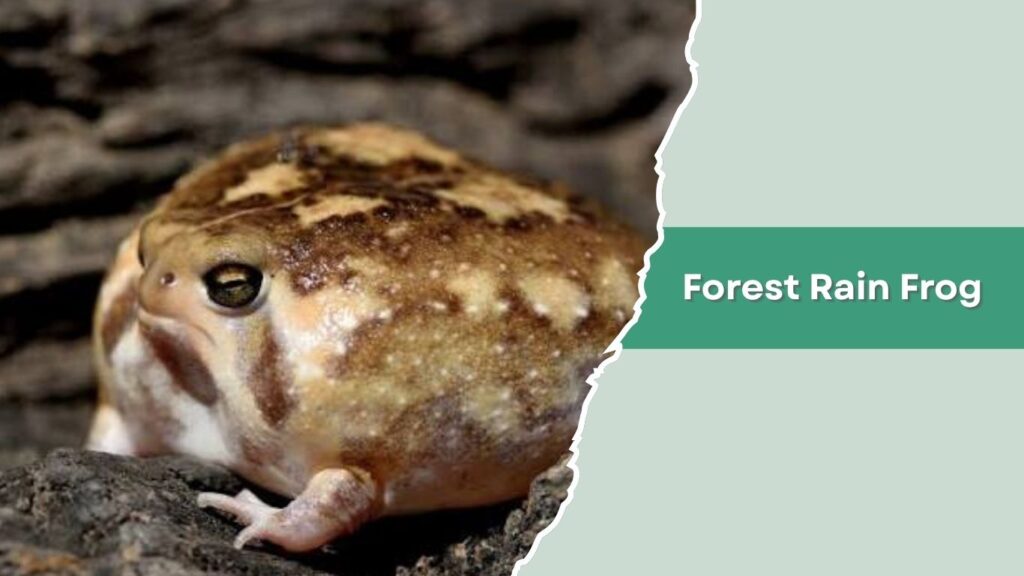
The Forest Rain Frog (Breviceps sylvestris) is a compact, burrowing frog native to South Africa. Despite its name, it is very different from the colorful tree frogs commonly associated with tropical rain forests. It spends much of its life close to or beneath the ground in montane forests and neighboring grasslands. The species is endemic to Limpopo Province, South Africa.
Identification
- Body is short, rounded, and thick
- Head is relatively small
- Snout is short and flattened
- Legs are unusually short
- Skin may appear brown, reddish, yellowish, or mottled
- Eyes are small compared with the body
- Feet are adapted for digging rather than swimming
Habitat and Distribution
Forest Rain Frogs occur naturally only in South Africa, particularly eastern and northern Limpopo Province. Their habitats include montane forest and mountain grassland. Populations are separated geographically, and two distinct subspecies have traditionally been recognized.
Behavior and Diet
These frogs are primarily terrestrial and spend considerable time hidden beneath soil, leaf litter, or other forest-floor cover. They become more active when environmental conditions are moist, particularly following rainfall.
Forest Rain Frogs feed mainly on small terrestrial invertebrates. Ants, termites, beetles, and other tiny arthropods found in soil and leaf litter are likely important prey.
Lifespan and Life Cycle
Unlike many familiar frogs, rain frogs are highly adapted to terrestrial reproduction. Breeding takes place away from permanent ponds, and developing young do not depend on a long free-swimming tadpole stage.
Young emerge as small froglets, allowing the species to reproduce in moist terrestrial habitats without requiring open water for tadpole development.
2. Black Rain Frog
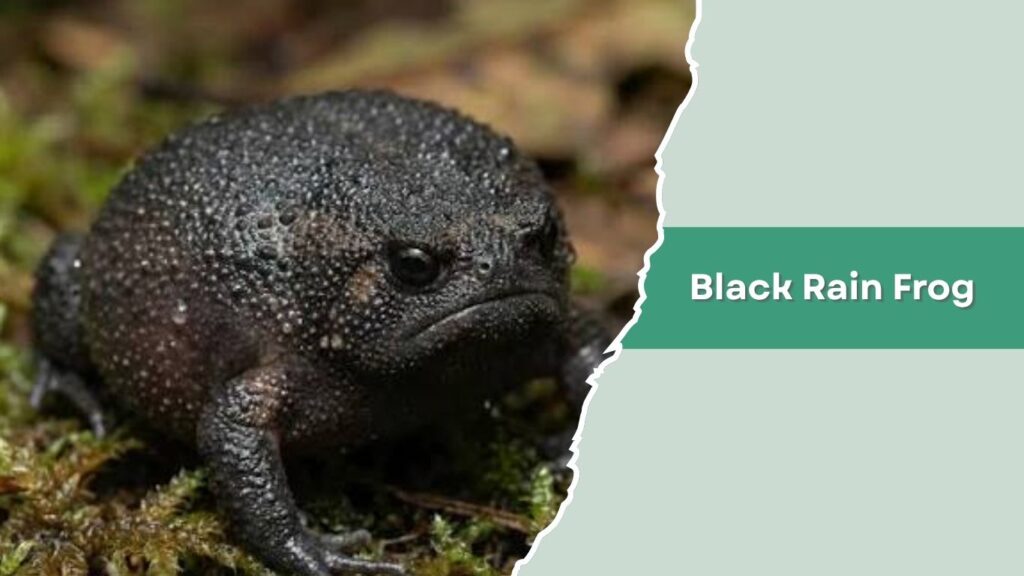
The Black Rain Frog (Breviceps fuscus) is one of Africa’s most unusual-looking frogs. Its almost spherical body, short legs, dark coloration, and naturally downturned mouth give it a distinctive appearance. Also called the Plain Rain Frog, it is endemic to South Africa and spends much of its life underground rather than beside ponds or streams.
Identification
- Body is round and heavily built
- Usually dark brown to nearly black
- Adults are roughly 4–5 cm long
- Legs and toes are extremely short
- Skin has small bumps and pits
- Snout is broad and short
- Mouth naturally appears downturned
- Feet are adapted for burrowing
Habitat and Distribution
Black Rain Frogs are native only to South Africa. They inhabit forested and shrub-covered areas along parts of the country’s southern region.
The species is strongly terrestrial. Rather than living in ponds, individuals shelter underground in burrows where moisture levels remain comparatively stable.
Behavior and Diet
Black Rain Frogs are secretive and primarily nocturnal. They spend much of the daytime underground and become more active above the surface during wet conditions.
Their diet consists mainly of small invertebrates encountered on or beneath the forest floor, including insects and other tiny arthropods. Their short limbs make them poor jumpers but effective burrowers.
Lifespan and Life Cycle
Breeding occurs on land. Females deposit eggs in underground chambers rather than in ponds. Black Rain Frogs undergo direct development, meaning they do not have a free-swimming tadpole stage. The young develop within the eggs and hatch as miniature froglets.
3. Red-Eyed Tree Frog
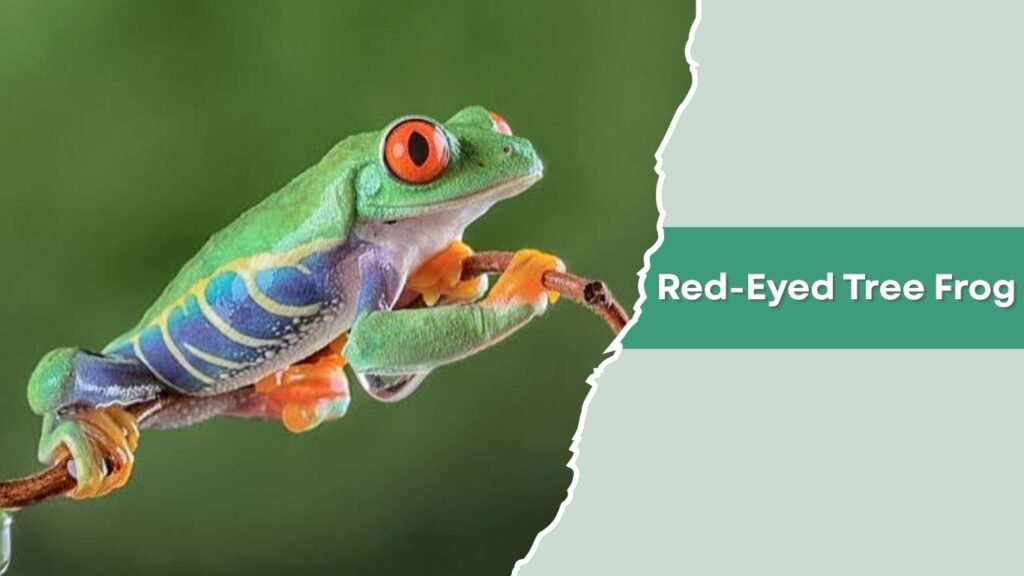
The Red-Eyed Tree Frog (Agalychnis callidryas) is one of the most recognizable rain forest frogs in the world. Its bright green body, enormous red eyes, blue-and-yellow sides, and orange toes make it instantly distinctive. This nocturnal tree frog inhabits humid forests from southern Mexico through Central America and into northern South America.
Identification
- Body is bright leaf-green
- Eyes are brilliant red with vertical pupils
- Toes are orange
- Adhesive toe pads help with climbing
- Sides show blue and yellow markings
- Skin is smooth
- Adults are approximately 4–7 cm long
- Females are generally larger than males
Habitat and Distribution
Red-Eyed Tree Frogs inhabit humid tropical forests, particularly areas close to ponds and temporary freshwater pools. They spend much of their lives among leaves and branches above the forest floor.
Their range extends from southern Mexico through Central America into northern South America. Water is especially important during reproduction because their tadpoles develop in freshwater.
Behavior and Diet
These frogs are nocturnal. During daylight, they commonly sleep on leaves with their legs tucked against the body, concealing much of their bright coloration.
After dark, they hunt crickets, moths, flies, roaches, and other small invertebrates. Their sticky toe pads allow them to move easily through wet vegetation.
Lifespan and Life Cycle
Females deposit eggs on vegetation above water. When the eggs hatch, tadpoles fall into the water below and continue developing until metamorphosis.
Red-Eyed Tree Frogs can live for several years, with reports of individuals surviving around eight years or more in captivity.
4. Strawberry Poison Dart Frog
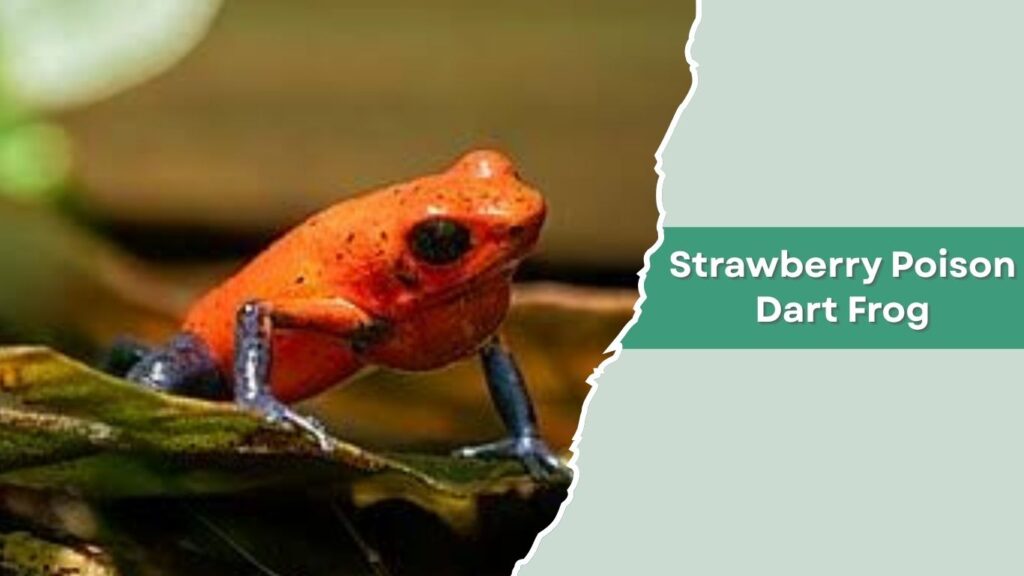
The Strawberry Poison Dart Frog (Oophaga pumilio) is a tiny but brilliantly colored rain forest frog native to Central America. Although the classic form has a strawberry-red body with blue or dark legs, this species has extraordinary geographic color variation. Populations may be red, orange, yellow, blue, green, white, or nearly black.
Identification
- Adults are approximately 17–24 mm long
- Classic form has a bright red body
- Legs are often dark blue or blackish
- Numerous regional color forms occur
- Skin appears smooth and glossy
- Eyes are relatively large and dark
- Fingers and toes lack extensive webbing
- Bright coloration warns predators of skin toxins
Habitat and Distribution
Strawberry Poison Dart Frogs live in humid tropical rain forests of Central America, particularly Nicaragua, Costa Rica, and Panama.
They spend considerable time in leaf litter near the forest floor but also climb vines, trees, and bromeliads. Water-filled plants are particularly important because females use them as nurseries for their tadpoles.
Behavior and Diet
These frogs are active during daylight. Males establish and defend small territories using repeated calls and may physically wrestle with rival males.
Their diet consists largely of tiny arthropods, especially ants and mites. Chemicals obtained through their natural diet contribute to the defensive alkaloids stored in their skin.
Lifespan and Life Cycle
Females lay only a few eggs at a time in moist terrestrial locations. Males guard and maintain the eggs. After hatching, the female carries each tadpole to a separate water-filled bromeliad.
She later returns to feed the tadpole unfertilized eggs until it completes metamorphosis, making this species remarkable for its extensive parental care.
5. Golden Poison Frog
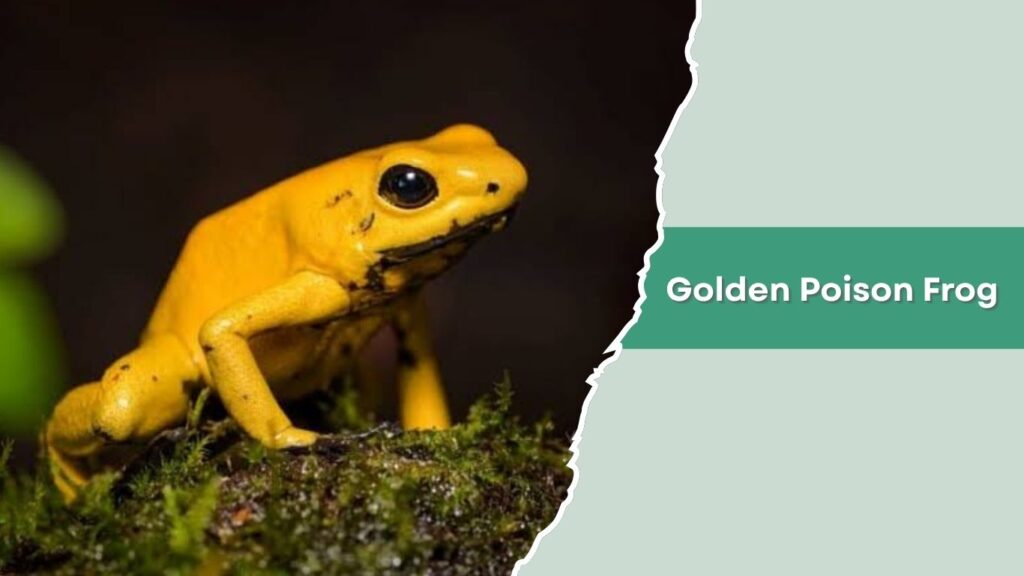
The Golden Poison Frog (Phyllobates terribilis) is a brilliantly colored amphibian native to a very limited area of western Colombia. It is famous for possessing exceptionally potent skin toxins in the wild. Despite the common name, individuals can be golden yellow, orange, or mint green. Its vivid coloration acts as a warning to potential predators.
Identification
- Adults are approximately 47–55 mm long
- Body is relatively robust
- Color may be golden yellow, orange, or mint green
- Adults usually have nearly uniform body coloration
- Eyes are dark and clearly visible
- Fingers have enlarged adhesive discs
- Juveniles are darker and more patterned
- Skin toxins provide powerful chemical defense
Habitat and Distribution
Golden Poison Frogs have an extremely restricted natural range in Colombia. They inhabit humid lowland rain forest in the departments of Cauca and Valle del Cauca, particularly at low elevations around 100–200 meters.
Dense forest vegetation, high humidity, leaf litter, and abundant small arthropods provide the conditions these frogs need.
Behavior and Diet
Golden Poison Frogs are active during daylight and forage across the forest floor. They primarily consume small insects such as ants, termites, and beetles.
Their famous toxicity is linked to compounds obtained from their wild diet. Captive frogs receiving toxin-free foods do not develop the same dangerous skin toxicity.
Lifespan and Life Cycle
Males call to attract females, and eggs are deposited in moist terrestrial locations. After hatching, an adult—typically the male—transports the tadpoles on its back to suitable water, where they continue development.
Following the aquatic tadpole stage, the young undergo metamorphosis and eventually adopt the brightly colored terrestrial appearance of adults.
6. Blue Poison Dart Frog
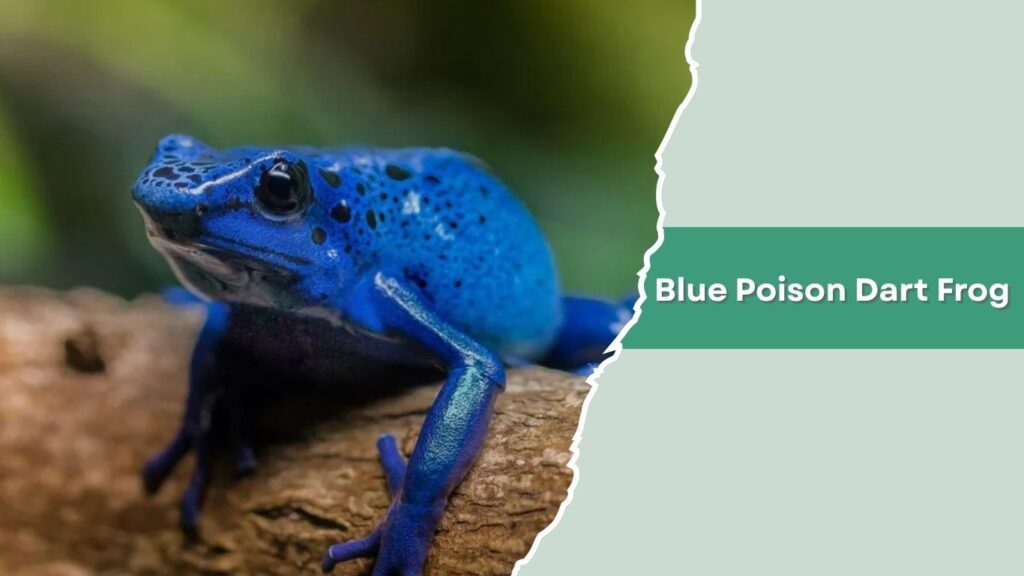
The Blue Poison Dart Frog is the striking blue form of Dendrobates tinctorius, historically called Dendrobates azureus. It is famous for its brilliant cobalt-blue skin covered with irregular black markings. This rain forest frog comes from a restricted area of southern Suriname, where it inhabits humid forest patches surrounded by savanna. Its bright coloration warns potential predators about defensive chemicals in its skin.
Identification
- Brilliant blue to cobalt-blue body
- Irregular black spots across the back and limbs
- Darker blue legs and feet
- Smooth, moist-looking skin
- Adults are relatively small and compact
- Large dark eyes
- Enlarged toe pads assist movement over vegetation
- Females are generally larger than males
Habitat and Distribution
Blue Poison Dart Frogs occur naturally in southern Suriname, particularly around isolated forest islands within the Sipaliwini region. They live on or close to the humid forest floor, where leaf litter, fallen branches, and vegetation provide cover.
Their restricted natural distribution makes the protection of these forest habitats particularly important.
Behavior and Diet
These frogs are active primarily during daylight. They search through leaf litter for ants, termites, beetles, mites, flies, spiders, and other tiny arthropods.
Wild poison frogs obtain many of their defensive alkaloids through their diet. Captive individuals fed ordinary non-toxic insects generally lose the powerful skin toxins associated with wild animals.
Lifespan and Life Cycle
Females lay small groups of eggs in moist terrestrial locations. After hatching, adults transport tadpoles to small bodies of water, where development continues.
The tadpoles eventually undergo metamorphosis and leave the water as tiny froglets. Under appropriate captive conditions, poison dart frogs can survive for many years.
7. Amazon Milk Frog
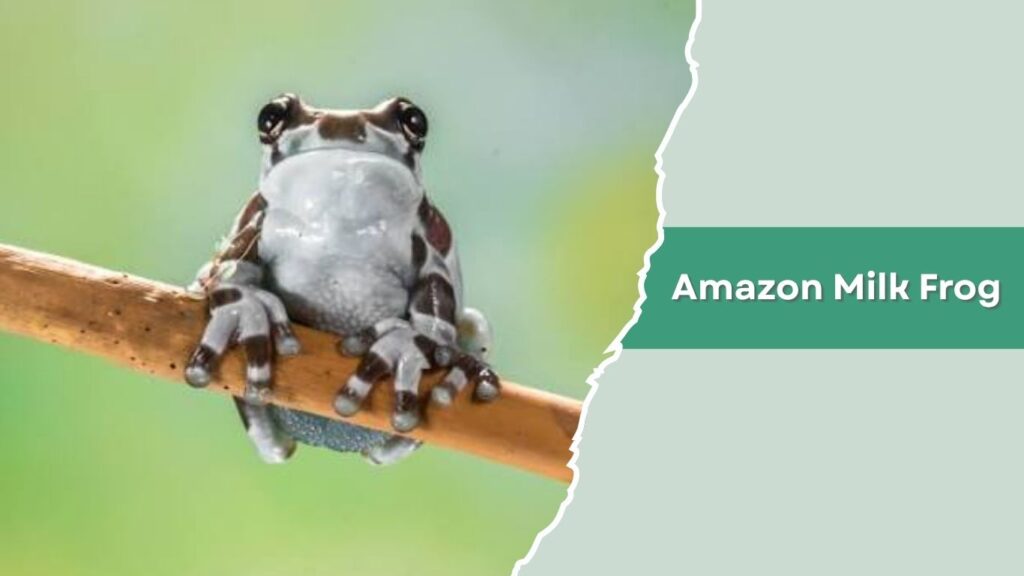
The Amazon Milk Frog (Trachycephalus resinifictrix) is a large arboreal frog native to the Amazon rain forest. It is recognized by its pale bluish-gray body, dark brown bands, large golden eyes, and oversized adhesive toe pads. The name “milk frog” comes from the sticky white defensive secretion produced by its skin when the animal feels threatened.
Identification
- Body is blue-gray, pale gray, or greenish-gray
- Dark brown or black bands cover the body
- Large golden or bronze eyes
- Black cross-shaped pupils
- Large adhesive toe pads
- Skin becomes increasingly bumpy with age
- Strong, muscular legs
- Females are generally larger than males
Habitat and Distribution
Amazon Milk Frogs occur in tropical South America, including Brazil, Colombia, Ecuador, Peru, and Guyana. They are strongly arboreal and spend much of their lives in rain forest trees rather than on the ground.
Tree holes that collect rainwater are particularly important because they can provide suitable sites for reproduction and tadpole development.
Behavior and Diet
These frogs are primarily nocturnal. They remain concealed during daylight and become active after dark, climbing branches and vegetation in search of prey.
Their diet consists mainly of insects and other small invertebrates. Strong adhesive toe pads allow them to cling securely to branches, leaves, and vertical surfaces.
Lifespan and Life Cycle
During breeding, females deposit eggs in water-filled tree cavities or similar aquatic sites. The eggs hatch into tadpoles that remain in water until metamorphosis.
After developing legs and absorbing their tails, young frogs leave the water and adopt the arboreal lifestyle of adults.
8. Glass Frog
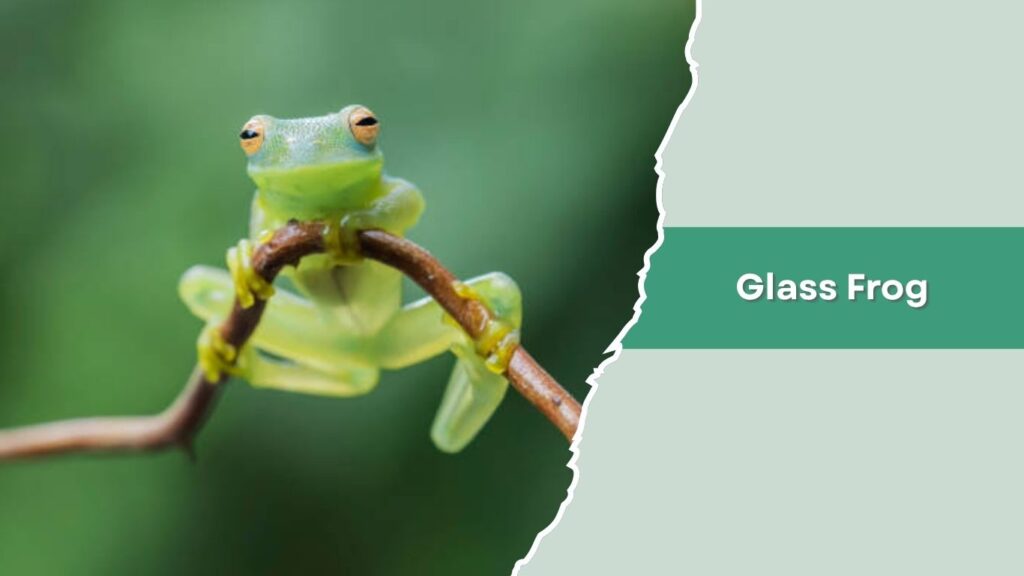
Glass Frog is the common name for frogs belonging to the family Centrolenidae. These remarkable rain forest frogs are famous for translucent skin on the underside of the body. In some species, the heart, liver, digestive tract, and other internal structures can be seen through the belly. Most Glass Frogs are small, green, nocturnal tree frogs associated with vegetation hanging over forest streams.
Identification
- Upper body is usually green
- Belly skin may be partially or highly transparent
- Internal organs can sometimes be visible
- Body is usually less than 3 cm in many species
- Large forward- or side-facing eyes
- Expanded toe pads for climbing
- Some species have yellow, white, blue, or red markings
- Body may blend closely with surrounding leaves
Habitat and Distribution
Glass Frogs are native to humid parts of Central and South America. Their greatest diversity occurs in tropical forests, particularly around mountain streams in the Andes and forests of countries such as Costa Rica and Panama.
Adults typically occupy leaves and branches directly above running water.
Behavior and Diet
Most Glass Frogs are nocturnal insect hunters. They eat flies, beetles, crickets, moths, and other small invertebrates encountered on vegetation.
Their green coloration helps them blend with leaves, while their translucent undersides may further reduce their visible outline.
Lifespan and Life Cycle
Females generally deposit eggs on leaves or other surfaces hanging above streams. Parental care is unusually common among Glass Frogs, with males of some species guarding egg clutches.
When the tadpoles hatch, they drop directly into the stream below and complete their aquatic development before returning to vegetation as froglets.
9. Amazon Horned Frog
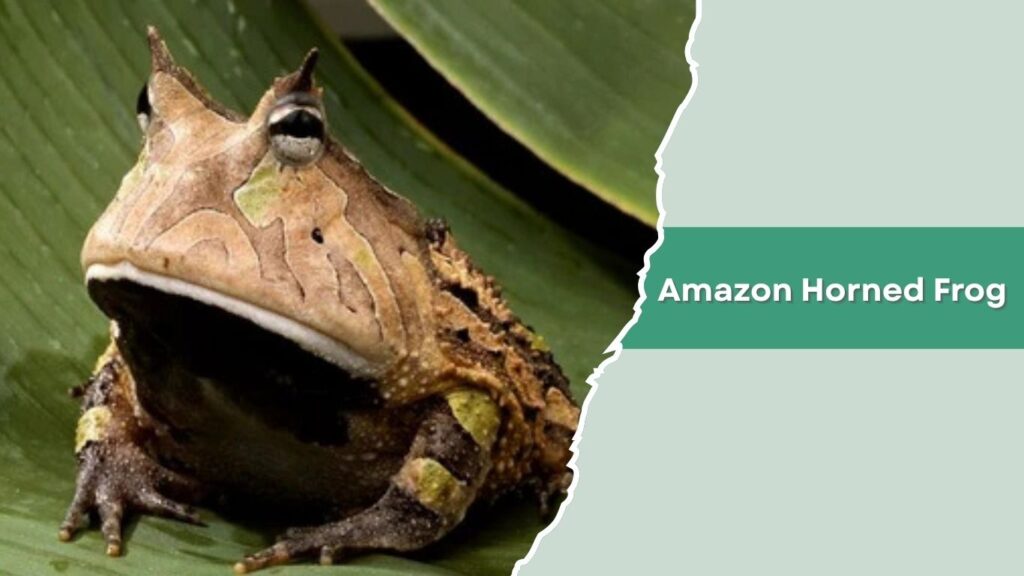
The Amazon Horned Frog (Ceratophrys cornuta) is a large, broad-headed rain forest frog found across the Amazon Basin. It is sometimes called the Surinam Horned Frog. The pointed projections above its eyes resemble small horns and help break up the outline of its head among dead leaves. This powerful ambush predator has an enormous mouth and will attack almost any appropriately sized animal that moves within reach.
Identification
- Adults measure approximately 7–15 cm
- Extremely broad head and mouth
- Pointed horn-like projections above the eyes
- Rounded, heavy body
- Short, strongly built legs
- Green, tan, or brown coloration
- Dark markings provide leaf-litter camouflage
- Females are generally larger than males
Habitat and Distribution
Amazon Horned Frogs occur across the Amazon Basin, including Brazil, Bolivia, Peru, Ecuador, Colombia, Venezuela, and the Guianas.
They are terrestrial frogs that inhabit rain forest floors, particularly areas containing deep leaf litter and nearby temporary pools or marshy habitats.
Behavior and Diet
Instead of actively pursuing prey over long distances, Amazon Horned Frogs are ambush predators. They partially bury themselves in leaf litter or soil and remain nearly motionless until prey approaches.
Their diet can include insects, other frogs, small reptiles, fish, and occasionally small mammals. Their enormous mouth enables them to consume surprisingly large prey.
Lifespan and Life Cycle
Breeding generally occurs in temporary pools during favorable wet conditions. Females can produce several hundred eggs.
The eggs may hatch within days, and tadpoles develop rapidly in temporary water. Metamorphosis can occur in roughly three months, helping the young develop before seasonal pools disappear.
10. White-Lipped Tree Frog
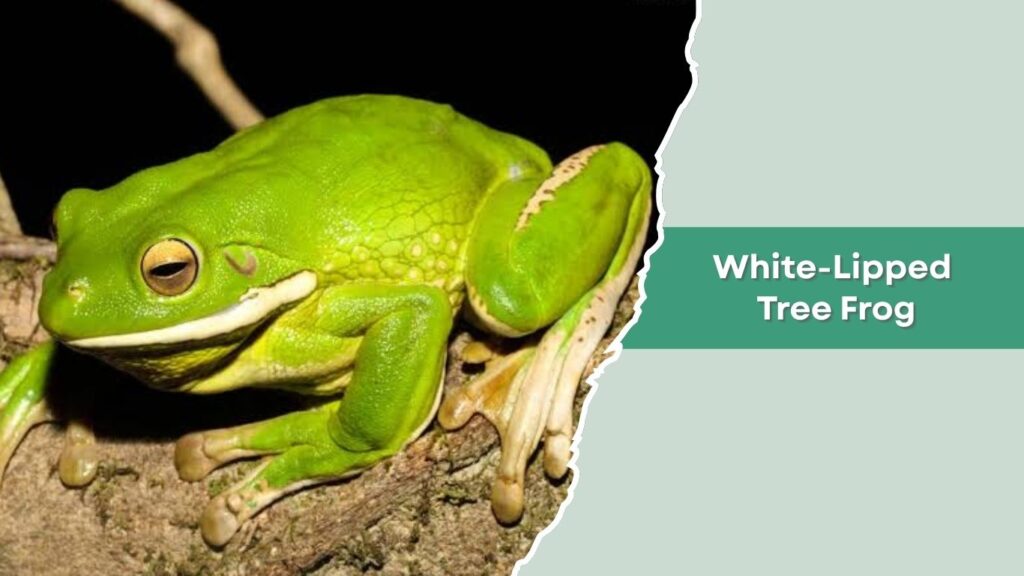
The White-Lipped Tree Frog (Litoria infrafrenata) is one of the largest tree frogs in the world. Also called the Giant Tree Frog, it is recognized by its bright green body and distinctive white stripe extending along the lower lip. It occurs naturally in New Guinea and northern Australia, where it inhabits tropical rain forests as well as gardens, farms, and buildings near forested areas.
Identification
- Large, robust tree frog
- Body is usually bright green
- Some individuals become brown
- Distinct white stripe runs along the lower lip
- Additional pale stripe may occur along the hind legs
- Large adhesive toe pads
- Smooth upper body
- Underside may have granular skin
- Females are generally larger than males
Habitat and Distribution
White-Lipped Tree Frogs occur throughout New Guinea and in northern Australia, including Queensland’s Cape York Peninsula and surrounding coastal regions.
Although strongly associated with tropical rain forest, they are adaptable and may also occur around farms, sheds, garages, gardens, and houses.
Behavior and Diet
These frogs are primarily nocturnal and spend much of their time climbing trees and vegetation. Their large adhesive toe pads give them excellent grip on wet leaves and branches.
They are opportunistic predators that mainly consume insects and other invertebrates, although large adults are capable of taking comparatively sizeable prey.
Lifespan and Life Cycle
Breeding is closely associated with rain and standing water. Males call to attract females, and eggs are deposited in freshwater.
Tadpoles develop aquatically before undergoing metamorphosis. The young eventually leave the water and become climbing, terrestrial adults adapted to the humid environment of tropical forests.
11. Green-and-Black Poison Dart Frog
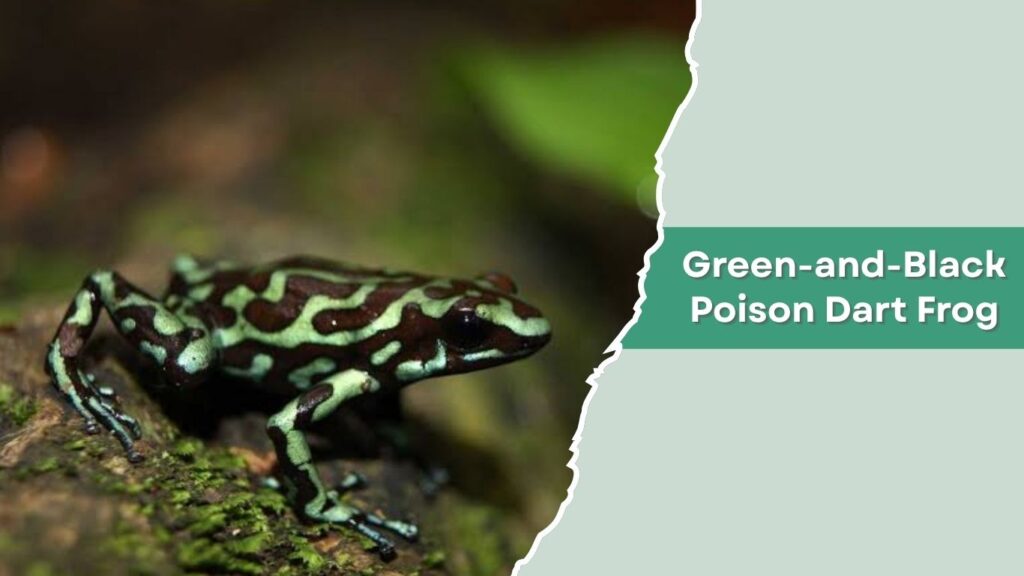
The Green-and-Black Poison Dart Frog (Dendrobates auratus) is a brightly colored rainforest amphibian native to Central America and northwestern South America. Its vivid green, turquoise, or bluish markings contrast sharply with a black background, warning predators about defensive chemicals in its skin. The species has also been introduced to Hawaii, where established populations occur.
Identification
- Adults are generally around 4 cm long
- Body is usually black with green or turquoise markings
- Patterns may consist of spots, bands, or irregular patches
- Skin is smooth and brightly colored
- Eyes are dark and relatively large
- Fingers and toes have small adhesive pads
- Females are usually somewhat larger than males
- Color patterns vary considerably between populations
Habitat and Distribution
Green-and-Black Poison Dart Frogs inhabit humid tropical forests from Nicaragua and Costa Rica through Panama into Colombia. They live mainly on the rainforest floor around leaf litter, fallen vegetation, streams, and small pools. Introduced populations have also become established in Hawaii.
Behavior and Diet
These frogs are active during the daytime and spend much of their time searching the forest floor for tiny prey. Their diet consists primarily of ants and other small arthropods. Alkaloids obtained from natural prey contribute to their skin toxins, which is why captive individuals fed ordinary feeder insects lose much of their toxicity.
Lifespan and Life Cycle
Females lay small groups of eggs in moist locations on land. After hatching, a parent transports the tadpoles to small pools of water where development continues.
Tadpoles undergo metamorphosis before emerging as miniature terrestrial frogs. Captive individuals have been documented living for several years, with an average of more than eight years reported in one longevity dataset.
12. Lemur Leaf Frog
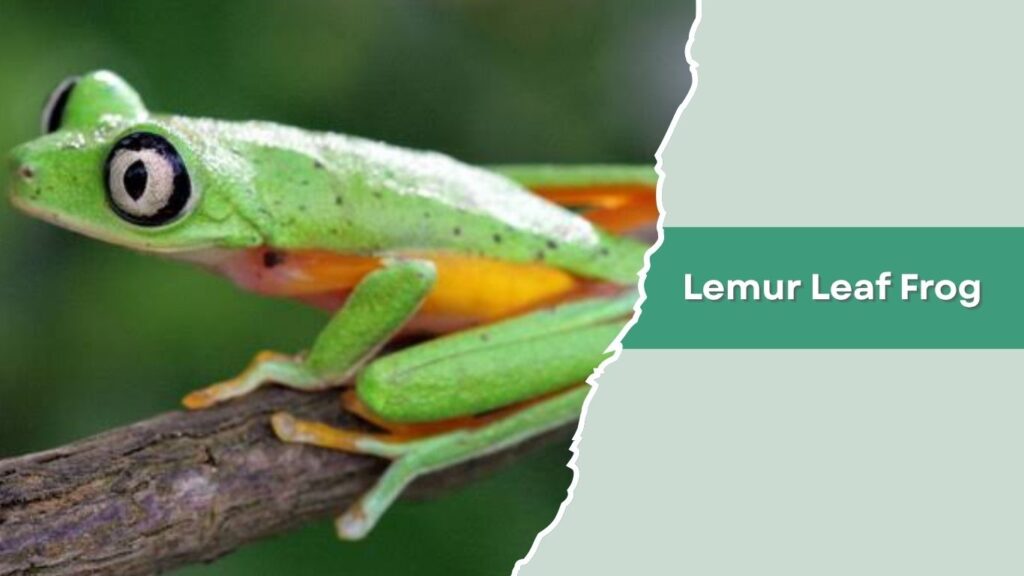
The Lemur Leaf Frog (Agalychnis lemur) is a delicate rainforest tree frog famous for its large eyes, slender limbs, and remarkable ability to change color. During daylight it is usually bright yellow-green, helping it disappear against leaves. At night, when it becomes active, its body darkens toward brown. Unfortunately, this Central American species is Critically Endangered.
Identification
- Females are approximately 4–5 cm long
- Males are generally around 3–4 cm
- Daytime coloration is yellowish-green
- Body becomes darker or brownish at night
- Large eyes have distinctive dark outlines
- Belly is generally white
- Hands, feet, and sides can appear yellow
- Legs and arms are unusually thin and long
- Fingers and toes are not heavily webbed
Habitat and Distribution
Lemur Leaf Frogs occur naturally in Costa Rica, Panama, and nearby parts of Colombia. They inhabit humid tropical forests, including mountain slopes and upland and lowland forest habitats.
Populations have disappeared from portions of their former range, with habitat destruction and chytrid fungal disease contributing significantly to their decline.
Behavior and Diet
These frogs are nocturnal. During the day, they flatten themselves against the underside of leaves and rely on their green coloration for camouflage. At night they slowly walk through vegetation using their long limbs, jumping mainly when escaping danger.
They hunt insects and other small invertebrates. Males are territorial and produce short calls to communicate with females and competing males.
Lifespan and Life Cycle
Breeding occurs mainly during the rainy season. Females attach clutches of roughly 15–20 eggs to leaves positioned above ponds or slow-moving streams.
After about one to two weeks, tadpoles hatch and fall into the water below. They later undergo metamorphosis and become climbing froglets. The species is estimated to live roughly 5–10 years.
13. Giant Monkey Frog
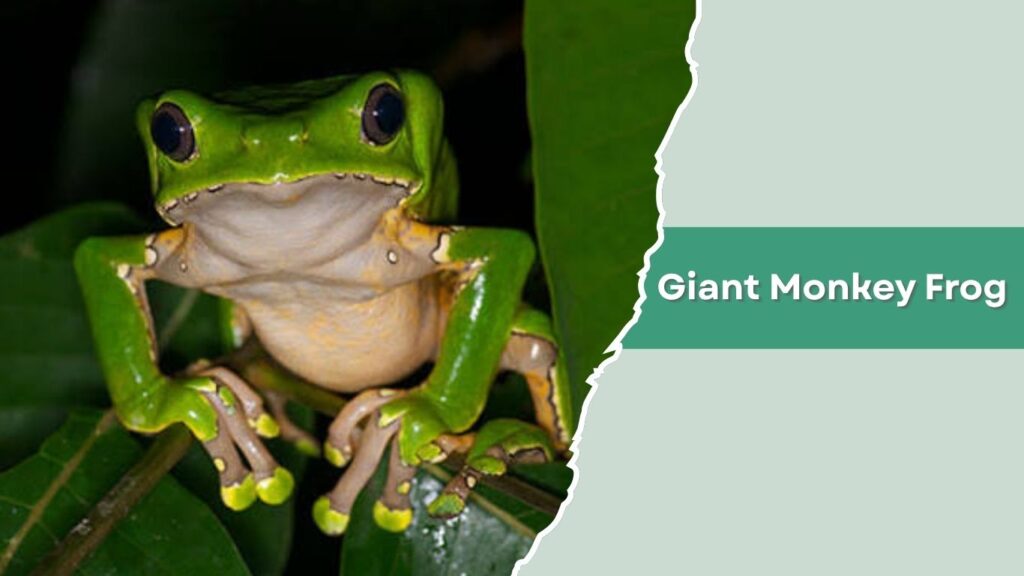
The Giant Monkey Frog (Phyllomedusa bicolor), also called the Giant Leaf Frog or Giant Waxy Monkey Frog, is a large arboreal amphibian of the Amazon rainforest. It has a bright green back, pale underside, large adhesive toes, and distinctive slow climbing movements. Rather than hopping frequently, it often walks carefully through branches using its grasping feet.
Identification
- One of the larger rainforest tree frogs
- Adults may exceed 10 cm in length
- Upper body is bright lime or leaf green
- Belly is white, cream, or yellowish-white
- White spots with dark borders may occur on the sides
- Fingers have prominent adhesive discs
- Eyes have vertical pupils
- Body is relatively heavy and muscular
- Moves slowly and deliberately through vegetation
Habitat and Distribution
Giant Monkey Frogs occur throughout much of the Amazon Basin, including Brazil, Peru, Bolivia, Colombia, Venezuela, Guyana, Suriname, and French Guiana.
They are primarily arboreal and inhabit trees in primary rainforest, secondary forest, and forest clearings. Adults descend toward vegetation overhanging ponds during the breeding season.
Behavior and Diet
This frog is nocturnal and spends daylight hours resting among leaves. After dark, it climbs slowly through vegetation hunting insects and other appropriately sized animals.
Its skin produces a complex defensive secretion containing biologically active peptides. This chemical defense helps discourage predators, although the substances can also have powerful effects on humans and should never be casually handled or used.
Lifespan and Life Cycle
During the rainy season, males call from vegetation and attract females toward branches above water. A mating pair folds leaves around a gelatinous mass of eggs, creating a protective nest.
When the eggs hatch, the tadpoles drop into the water below and continue development until metamorphosis.
14. Smoky Jungle Frog
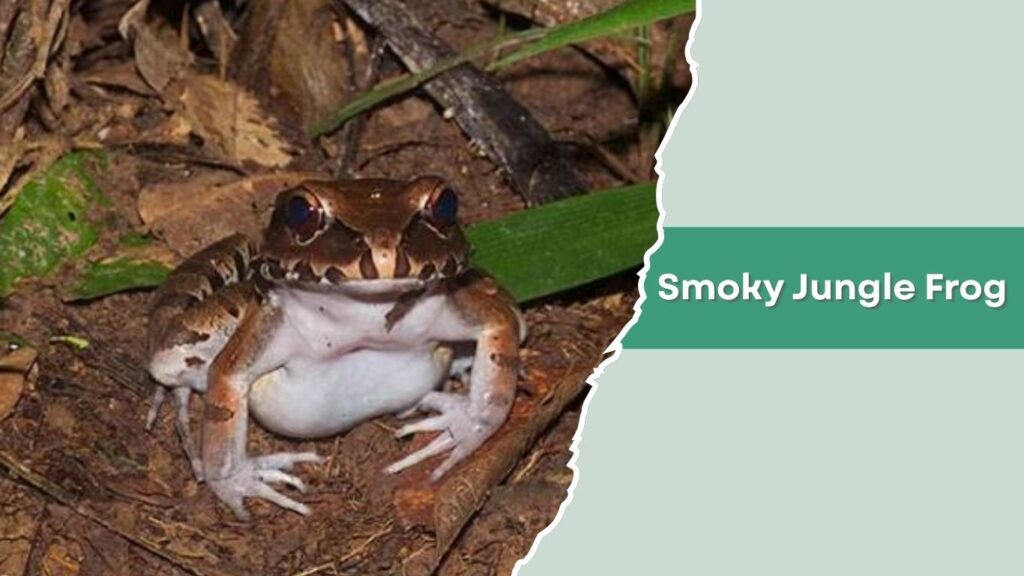
The Smoky Jungle Frog (Leptodactylus pentadactylus) is a powerful, large-bodied rainforest frog of the Amazon Basin. It is an active nocturnal predator capable of eating insects and other surprisingly large prey. Older references sometimes applied this scientific name to Central American Smoky Jungle Frogs, but those populations are now generally classified as Leptodactylus savagei.
Identification
- Large, muscular frog
- Body may be brown, reddish-brown, or grayish
- Dark bands or markings occur across the body
- Legs are powerful and adapted for jumping
- Head is broad with a large mouth
- Skin may appear smooth to slightly textured
- Eyes are large and prominent
- Adults can become much larger than most rainforest frogs
Habitat and Distribution
True L. pentadactylus inhabits northern South America, including portions of Brazil, Colombia, Ecuador, Peru, Bolivia, Venezuela, Guyana, Suriname, and French Guiana.
It occurs in Amazonian tropical forests and other humid environments, including areas around rivers, swamps, marshes, and temporary freshwater habitats.
Behavior and Diet
Smoky Jungle Frogs are mainly nocturnal and remain hidden during much of the day. At night they emerge to hunt on the forest floor.
They are opportunistic predators with powerful jaws. Their diet includes insects and other invertebrates, while large individuals can take frogs, small reptiles, and other vertebrate prey.
Lifespan and Life Cycle
Reproduction is associated with wet conditions. Females produce eggs within foam nests placed close to shallow water.
The foam provides protection while the embryos develop. After hatching, tadpoles enter the surrounding water and continue growing until metamorphosis transforms them into terrestrial juvenile frogs.
15. Puerto Rican Coquí
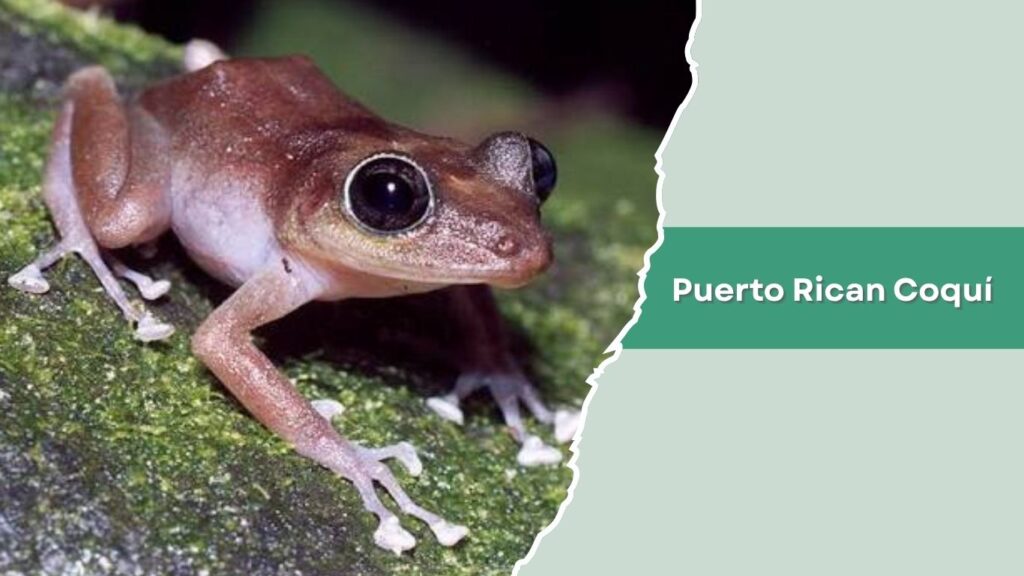
The Puerto Rican Coquí (Eleutherodactylus coqui) is a small rainforest frog and one of Puerto Rico’s best-known native animals. Its name comes from the loud two-part “co-quí” call produced by males. Unlike many frogs, the Coquí does not need a pond or free-swimming tadpole stage to reproduce because its young develop directly inside terrestrial eggs.
Identification
- Adults measure approximately 33–57 mm
- Body is brown to grayish-brown
- Color and dorsal patterns vary greatly
- Some have pale stripes or spots
- Eyes are golden to brown
- Enlarged toe pads assist climbing
- Body is relatively compact
- Males produce the distinctive “co-quí” call
Habitat and Distribution
The Coquí is native to Puerto Rico, where it occurs from low elevations to mountain forests and occupies a wide range of humid habitats.
The species has also been introduced outside its natural range, most notably to Hawaii. Introduced populations can reach particularly high densities because suitable climates and abundant food allow rapid population growth.
Behavior and Diet
Coquís are primarily nocturnal insectivores. After dark, they climb vegetation and search for insects, spiders, and other small invertebrates.
Males call both to attract females and to communicate with competing males. The loud “co-quí” sound is especially noticeable on warm, humid nights.
Lifespan and Life Cycle
Coquís reproduce through direct development. Females lay eggs in moist, protected terrestrial locations rather than depositing them in ponds.
The embryos develop completely inside the eggs, skipping the free-swimming tadpole stage. Small, fully formed froglets hatch directly from the eggs. This adaptation allows Coquís to reproduce even where permanent standing water is unavailable.
FAQs
1. What kinds of frogs live in tropical rain forests?
Tropical rain forests support thousands of frog species, including tree frogs, poison dart frogs, glass frogs, horned frogs, leaf frogs, and terrestrial species. Their exact diversity varies greatly between the Amazon, Central America, Africa, Asia, and other rainforest regions.
2. What do rain forest frogs eat?
Most rainforest frogs are predators. Small species primarily eat ants, mites, flies, mosquitoes, beetles, and other invertebrates, while large frogs such as Amazon Horned Frogs and Smoky Jungle Frogs can capture other frogs and small vertebrates.
3. Are all colorful rain forest frogs poisonous?
No. Bright coloration does not automatically indicate dangerous toxins. Poison dart frogs are famous for chemical defenses, but colorful tree frogs such as Red-Eyed Tree Frogs use bright patterns partly for camouflage and predator-startling displays rather than powerful skin poisons.
4. Can frogs survive in a rain forest without ponds?
Some can. Forest Rain Frogs and Puerto Rican Coquís use direct development, meaning young hatch from terrestrial eggs as froglets without a free-swimming tadpole stage. Other species still require ponds, streams, tree holes, or water-filled plants for larval development.
5. Why are rain forest frogs important?
Rainforest frogs consume huge numbers of insects and other small animals while also serving as prey for snakes, birds, mammals, fish, and other predators. Because amphibian skin is highly sensitive to environmental changes, frog populations can also provide valuable information about the health of forest and freshwater ecosystems.
