
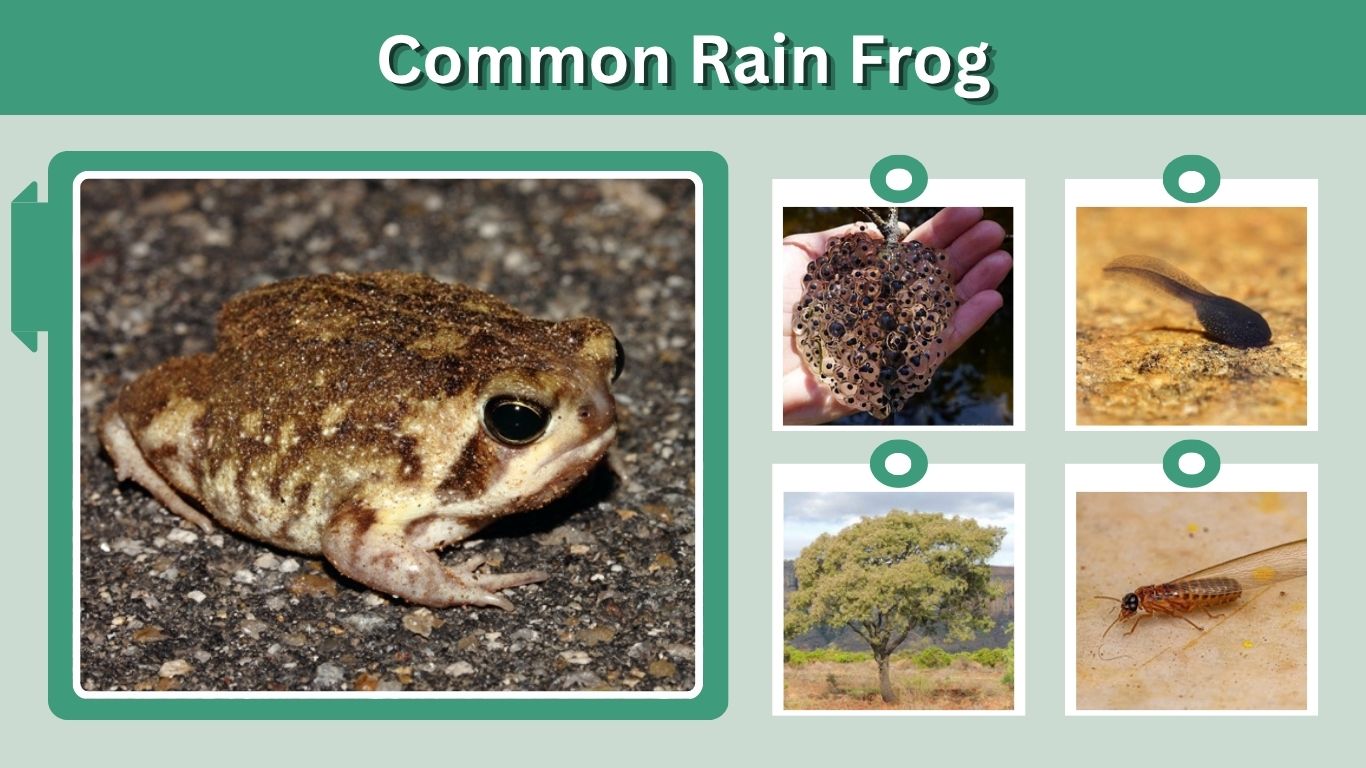
The common rain frog is a small, round-bodied amphibian native to southern Africa. Scientifically known as Breviceps adspersus, it is also called the bushveld rain frog or Transvaal short-headed frog. This unusual frog spends much of its life underground, emerging mainly when rainfall creates moist conditions for feeding and breeding. Its tiny legs, plump body, burrowing behavior, and grumpy-looking face make it instantly recognizable. Despite growing interest in keeping rain frogs as pets, their specialized lifestyle requires careful consideration and proper environmental conditions.
What Is a Common Rain Frog?
The common rain frog belongs to the family Brevicipitidae and genus Breviceps. Unlike many familiar frogs, it is primarily terrestrial and spends much of its time beneath the soil. Its compact body and short legs are better suited to digging and walking than swimming or making long jumps. The species occurs naturally across parts of southern Africa.
Common Rain Frog Identification
Common rain frogs can be recognized by several features:
- Scientific name: Breviceps adspersus
- Rounded, inflated-looking body
- Short head and blunt snout
- Very short legs
- Large, prominent eyes
- Brown, tan, or olive coloration
- Pale underside
- Irregular darker markings
- Bumpy or granular skin
- Strong burrowing behavior
The frog’s earthy coloration provides excellent camouflage against soil, dead vegetation, and leaf litter.
The recognized common names include common rain frog, bushveld rain frog, and Transvaal shorthead frog.
Common Rain Frog Size
Common rain frogs are small amphibians, although females can be noticeably larger than males.
Their rounded body makes them look considerably heavier than similarly sized frogs with long, slender legs. The short limbs are one reason these frogs usually walk or crawl instead of making the powerful jumps associated with many other frog species.
Common Rain Frog Habitat and Distribution
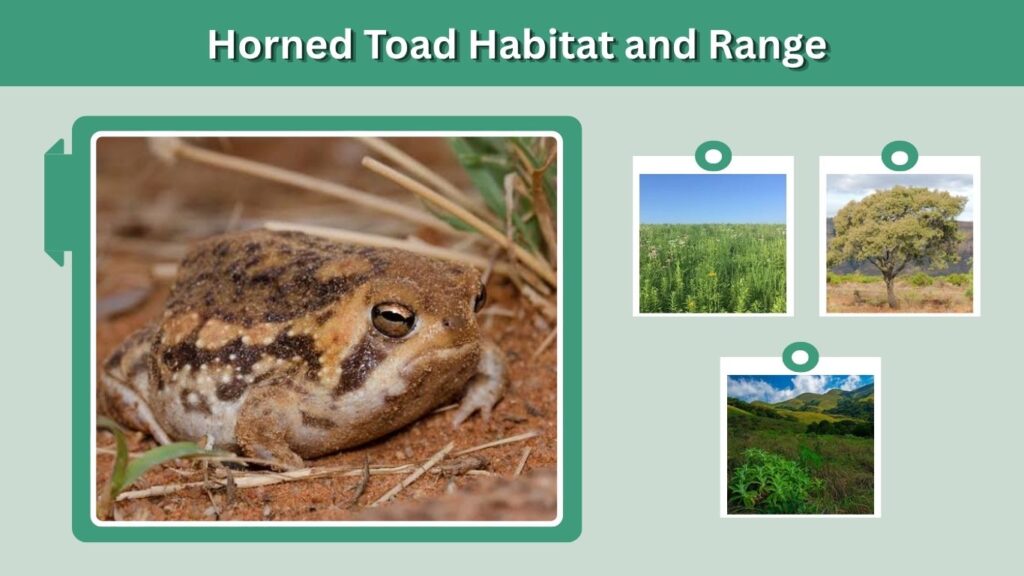
Common rain frogs are strongly associated with terrestrial habitats where the soil is soft enough for burrowing. Their underground lifestyle provides shelter from predators, dry weather, and temperature extremes. Rainfall temporarily transforms their environment, encouraging frogs to leave their burrows and become much more active on the surface.
Where Do Common Rain Frogs Live?
Breviceps adspersus is an African species associated with southern parts of the continent. South African biodiversity records identify populations in areas including Limpopo, Mpumalanga, North West, and other regions.
Suitable habitats can include:
- Savannas
- Grasslands
- Shrubland
- Bushveld
- Open woodland
- Agricultural landscapes
- Areas with loose soil
- Vegetated ground suitable for burrowing
They spend considerable periods underground and may be difficult to find during dry weather.
Why Are They Called Rain Frogs?
The name reflects their increased surface activity during rainy conditions.
Moist weather helps prevent amphibian skin from drying and also increases the activity of insects and other prey. Males may begin calling when conditions become suitable for breeding.
As a result, rain frogs that remain almost invisible during dry periods can suddenly become noticeable after heavy rainfall.
What Do Common Rain Frogs Eat?
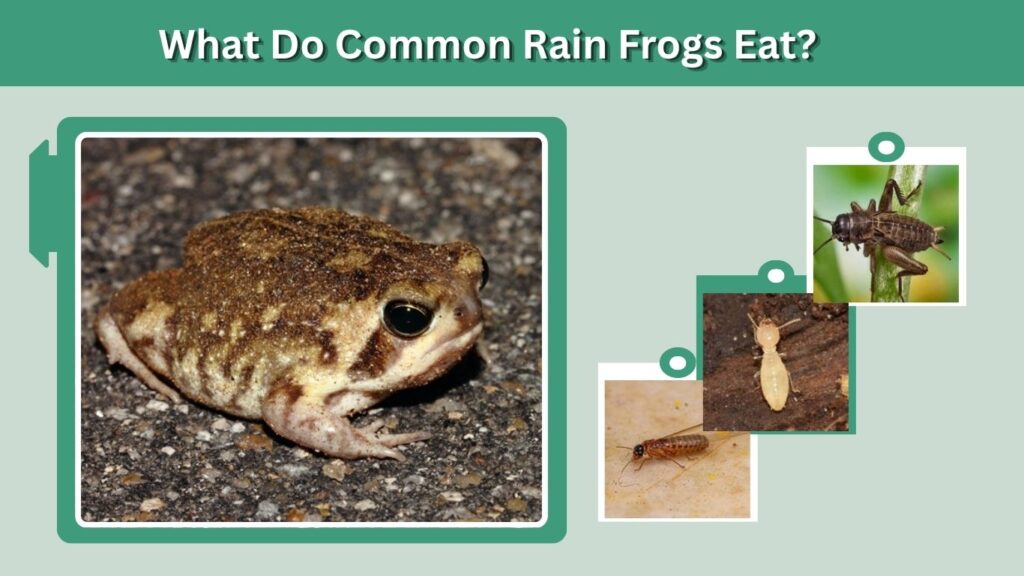
Common rain frogs are insectivorous predators. Because they live on or beneath the ground, most of their prey consists of small terrestrial invertebrates they encounter in soil, leaf litter, and low vegetation. Their mouth is relatively small, so appropriately sized prey is more suitable than large insects.
Common Rain Frog Diet
Potential foods include:
- Ants
- Termites
- Small crickets
- Beetles
- Insect larvae
- Tiny spiders
- Small worms
- Other ground-dwelling invertebrates
In the wild, the exact diet varies according to season and prey availability.
Their feeding activity often increases after rain because many insects and soil invertebrates become more active under moist conditions.
How Do Common Rain Frogs Hunt?
They are not fast, long-distance hunters. Instead, common rain frogs take advantage of prey that moves within striking distance.
Their camouflage allows them to remain inconspicuous near the soil surface. At night or following rain, they can emerge from underground shelters to search for small prey.
They usually swallow food whole rather than tearing it apart.
Common Rain Frog Life Cycle
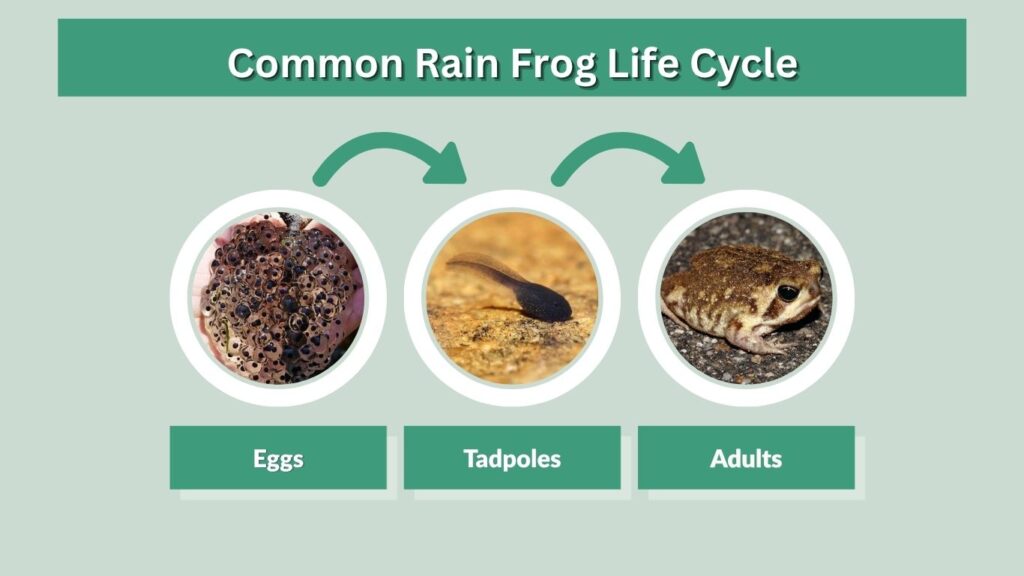
Rain frogs have a reproductive strategy very different from familiar pond-breeding frogs. Their life cycle is strongly adapted to terrestrial environments, reducing their dependence on permanent pools of water. This is particularly useful in regions where suitable standing water may be seasonal or unpredictable.
Mating and Eggs
During suitable rainy conditions, males call to attract females.
Females are typically larger and heavier than males. Because their rounded bodies and short limbs make normal frog amplexus difficult, rain frogs have specialized mating adaptations that help keep the pair together.
Eggs are deposited inside underground chambers rather than scattered into open water.
Do Common Rain Frogs Have Tadpoles?
Rain frogs are famous for direct development.
Rather than hatching into free-swimming tadpoles that must live in a pond, the embryos continue developing within protected underground eggs.
They eventually emerge as tiny froglets already resembling miniature adults.
This adaptation allows the species to complete reproduction without requiring permanent open water.
Common Rain Frog Adaptations
Almost every distinctive feature of a common rain frog reflects its terrestrial and burrowing lifestyle. Its tiny legs may appear poorly developed compared with those of jumping frogs, but they are appropriate for an animal that spends much of its life pushing through soil and hiding underground.
Important Adaptations
Common rain frogs have several useful adaptations:
- Round body: Helps support a compact burrowing lifestyle.
- Short limbs: Useful for walking and digging rather than jumping.
- Earthy coloration: Provides camouflage against soil.
- Burrowing behavior: Protects the frog from dry conditions.
- No aquatic tadpole stage: Allows reproduction away from permanent ponds.
- Body inflation: Can make the frog appear larger when threatened.
- Nocturnal activity: Reduces exposure to daytime heat and drying conditions.
These adaptations explain why keeping a rain frog like an ordinary tree frog or aquatic frog can create problems.
Common Rain Frog vs Desert Rain Frog
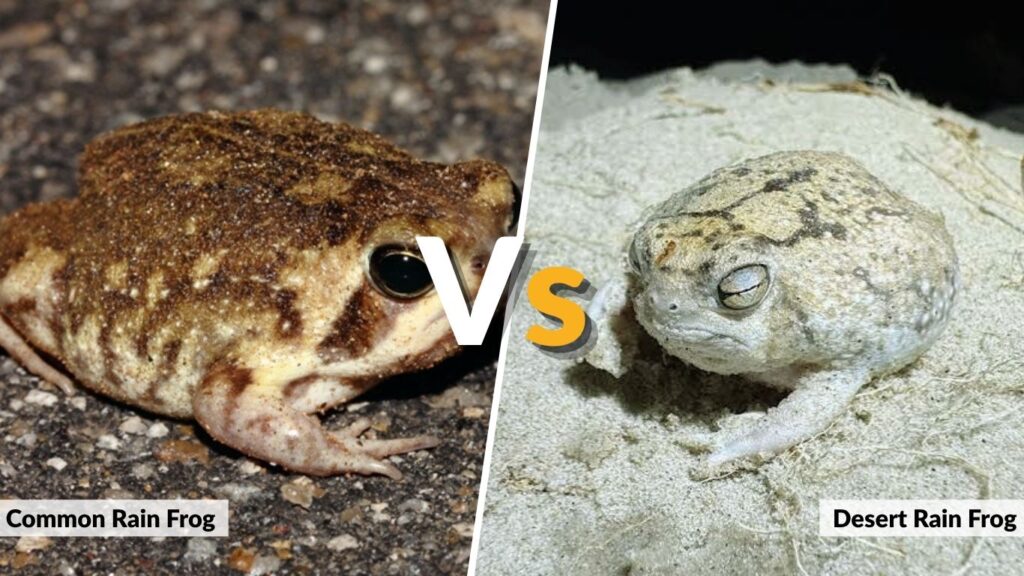
The common rain frog and desert rain frog are both members of Breviceps, which explains their similar round bodies and small legs. However, they are separate species adapted to different environments.
Main Differences
- Common rain frog: Breviceps adspersus
- Desert rain frog: Breviceps macrops
- Common rain frog habitat: Primarily savanna, grassland, and bushveld environments
- Desert rain frog habitat: Coastal sandy environments of southwestern Africa
- Color: Common rain frogs tend to have darker mottled brown coloration
- Desert species: Often appears paler and sand-colored
- Distribution: Their natural ranges differ
- Both species: Spend considerable time burrowing
The term “common desert rain frog” can therefore be misleading because common and desert rain frogs are not the same species.
Can You Keep a Common Rain Frog as a Pet?
Interest in common rain frogs as pets has increased because of their unusual shape and online popularity. However, they are specialized fossorial amphibians rather than highly visible display animals. A rain frog may spend a significant portion of its time completely buried, which is normal behavior rather than a sign that something is wrong.
Common Rain Frog Care
A suitable setup would need:
- Deep substrate that allows burrowing
- Moist but not waterlogged soil
- Good ventilation
- Stable species-appropriate temperatures
- Multiple hiding opportunities
- Small live insect prey
- Shallow access to moisture
- Minimal handling
Their substrate is especially important because burrowing is a fundamental natural behavior rather than an optional enrichment activity.
Avoid keeping the enclosure constantly soaked. Terrestrial rain frogs require moisture but are not aquatic frogs.
Do Common Rain Frogs Need Water?
They need moisture, but they do not need a deep swimming aquarium.
A shallow water source can be provided if captive husbandry requires it, but the frog must always be able to leave the water easily. Much of its moisture requirement should come from appropriately humid soil and environmental conditions.
Deep water can be inappropriate because these frogs are adapted primarily for terrestrial life rather than active swimming.
Are Common Rain Frogs Good Pets?
Their cute appearance can make them seem like simple pets, but their secretive behavior and environmental requirements mean they are better suited to experienced amphibian keepers.
Before Buying a Common Rain Frog
Consider these points:
- The frog may remain underground much of the time.
- Handling should be kept to a minimum.
- Amphibian skin is sensitive to chemicals and oils.
- Live food is necessary.
- Proper substrate moisture can require careful management.
- The exact species should be confirmed before purchase.
- Captive-bred animals are preferable to wild-caught frogs.
- Ownership and import laws should be checked locally.
An animal being advertised “for sale” does not automatically mean that it was responsibly sourced or is an appropriate pet.
Common Rain Frog Lifespan
Reliable lifespan data for common rain frogs are less readily established than for many widely bred pet frogs. Their secretive underground lifestyle also makes long-term study of wild individuals challenging.
How Long Do Common Rain Frogs Live?
Exact longevity can vary according to environmental conditions, nutrition, disease, predation, and whether an animal lives in captivity or the wild.
Online claims sometimes give very specific lifespans, but such figures should be treated cautiously when they are not supported by species-specific research.
Providing excellent environmental conditions would be essential for maintaining any rain frog successfully in captivity.
Are Common Rain Frogs Dangerous?
Common rain frogs have an amusingly grumpy appearance and may inflate themselves when threatened, but they are not aggressive predators of people. Their main survival strategies involve camouflage, hiding underground, calling, and defensive inflation rather than attacking large animals.
Are Common Rain Frogs Poisonous?
They are not known as dangerously poisonous frogs like some tropical poison dart frogs.
However, unnecessary handling should still be avoided. Amphibians have permeable, sensitive skin that can absorb substances from human hands.
Soap, lotion, sunscreen, cleaning products, and other chemicals may harm the frog even when they seem harmless to humans.
FAQs
Common rain frogs have gained considerable attention because of their almost spherical bodies, tiny legs, burrowing behavior, and expressive-looking faces. Understanding that these features belong to a highly specialized terrestrial amphibian helps explain many of their unusual behaviors.
What do common rain frogs eat?
They primarily eat small invertebrates such as ants, termites, small crickets, beetles, insect larvae, spiders, and worms.
Where do common rain frogs live?
They live in parts of southern Africa, including South Africa, where they occupy savannas, grasslands, bushveld, and other areas with suitable soil for burrowing.
How big is a common rain frog?
Common rain frogs are small, compact frogs. Females are generally larger and more robust than males, while both sexes have the distinctive round body characteristic of Breviceps rain frogs.
Can common rain frogs be kept as pets?
They can appear in the exotic animal trade, but they are specialized burrowing amphibians requiring appropriate substrate, moisture, live prey, and minimal handling. Captive-bred animals are preferable where legal.
Is a common rain frog the same as a desert rain frog?
No. The common rain frog is Breviceps adspersus, while the desert rain frog is Breviceps macrops. They are related but occupy different habitats and have different natural distributions.
