
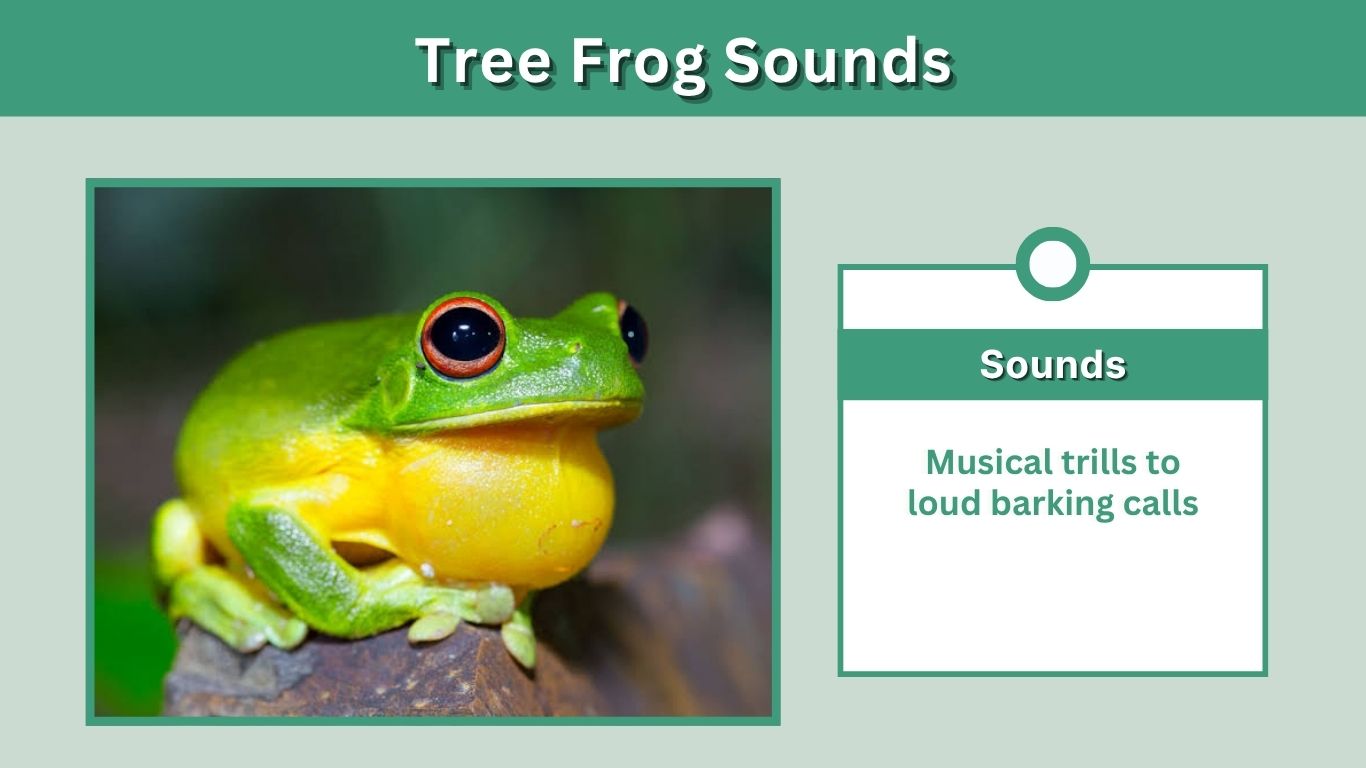
Tree frog sounds are among the most familiar noises heard around forests, ponds, and backyard gardens, especially after sunset. From musical trills to loud barking calls, different tree frog species produce distinctive sounds that help them communicate and attract mates. Some calls resemble birds, insects, or even small dogs, making identification surprisingly challenging. Understanding what tree frogs sound like, why they call at night, and how their vocalizations differ can help you recognize the amphibians living around your home or nearby natural habitats.
What Does a Tree Frog Sound Like?
Tree frog sounds vary widely depending on the species, surrounding environment, and purpose of communication. Some frogs produce short, sharp chirps, while others make long, musical trills or deep barking noises. Their calls are particularly noticeable during breeding seasons when males gather near freshwater habitats and communicate with potential mates.
Common Types of Tree Frog Sounds
Tree frogs produce several recognizable types of vocalizations:
- Chirping: Short, high-pitched sounds resembling small birds.
- Trilling: Rapid, musical notes repeated continuously.
- Barking: Loud, hollow calls similar to a dog’s bark.
- Honking: Nasal, repeated sounds resembling distant geese.
- Croaking: Rough, throaty calls produced in rhythmic patterns.
- Clicking: Brief, sharp notes used by certain species.
Why Tree Frog Calls Sound Different
Each tree frog species has its own characteristic calling pattern. Differences in pitch, rhythm, duration, and repetition help frogs recognize others of the same species.
Temperature and environmental conditions can also influence how frequently frogs call. Understanding these variations makes identifying tree frogs by sound more reliable.
Different Types of Tree Frog Sounds
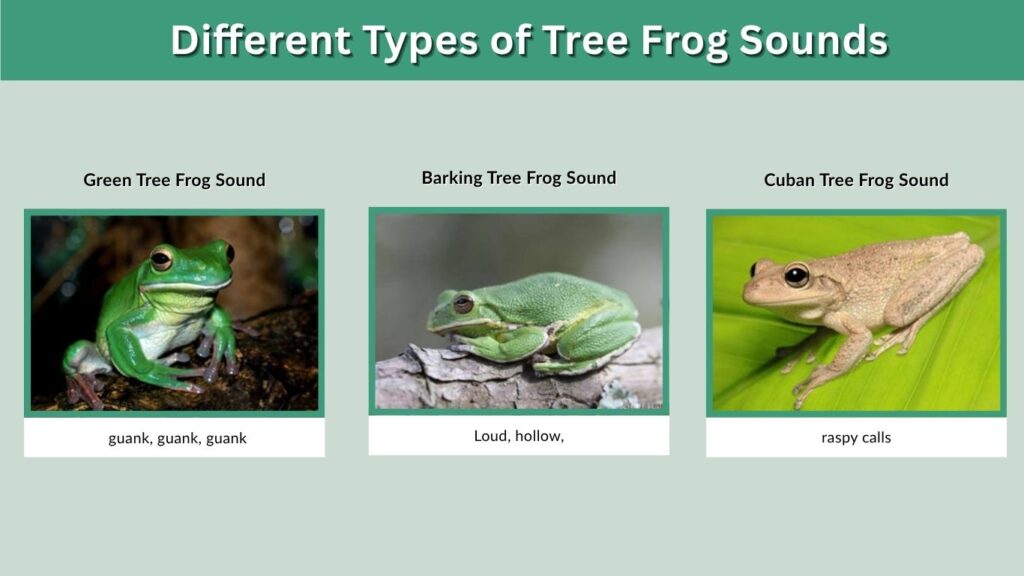
North America has numerous tree frog species with distinctive vocalizations. Some make musical sounds, while others produce loud calls that carry considerable distances. Identifying these sounds can provide useful clues about local amphibian populations and nearby habitats, even when the frogs remain hidden among vegetation.
Gray Tree Frog Sound
Gray tree frogs produce a musical, birdlike trill that typically lasts around one second. Their calls sound like rapid, vibrating notes repeated at intervals.
The eastern gray tree frog and Cope’s gray tree frog look remarkably similar, but Cope’s gray tree frog produces a faster, harsher trill.
These sounds are commonly heard around wooded ponds during spring and summer evenings.
Green Tree Frog Sound
The American green tree frog produces a distinctive nasal call often described as guank, guank, guank.
Its rhythmic, metallic-sounding voice can resemble a distant flock of geese. During breeding seasons, groups of males produce overlapping calls that become surprisingly loud.
Green tree frog sounds are especially common around wetlands and ponds in the southeastern United States.
Barking Tree Frog Sound
Barking tree frogs are named for their unusual vocalizations, which resemble the deep barking of small dogs.
Their calls are loud, hollow, and repeated at regular intervals. Large groups may create a chorus that carries across wetlands.
These frogs commonly call during warm, rainy nights near temporary ponds, marshes, and swampy woodlands.
Cuban Tree Frog Sound
Cuban tree frogs produce rough, raspy calls resembling a squeaking door or a low, snoring noise.
Unlike the musical trills of gray tree frogs, their vocalizations often sound irregular and harsh.
In Florida, Cuban tree frogs are frequently encountered around buildings, gardens, and artificial water sources, especially during warm, wet weather.
Pacific Tree Frog Sound
Pacific tree frogs, also called Pacific chorus frogs, produce the familiar two-part ribbit sound associated with frogs in movies.
Their calls are relatively loud for their small size and often repeat rapidly during the breeding season.
These frogs inhabit western North America and frequently call from vegetation surrounding ponds, marshes, and other freshwater habitats.
Red-Eyed Tree Frog Sound
The red-eyed tree frog (Agalychnis callidryas) produces short calls often described as chack or chack-chack.
Males use these vocalizations to attract females and communicate near breeding sites.
Unlike many North American tree frogs, this species inhabits tropical rainforests in Central America and nearby regions. Its calls become particularly noticeable during rainy periods.
White’s Tree Frog Sound
White’s tree frogs, also known as Australian green tree frogs, produce deep, repeated croaking calls.
Their vocalizations are often described as a series of low barking sounds. Males become particularly vocal during warm, humid conditions and rainy weather.
These frogs inhabit Australia and New Guinea and may call from trees, gardens, and areas around buildings.
Why Do Tree Frogs Make Sounds at Night?
Tree frog sounds at night are primarily associated with reproduction and communication. Many species become active after sunset because cooler temperatures and increased humidity reduce the risk of dehydration. Nighttime also provides opportunities to hunt insects, locate breeding sites, and communicate with other frogs.
Main Reasons Tree Frogs Call
Several factors explain their nighttime vocalizations:
- Attracting mates: Males advertise their presence to females.
- Defending territories: Calls may discourage rival males from approaching.
- Responding to rainfall: Wet conditions often encourage breeding activity.
- Communicating with rivals: Certain sounds occur during competitive encounters.
- Breeding activity: Large groups gather and produce overlapping calls near water.
Why Calls Increase After Rain
Rain creates favorable conditions for tree frog reproduction. Temporary pools fill with water, humidity increases, and suitable breeding habitats become available.
Male frogs often begin calling more frequently during or after rainfall. However, calling patterns vary by species, season, and temperature.
How Do Tree Frogs Produce Sounds?
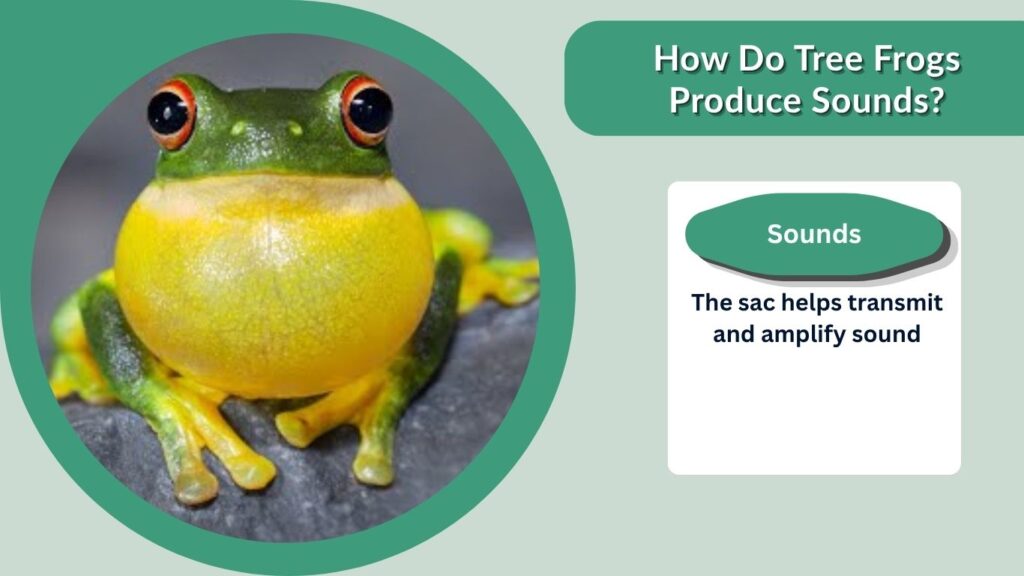
Tree frogs generate sounds by moving air through their larynx, where vibrating vocal structures produce recognizable calls. Many males possess expandable vocal sacs that help project their voices. These adaptations allow relatively small amphibians to produce surprisingly loud sounds that travel through vegetation and across freshwater habitats.
Role of the Vocal Sac
When calling, a male tree frog may inflate its vocal sac into a balloon-like structure beneath its throat.
The sac helps transmit and amplify sound, making the frog’s voice easier for nearby animals to detect.
Vocal sac size and shape differ among species, contributing to variations in their calls.
Can Female Tree Frogs Make Sounds?
Female tree frogs can produce vocalizations in some species, although males are responsible for most advertisement calls heard during breeding seasons.
Male calling is particularly important for attracting mates, while other vocalizations may occur during physical contact or defensive interactions.
How to Identify Tree Frog Sounds at Night
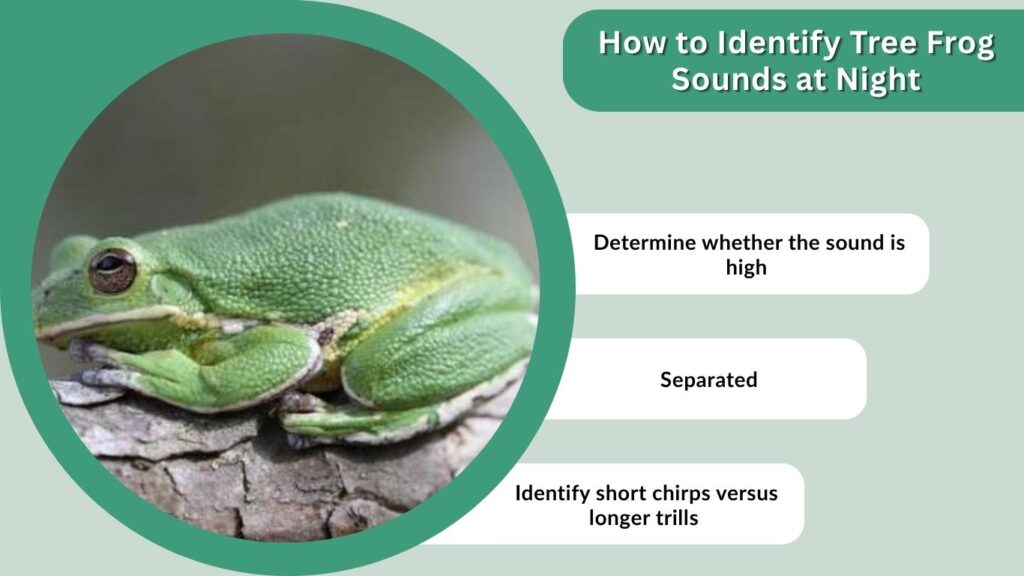
Identifying tree frog sounds requires careful listening because many species call simultaneously. The surrounding habitat, season, and geographic location provide important clues. By focusing on the rhythm and pitch of individual calls, listeners can distinguish tree frogs from other amphibians and nighttime wildlife.
Important Identification Clues
Consider these characteristics when listening:
- Pitch: Determine whether the sound is high, medium, or low.
- Rhythm: Notice whether calls are continuous or separated.
- Duration: Identify short chirps versus longer trills.
- Location: Observe whether sounds originate near trees or water.
- Season: Consider which species are actively breeding.
Tree Frog Sounds vs. Insect Sounds
Tree frogs and insects can produce similar nighttime noises. Crickets often create repetitive chirps, while katydids may produce buzzing or clicking sounds.
Tree frog calls frequently have distinctive pulse patterns and occur in coordinated breeding choruses. However, sound alone may not always provide a reliable identification.
FAQs
1. What do tree frogs sound like at night?
Tree frogs produce chirps, trills, honks, croaks, and barking noises. Their sounds vary depending on the species and breeding activity.
2. What does a gray tree frog sound like?
A gray tree frog produces a short, musical trill. Cope’s gray tree frog makes a similar but faster, more buzzing call.
3. Why do tree frogs make loud noises at night?
Male tree frogs call primarily to attract females during breeding periods. Some also use vocalizations to communicate with rival males.
4. Do tree frogs make sounds during the day?
Yes. Although many species primarily call at night, some produce daytime sounds, particularly during rainfall or breeding activity.
5. What tree frog sounds like a barking dog?
The barking tree frog produces loud, hollow calls resembling dog barks. Certain Australian tree frogs also make barking-like sounds.
