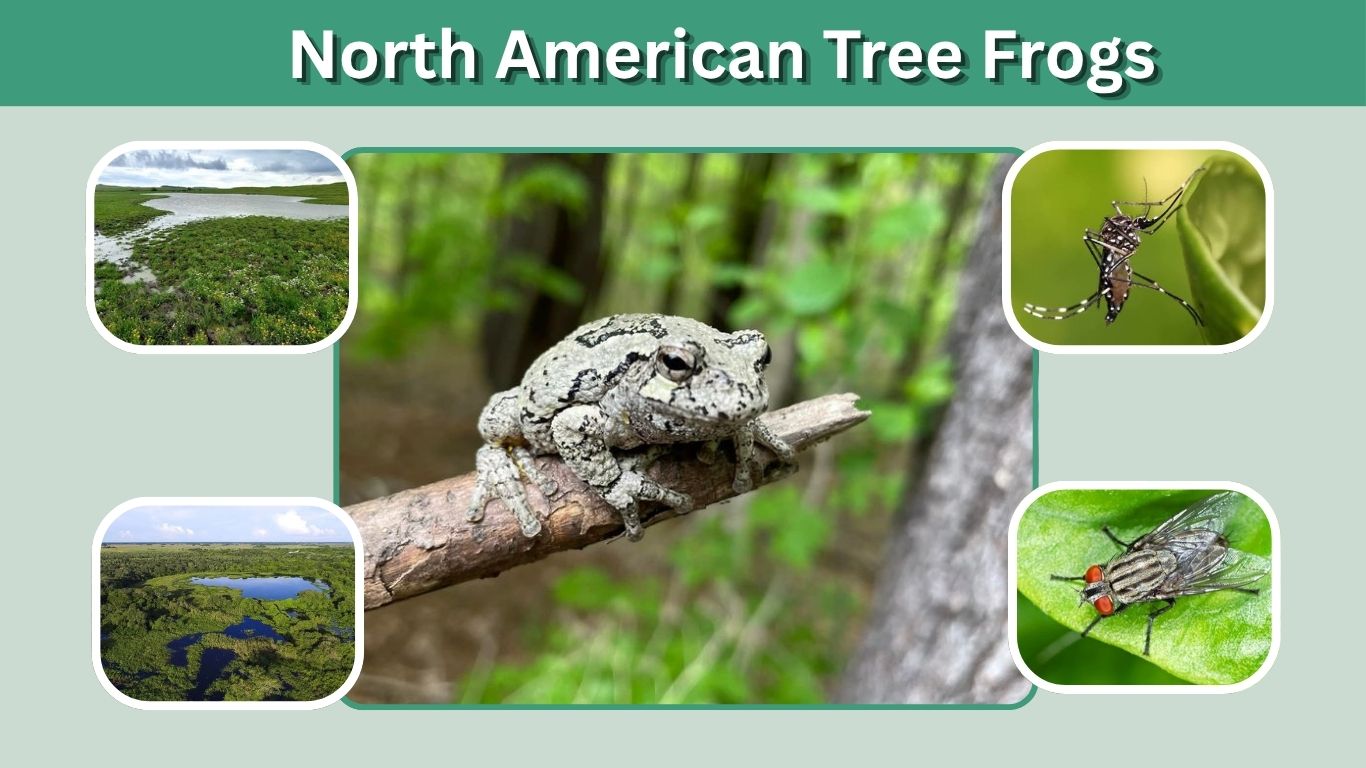
Have you ever heard a loud frog call coming from a tree on a warm summer evening? It might be a North American tree frog, one of several remarkable amphibians known for their climbing abilities, colorful bodies, and distinctive sounds. Found in forests, wetlands, gardens, and grasslands, these small frogs play an important role in controlling insect populations. Learning about their species, identification, calls, diet, habitat, and life cycle can help you recognize them in the wild.
What Is a North American Tree Frog?
North American tree frogs are small amphibians belonging primarily to the family Hylidae. They are distributed across Canada, the United States, and Mexico, occupying a wide range of climates and ecosystems. Many species possess adhesive toe pads that help them climb trees and vegetation, although some spend considerable time on the ground.
North American Tree Frog Identification
Although physical characteristics vary between species, many North American tree frogs share recognizable features.
- Body size: Usually about 0.75–3 inches long, depending on species.
- Skin color: Green, gray, brown, yellowish, or mottled.
- Toe pads: Rounded adhesive pads that help with climbing.
- Eyes: Relatively large eyes that provide useful vision in low light.
- Body shape: Compact bodies with slender, muscular hind legs.
- Skin texture: Smooth or slightly granular, depending on the species.
- Vocal sacs: Male frogs possess expandable vocal sacs that amplify mating calls.
Color alone is not always reliable for identifying a species because several tree frogs can change their appearance in response to environmental conditions.
Common North American Tree Frog Species
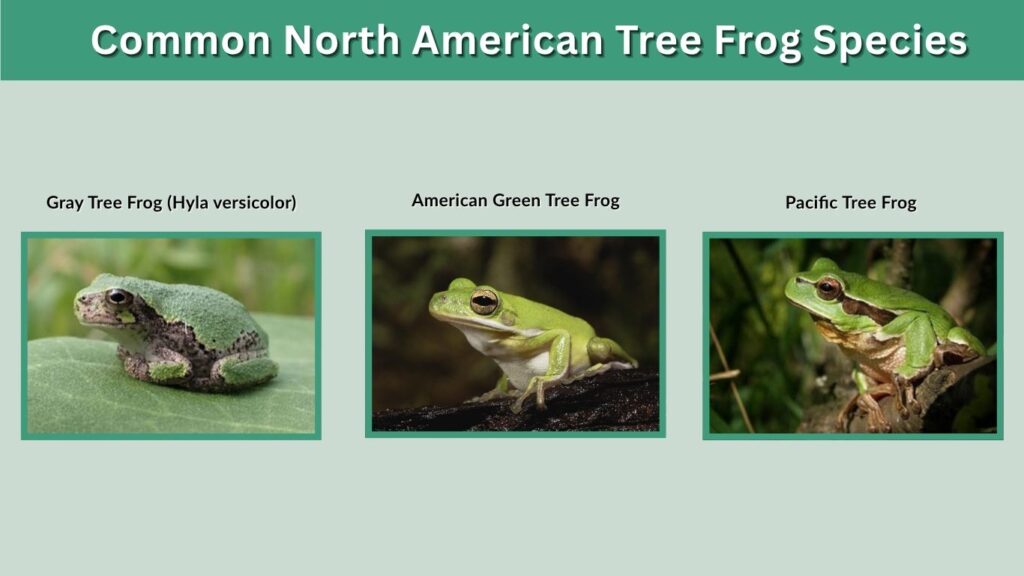
North America supports numerous tree frog species, each with unique colors, sounds, and habitat preferences. Some are widespread throughout eastern forests, while others live primarily in southeastern wetlands or along the Pacific Coast. Understanding the most familiar species makes identification easier and helps explain the diversity of these small amphibians.
1. Gray Tree Frog (Hyla versicolor)
The gray tree frog is found across much of eastern North America. Its mottled gray, brown, or green coloration helps it blend into tree bark and surrounding vegetation.
Adults typically have rough-looking skin, large toe pads, and yellow or orange markings concealed on their hind legs. Their distinctive musical trilling calls are especially noticeable during warmer months.
Gray tree frogs inhabit forests, wooded wetlands, and suburban landscapes with suitable vegetation.
2. American Green Tree Frog (Dryophytes cinereus)
The American green tree frog is a familiar species throughout the southeastern United States. Its bright green body and narrow white or yellowish stripe along each side make it relatively easy to recognize.
These frogs commonly inhabit wetlands, ponds, gardens, and areas containing tall vegetation.
Their loud, nasal calls are often heard on humid summer evenings and before rainfall. They also frequently rest on windows, leaves, and outdoor structures.
3. Pacific Tree Frog (Pseudacris regilla)
The northern Pacific tree frog occurs in western North America, particularly near the Pacific Coast.
It has variable green, brown, or gray coloration and a distinctive dark stripe running through each eye. Adults generally measure approximately 0.75–2 inches long.
These frogs occupy forests, grasslands, wetlands, and residential gardens. Their familiar two-part calls are sometimes described as a classic “ribbit” sound.
4. Spring Peeper (Pseudacris crucifer)
The spring peeper is one of the smallest North American tree frogs, typically measuring around 0.75–1.5 inches long.
Its tan or brown body features a characteristic dark X-shaped marking across the back.
Spring peepers live in wooded habitats near ponds and seasonal wetlands. Their high-pitched, repeated calls are among the earliest signs of spring in eastern North America.
5. Barking Tree Frog (Dryophytes gratiosus)
The barking tree frog is a relatively large species native to the southeastern United States.
It has a stout body, granular skin, and green or brown coloration, often with rounded dark spots.
Its deep calls resemble the barking of a small dog, making it distinguishable from many other native frogs. Barking tree frogs occupy wooded landscapes and temporary breeding ponds.
What Do North American Tree Frogs Sound Like?
North American tree frog sounds vary considerably between species. Some produce musical trills, while others make sharp peeps, nasal honks, or deep barking calls. Male frogs usually produce the loudest vocalizations during breeding periods, using their calls to attract females and communicate with competing males near suitable aquatic habitats.
North American Tree Frog Sounds by Species
| Tree Frog Species | Typical Sound | Common Calling Period |
| Gray Tree Frog | Slow, musical trill | Spring and summer |
| Cope’s Gray Tree Frog | Faster, harsher trill | Spring and summer |
| American Green Tree Frog | Repeated nasal honks | Warm, humid months |
| Pacific Tree Frog | Two-part “ribbit” | Winter to spring, varying by region |
| Spring Peeper | Sharp, high-pitched peeps | Late winter and spring |
| Barking Tree Frog | Deep, bark-like calls | Spring and summer |
These descriptions are general. Temperature, location, and breeding conditions can influence calling behavior.
Why Do North American Tree Frogs Make Sounds?
Male tree frogs primarily call to attract females during breeding season. Each species has a recognizable vocal pattern that helps potential mates locate the appropriate partner.
Some frogs also produce territorial or rain-associated calls. Large groups calling simultaneously create the familiar nighttime choruses heard around wetlands and forests.
Where Do North American Tree Frogs Live?
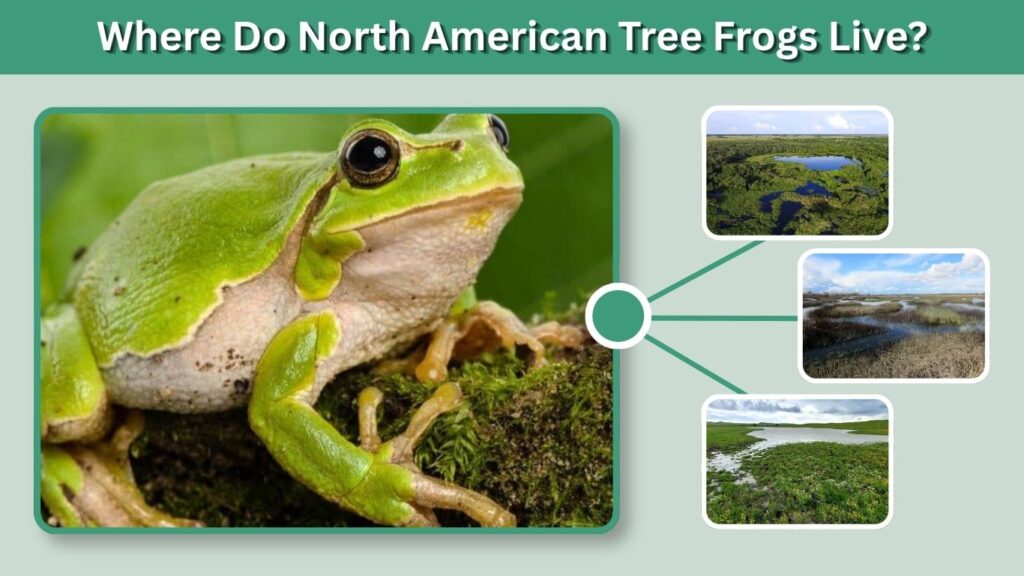
North American tree frogs occupy diverse environments, from humid southeastern swamps to temperate forests and western coastal regions. Their distributions depend on species-specific requirements for moisture, temperature, shelter, and breeding water. Although many spend considerable time climbing, others prefer low vegetation, leaf litter, or locations close to the ground.
Natural Habitat and Geographic Distribution
Tree frogs commonly inhabit deciduous forests, wooded wetlands, marshes, grasslands, and gardens.
Gray tree frogs favor wooded environments, while American green tree frogs often occur near ponds, swamps, and other freshwater habitats.
Pacific tree frogs tolerate a broad range of environments, including gardens and open landscapes.
Regardless of habitat differences, most species require suitable freshwater locations for reproduction.
Can North American Tree Frogs Live Near Houses?
Yes. Many tree frog species live comfortably around residential landscapes containing vegetation, insects, and moisture.
Homeowners may discover them on windows, patios, garden plants, or exterior walls.
Outdoor lights attract insects, which can provide convenient feeding opportunities. Maintaining native vegetation and avoiding unnecessary pesticide use can make gardens more suitable for these amphibians.
What Do North American Tree Frogs Eat?
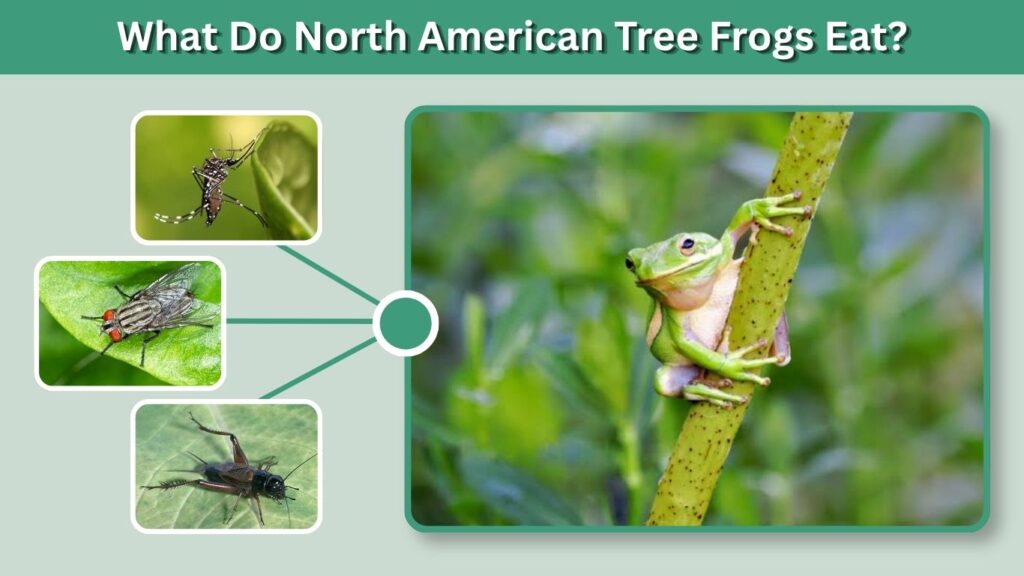
North American tree frogs are predominantly insectivorous as adults, feeding on small insects and other invertebrates. Their diets differ according to species, body size, seasonal conditions, and local prey availability. These frogs help regulate insect populations in gardens, forests, and wetlands while serving as prey for birds, snakes, and other animals.
North American Tree Frog Diet
Common prey includes mosquitoes, flies, moths, beetles, crickets, spiders, and other appropriately sized invertebrates.
Tree frogs typically capture prey using quick movements and their sticky tongues. Many species hunt primarily at night, when insect activity is high.
Young tadpoles have different feeding habits and often consume algae, microorganisms, and decomposing organic matter.
North American Tree Frog Life Cycle and Reproduction
North American tree frogs undergo metamorphosis, developing from aquatic eggs into tadpoles before becoming air-breathing adults. Reproductive timing varies according to species and climate. Most depend on ponds, wetlands, or temporary pools where eggs and developing tadpoles can survive until they are ready to leave the water.
From Eggs to Adult Tree Frogs
The life cycle generally follows four stages:
- Eggs: Females deposit gelatinous eggs in freshwater, often attached to vegetation.
- Tadpoles: Aquatic larvae hatch and use gills to breathe while feeding and growing.
- Froglets: Tadpoles develop limbs, absorb their tails, and begin transitioning onto land.
- Adults: Mature frogs live primarily on land and eventually reproduce in suitable aquatic habitats.
Development time varies by species, water temperature, and food availability. Some species complete metamorphosis within several weeks, while others require months.
How Do North American Tree Frogs Survive Winter?
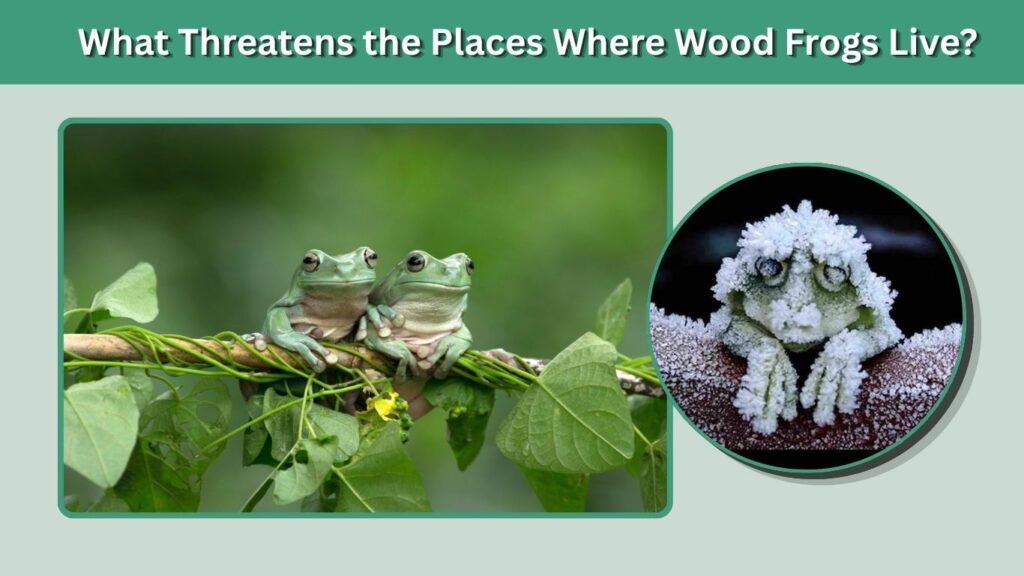
Tree frogs living in colder parts of North America must survive freezing temperatures and reduced food availability. Their winter survival strategies vary between species. Some shelter underground or beneath insulating debris, while certain cold-adapted tree frogs can tolerate partial freezing through specialized physiological mechanisms.
Can North American Tree Frogs Survive Freezing?
Yes, some species, including gray tree frogs and spring peepers, can survive partial freezing during winter.
These frogs produce protective compounds that help reduce damage to living cells when ice forms in parts of the body.
Gray tree frogs use substances such as glycerol and glucose during cold adaptation. However, not every North American tree frog possesses this level of freeze tolerance.
North American Tree Frog Lifespan and Care
The lifespan of a North American tree frog depends on its species, environmental conditions, predation pressure, and access to food. Frogs living in captivity may survive longer than wild individuals when provided with appropriate care. However, different species have distinct temperature, humidity, enclosure, and nutritional requirements.
How Long Do North American Tree Frogs Live?
Lifespan differs considerably among species. Some small frogs survive only a few breeding seasons in the wild, while others may live several years.
Gray tree frogs have been documented surviving more than seven years in captivity.
Accurate estimates require identifying the species because there is no single lifespan applicable to every North American tree frog.
Basic Care for North American Tree Frogs
Captive tree frogs require secure enclosures, appropriate humidity, access to clean dechlorinated water, climbing surfaces where needed, and suitable live insect prey.
Temperature and enclosure design must match the particular species.
Choose legally obtained, captive-bred animals rather than collecting wild frogs, and wash your hands after handling frogs or cleaning their enclosures.
FAQs
1. What is the most common North American tree frog?
It depends on the region. Gray tree frogs and spring peepers are widespread in eastern North America, while Pacific tree frogs are familiar in western coastal areas.
2. Are North American tree frogs poisonous?
Most familiar native tree frogs are not dangerous to humans, although their skin secretions may cause irritation. Avoid unnecessary handling and contact with your eyes.
3. Do North American tree frogs change color?
Yes. Several species, including gray and Pacific tree frogs, can change their coloration in response to environmental conditions and physiological factors.
4. What is the loudest North American tree frog?
Barking tree frogs produce particularly powerful calls. However, perceived loudness depends on distance, surroundings, and how many frogs are calling together.
5. Do North American tree frogs live in water?
Adults of many species spend most of their time on land or vegetation, but they generally return to freshwater habitats to reproduce. Their tadpoles develop in water.
