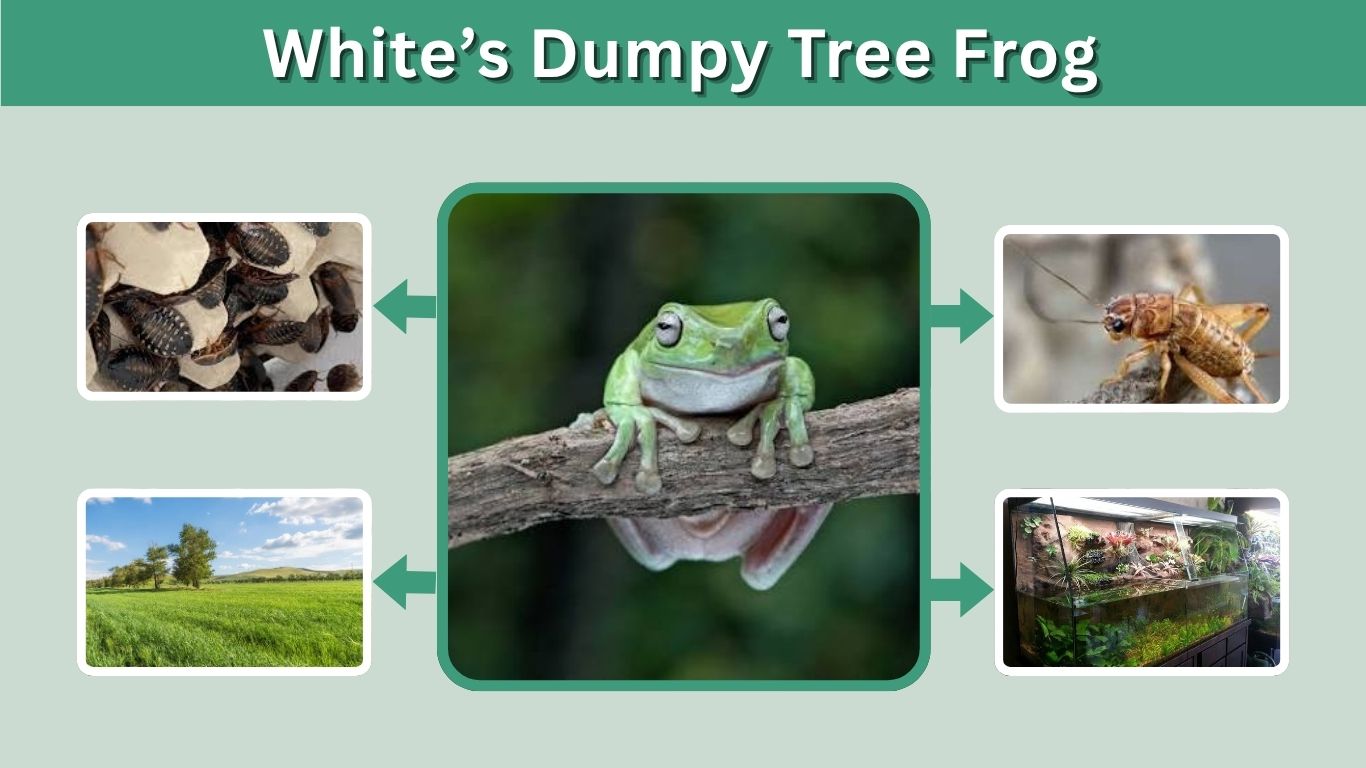
The White’s dumpy tree frog is a fascinating amphibian known for its chubby body, large eyes, and calm personality. Native to Australia and New Guinea, this popular pet frog is admired for its beautiful green coloration and excellent climbing abilities. Although relatively easy to maintain compared with many other amphibians, it requires proper housing, balanced nutrition, and suitable environmental conditions. Understanding White’s dumpy tree frog care, including habitat, temperature, food, lifespan, and common health problems, helps owners keep these adorable creatures healthy and comfortable in captivity.
What Is a White’s Dumpy Tree Frog?
The White’s dumpy tree frog (Ranoidea caerulea), also called the Australian green tree frog, is a large amphibian belonging to the family Hylidae. Its nickname comes from its rounded body, broad head, and slightly loose-looking skin.
Unlike many delicate tree frog species, these frogs have a sturdy build and adaptable nature. They are primarily nocturnal, spending daylight hours resting and becoming active during the evening.
White’s Dumpy Tree Frog Appearance
White’s dumpy tree frogs have smooth, waxy skin that helps reduce moisture loss. Their coloration varies naturally between green, turquoise, olive, and brownish shades.
Their most recognizable physical features include:
- Body Color: Bright green, blue-green, olive, or brownish-green.
- Eyes: Large golden eyes with horizontal pupils.
- Skin: Smooth, slightly waxy skin that retains moisture.
- Toe Pads: Large adhesive pads designed for climbing.
- Body Shape: Rounded abdomen, broad head, and sturdy legs.
Some individuals display small white spots across their backs, creating distinctive natural patterns.
How Big Do White’s Dumpy Tree Frogs Get?
Adult White’s dumpy tree frogs typically reach 3–5 inches in body length. Females are generally larger and heavier than males.
Their growth depends on genetics, nutrition, and environmental conditions. Although these frogs naturally appear plump, excessive weight can indicate obesity.
White’s Dumpy Tree Frog Habitat
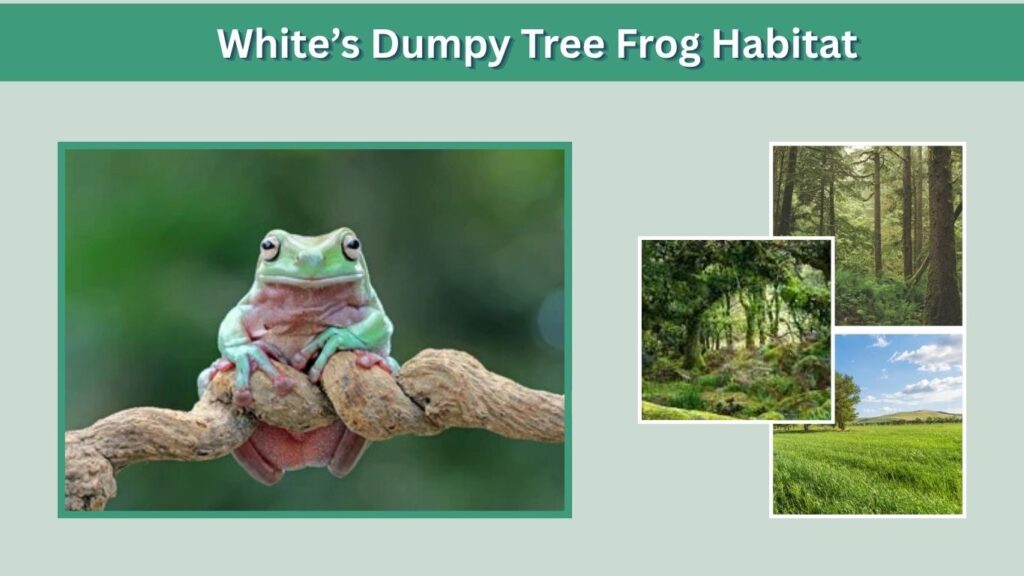
White’s dumpy tree frogs naturally inhabit forests, woodlands, grasslands, and areas near human settlements. They are widely distributed across northern and eastern Australia and parts of New Guinea.
These adaptable amphibians frequently shelter inside tree hollows, beneath bark, or around buildings. Their natural environment provides climbing surfaces, shaded resting places, insects, and access to moisture.
Natural Behavior and Activity
White’s dumpy tree frogs spend much of their time climbing trees and resting above ground. Their specialized toe pads allow them to grip branches and smooth surfaces.
They usually become active after sunset, exploring their surroundings and hunting insects. Providing climbing opportunities in captivity helps encourage these natural behaviors.
White’s Dumpy Tree Frog Care Guide
Proper White’s dumpy tree frog care involves maintaining suitable temperatures, moderate humidity, clean water, and a spacious enclosure. Although relatively hardy, these amphibians can develop health problems when their environmental requirements are ignored.
Tank Size and Enclosure Setup
A single adult White’s dumpy tree frog benefits from a tall enclosure measuring approximately 18 × 18 × 24 inches. Larger habitats offer additional climbing and exploration opportunities.
A suitable enclosure should contain:
- Climbing Branches: Strong branches and cork bark for climbing.
- Plants: Live or artificial plants that provide shelter.
- Substrate: Coconut fiber or another amphibian-safe substrate.
- Hiding Places: Secure resting areas at different heights.
- Water Dish: Shallow, clean water with easy access.
- Secure Lid: A ventilated cover that prevents escapes.
Avoid overcrowding because insufficient space can create stress and competition.
Temperature and Humidity Requirements
Maintain daytime ambient temperatures around 75–80°F (24–27°C), with an optional warm area reaching approximately 82–85°F (28–29°C).
Nighttime temperatures can decrease to around 70–72°F (21–22°C).
Humidity generally works well around 50–70%, provided the enclosure has adequate ventilation and surfaces can dry between misting sessions.
Use reliable thermometers and a hygrometer to monitor environmental conditions.
Lighting and Water Requirements
Provide a consistent day-night lighting cycle with appropriate low-level UVB exposure. UVB supports vitamin D production and healthy calcium metabolism.
Fresh, dechlorinated water should always be available in a shallow container. Replace contaminated water promptly.
Avoid deep water features because these primarily tree-dwelling frogs require safe, easily accessible exits.
What Do White’s Dumpy Tree Frogs Eat?
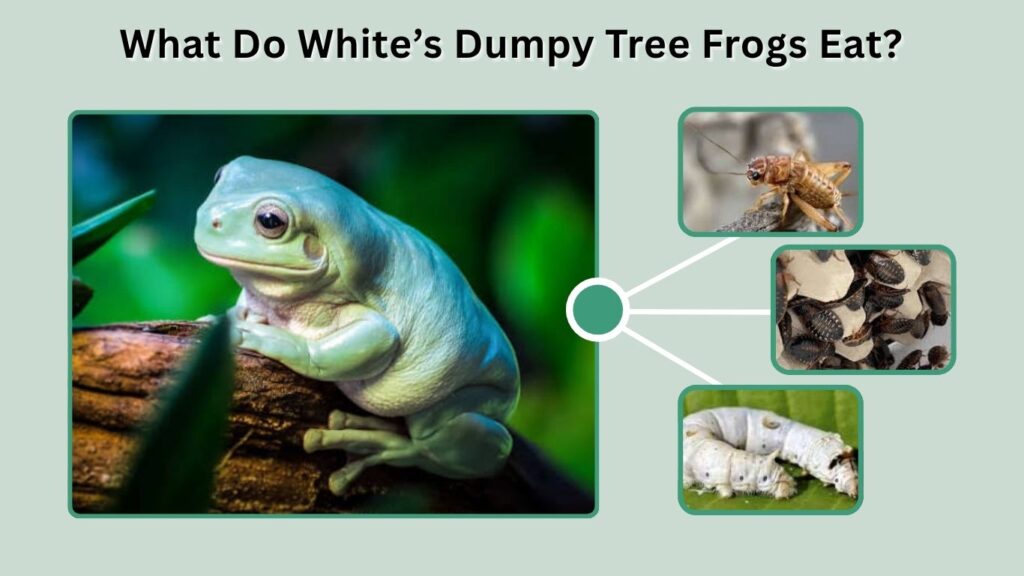
White’s dumpy tree frogs are insectivorous amphibians that primarily consume insects and small invertebrates. Their diet should contain varied, nutritious prey to support healthy growth and body condition.
Best Foods for White’s Dumpy Tree Frogs
Suitable feeder insects include:
- Crickets: A commonly available source of protein.
- Dubia Roaches: Nutritious insects suitable for regular feeding.
- Earthworms: Soft-bodied prey offering dietary variety.
- Silkworms: Nutritious feeders for occasional rotation.
- Black Soldier Fly Larvae: A useful source of calcium.
- Waxworms: High-fat treats that should be offered sparingly.
Feeder insects should be appropriately sized, gut-loaded, and supplemented with calcium and suitable vitamins according to the frog’s needs.
How Often Should You Feed Them?
Juvenile White’s dumpy tree frogs generally require daily feeding because they are actively growing.
Healthy adults can often be fed three or four times weekly, depending on age, activity, and body condition.
Avoid excessive feeding because obesity is common among captive individuals. Remove uneaten insects when necessary to prevent irritation or injury.
White’s Dumpy Tree Frog Lifespan
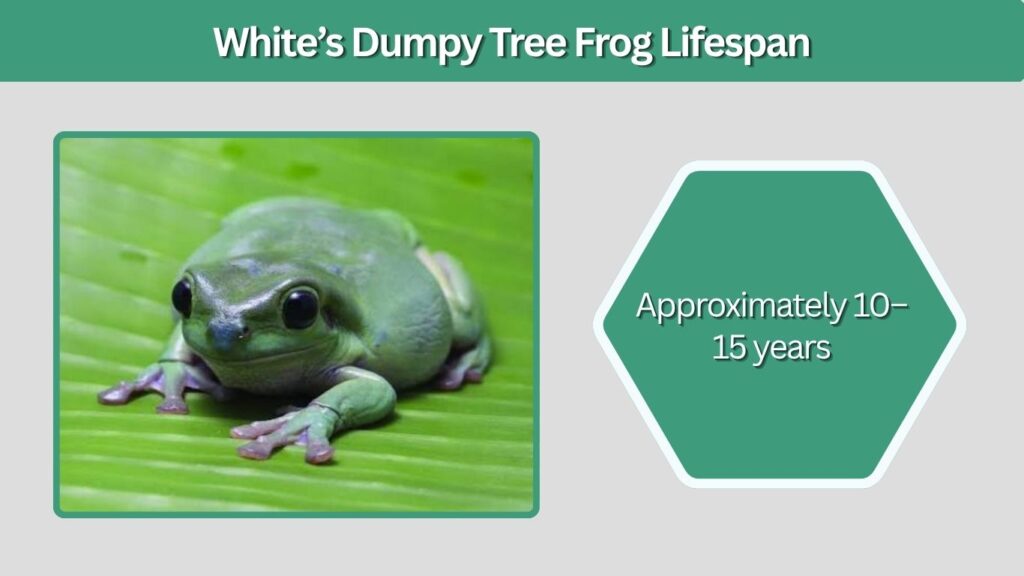
White’s dumpy tree frogs commonly live approximately 10–15 years in captivity when maintained properly. Some individuals survive for 20 years or longer under excellent conditions.
Their lifespan depends on nutrition, environmental stability, hygiene, and overall health.
Wild frogs face additional risks from predators, disease, and habitat disturbances, which can reduce their survival.
White’s Dumpy Tree Frog Sounds and Color Changes
White’s dumpy tree frogs produce distinctive croaking or barking calls, particularly during breeding activity. Adult males are generally more vocal than females.
Their coloration may also shift between green, olive, and brownish shades depending on environmental conditions and individual pigmentation.
A brown frog is not necessarily unhealthy. However, sudden discoloration accompanied by weakness, abnormal skin, or loss of appetite requires attention.
Common White’s Dumpy Tree Frog Health Problems
Although considered relatively hardy amphibians, White’s dumpy tree frogs can develop illnesses when their enclosure, nutrition, or hygiene is inadequate.
Signs of an Unhealthy White’s Dumpy Tree Frog
Common warning signs include:
- Loss of Appetite: Persistent refusal to eat.
- Unusual Weakness: Reduced activity or difficulty climbing.
- Skin Problems: Redness, sores, or abnormal discoloration.
- Weight Changes: Unexplained weight loss or excessive swelling.
- Movement Problems: Weak limbs or abnormal posture.
Common concerns include obesity, dehydration, skin infections, and metabolic bone disease.
Maintain appropriate enclosure conditions and contact an amphibian-experienced veterinarian when concerning symptoms appear.
Are White’s Dumpy Tree Frogs Good Pets?
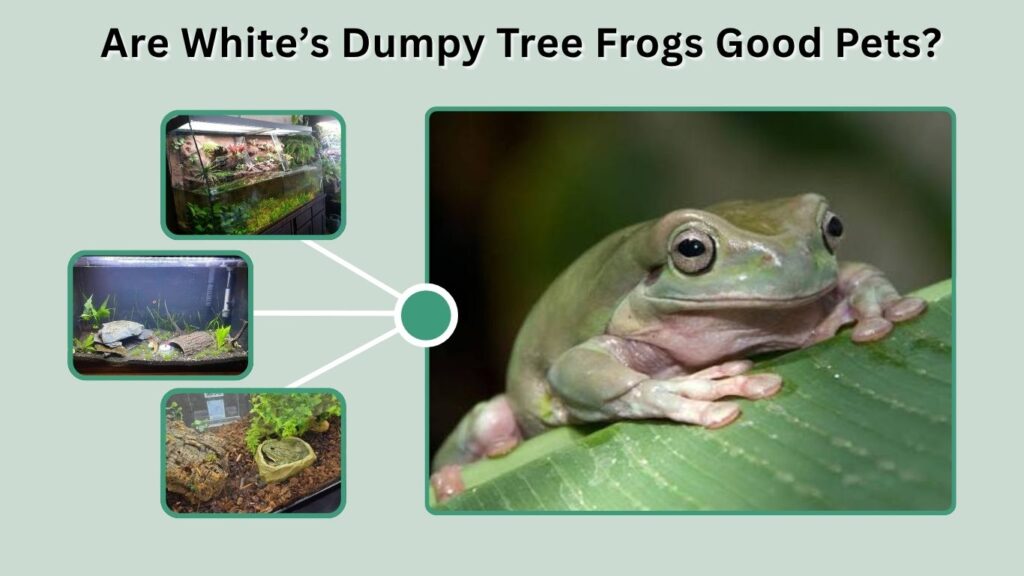
White’s dumpy tree frogs make interesting pets for beginners willing to maintain appropriate amphibian housing.
Their charming appearance, relatively calm behavior, and long lifespan make them appealing display animals.
However, they are not suitable for frequent handling because amphibian skin is sensitive to chemicals and oils.
Choose healthy, captive-bred frogs from reputable breeders and provide consistent long-term care.
FAQs
1. Are White’s tree frogs and dumpy tree frogs the same?
Yes. White’s tree frog, dumpy tree frog, and Australian green tree frog are common names for the same species, Ranoidea caerulea.
2. Can White’s dumpy tree frogs swim?
Yes, they can swim short distances, but they primarily live in trees. Shallow water with an easy exit is safer than deep water.
3. How Can You Tell a Male From a Female?
Adult males often have darker throat skin, produce louder breeding calls, and may develop nuptial pads. Females are generally larger.
4. Why Is My White’s Dumpy Tree Frog Brown?
Brown coloration can be a natural response to environmental conditions. Persistent unusual color changes accompanied by illness symptoms require veterinary evaluation.
5. Do White’s Dumpy Tree Frogs Make Noise at Night?
Yes. Adult males can produce noticeable croaking or barking calls, especially during breeding periods and after environmental changes resembling rainfall.
