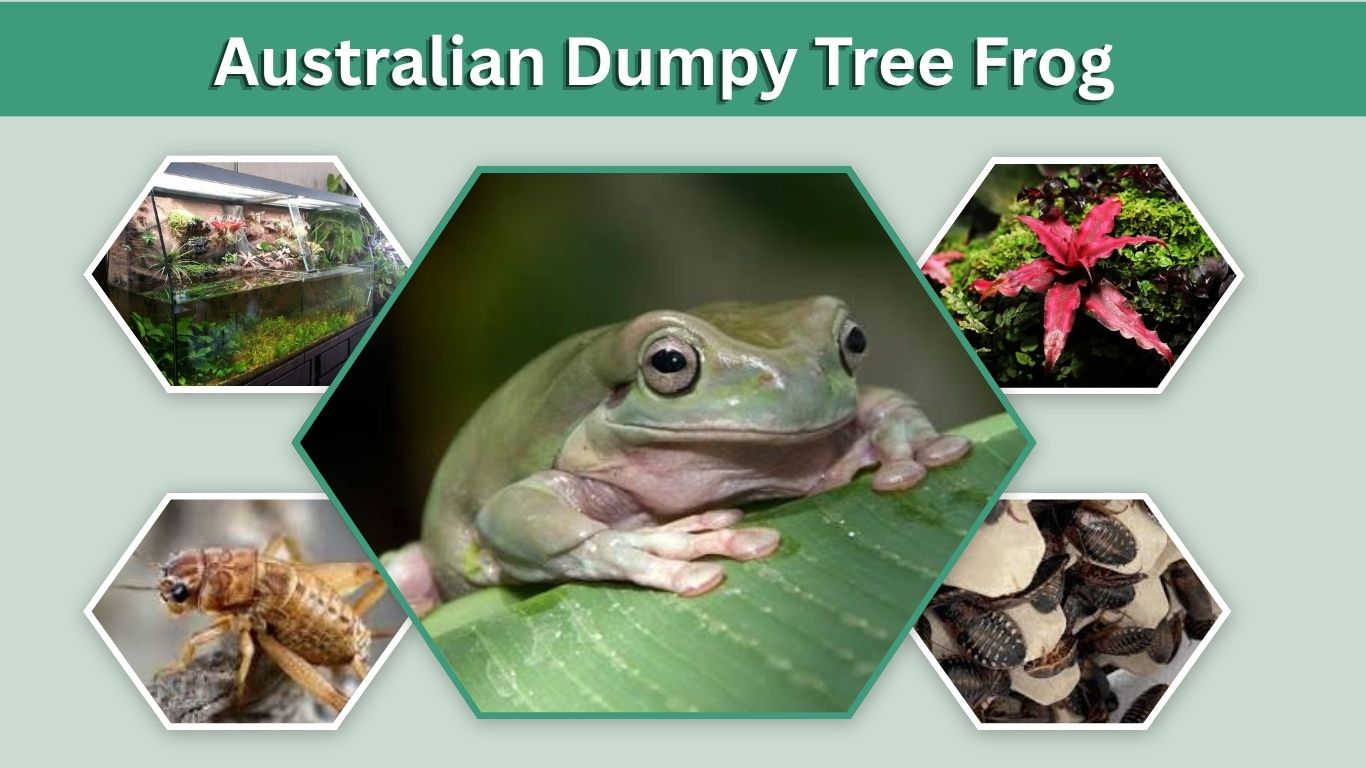
The Australian dumpy tree frog is a large, friendly-looking amphibian famous for its rounded body, golden eyes, and remarkable climbing ability. Also known as White’s tree frog or the Australian green tree frog, it lives across parts of Australia and New Guinea. Although most individuals are green, some display unusual blue or turquoise coloring. Its adaptable nature and calm behavior also make it popular among amphibian keepers. Learning about its appearance, habitat, diet, behavior, and basic care helps explain why this frog attracts so much attention.
What Is an Australian Dumpy Tree Frog?
The Australian dumpy tree frog (Ranoidea caerulea, also known as Litoria caerulea) is a large amphibian belonging to the family Hylidae. It is one of Australia’s most recognizable tree frogs, known for its sturdy body, smooth skin, and distinctive facial appearance.
Despite its rounded shape, this species is an excellent climber that spends much of its life above ground.
Why Is It Called a Dumpy Tree Frog?
The nickname “dumpy” refers to the frog’s broad, rounded body and slightly loose-looking skin. Unlike slender tree frogs, Australian dumpy tree frogs often appear plump even when healthy.
The species is also called White’s tree frog after John White, who collected early specimens. These names describe the same amphibian rather than different species.
Australian Dumpy Tree Frog Appearance and Colors
Australian dumpy tree frogs have smooth, waxy skin, large golden eyes, and broad heads. Their bodies are usually bright green, although individuals may appear olive, turquoise, or brownish-green.
Their natural appearance helps them blend into vegetation while resting during daylight hours.
Physical Characteristics
The most recognizable features include:
- Body Size: Adults generally measure 3–5 inches long.
- Skin Color: Green, olive, turquoise, or occasionally blue.
- Eyes: Large golden eyes with horizontal pupils.
- Toe Pads: Broad adhesive pads that support climbing.
- Body Shape: Rounded abdomen with a broad head.
- Skin Texture: Smooth, waxy skin that reduces moisture loss.
Females are generally larger than males, although body size alone cannot reliably determine their sex.
What Is an Australian Blue Dumpy Tree Frog?
The Australian blue dumpy tree frog is a color variation of the same species rather than a separate type of frog.
Normally, yellow pigmentation combines with blue structural coloration to produce a green appearance. When yellow pigmentation is reduced or absent, a frog may look distinctly blue.
Naturally occurring blue individuals are uncommon, although selectively bred blue-colored frogs are available in captivity.
Blue coloration does not fundamentally change the frog’s habitat requirements, diet, or behavior.
Australian Dumpy Tree Frog Habitat
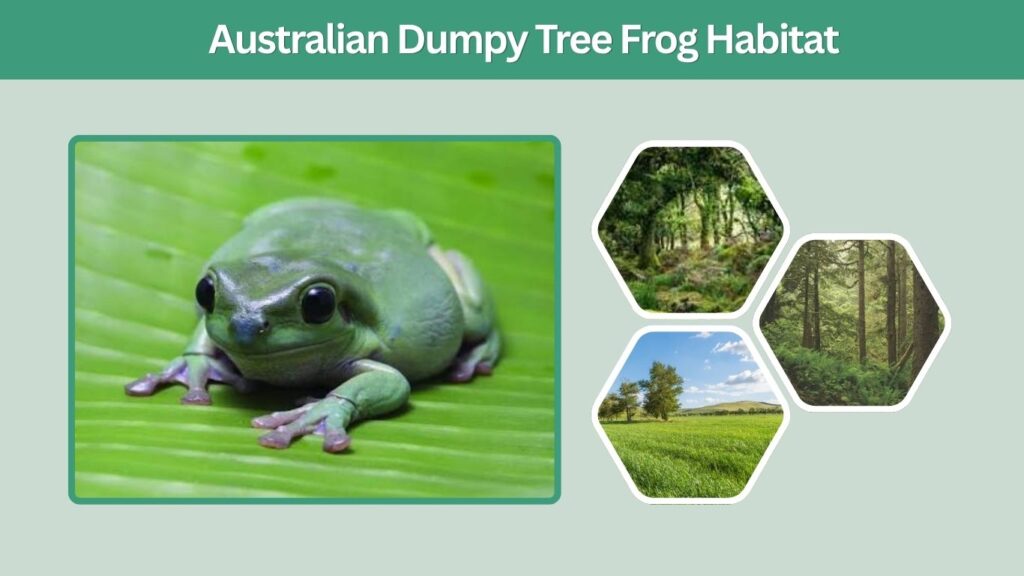
Australian dumpy tree frogs inhabit forests, woodlands, grasslands, and environments near human settlements. Their distribution includes northern and eastern Australia and parts of New Guinea.
They often shelter inside tree hollows, rock crevices, and protected spaces around buildings. Their adaptable nature allows them to survive in both relatively moist and seasonally dry environments.
Natural Behavior and Lifestyle
Australian dumpy tree frogs are primarily nocturnal. They usually rest during daylight hours and become more active after sunset.
Their large toe pads help them climb tree trunks, branches, and smooth surfaces.
During dry conditions, these frogs conserve moisture by sheltering in protected areas and using waxy skin secretions to reduce water loss.
Australian Dumpy Tree Frog Sounds and Breeding
Male Australian dumpy tree frogs produce deep, repeated barking calls, especially during the breeding season.
Breeding generally occurs during warmer, wetter periods when suitable freshwater habitats become available.
Females deposit eggs in water, where developing embryos eventually hatch into tadpoles.
The tadpoles grow and undergo metamorphosis, gradually developing limbs and transforming into young frogs.
Australian Dumpy Tree Frog Care Guide
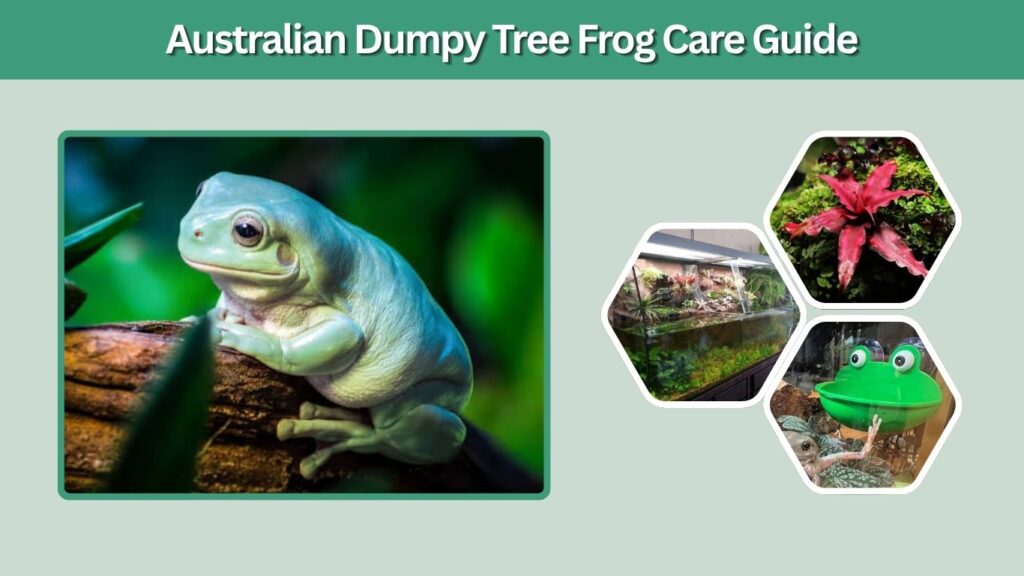
Australian dumpy tree frogs are relatively hardy amphibians, but successful captive care requires suitable housing, stable environmental conditions, and proper nutrition.
Their enclosure should provide opportunities for climbing, secure resting places, and access to clean water.
Tank Size and Enclosure Setup
A tall terrarium measuring approximately 18 × 18 × 24 inches is a suitable starting point for one adult frog.
An appropriate enclosure should contain:
- Climbing Branches: Strong branches and cork bark.
- Plants: Live or artificial foliage for shelter.
- Substrate: Amphibian-safe coconut fiber or suitable soil.
- Hiding Places: Protected resting areas at different heights.
- Water Dish: Shallow, clean, dechlorinated water.
- Ventilation: Adequate airflow with a secure lid.
Larger enclosures provide additional climbing space and encourage natural exploration.
Temperature, Humidity, and Lighting
Daytime temperatures should generally remain around 75–80°F (24–27°C), with an optional warm perch around 82–85°F (28–29°C).
Nighttime temperatures may decrease to approximately 70–72°F (21–22°C).
Maintain moderate humidity, typically around 50–70%, while allowing enclosure surfaces to dry between misting sessions.
Provide an appropriate day-night cycle and low-level UVB lighting to support calcium metabolism.
Handling and Daily Maintenance
Avoid frequent handling because amphibian skin is sensitive to oils, chemicals, and soap residues.
Replace contaminated water regularly, remove waste, and monitor enclosure temperatures and humidity.
Keeping the habitat clean and stable helps prevent unnecessary stress and illness.
What Do Australian Dumpy Tree Frogs Eat?
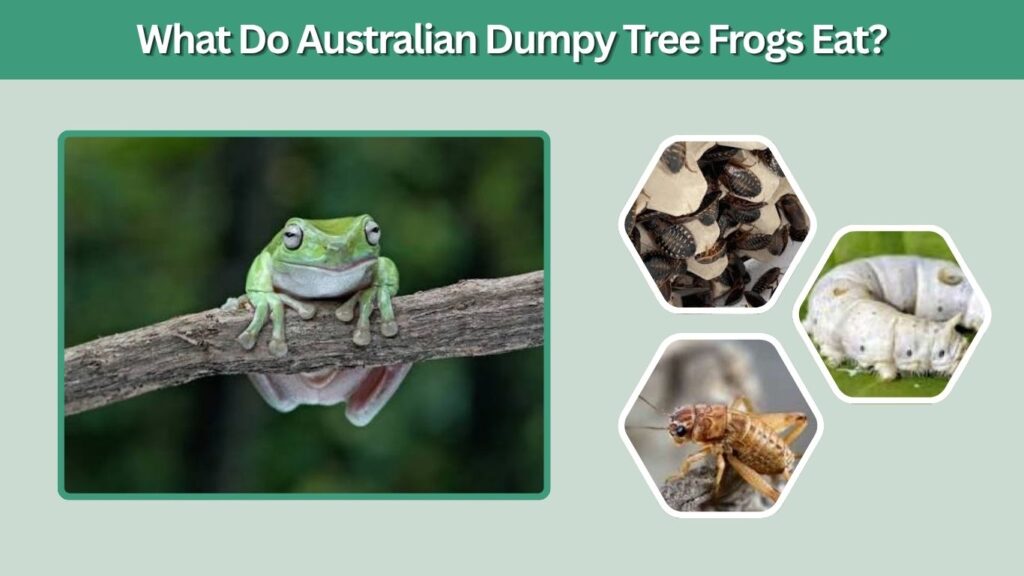
Australian dumpy tree frogs are opportunistic predators that primarily consume insects and other small animals.
In captivity, their diet should include varied, appropriately sized feeder insects supplemented with essential nutrients.
Best Foods for Australian Dumpy Tree Frogs
Suitable feeder insects include:
- Crickets: A reliable source of protein.
- Dubia Roaches: Nutritious insects for regular feeding.
- Earthworms: Soft-bodied prey offering dietary variety.
- Silkworms: A useful supplementary food.
- Black Soldier Fly Larvae: Calcium-rich feeder insects.
- Waxworms: Occasional treats due to their high fat content.
Juveniles generally require more frequent feeding than adults. Healthy adults may eat three or four times weekly, depending on body condition.
Avoid overfeeding because these frogs can become obese.
Australian Dumpy Tree Frog Lifespan
Australian dumpy tree frogs commonly live approximately 10–15 years in captivity, although some survive for 20 years or longer.
Their longevity depends on nutrition, appropriate environmental conditions, hygiene, and veterinary care.
Because of their long lifespan, keeping one requires a substantial commitment.
Common Australian Dumpy Tree Frog Health Problems
Although relatively resilient, Australian dumpy tree frogs can develop health problems related to poor hygiene, nutritional deficiencies, or unsuitable enclosure conditions.
Signs of an Unhealthy Dumpy Tree Frog
Common warning signs include:
- Loss of Appetite: Persistent refusal to eat.
- Weakness: Difficulty climbing or moving normally.
- Skin Problems: Redness, sores, or unusual patches.
- Weight Changes: Rapid weight loss or abnormal swelling.
- Unusual Behavior: Persistent lethargy or abnormal posture.
Contact an amphibian-experienced veterinarian if symptoms appear.
FAQs
1. Are Australian Dumpy Tree Frogs Good Pets?
Yes. They can be suitable pets for beginners who can maintain proper temperature, humidity, nutrition, and enclosure hygiene. They are best appreciated as display animals rather than frequently handled pets.
2. Are Australian Dumpy Tree Frogs and White’s Tree Frogs the Same?
Yes. Australian dumpy tree frog, White’s tree frog, and Australian green tree frog are common names for the same species.
3. Are Australian Blue Dumpy Tree Frogs Rare?
Naturally occurring blue individuals are uncommon. However, captive breeding has made blue-colored variations more accessible within the amphibian hobby.
4. Can Australian Dumpy Tree Frogs Swim?
Yes, they can swim, but they are primarily tree-dwelling amphibians. Captive frogs need shallow water with a safe, easily accessible exit.
5. Where Can You Buy an Australian Dumpy Tree Frog?
Captive-bred Australian dumpy tree frogs may be available through reputable amphibian breeders and specialist reptile retailers. Buyers should check local ownership regulations and avoid wild-caught animals.
