
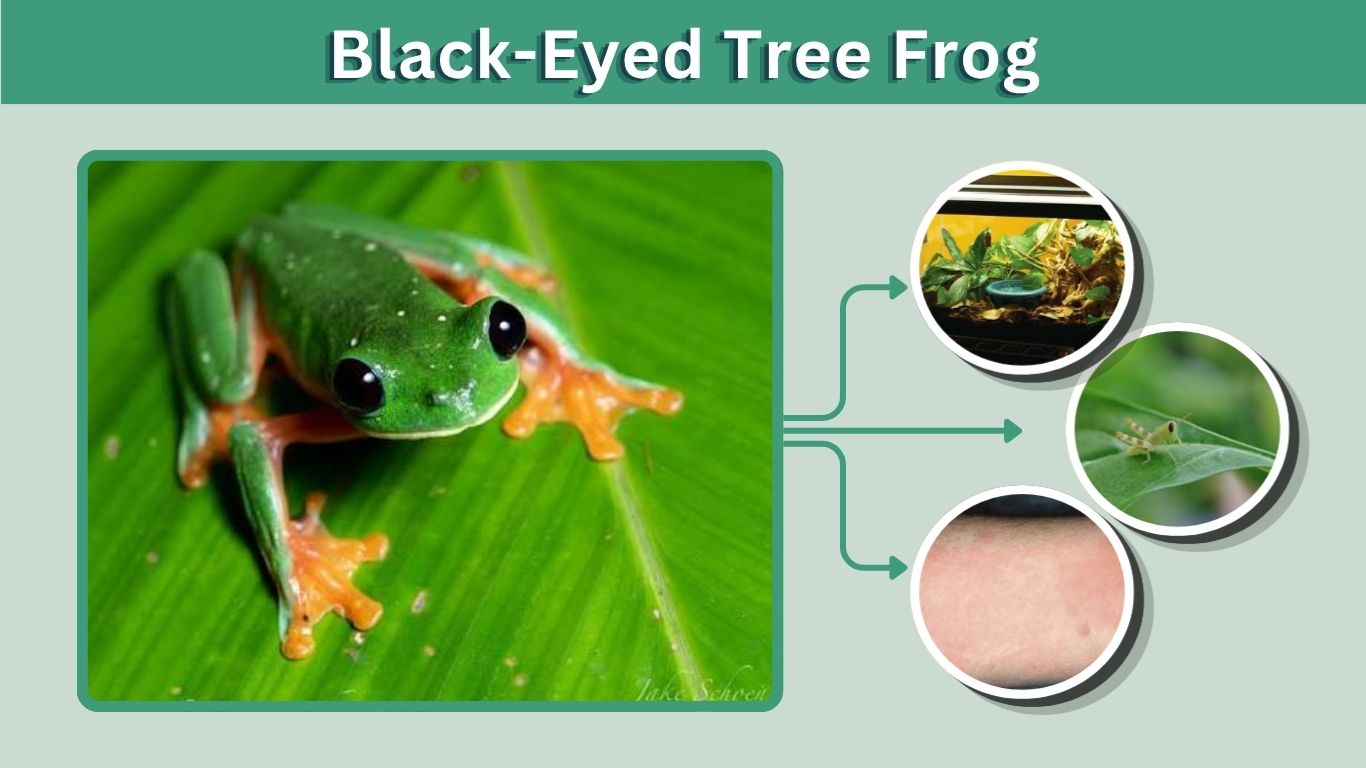
The black-eyed tree frog is a striking Central American amphibian with a leaf-green body, dark ruby-black eyes, orange or pink sides, and sticky climbing toes. Also known as Morelet’s tree frog, it spends daylight hours sleeping beneath leaves and becomes active after dark. Although occasionally available as a captive-bred pet, it requires carefully controlled warmth, humidity, ventilation, live food, and clean water. Its sensitive skin and history of disease-related population declines make responsible sourcing, quarantine, and minimal handling especially important.
What Is a Black-Eyed Tree Frog?
The true black-eyed tree frog is Agalychnis moreletii. It belongs to the same genus as the famous red-eyed tree frog but is a separate species.
Identification
- Scientific name: Agalychnis moreletii
- Common names: Black-eyed tree frog and Morelet’s tree frog
- Family: Phyllomedusidae
- Native range: Mexico and northern Central America
- Adult size: Approximately 2–3.25 inches
- Color: Green with orange, red, or pink sides
- Eyes: Extremely dark red, appearing black
- Lifestyle: Arboreal and nocturnal
- Diet: Insectivorous
- Lifespan: Commonly estimated at 5–10 years
- Conservation status: Least Concern
- Experience level: Intermediate
Adult females are usually larger and heavier than males. Males develop vocal sacs and call during the breeding season to attract females.
Black-Eyed vs. Red-Eyed Tree Frog
The black-eyed and red-eyed tree frogs have similar slender bodies and climbing feet, but their coloration makes adults relatively easy to distinguish.
| Feature | Black-eyed tree frog | Red-eyed tree frog |
| Scientific name | Agalychnis moreletii | Agalychnis callidryas |
| Eye color | Dark red to nearly black | Bright red |
| Flanks | Orange, red, or pink | Blue and yellow stripes |
| Feet | Usually green or orange-toned | Bright orange or red |
| Range | Mexico to northern Central America | Mexico through Central America |
A red-eyed tree frog developing black spots or abnormal dark coloration is not becoming a black-eyed tree frog. Persistent spots, skin lesions, or sudden discoloration can indicate stress, injury, or disease and should be evaluated by an exotic veterinarian.
Black-Eyed Tree Frog Habitat and Distribution
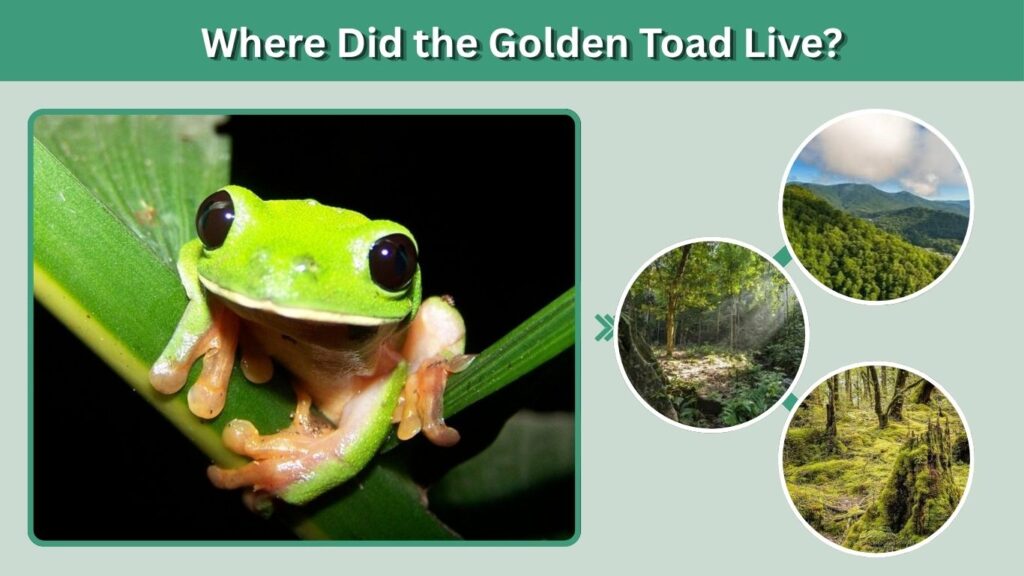
Black-eyed tree frogs occur in Belize, El Salvador, Guatemala, Honduras, and Mexico. They inhabit humid lowland forests, lower montane forests, cloud forests, wetlands, and wooded areas near temporary or permanent pools.
Are They Native to Georgia or Florida?
No. Agalychnis moreletii is not native to Georgia, Florida, Texas, or any other part of the United States. A light-green frog with dark-looking eyes in these regions is likely a native species whose pupils appear enlarged under low light.
Its natural distribution extends from southern Mexico into northern Central America. It should never be released outdoors outside its native range.
Arboreal Adaptations
Large adhesive toe pads help the frog grip leaves and branches. Its long legs allow it to move efficiently through vegetation, while its green upper body provides camouflage during daytime rest.
The dark eyes may reduce visual contrast while the frog sleeps. When disturbed, it suddenly opens its eyes and exposes brighter colors along its sides, potentially startling a predator long enough to escape.
Black-Eyed Tree Frog Enclosure
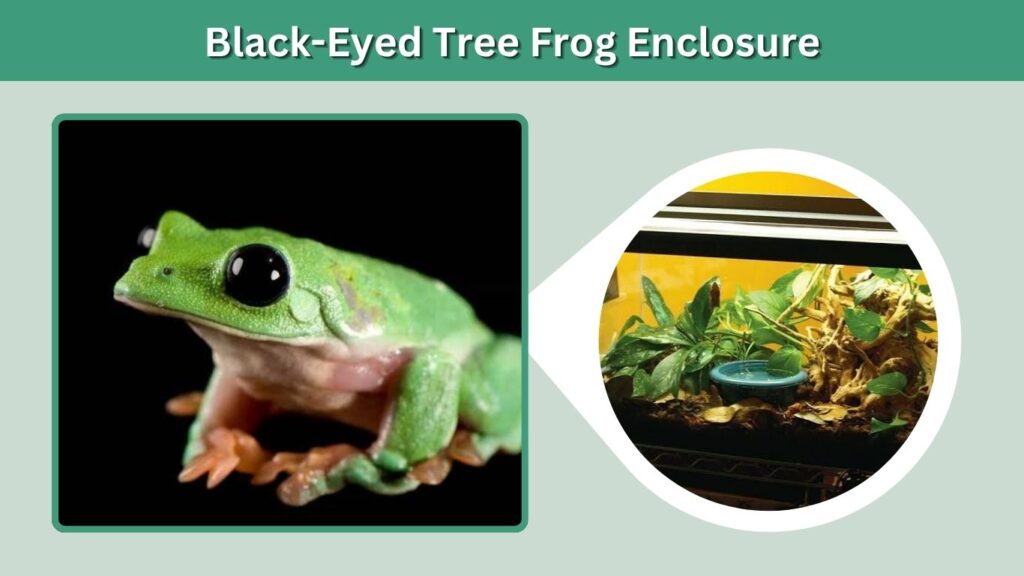
A tall, front-opening terrarium is preferable because these frogs spend most of their time above the ground. The enclosure must provide climbing routes, foliage, shaded sleeping sites, and open areas for hunting.
Enclosure Requirements
- Minimum size: Approximately 18 × 18 × 24 inches for one or two adults
- Daytime temperature: 74–82°F
- Nighttime temperature: 68–74°F
- Humidity: Generally 60–80%
- Lighting: 10–12-hour day-and-night cycle
- UVB: Low-output UVB recommended
- Water: Shallow dish with dechlorinated water
- Ventilation: Strong cross-ventilation or screened top
- Furnishings: Branches, broad leaves, vines, and live plants
Larger groups require additional space, perches, feeding locations, and hiding areas. Overcrowding increases stress and makes disease transmission more likely.
Plants and Climbing Structures
Pothos, philodendron, bromeliads, and other sturdy amphibian-safe plants provide valuable sleeping surfaces. Verify that plants have not been treated with pesticides or leaf-polishing chemicals.
Arrange branches diagonally and horizontally throughout the terrarium. Every structure should be stable and free from sharp or abrasive surfaces.
Substrate and Humidity
Coconut fiber, organic topsoil, leaf litter, or a planted bioactive substrate can maintain humidity. A drainage layer prevents the lower substrate from becoming permanently waterlogged.
Mist the enclosure as needed, preferably in the evening, but allow some surface drying during the day. Constantly saturated conditions combined with stagnant air encourage bacterial and fungal growth. Humidity should therefore be balanced with reliable ventilation.
Black-Eyed Tree Frog Heating, Lighting, and Water
Use a thermostat-controlled heat source above one side of the terrarium to create a gentle temperature gradient. Never place an unregulated heater where the frog can touch it.
UVB and Daylight
Low-level UVB may support vitamin D production, calcium use, and normal behavior. Place the lamp above mesh because glass blocks useful ultraviolet radiation. Provide dense foliage so the frog can choose between light and shade.
Avoid powerful basking bulbs that overheat or rapidly dry the enclosure. Check temperatures at the highest branches, where heat accumulates.
Water Quality
Provide fresh, shallow, dechlorinated water and replace it daily. Amphibians absorb water and chemicals through their skin, making untreated tap water, soap residue, pesticides, and cleaning sprays particularly dangerous.
Clean the dish with amphibian-safe methods and rinse it thoroughly. The water must be shallow enough for the frog to leave easily.
Black-Eyed Tree Frog Diet and Feeding
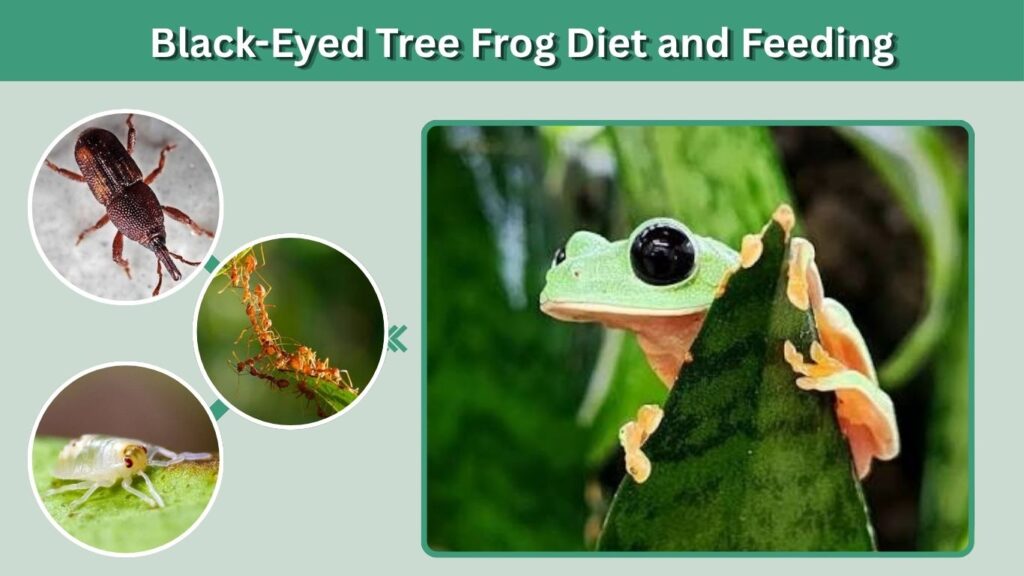
Black-eyed tree frogs hunt insects at night. Captive individuals need a varied diet rather than relying exclusively on crickets.
Suitable Foods
- Appropriately sized crickets
- Dubia roach nymphs
- Black soldier fly larvae
- Small locusts
- Houseflies
- Silkworms
- Occasional mealworms
Feed adults several appropriately sized insects two or three times weekly. Juveniles need smaller meals more frequently. Prey should generally be no wider than the space between the frog’s eyes.
Gut-load feeders before use and apply calcium and multivitamin supplements on a suitable schedule. Consult an experienced amphibian veterinarian because excessive supplementation can also cause health problems.
Remove uneaten prey, particularly crickets, because they may bite resting frogs.
Sleeping and Daily Behavior
Black-eyed tree frogs are primarily nocturnal. During daylight, they commonly press their bodies against a broad leaf, close their eyes, and remain almost motionless.
Is Daytime Inactivity Normal?
Sleeping throughout much of the day is normal. The frog should become more alert after the enclosure darkens and may move between perches while hunting.
Concern is appropriate when inactivity continues at night or is accompanied by weight loss, difficulty gripping branches, red skin, cloudy eyes, abnormal posture, or refusal to eat.
Are Black-Eyed Tree Frogs Poisonous?
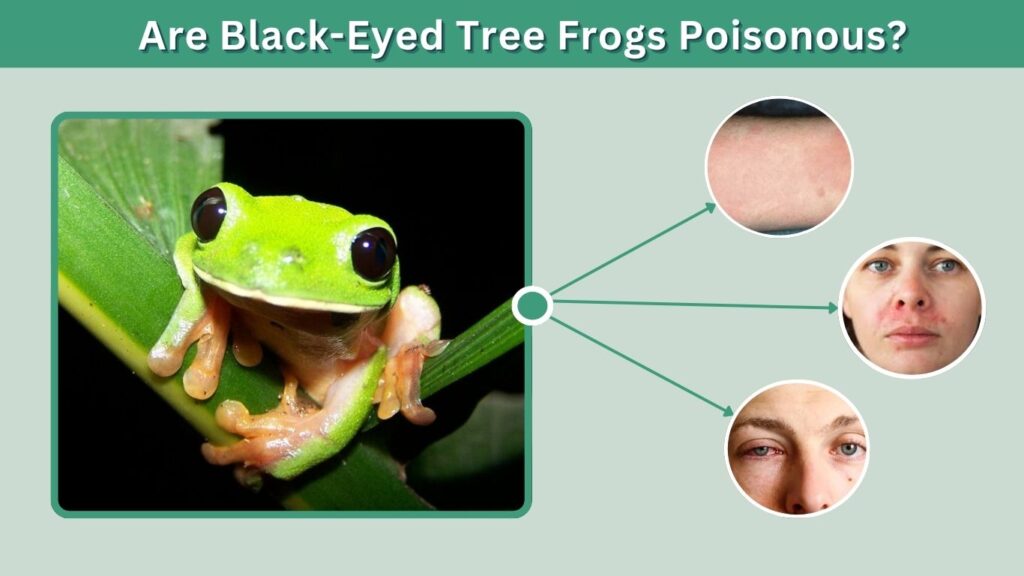
Black-eyed tree frogs are not dangerously poisonous or venomous to humans. Like many amphibians, however, their skin produces protective secretions that may irritate the eyes, mouth, or broken skin.
Safe Handling
- Handle the frog only when necessary
- Wear clean, damp, powder-free nitrile gloves
- Keep it away from the face and mouth
- Never handle it after using lotion or sanitizer
- Wash hands after enclosure maintenance
- Supervise children around the terrarium
Amphibians can carry Salmonella without appearing ill. Their delicate skin can also absorb oils, salts, soap, and chemicals from human hands. They are therefore display pets rather than animals intended for frequent handling.
Breeding and Life Cycle
Breeding normally occurs during the rainy season near forest pools. Males call from vegetation to attract females, and competition may include calls and vibrations transmitted through branches.
Eggs and Tadpoles
Females deposit clutches of approximately 50–75 eggs on leaves or other surfaces above water. The developing eggs have a greenish appearance.
After hatching, tadpoles fall into the water below, where they feed and develop before metamorphosing into froglets. This reproductive strategy allows adults to remain in vegetation while their aquatic larvae grow in ponds.
Captive breeding requires seasonal environmental changes, a rain chamber, suitable leaves above water, and separate facilities for raising tadpoles.
Conservation Status
The black-eyed tree frog was previously classified as Critically Endangered following severe declines associated with habitat loss and chytridiomycosis. Later surveys found more populations and evidence that some were recovering, leading to its reclassification as Least Concern in 2016.
Its improved category does not mean all populations are secure. Forest destruction, agriculture, pollution, collection, and the chytrid fungus remain concerns.
The species is listed under CITES Appendix II, meaning international trade is regulated. Captive-bred animals with legitimate documentation are the responsible choice.
Buying a Black-Eyed Tree Frog
Black-eyed tree frogs are less commonly available than red-eyed tree frogs, so price and availability vary. The enclosure should be completely prepared and tested before purchasing one.
Before buying, check:
- Captive-bred status
- Correct scientific identification
- CITES or import documentation when applicable
- Feeding and health history
- Seller reviews
- Live-arrival guarantee
- Local ownership laws
- Availability of an exotic veterinarian
Quarantine a new frog away from existing amphibians for at least six to eight weeks. Separate equipment should be used during quarantine to reduce the risk of spreading chytrid fungus, ranavirus, or parasites.
FAQs
Are black-eyed tree frogs good pets?
They can be rewarding display pets for intermediate keepers. However, they require controlled humidity, live insects, clean water, and minimal handling.
How large does a black-eyed tree frog grow?
Adults generally measure approximately two to slightly over three inches, with females usually becoming larger than males.
How long do black-eyed tree frogs live?
Their captive lifespan is commonly estimated at five to ten years, depending on genetics, husbandry, nutrition, and veterinary care.
What do black-eyed tree frogs eat?
They eat live insects such as crickets, roaches, flies, locusts, silkworms, and black soldier fly larvae.
Why does my tree frog’s eye look black?
The true black-eyed tree frog naturally has an extremely dark red iris. In other species, enlarged pupils under low light can also make the eyes appear almost completely black.
