
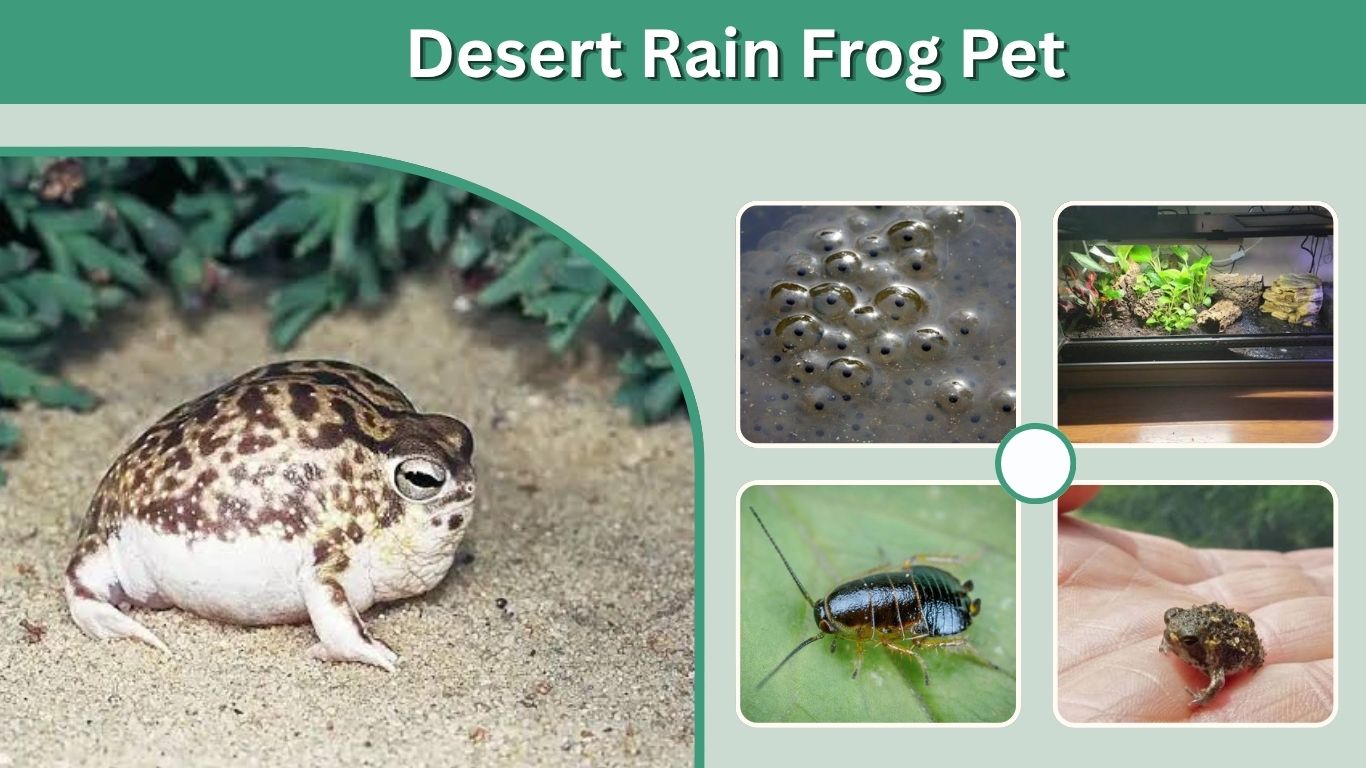
The desert rain frog (Breviceps macrops) has become famous for its round body, tiny legs, grumpy expression, and surprisingly loud squeak. Its popularity naturally makes people wonder whether a desert rain frog can be kept as a pet. However, this unusual African frog is very different from common captive amphibians. It is a specialized burrowing species with poorly established captive-care requirements, and its wild population is declining. Anyone considering a rain frog should understand its habitat, diet, behavior, conservation status, and sourcing issues first.
Can You Keep a Desert Rain Frog as a Pet?
A desert rain frog may occasionally appear in discussions about exotic pets, but it is not a good choice for most pet owners. This species has specialized environmental requirements and spends much of its life buried beneath sand. Captive husbandry is also far less established than it is for popular frogs such as White’s tree frogs, Pacman frogs, or tomato frogs.
The conservation situation is another important consideration. In 2026, the IUCN changed the desert rain frog’s status from Near Threatened to Vulnerable, citing continuing habitat decline.
Why Desert Rain Frogs Are Difficult Pets
Potential problems include:
- Limited reliable captive-care information
- Specialized burrowing behavior
- Sensitivity to improper moisture levels
- Need for appropriate sandy substrate
- Little tolerance for frequent handling
- Difficulty confirming captive-bred origins
- Restricted natural distribution
- Conservation concerns surrounding wild collection
A legally obtained, genuinely captive-bred animal would be preferable to a wild-caught frog, but buyers should never assume that an advertised frog was captive bred without documentation.
Desert Rain Frog Habitat Requirements
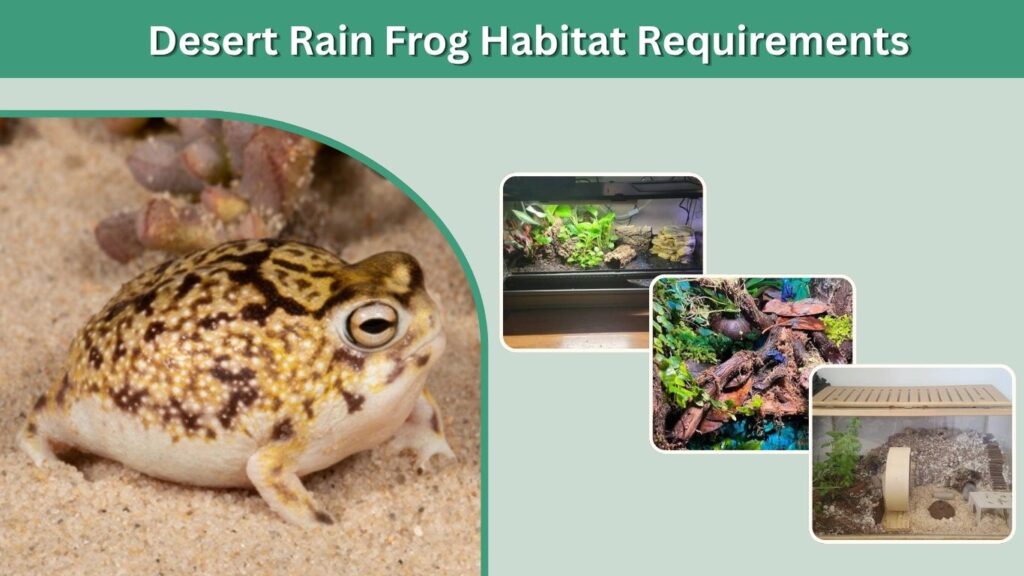
Understanding the natural habitat explains why these frogs can be challenging in captivity. Breviceps macrops occurs along a narrow coastal region of South Africa and southwestern Namibia. It is a fossorial species, meaning it spends much of its life underground in sandy coastal dunes with low vegetation.
What Type of Enclosure Would a Rain Frog Need?
If a legally captive-bred rain frog is kept, the enclosure should prioritize its natural burrowing lifestyle rather than creating a decorative display tank.
Important principles include:
- Deep substrate suitable for burrowing
- Plenty of floor space
- Secure hiding opportunities
- Good ventilation
- Stable environmental conditions
- Appropriate moisture without waterlogging
- No sharp rocks or decorations
- Minimal disturbance
Unlike aquatic frogs, a rain frog does not need a large swimming area. It is a terrestrial burrower.
Exact temperature and humidity targets should come from a veterinarian or experienced breeder familiar with the specific Breviceps species, because standardized pet-care parameters are not well established.
Does a Desert Rain Frog Need a Dry Tank?
The word “desert” can be misleading. Its natural environment is sandy and relatively arid, but that does not mean a captive frog should simply be kept in hot, bone-dry sand.
Amphibians lose moisture easily through their skin. Appropriate moisture within the substrate is important, while overly wet conditions can also cause problems.
This balance is one reason desert rain frogs are more difficult to maintain than their cute appearance suggests.
What Do Pet Rain Frogs Eat?
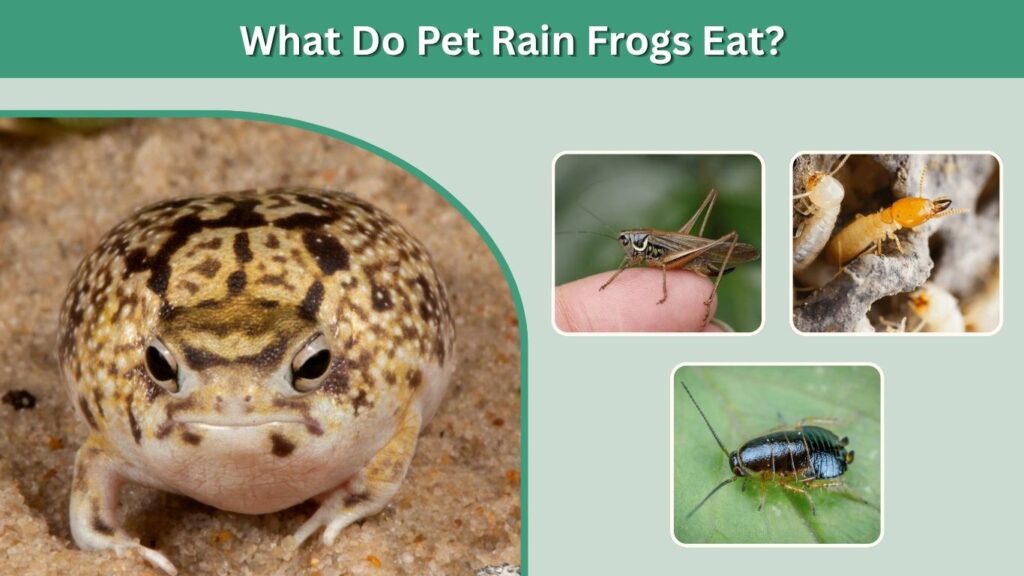
Rain frogs are small predators that naturally consume tiny invertebrates. A captive frog would therefore require appropriately sized live prey rather than fruit, vegetables, pellets, or ordinary human foods.
Suitable Food Types
Depending on the frog’s size and veterinary guidance, potential feeder insects may include:
- Very small crickets
- Small roaches
- Termites
- Tiny beetles
- Small insect larvae
- Other appropriately sized invertebrates
Food should always be smaller than the frog can safely swallow.
A captive amphibian diet may also require appropriate mineral supplementation, but supplementation schedules should be based on professional husbandry advice rather than copied from unrelated frog species.
How Often Do Rain Frogs Eat?
There is no widely accepted standardized feeding schedule specifically for captive desert rain frogs.
Age, body condition, prey size, environmental temperature, and individual activity all affect feeding requirements. Juvenile amphibians generally require food more frequently than mature animals.
Obesity should be avoided even though rain frogs naturally have a very round appearance.
Desert Rain Frog Behavior
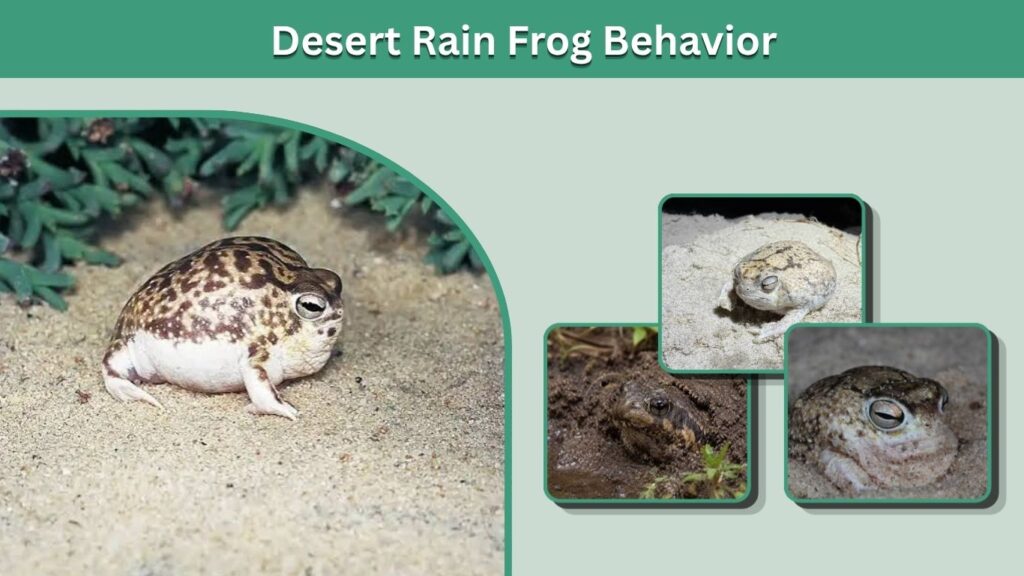
A pet owner hoping to watch an active frog throughout the day could be disappointed by a rain frog. These animals are highly adapted to an underground lifestyle and may spend long periods completely hidden.
Their natural behavior is one of the strongest reasons they are better appreciated in the wild than purchased as display pets.
Typical Behavior
Rain frogs may:
- Spend much of their time underground
- Emerge during favorable moist conditions
- Become more active after dark
- Dig backward into sand
- Inflate themselves when threatened
- Produce high-pitched defensive sounds
- Avoid prolonged exposure
- Remain hidden for extended periods
Constantly digging up a frog to check on it would likely cause unnecessary stress.
Why Do Desert Rain Frogs Squeak?
The famous desert rain frog “scream” is better described as a high-pitched squeak or whistle.
Vocalizations can be associated with communication or defensive behavior. Videos showing a frog squeaking after being disturbed should not be treated as instructions for interacting with a pet.
A frog should never be intentionally frightened simply to make it produce a popular sound.
Can You Handle a Pet Rain Frog?
Rain frogs should be treated primarily as observation animals, not pets designed for regular physical interaction.
Amphibian skin is highly permeable and sensitive. Oils, soap, lotion, sanitizer, chemicals, and other substances on human hands can potentially irritate their skin.
Handling Should Be Limited Because:
- It can cause stress.
- The frog may attempt to escape.
- Human skin products can contaminate its skin.
- Handling can disturb its protective mucus layer.
- The frog may inflate or vocalize defensively.
- Small limbs can be injured accidentally.
When handling is necessary for enclosure maintenance or veterinary care, appropriate amphibian-safe handling practices should be used.
Do Desert Rain Frogs Need Water?
Desert rain frogs are unusual because they are not dependent on ponds for reproduction in the way many familiar frogs are.
They are adapted to terrestrial life and spend considerable time underground. Their reproductive strategy also allows young to develop without a conventional free-swimming tadpole stage.
However, terrestrial does not mean that they do not need moisture. Like other amphibians, suitable moisture remains important for maintaining normal skin function.
A deep aquarium full of water would therefore be inappropriate, but so would an excessively dry enclosure.
Desert Rain Frog Life Cycle
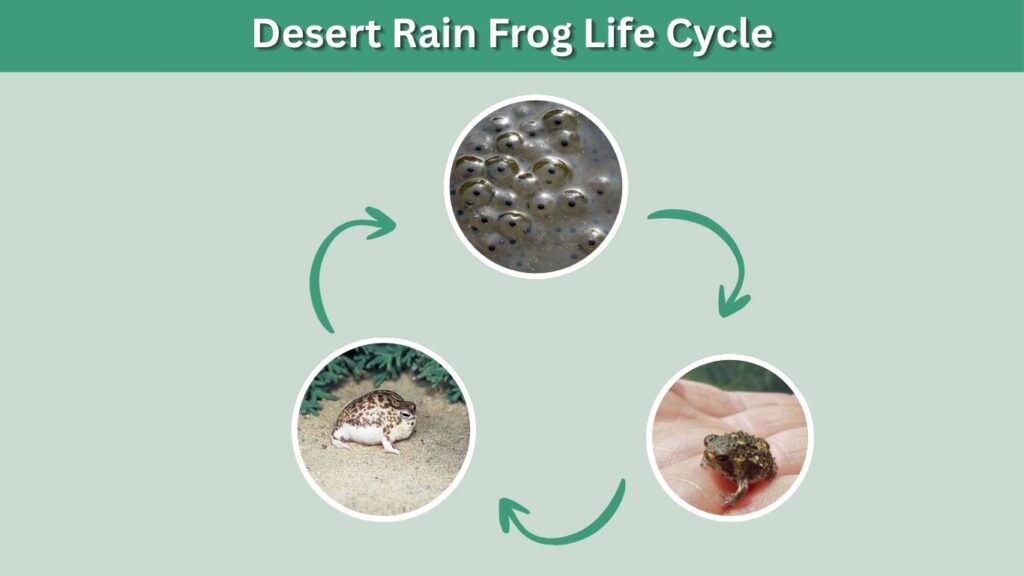
Rain frogs have an unusual life cycle that helps them survive where permanent pools may be scarce. Rather than depositing eggs in open water and producing swimming tadpoles, members of this group reproduce on land.
From Egg to Froglet
Their basic development involves:
- Adults meet during breeding conditions.
- Mating occurs on land.
- Eggs are deposited in a protected underground location.
- Embryos develop inside the eggs.
- Development continues without a free-swimming tadpole phase.
- Small froglets emerge.
This process is called direct development.
It is an important adaptation for a frog that spends most of its life in sandy terrestrial habitat.
Are Desert Rain Frogs Endangered?
The desert rain frog is now listed as Vulnerable by the IUCN. Its distribution is limited to the Namaqualand coast of South Africa northward into coastal southwestern Namibia.
Habitat quality and extent are declining. Major pressures include coastal mining, development, roads, human settlement, land-use changes, and climate-related impacts.
Why Pet Buyers Should Care
Popularity on social media can create demand for unusual animals. For species with declining wild populations, that demand can become harmful if animals are illegally or unsustainably collected.
Before purchasing any rain frog:
- Confirm the exact scientific species.
- Check local ownership laws.
- Request proof that it was captive bred.
- Avoid sellers unable to explain its origin.
- Never collect one from the wild.
- Research veterinary care before purchasing.
Desert Rain Frog Price and Availability
There is no reliable standard desert rain frog pet price.
Advertisements online may vary widely, and a high price does not prove that an animal was legally or ethically obtained. Availability can also vary by country because wildlife-importation, possession, and trade rules differ.
Claims such as “captive bred” should be supported by credible documentation.
A seller offering large numbers of rare rain frogs with little information about their breeding history should be treated cautiously.
What About Black and Common Rain Frogs as Pets?
Other African rain frogs are sometimes advertised as pets, including black, common, Cape, Bushveld, and Mozambique rain frogs.
These are separate species with different distributions and ecological requirements. A care sheet written for one should not automatically be used for another.
For example, the black rain frog (Breviceps fuscus) inhabits forested and mountain environments in South Africa, whereas the desert rain frog is associated with coastal sand dunes.
Keeping every rain frog under identical conditions could therefore be harmful.
Are Rain Frogs Good Pets?
For most people, no.
Their appearance is appealing, but a good pet species needs more than popularity. Rain frogs are secretive, specialized burrowers with limited established captive husbandry, and some species have conservation concerns.
Someone who wants a small terrestrial frog may have a better experience with a well-established captive-bred species for which veterinary information, food requirements, enclosure parameters, and breeding history are readily available.
Rain frogs are often more rewarding as fascinating wild animals than as animals kept primarily because of viral photos or videos.
FAQs
Can you have a desert rain frog as a pet?
Possibility depends on local laws and how the animal was obtained, but desert rain frogs are not recommended for most keepers because their captive-care needs are specialized and poorly standardized.
Are desert rain frogs good pets for beginners?
No. Their burrowing behavior, environmental requirements, limited husbandry information, and conservation concerns make them unsuitable beginner amphibians.
What does a pet rain frog eat?
Rain frogs primarily eat small invertebrates. Appropriately sized live insects would form the basis of a captive diet.
How much does a desert rain frog cost?
There is no dependable standard price. Availability is limited, prices vary, and buyers should prioritize legal captive-bred origin over finding the cheapest animal.
Is the desert rain frog endangered?
It is currently classified as Vulnerable, rather than Endangered, on the IUCN Red List. Its population is declining as its restricted coastal habitat is affected by mining, development, land-use changes, and other pressures.
