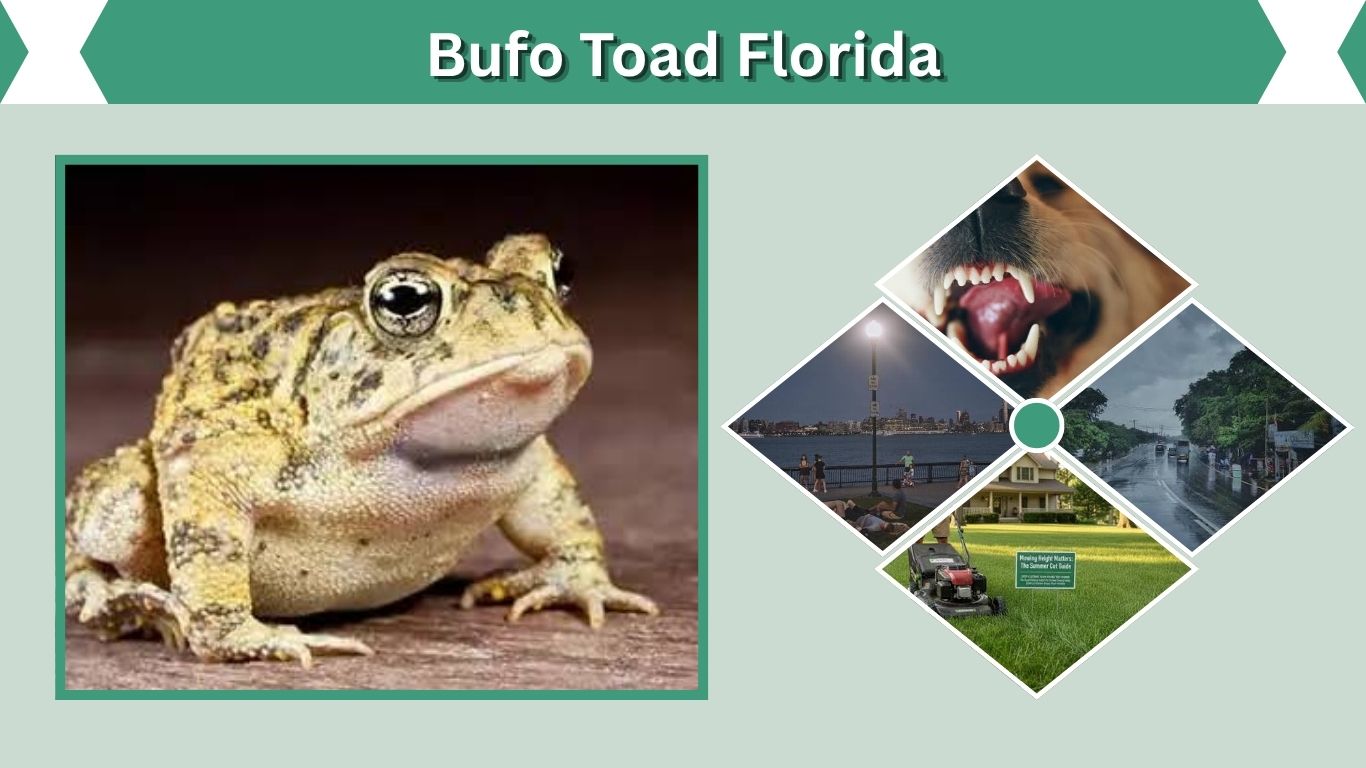
The Bufo toad in Florida, more accurately called the cane toad (Rhinella marina), is a large invasive amphibian established mainly in southern and central parts of the state. Formerly known as Bufo marinus, it is especially common around yards, canals, ponds, golf courses, and other human-modified habitats. Cane toads produce a potent defensive toxin that can seriously poison dogs that bite or lick them. Correct identification is essential because Florida also has harmless native toads that should not be removed or killed.
What Is a Bufo Toad in Florida?
“Bufo toad” is an older common name still widely used in Florida. The animal is the cane toad, scientifically known as Rhinella marina. It was formerly classified as Bufo marinus, explaining why residents continue to call it a Bufo. Cane toads are nonnative to Florida and have become particularly successful around developed areas.
Bufo Toad Identification
Look for these characteristics:
- Scientific name: Rhinella marina
- Former name: Bufo marinus
- Other names: Cane toad, marine toad, giant toad
- Adult size: Commonly about 6–9 inches long
- Color: Brown, reddish-brown, gray-brown, or mottled
- Skin: Dry-looking and warty
- Head: Broad without prominent cranial ridges
- Poison glands: Very large glands behind the eyes
- Belly: Pale yellow or beige
- Activity: Mainly nocturnal
The large poison glands angle backward from behind the eyes toward the shoulders and are among the best identification features.
How Big Are Florida Bufo Toads?
Adult cane toads are much larger than most native Florida toads. The Florida Fish and Wildlife Conservation Commission states that adults generally reach about 6–9 inches in length.
Very young cane toads are much harder to identify because recently transformed juveniles may be extremely small. Size alone should therefore never be used to identify babies or tadpoles.
Where Are Bufo Toads Found in Florida?
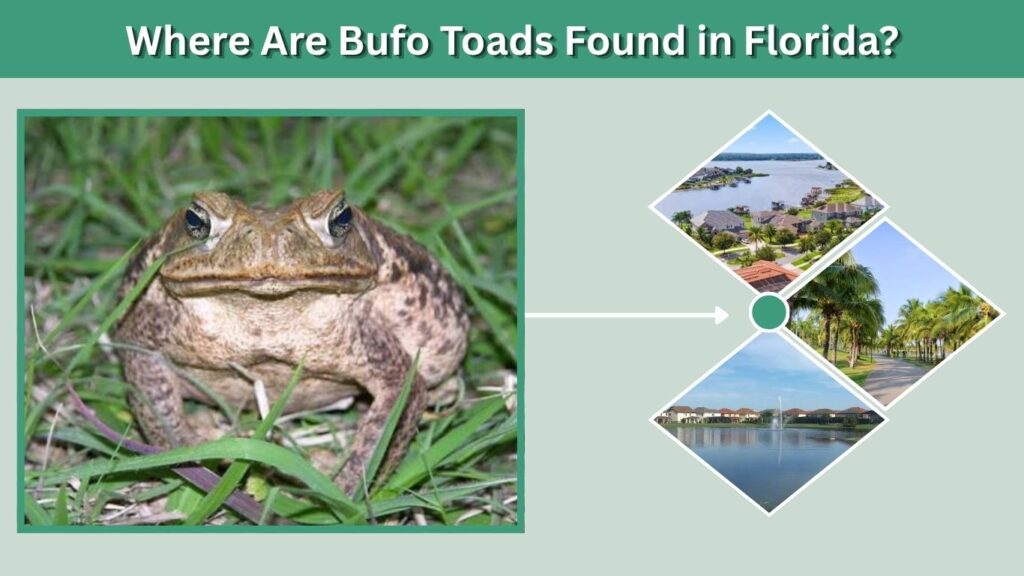
Cane toads thrive particularly well in environments modified by people. They commonly use lawns, landscaped neighborhoods, agricultural areas, golf courses, canals, ponds, and spaces around buildings. They are less strongly associated with Florida’s relatively undisturbed natural habitats than with urban and suburban landscapes.
Bufo Toad Range in Florida
They are especially established in:
- South Florida
- Much of the southern peninsula
- Parts of central Florida
- Urban and suburban communities
- Agricultural landscapes
- Areas surrounding ponds and canals
UF/IFAS’s distribution information updated through April 2025 shows widespread populations through much of southern Florida and northward into portions of central Florida, with an isolated established population around DeLand in Volusia County. Isolated individuals farther north can also result from escaped or released captive animals.
Are Bufo Toads in North Florida?
They are far less established across northern Florida than in South Florida.
An individual cane toad found well outside the established range should therefore be identified carefully. Native Southern, Fowler’s, Gulf Coast, and oak toads occur in Florida and can be mistakenly labeled as invasive cane toads.
Bufo Toad vs Native Florida Toad
Correct identification matters because native toads are beneficial wildlife. The Southern toad (Anaxyrus terrestris) is one of the species most often confused with cane toads. Adult Southern toads are substantially smaller and have noticeable raised cranial crests on top of the head.
Bufo Toad vs Southern Toad
Cane toad:
- Often 6–9 inches long
- Very large poison glands
- No obvious cranial crests
- Broad head
- Invasive in Florida
- Toxin can be dangerous to pets
Southern toad:
- Usually no more than about 3–4 inches
- Smaller oval glands
- Prominent ridges or crests on the head
- Native to Florida
- Beneficial native species
Small individuals remain more difficult to distinguish, so uncertain toads should not be killed.
Oak Toad vs Bufo Toad
Oak toads are dramatically smaller. Adults rarely exceed about 1.5 inches and commonly have a light stripe running along the center of the back.
Their small size alone separates adults easily from full-grown cane toads.
However, baby cane toads can also be tiny, which makes identification of young animals much less reliable.
Are Florida Bufo Toads Poisonous?
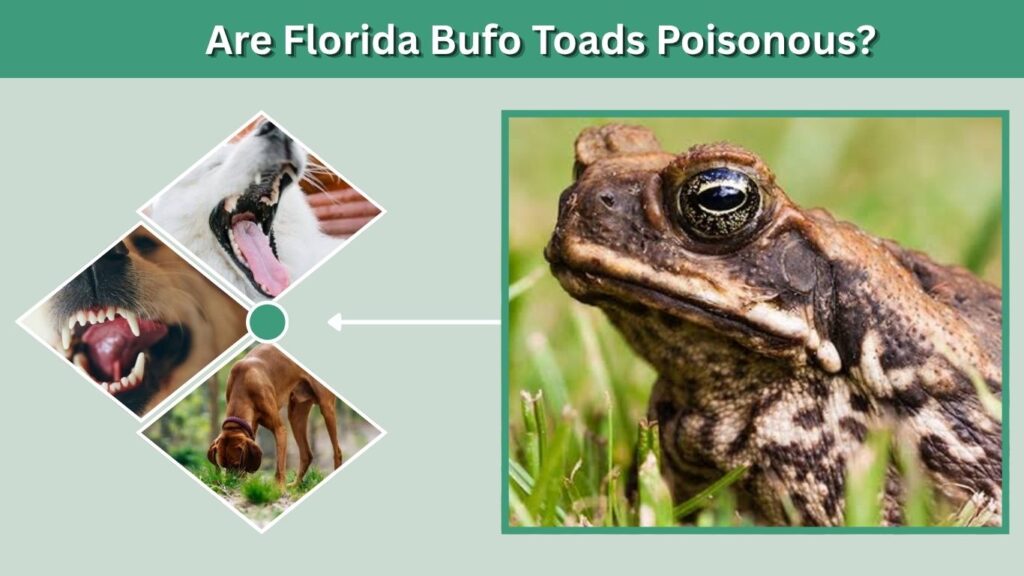
Cane toads possess large parotoid glands that release a milky defensive secretion containing potent toxins. The secretion is intended to discourage predators. The greatest risk in Florida is to dogs that bite, mouth, or lick a toad, allowing toxin to contact the gums and other tissues of the mouth.
Bufo Toad Poisoning in Dogs
Warning signs can include:
- Excessive drooling
- Frothing at the mouth
- Very red or pink gums
- Pawing at the mouth
- Disorientation
- Vomiting
- Tremors
- Seizures
- Abnormal heart activity
- Collapse
Severe poisoning can be fatal.
If a dog bites or mouths a suspected cane toad, treat the situation as an emergency. UF/IFAS advises wiping the mouth with a damp cloth and rinsing it for about 15 minutes, directing water outward so it does not run down the animal’s throat. Seek veterinary care immediately.
Are Bufo Toads Deadly to Humans?
They are not animals that attack or chase people.
However, their skin secretion can irritate human skin and especially the eyes. Avoid touching a cane toad with bare hands, and wash thoroughly after accidental contact.
FWC recommends protective gloves and eye/skin protection when handling one.
Bufo Toad Season in Florida
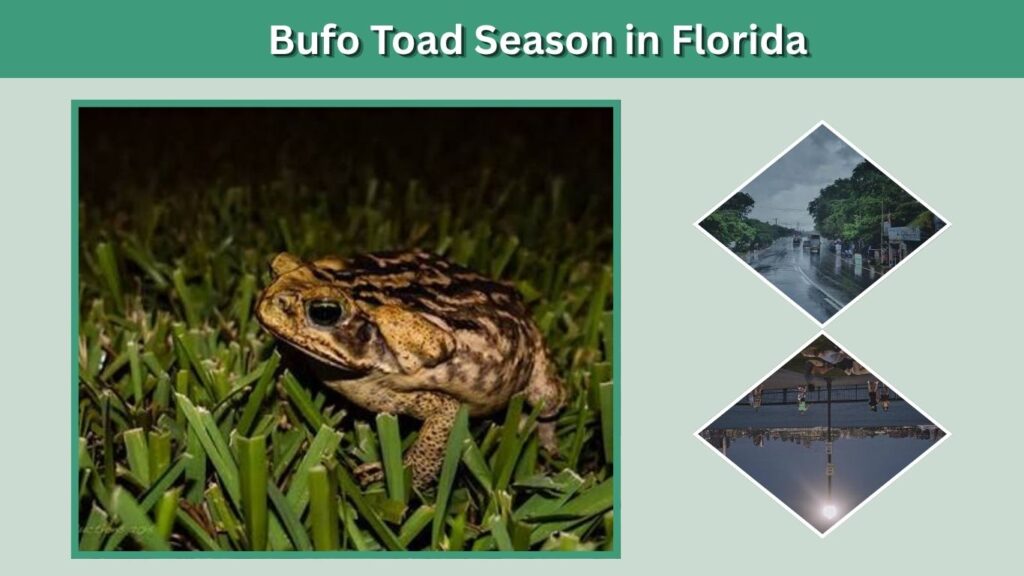
Florida’s warm climate allows cane toads to remain active for much of the year. Activity generally increases during warm, humid, and rainy conditions, when insects and breeding water become more abundant.
Unlike toads living in colder climates, Florida cane toads do not necessarily experience a long, predictable winter hibernation.
When Are Bufo Toads Most Active?
You are especially likely to encounter them:
- After rain
- During warm nights
- Around dusk and nighttime
- Near irrigation systems
- Around ponds and canals
- Near outdoor pet food
- Beneath landscaping or debris
- Around outdoor lights where insects gather
FWC notes that cane toads can breed year-round in Florida in standing water, streams, canals, and ditches.
What Do Florida Bufo Toads Eat?
Cane toads are opportunistic omnivores. Their willingness to consume many types of food contributes to their success in urban and suburban environments.
Bufo Toad Diet
They can eat:
- Beetles
- Cockroaches
- Ants
- Crickets
- Other insects
- Frogs and smaller toads
- Lizards
- Small snakes
- Small mammals
- Small birds
- Plant material
- Pet food
Outdoor dog or cat food can attract cane toads to yards, so bringing food bowls inside at night can reduce encounters.
How to Get Rid of Bufo Toads in Florida
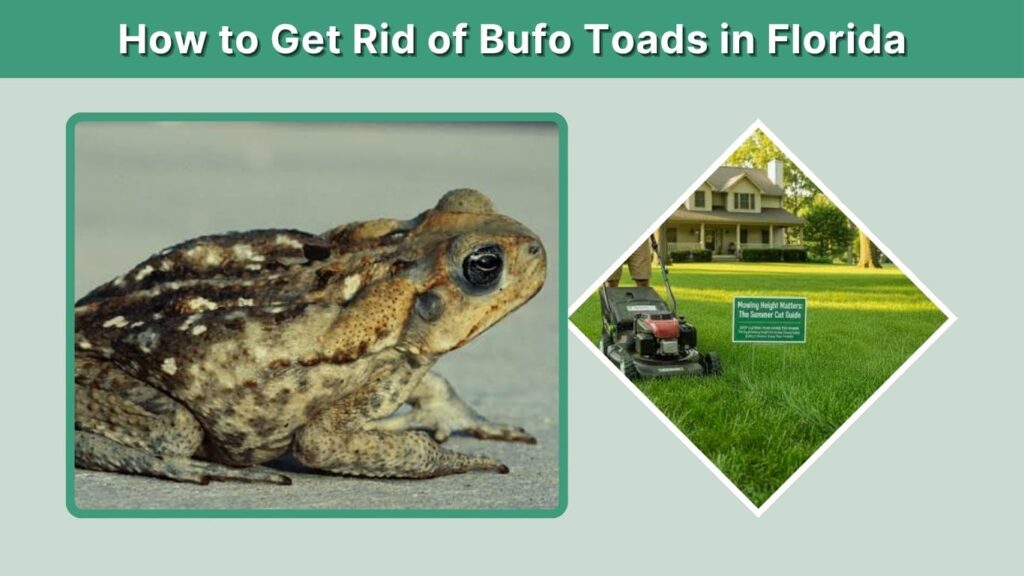
Prevention is often the easiest way to reduce encounters. Removing shelter, food sources, and standing-water opportunities can make a property less attractive without affecting native wildlife unnecessarily.
How to Keep Bufo Toads Away
FWC recommends measures such as:
- Keep grass short
- Remove brush and clutter
- Trim dense vegetation near the ground
- Fill holes around buildings
- Keep branches and debris off the ground
- Bring pet food indoors at night
- Bring pet water bowls inside when practical
- Clean up outdoor food scraps
- Supervise pets outside after dark
These steps also reduce insects and hiding places that attract toads.
Is It Legal to Kill Bufo Toads in Florida?
Yes, but there are important conditions.
FWC states that cane toads are not protected in Florida except under anti-cruelty laws. They may be removed and humanely killed year-round on private property with the landowner’s permission.
Captured cane toads must not be relocated and released elsewhere.
Most importantly, positively identify the animal before taking action. Killing a native Southern toad because it was mistaken for a cane toad unnecessarily harms beneficial Florida wildlife. Homeowners uncomfortable with removal can use a professional wildlife trapper.
Bufo Toad Tadpoles and Babies
Adult cane toads are easier to identify than their earliest stages. Eggs occur in long gelatinous strings, while tadpoles are small and dark. Newly transformed toadlets may initially be only about the size of a raisin.
Can You Identify Baby Bufo Toads?
Identification becomes much harder at very small sizes.
UF/IFAS specifically warns that young cane toads can easily be confused with native species. Eggs and tadpoles are also difficult for non-specialists to distinguish reliably.
For that reason, avoid removing or killing small toads solely because they appear in an area where cane toads occur.
Bufo Toad and Hallucinogenic Toad Confusion
Florida’s invasive cane toad is sometimes confused online with the Sonoran Desert or Colorado River toad. They are different species.
The Florida cane toad is Rhinella marina. The Sonoran Desert toad is a different amphibian and is not the invasive Florida cane toad discussed here.
Cane toad secretions are toxic and should never be intentionally ingested, licked, or otherwise exposed to the mouth or eyes.
FAQs
Are Bufo Toads Native to Florida?
No. Cane or Bufo toads are nonnative and invasive in Florida. They originated naturally in parts of Central and South America and adjacent regions.
Where Are Bufo Toads Most Common in Florida?
They are most established in South Florida and portions of central Florida, particularly in urban, suburban, and agricultural landscapes.
Can a Bufo Toad Kill a Dog?
Yes. Severe cane toad poisoning can be fatal to dogs, particularly when a dog bites or mouths the toad. Immediate mouth decontamination and emergency veterinary treatment are important.
How Can I Tell a Bufo Toad From a Florida Toad?
Adult cane toads are usually much larger, have very large poison glands behind their eyes, and lack the prominent head crests seen on native Southern toads.
Can I Remove Bufo Toads From My Florida Property?
Yes. FWC allows cane toads to be removed and humanely killed from private property with landowner permission, but captured animals cannot legally be relocated and released. Correct identification is essential before removal.
