
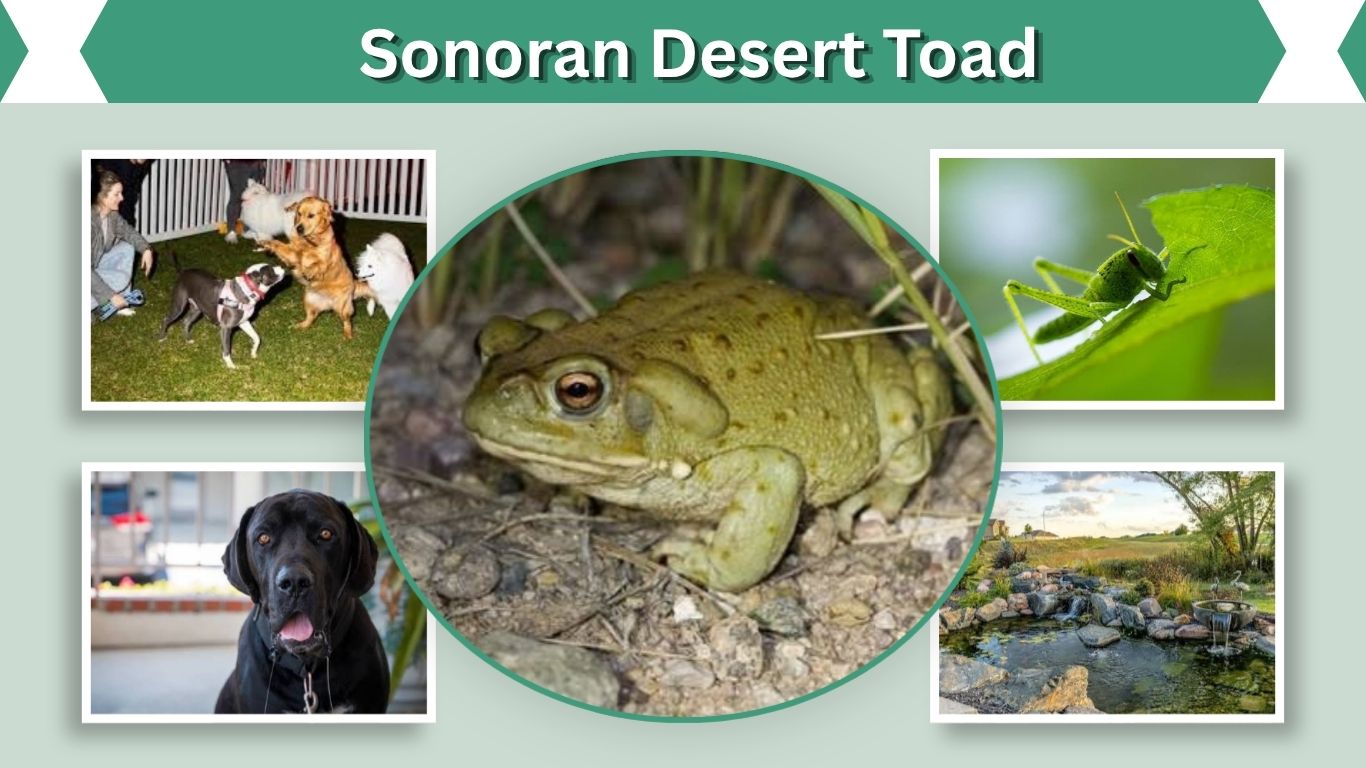
The Sonoran Desert toad (Incilius alvarius), also called the Colorado River toad, is one of the largest native toads in North America. It inhabits Arizona, southwestern New Mexico, and northwestern Mexico, becoming especially active during the summer monsoon season. Adults are olive-green to gray with prominent poison glands behind the eyes. Those glands produce powerful defensive toxins that can seriously poison dogs that bite or lick the animal. Although famous for its unusual chemistry, this desert amphibian is best understood as important native wildlife adapted to an extremely dry environment.
What Is a Sonoran Desert Toad?
The Sonoran Desert toad is a true toad in the family Bufonidae. Older books and websites may call it Bufo alvarius, but its currently used scientific name is Incilius alvarius. Its other familiar name, Colorado River toad, refers to the same species rather than a different type of toad.
Sonoran Desert Toad Identification
Typical characteristics include:
- Scientific name: Incilius alvarius
- Former name: Bufo alvarius
- Other name: Colorado River toad
- Family: Bufonidae
- Color: Olive-green, gray-green, or brownish
- Belly: Creamy white
- Skin: Relatively smooth for a toad
- Parotoid glands: Very large glands behind the eyes
- Jaw: Often has noticeable pale or white bumps
- Eyes: Golden to brownish with horizontal pupils
- Activity: Mainly nocturnal during hot weather
Young toadlets can look different from adults, often showing tan or green coloration with orange or reddish spots.
Sonoran Desert Toad Size
This species can reach 7 inches or more in length, making it one of North America’s largest native toads.
Claims about a “57-pound Sonoran Desert toad” circulate online, but they are not consistent with the documented biology of the species. A normal Sonoran Desert toad is a large amphibian, not an animal approaching the weight of a medium-sized dog.
Sonoran Desert Toad Habitat and Range
Despite living in one of North America’s driest regions, the Sonoran Desert toad requires access to seasonal or permanent water for reproduction. It survives dry periods by remaining underground and becomes conspicuous after summer rains, when temporary pools and flowing washes provide breeding habitat.
Where Do Sonoran Desert Toads Live?
Their habitat can include:
- Creosote desert scrub
- Desert washes
- Grasslands
- Agricultural areas
- Temporary rain pools
- Ponds
- Irrigation areas
- Oak-pine woodland
- Thornscrub
- Tropical deciduous forest in Mexico
The species ranges from central Arizona through southwestern New Mexico into northwestern Mexico, particularly Sonora and Sinaloa. Historical records also exist from southeastern California, although the species has not been seen there for decades.
Sonoran Desert Toad in Arizona
Arizona is one of the best-known parts of its U.S. range.
For much of the year, the toads remain hidden underground. They usually become active from approximately late May through September, with peak activity associated with summer monsoon rains. Hot-season activity is mainly nocturnal.
This explains why homeowners may suddenly see several large toads around yards, roads, pools, and patios immediately after heavy summer storms.
Sonoran Desert Toad Adaptations
An amphibian living in the desert must solve a major problem: preventing excessive water loss. Sonoran Desert toads survive by avoiding the harshest surface conditions for much of the year. They can remain underground for extended periods and emerge when rain produces suitable moisture and breeding opportunities.
Important Desert Adaptations
They have several useful adaptations:
- Long periods spent underground
- Primarily nocturnal summer activity
- Emergence synchronized with monsoon rainfall
- Rapid reproduction in seasonal water
- Large bodies that lose water relatively slowly
- Powerful defensive skin secretions
- Ability to use both natural and human-created water sources
Desert amphibians may remain underground for many months, emerging only when environmental conditions become favorable.
What Do Sonoran Desert Toads Eat?
Sonoran Desert toads are opportunistic predators. Insects form much of their diet, but large adults are capable of consuming bigger prey than most small desert toads. Their feeding activity increases during warm, wet periods when insects and other animals become abundant.
Sonoran Desert Toad Diet
Common prey includes:
- Beetles
- Crickets
- Cockroaches
- Moths
- Other insects
- Spiders
- Small invertebrates
- Occasionally small vertebrates
- Occasionally other toads
The Arizona-Sonora Desert Museum notes that beetles are especially important, although large adults sometimes consume small vertebrates.
Feeding Behavior
These toads usually wait for moving prey and then capture it with a rapid tongue strike.
Artificial lights can indirectly attract them because lights concentrate insects around homes, patios, and garages.
Pet food left outdoors can also attract insects and other wildlife, creating conditions where toads may spend more time around residential properties.
Sonoran Desert Toad Toxin and Venom
The Sonoran Desert toad does not inject venom through fangs or a stinger. Instead, glands in its skin—especially the large parotid glands behind its eyes—release a potent defensive secretion when the animal is threatened or mouthed by a predator.
Is the Sonoran Desert Toad Poisonous?
Yes, in everyday terms it is considered a toxic or poisonous toad because exposure to its secretions can cause poisoning.
The secretion can affect the nervous and cardiovascular systems of mammals. People should avoid getting it into the eyes, mouth, or nose and should wash their hands after accidental handling.
The toad cannot deliberately spit toxin at people and normally poses little risk when simply observed from a distance.
Sonoran Desert Toad and 5-MeO-DMT
The species is widely discussed because its defensive secretion contains psychoactive compounds, including 5-MeO-DMT.
That does not make licking, ingesting, or deliberately handling the secretion safe. The natural secretion contains potent toxins and exposure can cause dangerous poisoning.
Collecting, harassing, or exploiting wild toads can also harm local populations. The safest approach is to leave wild animals undisturbed.
Sonoran Desert Toads and Dogs
Dogs face one of the greatest risks because they investigate animals with their mouths. A dog that licks, bites, or picks up a Sonoran Desert toad can absorb toxin rapidly through tissues in the mouth.
The Arizona Poison and Drug Information Center warns that exposure can cause effects ranging from severe discomfort to paralysis or death.
Symptoms in Dogs
Possible signs include:
- Heavy drooling
- Foaming at the mouth
- Pawing at the face
- Red or irritated gums
- Unsteady walking
- Abnormal heartbeat
- Weakness
- Tremors
- Seizures
- Collapse
Symptoms may begin quickly.
What If a Dog Licks a Sonoran Desert Toad?
Immediately contact a veterinarian or animal poison service.
If toxin is inside the mouth, the Arizona Poison Center advises flushing the mouth with running water from one side outward to the other, allowing contaminated water to flow out rather than down the dog’s throat. Veterinary evaluation is particularly important if unusual symptoms appear or the dog swallowed the toad.
Sonoran Desert Toad Life Cycle
Reproduction is closely tied to summer rainfall. Males gather around temporary pools, ponds, and similar water bodies and produce a relatively weak mating call that has been compared with a ferryboat whistle. Females deposit eggs in water, where tadpoles develop rapidly enough to take advantage of temporary desert pools.
Life Cycle Stages
The basic cycle includes:
- Summer rain activates adults.
- Males travel toward breeding water.
- Males call for females.
- Adults mate in water.
- Females lay eggs.
- Tadpoles hatch.
- Larvae feed and develop.
- Legs form during metamorphosis.
- Juvenile toadlets leave the water.
- Young toads begin terrestrial life.
The Arizona-Sonora Desert Museum reports that larvae can complete metamorphosis in approximately 6–10 weeks.
Sonoran Desert Toad Lifespan
The species is surprisingly long-lived for an amphibian.
Individuals are known to survive at least 10 years, and some may live approximately 20 years.
Much of that life can be spent hidden underground rather than visibly moving across the desert surface.
Sonoran Desert Toad Call
The mating call is less dramatic than the loud trills produced by many other toads.
What Does It Sound Like?
The male produces a relatively weak call sometimes compared to a ferryboat whistle.
Calls are most likely during the summer breeding season after rainfall. Because males gather around water, several calling animals may sometimes be heard in the same area.
Sonoran Desert Toad Conservation
The species still occurs across a substantial portion of Arizona and Mexico, but that does not mean wild populations should be treated as an unlimited resource.
Arizona’s current wildlife conservation strategy includes Incilius alvarius among the state’s Species of Greatest Conservation Need, reflecting conservation concerns that warrant monitoring and management.
Should You Keep One as a Pet?
Removing wild Sonoran Desert toads is not a good default approach.
Wildlife collection and possession rules can vary by jurisdiction and can change. Anyone considering keeping native wildlife should check current state and local regulations rather than collecting an animal encountered outdoors.
Leaving wild individuals in their habitat also avoids unnecessary handling of their toxic skin secretions.
How to Keep Sonoran Desert Toads Away From Dogs
Properties within the species’ range may experience repeated visits during monsoon season. Complete elimination is unrealistic, but reducing encounters can protect pets without harming native wildlife.
Reduce Toad Encounters
Helpful steps include:
- Supervise dogs outside after dark.
- Use a leash during monsoon nights.
- Bring pet food indoors.
- Remove unnecessary standing water.
- Check yards after heavy rain.
- Keep pets away from ponds and drainage areas.
- Block gaps beneath gates where practical.
- Avoid deliberately handling or harming toads.
Because Sonoran Desert toads are native wildlife, exclusion and pet supervision are preferable to attempts to kill them.
FAQs
Is the Colorado River Toad the Same as the Sonoran Desert Toad?
Yes. Colorado River toad and Sonoran Desert toad are common names for Incilius alvarius.
How Big Does a Sonoran Desert Toad Get?
Adults can reach about 7 inches or more, making this one of North America’s largest native toads.
Are Sonoran Desert Toads Poisonous to Dogs?
Yes. Their defensive secretion can cause severe and potentially fatal poisoning when dogs lick, bite, or swallow them.
Where Are Sonoran Desert Toads Found?
They occur primarily from central Arizona and southwestern New Mexico south into northwestern Mexico.
When Are Sonoran Desert Toads Most Active?
They are most visible during warm summer months, particularly after monsoon rainfall. In hot weather they are primarily active at night.
