
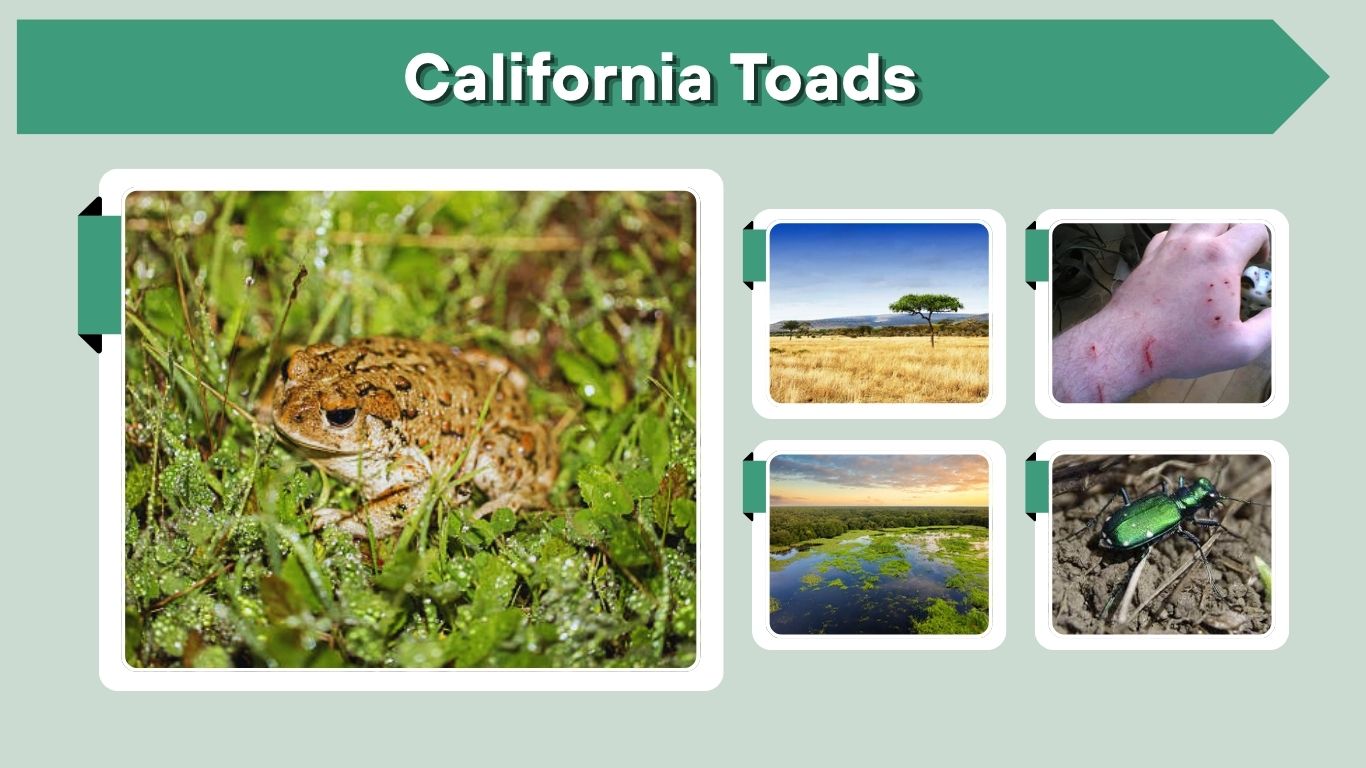
California is home to several fascinating toad species that inhabit deserts, wetlands, forests, grasslands, and suburban environments. While many people search for the “California toad,” the term often refers to multiple native species, including the California Toad, Western Toad, Arroyo Toad, and California Black Toad. These amphibians play important ecological roles by controlling insect populations and serving as indicators of environmental health. Understanding their identification, habitat, diet, and behavior can help residents and wildlife enthusiasts appreciate California’s diverse amphibian populations.
What Is a California Toad?
California supports a variety of native toad species adapted to different environments throughout the state. Although the California Toad (Anaxyrus boreas halophilus) is commonly associated with the name, several related species share similar characteristics. These amphibians are known for their rough skin, sturdy bodies, and remarkable ability to survive in habitats ranging from coastal wetlands to arid deserts.
Scientific Classification
Most California toads belong to the family Bufonidae, commonly known as true toads. They are closely related to other North American toad species and possess specialized skin glands that provide protection from predators.
California Toad Characteristics
Several traits help identify California toads:
- Rough, warty skin
- Stocky body structure
- Prominent parotoid glands
- Horizontal pupils
- Earth-toned coloration
California Toad Size
Depending on the species, adult California toads generally range from 2 to 6 inches in length. Females are often larger than males, particularly during breeding season.
Types of Toads Found in California
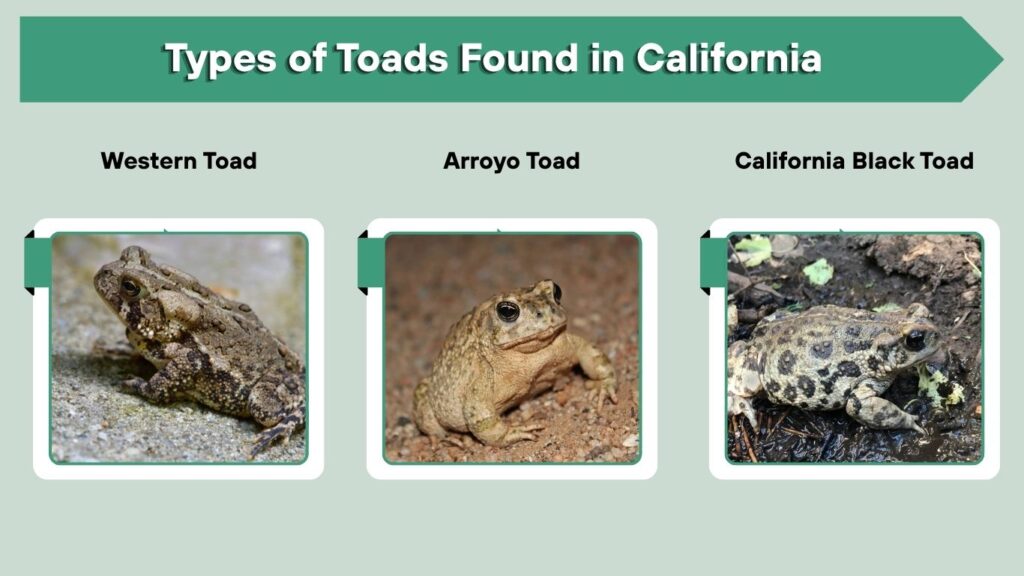
California contains some of the greatest amphibian diversity in North America. Different species occupy unique habitats and display varying physical characteristics. Some are widespread and common, while others are rare and protected due to habitat loss and environmental pressures. Learning about these species helps distinguish them from one another and highlights the importance of conservation efforts throughout the state.
California Toad (Anaxyrus boreas halophilus)
This subspecies of the Western Toad is commonly found in central and southern California. It inhabits wetlands, streams, ponds, and nearby terrestrial habitats.
Western Toad
The Western Toad has one of the broadest distributions in the western United States and can be found throughout much of California.
Arroyo Toad
The Arroyo Toad is a federally protected species primarily found in southern California. It depends on sandy stream habitats for breeding and survival.
California Black Toad
This uncommon species is native to desert spring systems and is primarily found in portions of Inyo County.
California Spadefoot
Although often mistaken for a true toad, the California Spadefoot belongs to a separate amphibian family and possesses unique adaptations for burrowing.
California Toad Habitat and Range
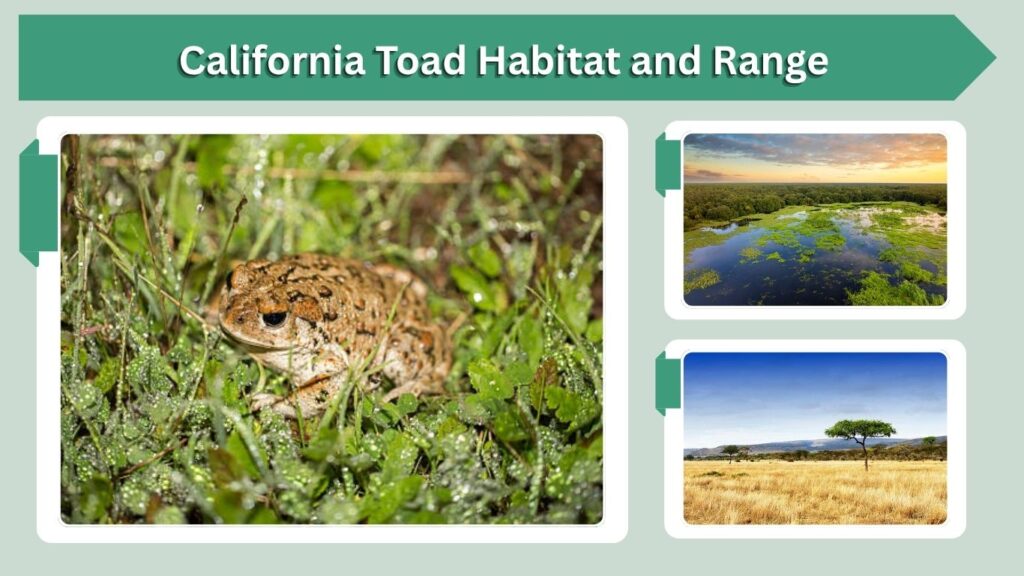
Toads occupy a wide range of habitats across California, from coastal regions to mountainous forests and desert ecosystems. Their distribution depends largely on water availability during breeding season and access to shelter throughout the year. While adults spend much of their time on land, they return to ponds, streams, and temporary pools to reproduce, making aquatic habitats essential for population survival.
Northern California Toads
Northern California supports populations of Western Toads and other amphibian species that thrive in cooler climates. Forests, rivers, and mountain wetlands provide ideal conditions for breeding and development.
Southern California Toads
Southern California contains several native species adapted to warmer conditions. Arroyo Toads, California Toads, and California Spadefoots are among the most notable amphibians found throughout the region.
Preferred Habitats
California toads commonly inhabit:
- Wetlands
- Grasslands
- Forest edges
- Desert springs
- Agricultural areas
- Urban parks
- Residential gardens
Many species seek shelter beneath rocks, logs, leaf litter, and underground burrows during daylight hours.
Are California Toads Poisonous?
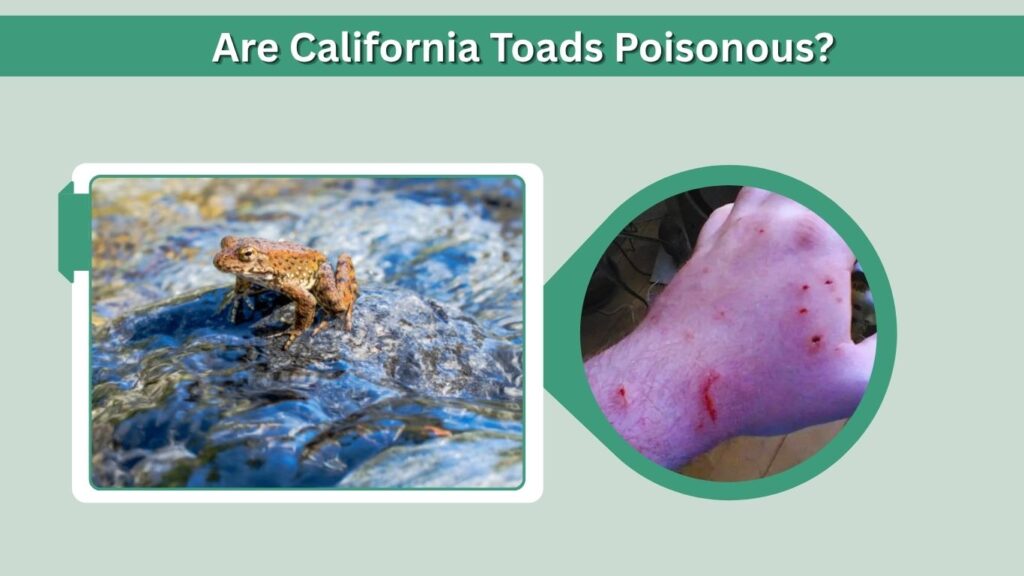
One of the most common questions about California toads concerns their toxicity. Like many true toads, California species possess defensive skin secretions that discourage predators. These natural chemicals are produced by glands located behind the eyes and help increase survival in the wild. While generally harmless when observed from a distance, proper precautions should be taken when handling any wild amphibian.
Do California Toads Produce Toxins?
Yes, most California toad species produce mild toxins through their parotoid glands. These secretions serve as a defense mechanism against predators and are not intended to harm humans.
Are California Toads Poisonous to Humans?
Human contact with California toads rarely causes serious problems. However, touching the eyes, nose, or mouth after handling a toad may result in irritation. Washing hands thoroughly after contact is always recommended.
Are California Toads Poisonous to Dogs?
Dogs may experience stronger reactions if they lick or bite a toad. Potential symptoms include:
- Excessive drooling
- Mouth irritation
- Vomiting
- Pawing at the face
- Temporary discomfort
Veterinary advice should be sought if symptoms appear severe or prolonged.
What Do California Toads Eat?
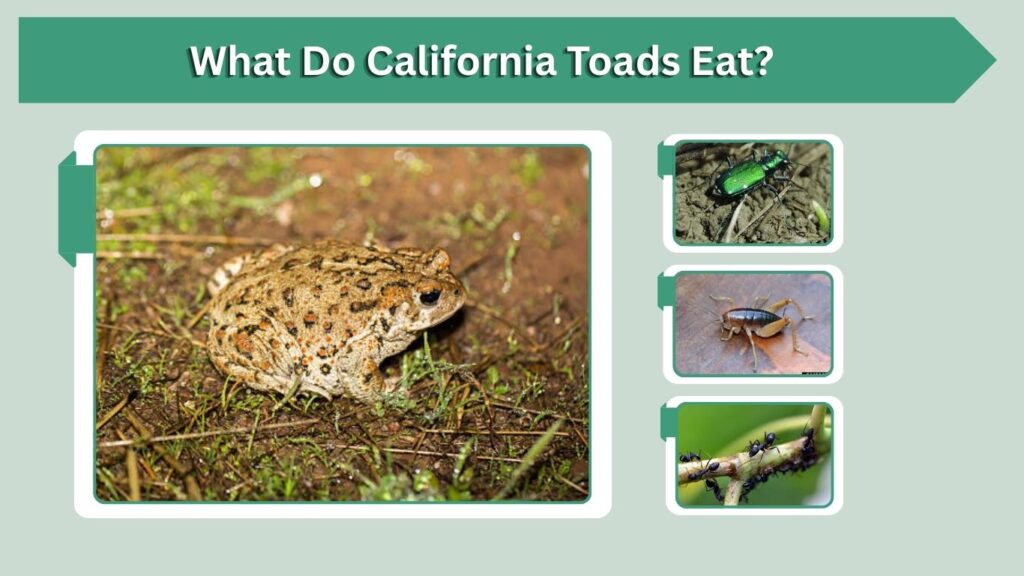
California toads are opportunistic predators that consume a variety of insects and other small invertebrates. Their feeding habits help control pest populations and contribute to ecosystem balance. Most hunting activity occurs at night when temperatures are cooler and prey is more active. Using their sticky tongues and quick reflexes, toads capture food efficiently while expending minimal energy.
California Toad Diet
Their diet commonly consists of beetles, crickets, ants, spiders, worms, caterpillars, and numerous other small invertebrates. The specific prey consumed varies according to habitat and seasonal availability.
Hunting Behavior
California toads rely on patience rather than speed. They often remain motionless until prey comes within striking distance. Once an insect approaches, the toad rapidly extends its sticky tongue to capture and consume the prey in a fraction of a second.
California Toad Lifespan and Behavior
California toads are resilient amphibians that can survive in a variety of environmental conditions. Their lifespan depends on habitat quality, food availability, climate, and predation pressure. Although many young toads fail to reach adulthood, mature individuals can live for several years. Understanding their behavior and life expectancy provides valuable insight into how these amphibians survive in diverse California ecosystems.
How Long Do California Toads Live?
Most California toads live between 5 and 10 years in the wild. Some individuals may survive longer under favorable conditions with limited predation and abundant food resources.
Daily Behavior
California toads are primarily nocturnal. They spend daylight hours hiding beneath rocks, logs, vegetation, or underground burrows to avoid heat and dehydration. At night, they emerge to hunt insects and search for mates during breeding season.
Seasonal Activity
During colder months or periods of drought, many species reduce activity and seek shelter underground. This behavior helps conserve energy and moisture until environmental conditions improve.
California Toad Reproduction and Life Cycle
Breeding is one of the most important stages in the life of a California toad. Seasonal rains and warmer temperatures trigger reproductive activity, drawing adults to ponds, streams, and temporary pools. The reproductive process involves courtship, egg-laying, tadpole development, and metamorphosis into terrestrial juveniles.
Breeding Season
Most California toads breed during spring or early summer when water sources become available. Males often arrive at breeding sites first and begin calling to attract females.
California Toad Call
Male toads produce distinctive vocalizations that vary by species. These calls help females locate potential mates and allow males to establish breeding territories.
Egg Development
Females deposit long strings of eggs in shallow water. Depending on the species, a single female may lay thousands of eggs during one breeding event.
Tadpole Development
After hatching, tadpoles feed on algae and organic material found in the water. Over time, they develop legs, absorb their tails, and transform into young toads capable of living on land.
Baby California Toads
Young California toads face numerous challenges during their early stages of life. Predators, drought, disease, and limited food availability all affect survival rates. Despite these challenges, successful reproduction allows populations to persist throughout the state.
California Toad Tadpoles
Tadpoles remain aquatic during the first stage of development. They use gills to breathe and rely on water sources for growth and protection.
Juvenile California Toads
Following metamorphosis, small toadlets leave breeding ponds and begin life on land. At this stage, they are especially vulnerable to environmental hazards and predators.
Growth to Adulthood
Juveniles continue growing for several years before reaching reproductive maturity. Growth rates vary depending on habitat quality, temperature, and food availability.
California Toad Care Guide
Some amphibian enthusiasts are interested in keeping native toads as pets. While certain species may adapt well to captivity, regulations regarding wildlife collection vary throughout California. Responsible ownership requires proper housing, nutrition, and environmental management.
Can California Toads Be Kept as Pets?
Before keeping any native amphibian, individuals should review local and state wildlife regulations. Some species may be protected or restricted from collection.
Basic Care Requirements
A suitable enclosure should include:
- Moist substrate for burrowing
- Hiding places
- Shallow water dish
- Proper ventilation
- Secure enclosure lid
Feeding a Pet California Toad
Captive toads typically consume a variety of live insects, including crickets, mealworms, roaches, and earthworms. Food should be appropriately sized and supplemented when necessary to support healthy growth.
California Horned Toad vs California Toad
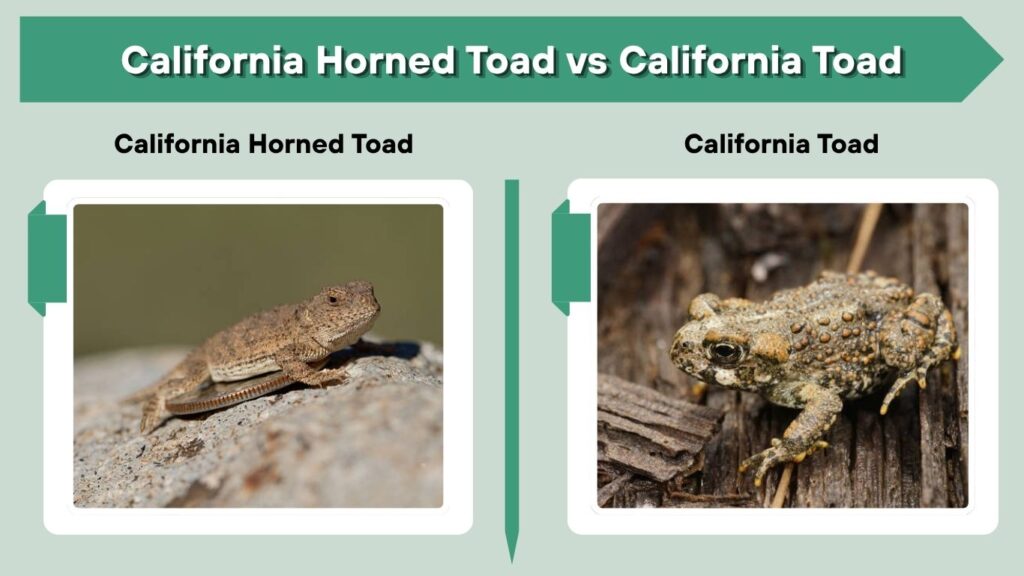
Many people mistakenly use the terms “horned toad” and “toad” interchangeably. However, California horned toads are not true toads at all. They are actually reptiles known as horned lizards and belong to an entirely different animal group.
What Is a California Horned Toad?
The California horned lizard is a flat-bodied reptile recognized for the spines around its head and body. It inhabits dry regions throughout parts of California and neighboring states.
Key Differences
Important distinctions include:
- Horned toads are reptiles.
- California toads are amphibians.
- Horned lizards have scales.
- Toads have moist skin.
- Horned lizards lay reptile eggs.
- Toads undergo metamorphosis.
Are California Horned Toads Endangered?
Some horned lizard populations have declined due to habitat loss, invasive species, and environmental changes. Conservation efforts continue in several areas where populations remain vulnerable.
Cane Toads and Colorado River Toads in California
Questions about cane toads and Colorado River toads frequently arise because these species are known for their potent toxins. However, they are not considered common native amphibians in California.
Are Cane Toads Found in California?
Cane toads are not established as native populations within California. Reports are generally associated with escaped pets or isolated introductions.
Colorado River Toads in California
The Colorado River toad primarily occurs in parts of Arizona and Mexico. It is not commonly encountered within California’s native amphibian communities.
California Toad Conservation
California’s amphibians face numerous challenges, including habitat destruction, water pollution, climate change, and disease. Conservation efforts help protect vulnerable populations and preserve biodiversity throughout the state.
Threats to California Toads
Major threats include:
- Habitat loss
- Urban development
- Drought
- Water pollution
- Invasive species
- Disease outbreaks
Conservation Efforts
Government agencies, researchers, and conservation organizations work together to restore habitats, monitor populations, and protect sensitive species such as the Arroyo Toad.
FAQs
Can California Toads Be Kept as Pets?
Some California toad species can adapt to captivity, but local and state regulations may restrict the collection or ownership of native wildlife. Always verify legal requirements before keeping a California toad as a pet.
Do California Toads Hibernate?
Many California toads enter a period of dormancy during colder months or extended dry conditions. They often burrow underground or seek protected shelters until temperatures and moisture levels improve.
How Big Do California Toads Get?
Most California toads grow between 2 and 6 inches in length, depending on the species. Females are generally larger than males and may appear noticeably heavier during breeding season.
What Is the Difference Between a California Toad and a Horned Toad?
A California toad is an amphibian, while a horned toad is actually a reptile known as a horned lizard. Horned lizards have scales and live entirely on land, whereas toads have moist skin and require water for reproduction.
Are California Toads Beneficial for Gardens?
Yes. California toads help control populations of insects, beetles, ants, slugs, and other garden pests. Their natural feeding habits make them valuable allies in maintaining a healthy backyard ecosystem.
