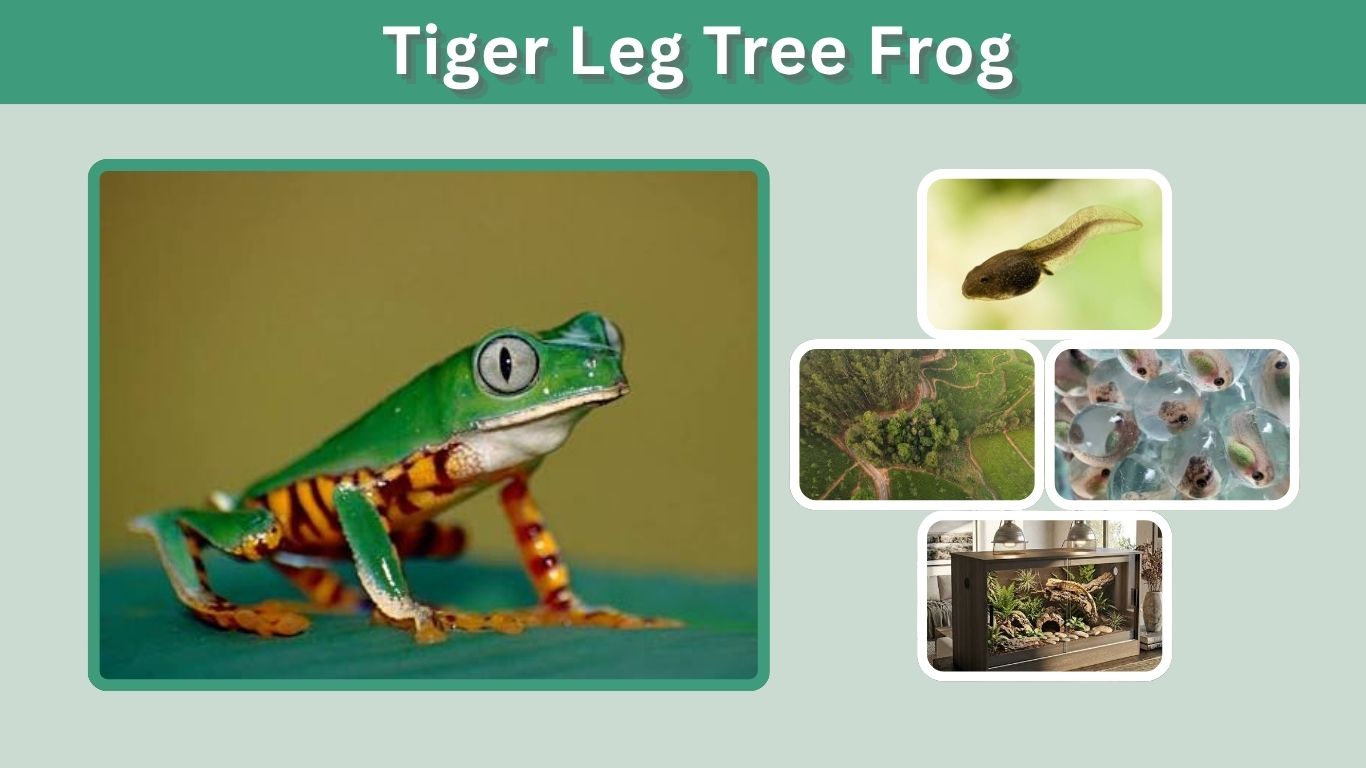
The tiger leg tree frog (Callimedusa tomopterna) is a colorful amphibian native to South America’s tropical rainforests. Also known as the tiger legged monkey tree frog or tiger-striped leaf frog, this species is recognized by its green body, orange legs, and striking black stripes. Its unique appearance, climbing abilities, and nocturnal behavior make it fascinating to amphibian enthusiasts. Understanding its natural habitat, size, diet, lifespan, breeding habits, and care requirements helps explain how this remarkable frog survives in the Amazon rainforest.
What Is a Tiger Leg Tree Frog?
The tiger leg tree frog is a small, tree-dwelling amphibian belonging to the family Phyllomedusidae. Its accepted scientific name is Callimedusa tomopterna, although older scientific literature identifies it as Phyllomedusa tomopterna.
This frog is also known as the tiger-striped leaf frog, tiger leg monkey frog, or barred monkey frog. Its common names describe its distinctive striped limbs and its ability to move carefully through rainforest vegetation.
Tiger Leg Tree Frog Quick Facts
- Scientific name: Callimedusa tomopterna
- Family: Phyllomedusidae
- Common names: Tiger-striped leaf frog, barred monkey frog, tiger leg monkey tree frog
- Native region: South America
- Habitat: Tropical rainforests
- Adult size: Approximately 4.4–6 cm
- Diet: Primarily insects and other small invertebrates
- Activity: Nocturnal
- Lifestyle: Arboreal
- Conservation status: Least Concern
Although sometimes called a tiger legged waxy monkey tree frog, it should not be confused with other waxy monkey frogs, particularly Phyllomedusa sauvagii.
Tiger Leg Tree Frog Size and Appearance
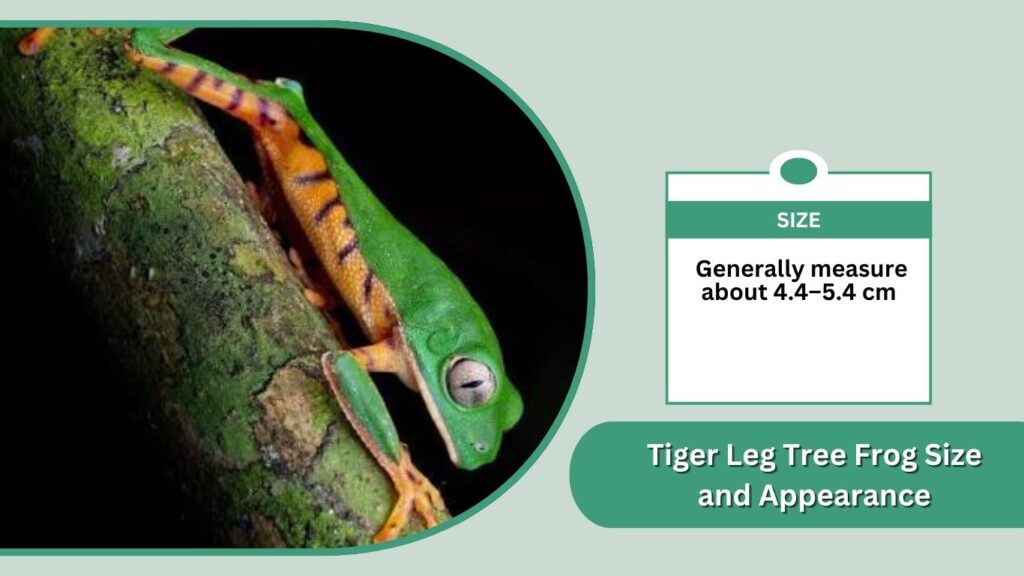
The tiger leg tree frog is relatively small compared with many other tropical tree frogs. Adult males generally measure about 4.4–5.4 cm (1.7–2.1 inches) from snout to vent, while females may reach approximately 6 cm (2.4 inches).
Despite its modest size, the species has a particularly striking appearance. Its green back provides camouflage among leaves, while the brightly patterned limbs become more visible when it moves.
How to Identify a Tiger Leg Monkey Tree Frog
- Green upper body: Its smooth green back helps conceal it among rainforest plants.
- Striped legs: Bright orange or yellow-orange limbs display contrasting dark stripes.
- Large eyes: Pale silver or gray irises surround distinctive vertical pupils.
- Slender body: Its lightweight body supports movement through branches.
- Specialized toes: Grasping digits and toe pads help it climb vegetation.
- Pale underside: The belly is lighter than the back, often appearing whitish or cream.
The combination of a green body and tiger-like striped limbs is its most recognizable feature.
Where Do Tiger Leg Tree Frogs Live?
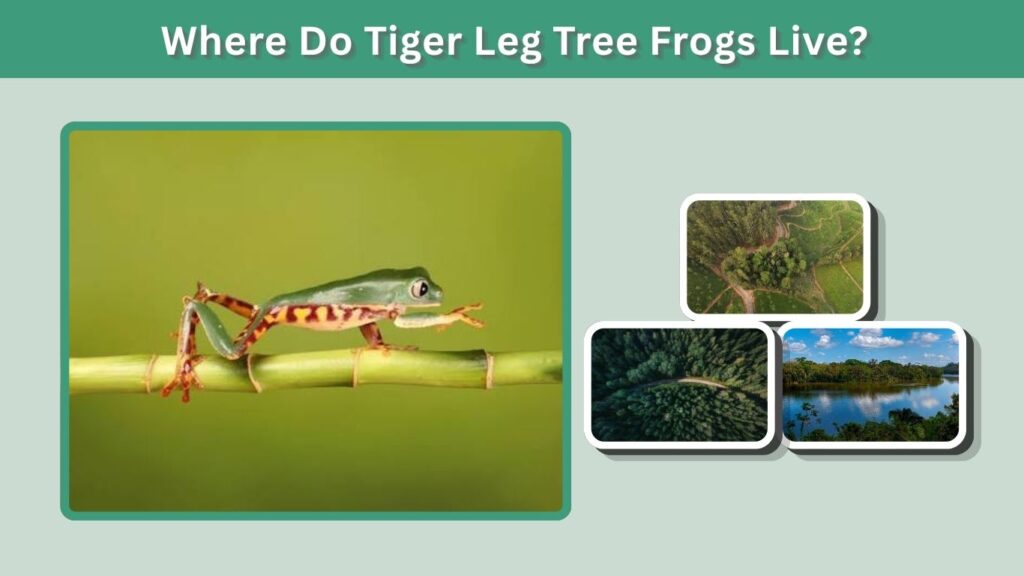
Tiger leg tree frogs naturally inhabit the Amazon Basin and nearby tropical regions of northern South America. Their geographical distribution includes Brazil, Colombia, Ecuador, Peru, Bolivia, Venezuela, Guyana, Suriname, and French Guiana.
These amphibians primarily occupy humid lowland rainforests, where dense vegetation provides shelter and climbing opportunities.
They are especially associated with forest habitats containing ponds or other suitable breeding waters.
Natural Habitat and Environmental Conditions
Tiger leg tree frogs prefer warm, humid environments with abundant vegetation. They frequently rest on branches, leaves, and shrubs above the forest floor.
Their arboreal lifestyle helps them avoid some ground-dwelling predators while providing access to insect prey.
During the rainy season, adults may gather around suitable ponds to reproduce. Temporary flooding and increased moisture create favorable conditions for breeding activity.
Although they are strongly associated with forests, individuals have occasionally been recorded in more open or disturbed environments.
What Do Tiger Leg Tree Frogs Eat?
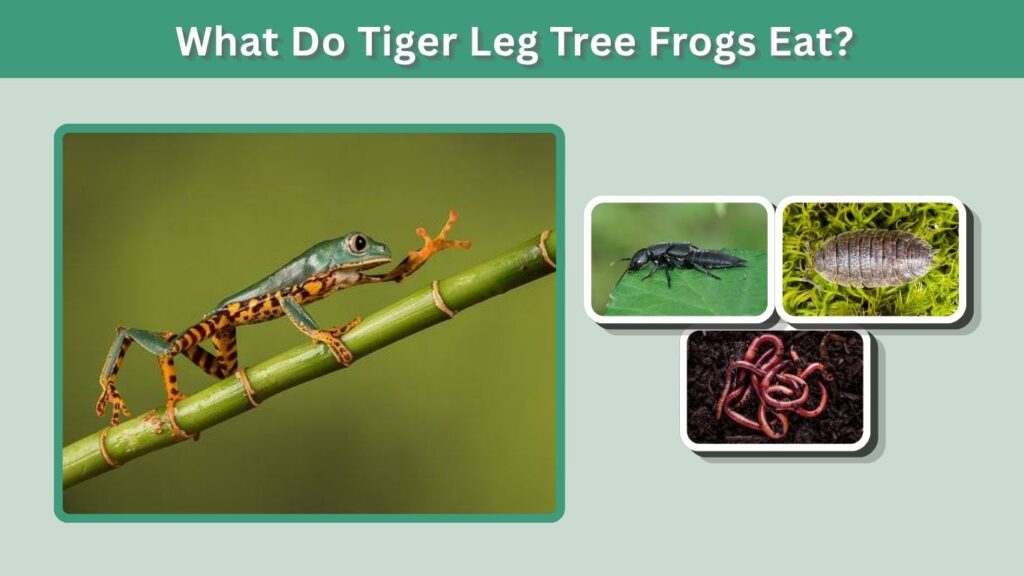
Tiger leg tree frogs are primarily insectivorous. They hunt small invertebrates in surrounding vegetation, especially during nighttime activity.
Like other insect-eating frogs, they use their vision to detect movement and capture appropriately sized prey.
Their exact wild diet has not been extensively documented, but small insects are expected to form an important part of their natural feeding habits.
Common Foods for Tiger Leg Tree Frogs
- Crickets: Provide protein and are commonly used in captive amphibian diets.
- Small roaches: Offer variety and essential nutrients.
- Flies: Represent suitable moving prey for smaller individuals.
- Moths: May be encountered during nighttime hunting.
- Small soft-bodied insects: Can provide additional dietary variety.
- Other small invertebrates: May be consumed when available in the natural habitat.
Captive frogs should receive appropriately sized, captive-bred feeder insects. Gut-loading and suitable calcium and vitamin supplementation help prevent nutritional deficiencies.
Wild insects should be avoided because they may contain pesticides or parasites.
Tiger Leg Monkey Tree Frog Behavior
The tiger leg monkey tree frog is primarily nocturnal, spending much of the day resting quietly among leaves and branches.
At night, it becomes more active, searching for insects and exploring nearby vegetation.
Unlike frogs that frequently make long jumps, monkey frogs often move by carefully stepping between branches. Their grasping digits allow them to maintain contact with vegetation while climbing.
This distinctive walking behavior explains the name monkey tree frog.
Why Do Tiger Leg Tree Frogs Have Striped Legs?
Their bright orange legs and dark markings contrast strongly with their green backs.
While resting with their limbs tucked against their bodies, the frogs can appear mostly green and remain relatively concealed.
When they extend their legs, the colorful markings become visible. This contrasting coloration may help confuse or startle predators, although its precise defensive function has not been conclusively established for this species.
Tiger Leg Tree Frog Breeding and Reproduction
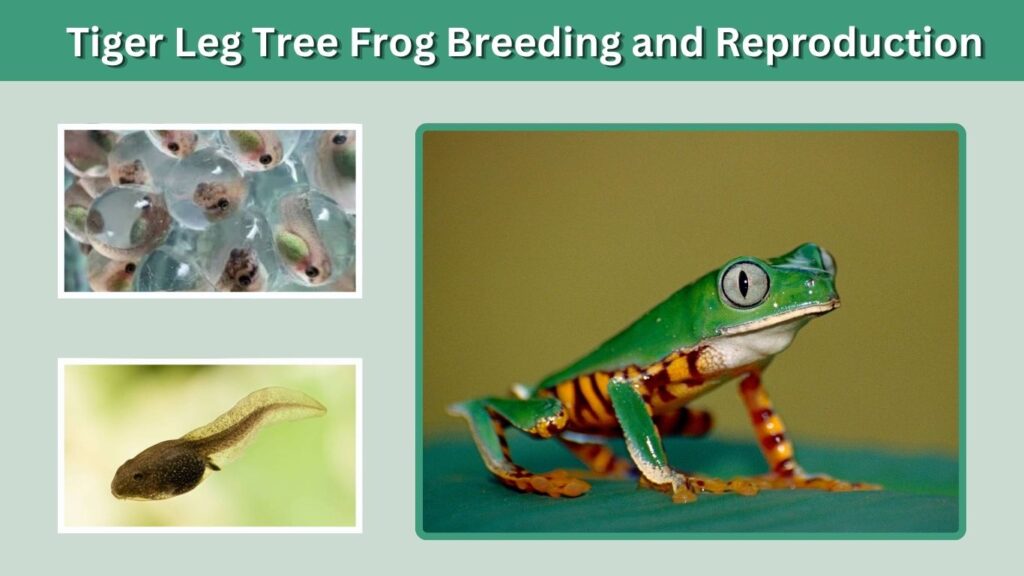
Tiger leg tree frogs reproduce in association with freshwater breeding sites. During favorable conditions, males move toward suitable ponds and produce calls to attract females.
Following courtship, the mating pair deposits eggs on vegetation positioned above the water.
The eggs develop in a protective gelatinous mass associated with leaves. Once the embryos mature and hatch, the tadpoles enter the water below.
There, they continue growing and eventually undergo metamorphosis into young frogs.
This unusual reproductive strategy allows adults to lay eggs above water while ensuring that the developing tadpoles can reach an aquatic environment.
Are Tiger Leg Tree Frogs Poisonous?
Tiger leg tree frogs possess skin glands, as do other amphibians. Many related monkey frogs produce defensive compounds in their skin secretions.
However, the precise effects of Callimedusa tomopterna secretions on humans are not thoroughly documented, so it is inappropriate to assume that this species has the same toxicity as the giant monkey frog.
These frogs do not possess a venom-injecting sting or fang.
Nevertheless, unnecessary handling should be avoided because skin secretions may cause irritation and amphibians can absorb harmful substances through their sensitive skin.
Anyone handling amphibians should follow appropriate hygiene precautions.
Tiger Legged Monkey Tree Frog Care
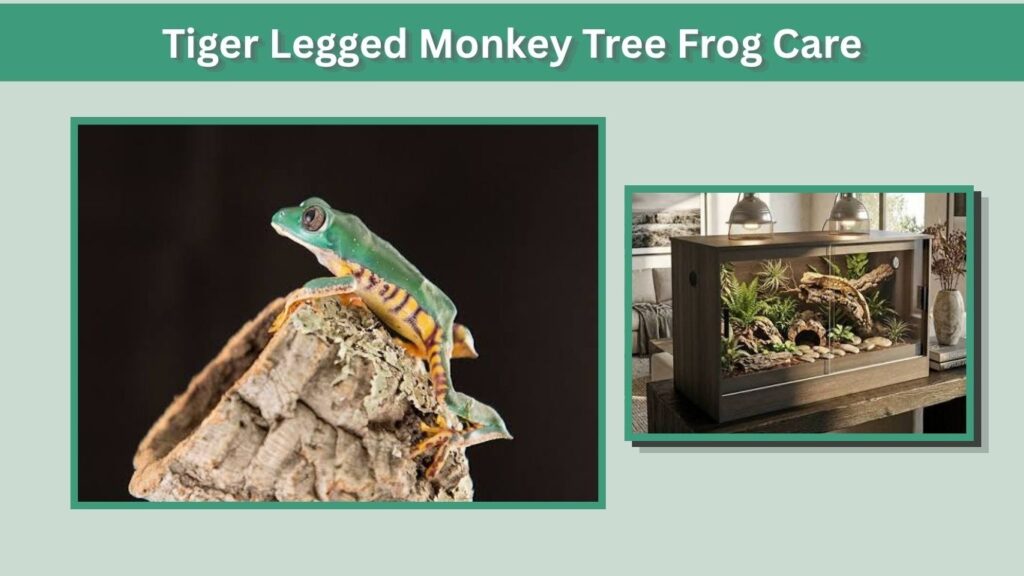
The tiger legged monkey tree frog is occasionally maintained by experienced amphibian keepers. However, its environmental requirements make it a challenging choice for beginners.
A suitable enclosure should replicate important features of a tropical forest, including vertical climbing space, plants, stable temperatures, adequate humidity, and ventilation.
Enclosure and Terrarium Requirements
- Enclosure size: A vertical terrarium approximately 45 × 45 × 60 cm or larger can provide a starting point for a single adult.
- Temperature: Approximately 24–28°C during the day, with a modest nighttime decrease.
- Humidity: Generally around 70–90%, while allowing appropriate ventilation and moisture fluctuations.
- Climbing structures: Include secure branches, vines, and broad-leaved plants.
- Water: Provide clean, dechlorinated water in a shallow container.
- Lighting: Maintain a consistent day-night cycle with appropriate low-level UVB where recommended.
- Substrate: Use a clean, moisture-retaining substrate that does not remain waterlogged.
These figures are general captive-care starting points, not universally established requirements for every population or life stage. A qualified amphibian veterinarian or experienced species specialist should help determine suitable conditions.
Feeding and Daily Maintenance
Captive tiger leg tree frogs generally require regular feeding with suitable live insects.
Young frogs need smaller prey and may require more frequent feeding than adults.
Food should be supplemented according to nutritional needs, while uneaten insects and waste should be removed promptly.
Keepers should monitor temperature, humidity, hydration, appetite, and activity. Poor ventilation and persistently wet conditions can contribute to skin problems.
Handling should be minimal to avoid stress and possible damage to the frog’s delicate skin.
Tiger Leg Tree Frog Lifespan
The tiger leg tree frog’s lifespan in the wild has not been reliably established through extensive long-term studies.
Some captive husbandry sources suggest that individuals may live approximately 5–10 years under suitable conditions, but well-documented species-specific longevity records remain limited.
Environmental stability, appropriate nutrition, disease prevention, and reduced stress are important factors in supporting captive amphibian health.
Tiger Leg Tree Frog Conservation Status
The tiger-striped leaf frog is currently categorized as Least Concern on the IUCN Red List.
Its relatively broad distribution throughout northern South America helps support this classification.
Nevertheless, deforestation, habitat fragmentation, and changes to freshwater breeding sites may threaten local populations.
Protecting rainforest habitats and maintaining healthy wetland environments are important for the long-term survival of these amphibians.
FAQs
1. How Big Does a Tiger Leg Tree Frog Get?
Adult male tiger leg tree frogs generally reach 4.4–5.4 cm, while females may grow to approximately 6 cm. Their slender bodies, specialized climbing toes, and long limbs allow them to move efficiently through rainforest vegetation.
2. Are Tiger Legged Monkey Tree Frogs Good Pets?
Tiger legged monkey tree frogs may be suitable for experienced amphibian keepers. They require specialized vertical enclosures, carefully controlled environmental conditions, suitable live insects, and minimal handling. Beginners may find their care requirements challenging.
3. What Is the Scientific Name of the Tiger Leg Tree Frog?
The currently accepted scientific name is Callimedusa tomopterna. Older literature frequently uses Phyllomedusa tomopterna. Both names refer to the same species, also commonly called the tiger-striped leaf frog or barred monkey frog.
4. Where Are Tiger Leg Monkey Frogs Found?
Tiger leg monkey frogs inhabit tropical regions of northern South America, including the Amazon Basin. They occur in countries such as Brazil, Peru, Ecuador, Colombia, and Bolivia, where they primarily occupy humid forests near suitable breeding waters.
5. How Long Do Tiger Leg Tree Frogs Live?
Some captive care sources suggest lifespans of approximately 5–10 years. However, reliable longevity data for this particular species are limited. Proper nutrition, appropriate enclosure conditions, and veterinary care may help support a longer, healthier life.
