
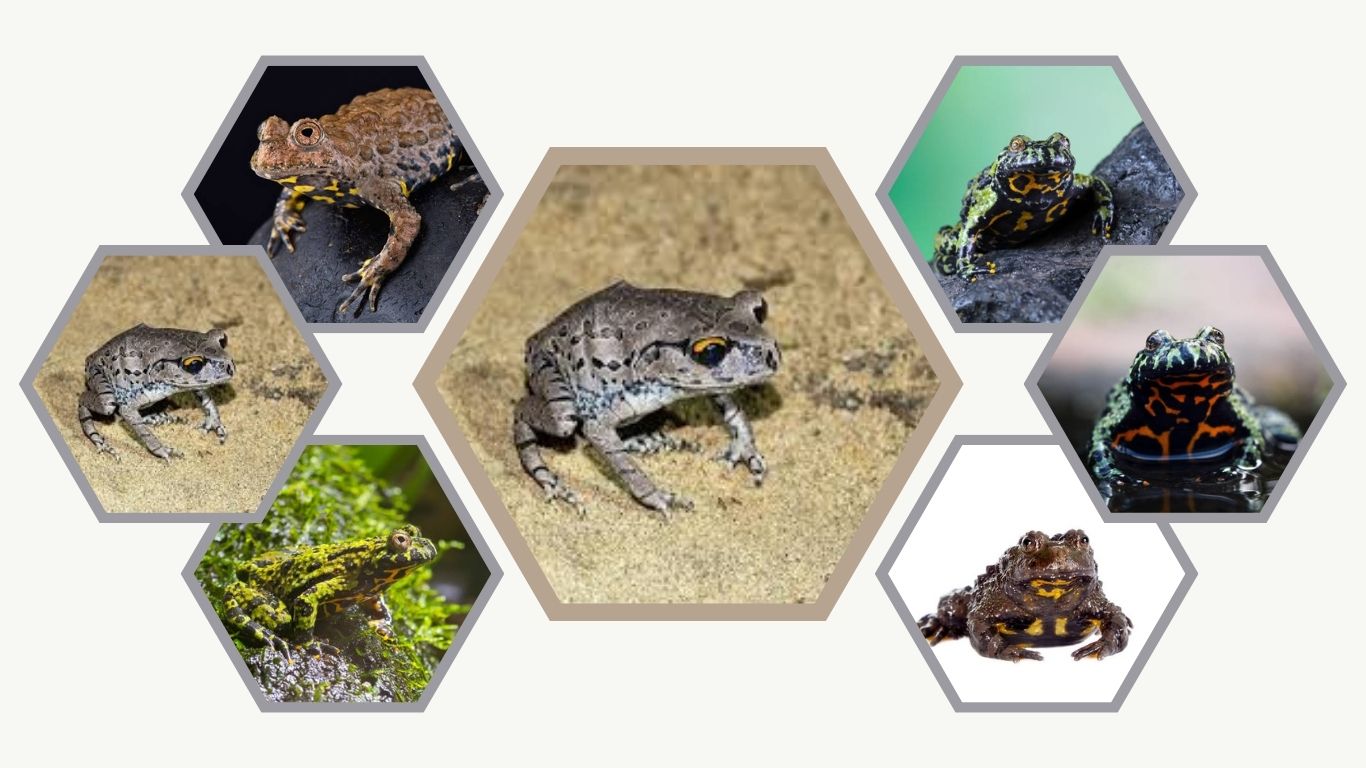
Fire-bellied toads are small, colorful amphibians known for their bright warning-colored bellies and active behavior near freshwater habitats. These fascinating toads are found mainly in Europe and Asia, where they inhabit ponds, marshes, streams, and wetlands with cool and humid conditions. Different species vary in size, coloration, habitat, and distribution, but all share distinctive defensive behaviors and aquatic lifestyles. Their vivid patterns, adaptability, and unique characteristics make them popular among amphibian enthusiasts, researchers, and nature lovers interested in learning more about the diverse world of fire-bellied toads.
1. Oriental Fire-bellied Toad

The Oriental Fire-bellied Toad is a small and colorful amphibian native to East Asia. It is widely recognized for its bright green back and vivid orange-red belly covered with black markings. This species is popular among amphibian enthusiasts because of its active daytime behavior, hardy nature, and unique defensive display. It commonly lives in shallow freshwater habitats surrounded by dense vegetation.
Identification
- Scientific Name: Bombina orientalis
- Common Colors: Green, black, and orange-red
- Average Size: 1.5 to 2 inches
- Skin Type: Slightly rough and bumpy
- Belly Markings: Bright orange or red with black spots
- Eye Appearance: Dark eyes with rounded pupils
- Average Lifespan: 10 to 15 years
Habitat and Distribution
The Oriental Fire-bellied Toad is commonly found in China, Korea, and parts of Russia. It prefers shallow ponds, marshes, slow-moving streams, and wetlands with abundant plants. This species thrives in cool and humid environments where it can easily hide among rocks, aquatic plants, and muddy areas near water sources.
Behavior and Diet
This toad is mainly active during the daytime and spends much of its time swimming or resting near water. When threatened, it arches its body to display its brightly colored belly as a warning to predators. Its diet consists of insects, worms, larvae, flies, and other small invertebrates found in moist habitats.
Lifecycle
Breeding usually occurs during warmer months when males call to attract females near shallow water. Females lay clusters of eggs attached to aquatic plants. Tadpoles hatch and live entirely in water before gradually transforming into young toads through metamorphosis. As they mature, their distinctive belly coloration becomes brighter and more visible.
2. European Fire-bellied Toad

The European Fire-bellied Toad is a small amphibian known for its dark body and striking red-orange belly with black markings. Native to central and eastern Europe, this species is commonly found in wetlands, ponds, and marshes. It is admired for its unique warning coloration, calm temperament, and ability to survive in a variety of freshwater habitats with dense vegetation and shallow water.
Identification
- Scientific Name: Bombina bombina
- Common Colors: Dark gray, black, and red-orange
- Average Size: 1.5 to 2 inches
- Skin Texture: Warty and rough
- Belly Pattern: Bright orange or red with black patches
- Eye Appearance: Rounded eyes with dark pupils
- Average Lifespan: 10 to 12 years
Habitat and Distribution
The European Fire-bellied Toad is native to countries across central and eastern Europe. It commonly inhabits shallow ponds, marshlands, flooded grasslands, and slow-moving waterways. This species prefers warm wetlands with muddy bottoms and thick aquatic vegetation where it can hide, breed, and search for food safely.
Behavior and Diet
This species is active during both day and night, especially in warm and humid conditions. When disturbed, it displays its brightly colored belly to scare predators. Its diet mainly includes insects, worms, spiders, larvae, and other small invertebrates commonly found near freshwater environments.
Lifecycle
Breeding takes place during spring and early summer in shallow water habitats. Males attract females with soft calls, and females lay eggs on underwater plants. Tadpoles hatch and remain aquatic until metamorphosis occurs. Young toads slowly develop their bright belly patterns as they grow into adults.
3. Yellow-bellied Toad

The Yellow-bellied Toad is a small amphibian famous for its dark upper body and bright yellow underside marked with black patches. It is commonly found in mountainous and forested regions of Europe. This species prefers cool freshwater habitats and is known for its warning coloration, which helps protect it from predators. Its adaptable nature allows it to survive in temporary pools and shallow streams.
Identification
- Scientific Name: Bombina variegata
- Common Colors: Gray, brown, black, and yellow
- Average Size: 1.5 to 2 inches
- Skin Texture: Rough and warty
- Belly Pattern: Bright yellow with dark black markings
- Eye Appearance: Prominent eyes with heart-shaped pupils
- Average Lifespan: 10 to 15 years
Habitat and Distribution
The Yellow-bellied Toad is native to central and southern Europe. It commonly lives in mountain ponds, forest puddles, shallow streams, and temporary rain pools. This species prefers cool and moist habitats with muddy ground, scattered vegetation, and clean freshwater sources for breeding and shelter.
Behavior and Diet
This toad is mostly active during warm and humid weather. It spends much of its time near shallow water and uses its bright belly coloration to warn predators when threatened. Its diet includes insects, worms, spiders, beetles, larvae, and other small invertebrates commonly found in wet environments.
Lifecycle
Breeding usually begins in late spring or early summer after heavy rainfall. Females lay eggs in shallow water, often attached to plants or submerged objects. Tadpoles develop in aquatic habitats before transforming into young toads. As they mature, their yellow belly patterns become more vivid and noticeable.
4. Chinese Fire-bellied Toad

The Chinese Fire-bellied Toad is a colorful amphibian native to several regions of China. It is well known for its dark green body and bright orange-red belly marked with black spots. This species prefers moist environments near freshwater habitats and is valued for its active behavior and striking appearance. It is commonly seen in ponds, marshes, and slow-moving streams surrounded by vegetation.
Identification
- Scientific Name: Bombina maxima
- Common Colors: Dark green, black, and orange-red
- Average Size: 2 to 3 inches
- Skin Texture: Rough and slightly warty
- Belly Pattern: Bright orange or red with black patches
- Eye Appearance: Large eyes with dark pupils
- Average Lifespan: 10 to 15 years
Habitat and Distribution
The Chinese Fire-bellied Toad is mainly found in southwestern China, especially in mountainous and forested regions. It inhabits shallow ponds, marshlands, streams, and wet grasslands. This species prefers cool and humid environments with plenty of aquatic plants, muddy ground, and clean freshwater sources for shelter and breeding.
Behavior and Diet
This toad is active during both day and night, especially after rainfall or in humid weather. It often remains close to water and displays its brightly colored belly when threatened. Its diet includes insects, worms, spiders, larvae, beetles, and other small invertebrates found in damp habitats.
Lifecycle
Breeding usually takes place during warm and rainy seasons. Females lay eggs in shallow water attached to aquatic plants or submerged surfaces. Tadpoles hatch and remain aquatic while developing. After metamorphosis, young toads gradually develop their vivid belly coloration and begin living both on land and in water.
5. Giant Fire-bellied Toad

The Giant Fire-bellied Toad is one of the largest species within the fire-bellied toad group. It is recognized for its dark body coloration, rough skin, and bright orange-red belly with black markings. Native to parts of China and nearby regions, this amphibian prefers cool freshwater habitats. Its larger size, active behavior, and defensive warning display make it a distinctive species among fire-bellied toads.
Identification
- Scientific Name: Bombina maxima
- Common Colors: Dark brown, black, and orange-red
- Average Size: 2.5 to 3 inches
- Skin Texture: Thick, rough, and warty
- Belly Pattern: Bright orange-red with black spots
- Eye Appearance: Large eyes with dark pupils
- Average Lifespan: 10 to 15 years
Habitat and Distribution
The Giant Fire-bellied Toad is commonly found in southwestern China, especially in mountainous and forested regions. It inhabits ponds, marshes, streams, and wetlands with cool temperatures and high humidity. This species prefers freshwater habitats surrounded by dense vegetation, rocks, and muddy areas that provide shelter and breeding sites.
Behavior and Diet
This species is active both during the day and at night, especially in damp weather conditions. When threatened, it raises its body to expose its brightly colored underside as a warning to predators. Its diet mainly consists of insects, worms, spiders, beetles, larvae, and other small invertebrates found near water sources.
Lifecycle
Breeding usually occurs during rainy and warm seasons when males call near shallow water to attract females. Eggs are laid in freshwater habitats and attached to plants or submerged surfaces. Tadpoles develop in water before transforming into juvenile toads through metamorphosis. Young toads gradually develop their bright warning coloration as they mature.
6. Hubei Fire-bellied Toad

The Hubei Fire-bellied Toad is a lesser-known species of fire-bellied toad native to parts of central China. It is admired for its dark upper body and brightly colored belly marked with contrasting black patterns. This amphibian thrives in cool and humid freshwater habitats surrounded by vegetation. Like other fire-bellied toads, it uses its vivid underside as a warning display against predators in the wild.
Identification
- Scientific Name: Bombina microdeladigitora
- Common Colors: Dark brown, black, and orange-red
- Average Size: 1.5 to 2 inches
- Skin Texture: Rough and slightly warty
- Belly Pattern: Bright orange or red with black markings
- Eye Appearance: Rounded eyes with dark pupils
- Average Lifespan: 8 to 12 years
Habitat and Distribution
The Hubei Fire-bellied Toad is mainly found in Hubei Province and nearby regions of China. It commonly inhabits shallow ponds, forest streams, wetlands, and marshy environments with high humidity. This species prefers cool freshwater habitats containing aquatic vegetation, muddy ground, and sheltered areas for hiding and breeding.
Behavior and Diet
This toad is generally active during humid and rainy conditions and spends much of its time close to water. When threatened, it displays its colorful belly to warn predators. Its diet includes insects, worms, spiders, larvae, and other small invertebrates commonly found in moist habitats and near freshwater areas.
Lifecycle
Breeding usually begins during the warm rainy season when males call to attract females near shallow water. Females lay eggs attached to underwater plants or submerged objects. Tadpoles hatch and develop in aquatic environments before undergoing metamorphosis into juvenile toads with gradually brightening belly coloration.
7. Sichuan Fire-bellied Toad

The Sichuan Fire-bellied Toad is a colorful amphibian native to the mountainous regions of Sichuan, China. It is known for its dark upper body and bright orange-red belly covered with black markings. This species prefers cool and moist freshwater habitats with dense vegetation. Its vivid warning colors, active behavior, and adaptability to wet environments make it a distinctive member of the fire-bellied toad group.
Identification
- Scientific Name: Bombina lichuanensis
- Common Colors: Dark brown, black, and orange-red
- Average Size: 1.5 to 2.5 inches
- Skin Texture: Rough and bumpy
- Belly Pattern: Bright red or orange with black spots
- Eye Appearance: Large eyes with dark pupils
- Average Lifespan: 10 to 14 years
Habitat and Distribution
The Sichuan Fire-bellied Toad is mainly found in Sichuan Province and nearby mountain regions of China. It inhabits ponds, marshes, slow-moving streams, and forest wetlands with cool temperatures and high humidity. This species prefers freshwater habitats containing rocks, muddy areas, and thick aquatic vegetation for shelter and breeding.
Behavior and Diet
This toad is active during both daytime and nighttime, especially in rainy or humid weather. When threatened, it arches its body to display its brightly colored underside as a warning signal to predators. Its diet includes insects, worms, spiders, beetles, larvae, and other small invertebrates commonly found near freshwater habitats.
Lifecycle
Breeding usually takes place during warm and rainy seasons in shallow freshwater habitats. Females lay eggs attached to aquatic plants or submerged surfaces. Tadpoles hatch and develop entirely in water before transforming into juvenile toads through metamorphosis. As they mature, their bright belly patterns become more vivid and noticeable.
8. Korean Fire-bellied Toad

The Korean Fire-bellied Toad is a small amphibian native to the Korean Peninsula and nearby regions of northeastern Asia. It is recognized for its dark green or brown upper body and vivid orange-red belly marked with black spots. This species prefers cool and humid freshwater habitats with dense vegetation. Its colorful warning display and active behavior make it one of the most recognizable fire-bellied toads in East Asia.
Identification
- Scientific Name: Bombina orientalis
- Common Colors: Green, brown, black, and orange-red
- Average Size: 1.5 to 2 inches
- Skin Texture: Slightly rough and bumpy
- Belly Pattern: Bright orange-red with black markings
- Eye Appearance: Prominent eyes with dark pupils
- Average Lifespan: 10 to 15 years
Habitat and Distribution
The Korean Fire-bellied Toad is mainly found across the Korean Peninsula and nearby parts of northeastern China and Russia. It commonly inhabits shallow ponds, marshes, rice fields, streams, and wetlands. This species thrives in cool environments with clean freshwater, muddy ground, and thick vegetation that provide shelter and breeding areas.
Behavior and Diet
This species is active mostly during the daytime and spends much of its time swimming or resting near water. When threatened, it exposes its brightly colored belly to warn predators of its toxic skin secretions. Its diet includes insects, worms, flies, spiders, larvae, and other small invertebrates found in moist habitats.
Lifecycle
Breeding usually occurs during spring and early summer when males call to attract females near shallow water. Females lay clusters of eggs attached to aquatic plants. Tadpoles hatch and remain aquatic until metamorphosis is complete. Young toads gradually develop their bright belly coloration as they grow into adults.
9. Guangxi Fire-bellied Toad

The Guangxi Fire-bellied Toad is a rare amphibian species native to the Guangxi region of southern China. It is known for its dark-colored upper body and bright orange or red underside marked with black patterns. This species prefers humid freshwater habitats surrounded by vegetation and rocky terrain. Like other fire-bellied toads, it uses its vivid belly coloration as a warning display against predators in the wild.
Identification
- Scientific Name: Bombina fortinuptialis
- Common Colors: Dark brown, black, and orange-red
- Average Size: 1.5 to 2 inches
- Skin Texture: Rough and warty
- Belly Pattern: Bright orange or red with black spots
- Eye Appearance: Rounded eyes with dark pupils
- Average Lifespan: 8 to 12 years
Habitat and Distribution
The Guangxi Fire-bellied Toad is mainly found in Guangxi Province and nearby regions in southern China. It commonly inhabits forest ponds, marshes, shallow streams, and wetlands with high humidity. This species prefers cool freshwater habitats with muddy ground, rocks, and dense aquatic vegetation for protection and breeding.
Behavior and Diet
This toad is active during humid weather and often stays close to shallow water sources. When threatened, it displays its brightly colored underside to discourage predators. Its diet mainly consists of insects, worms, spiders, beetles, larvae, and other small invertebrates commonly found in moist environments.
Lifecycle
Breeding usually occurs during warm rainy seasons in shallow freshwater habitats. Females lay eggs attached to aquatic plants or submerged objects. Tadpoles hatch and develop in water before transforming into juvenile toads through metamorphosis. As they mature, their vivid belly coloration gradually becomes brighter and more distinct.
10. Yunnan Fire-bellied Toad

The Yunnan Fire-bellied Toad is a colorful amphibian native to the Yunnan Province of southwestern China. It is recognized for its dark upper body and vivid orange-red belly marked with black patches. This species prefers cool, humid freshwater environments surrounded by dense vegetation and rocky terrain. Its striking warning coloration, aquatic lifestyle, and adaptability to wet habitats make it a notable member of the fire-bellied toad family.
Identification
- Scientific Name: Bombina yunnanensis
- Common Colors: Dark brown, black, and orange-red
- Average Size: 1.5 to 2.5 inches
- Skin Texture: Rough and slightly warty
- Belly Pattern: Bright orange-red with black markings
- Eye Appearance: Large eyes with dark pupils
- Average Lifespan: 10 to 14 years
Habitat and Distribution
The Yunnan Fire-bellied Toad is mainly found in Yunnan Province and nearby mountainous areas of China. It inhabits ponds, marshes, slow-moving streams, and forest wetlands with cool temperatures and high humidity. This species thrives in freshwater habitats containing rocks, muddy areas, and thick aquatic vegetation for shelter and breeding.
Behavior and Diet
This species is active during both daytime and nighttime, especially in humid or rainy conditions. When threatened, it arches its body to display its brightly colored underside as a warning to predators. Its diet includes insects, worms, spiders, larvae, beetles, and other small invertebrates commonly found near freshwater habitats.
Lifecycle
Breeding usually takes place during warm and rainy seasons in shallow freshwater habitats. Females lay eggs attached to aquatic plants or submerged surfaces. Tadpoles hatch and develop entirely in water before transforming into juvenile toads through metamorphosis. Young toads gradually develop brighter belly coloration as they mature into adults.
FAQs
Are fire-bellied toads poisonous?
Fire-bellied toads produce mild toxic skin secretions that help protect them from predators. These toxins are usually not dangerous to humans but can cause irritation if touched and then transferred to the eyes or mouth. It is always best to wash hands after handling them.
What do fire-bellied toads eat?
Fire-bellied toads mainly eat small insects and invertebrates. Their diet commonly includes crickets, worms, flies, beetles, larvae, and spiders. In captivity, they are usually fed live insects along with vitamin and calcium supplements to maintain proper health and growth.
How long do fire-bellied toads live?
Most fire-bellied toads can live between 10 and 15 years with proper care. Some individuals may live even longer in captivity when provided with clean water, balanced nutrition, suitable temperatures, and a stress-free environment that supports healthy development.
Where do fire-bellied toads live?
Fire-bellied toads are commonly found in parts of Europe and Asia. They prefer shallow freshwater habitats such as ponds, marshes, wetlands, rice fields, and slow-moving streams. These amphibians thrive in cool and humid environments with dense vegetation and muddy ground.
Why do fire-bellied toads show their bellies?
Fire-bellied toads display their brightly colored bellies as a defensive behavior called the unken reflex. When threatened, they arch their bodies to reveal vivid warning colors that signal predators about their toxic skin secretions, helping reduce the chance of being attacked or eaten.
