
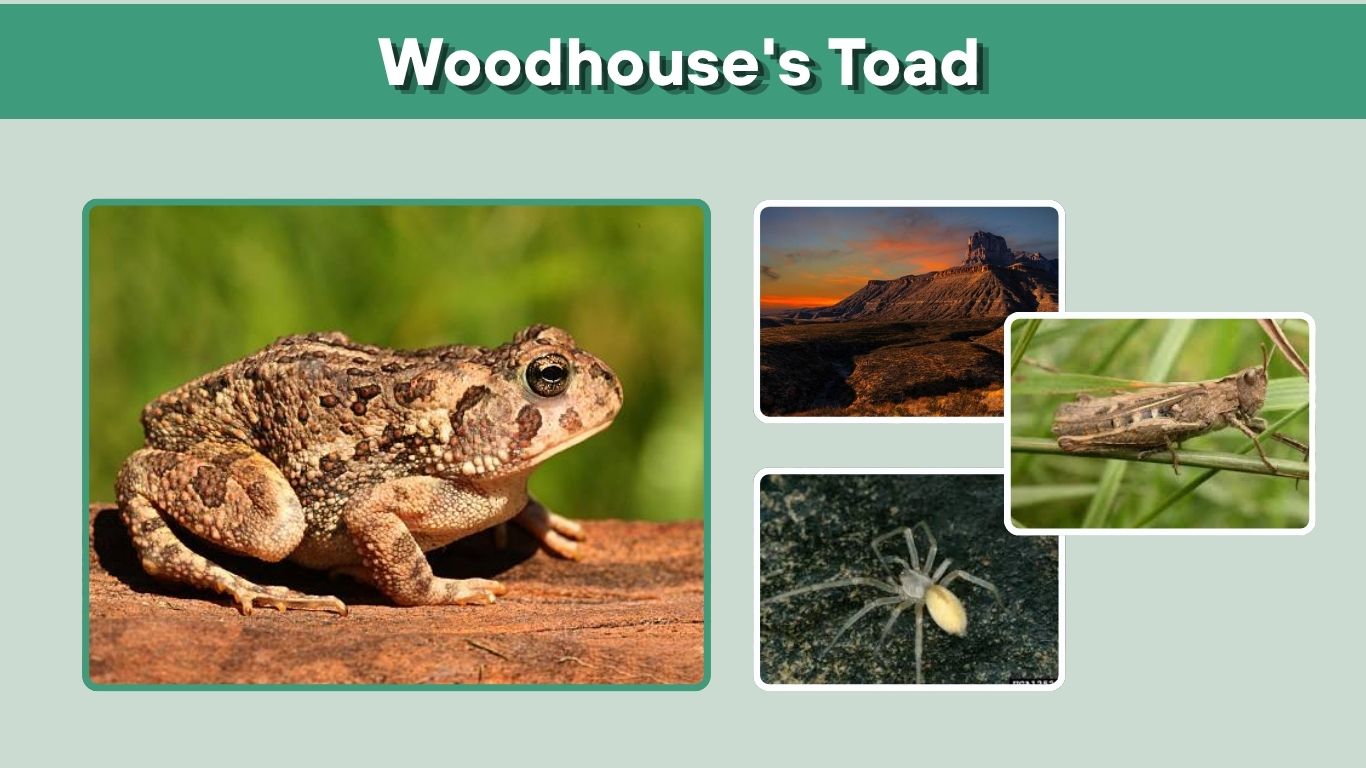
Woodhouse’s toad (Anaxyrus woodhousii) is one of the most widespread toad species in North America. Found throughout the Great Plains, Southwest, and Rocky Mountain regions, this adaptable amphibian thrives in diverse environments ranging from grasslands to suburban neighborhoods. Many people encounter Woodhouse’s toads in gardens, parks, and near water sources. Whether you are interested in identifying one in the wild, keeping one as a pet, or learning about its ecological role, understanding its habitat, behavior, diet, and care requirements can help you appreciate this fascinating species.
What Is a Woodhouse’s Toad?
Woodhouse’s toad is a medium-sized amphibian belonging to the true toad family, Bufonidae. Named after American naturalist Samuel Washington Woodhouse, the species is recognized for its adaptability and broad geographic range. It can survive in a variety of climates and habitats, making it one of the most successful toad species in North America. Understanding its physical traits and identifying features helps distinguish it from similar toad species.
Physical Characteristics
Woodhouse’s toads typically have rough, warty skin and a stout body. Their coloration varies depending on habitat and age, but most individuals display shades of gray, olive, brown, or tan.
Key identification features include:
- A pale stripe running down the center of the back
- Large parotoid glands behind the eyes
- Numerous dark spots on the body
- A light-colored belly with minimal markings
- Horizontal pupils typical of true toads
Size and Appearance
Adult Woodhouse’s toads generally grow between 2 and 5 inches in length. Females are usually larger than males, especially during the breeding season. Juveniles appear similar to adults but often have brighter colors and more noticeable patterns that gradually fade as they mature.
Woodhouse’s Toad Habitat and Range
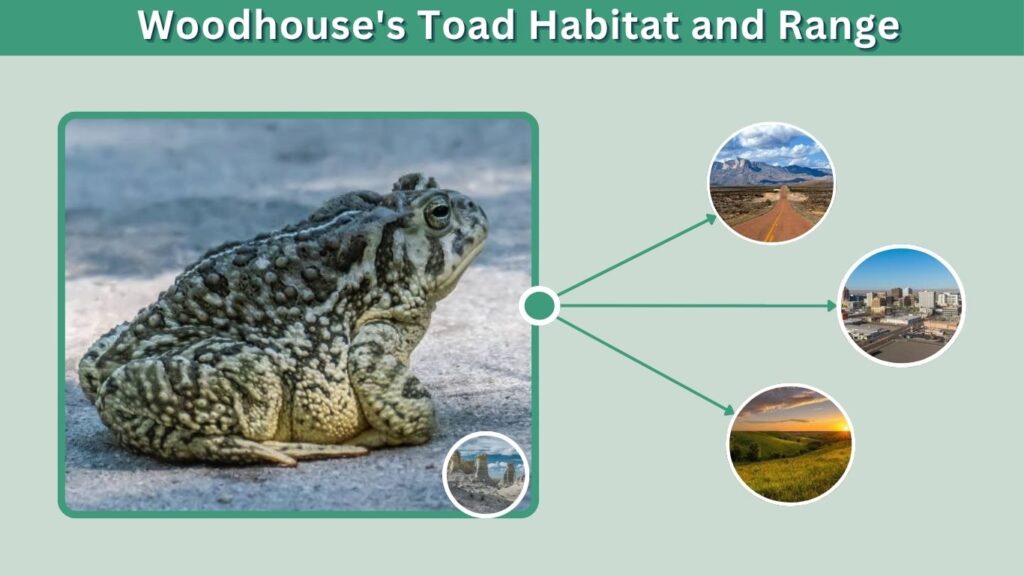
Woodhouse’s toad occupies a vast geographic range and adapts well to both natural and human-modified landscapes. Its ability to tolerate varying environmental conditions has allowed it to establish populations across much of the western and central United States. While the species depends on water for breeding, adults spend much of their lives in terrestrial habitats where food and shelter are readily available.
Where Do Woodhouse’s Toads Live?
The species can be found throughout:
- Colorado
- Arizona
- Texas
- New Mexico
- Kansas
- Oklahoma
- Nebraska
- Wyoming
Woodhouse’s toads are particularly common in regions with seasonal rainfall and accessible breeding ponds.
Preferred Habitat
These toads thrive in areas that provide moisture, cover, and access to insects. Common habitats include:
- Grasslands
- Prairies
- Agricultural fields
- Floodplains
- Wetlands
- Parks and gardens
- Residential neighborhoods
Adults often shelter beneath rocks, logs, leaf litter, and other debris during the day to avoid dehydration.
What Do Woodhouse’s Toads Eat?
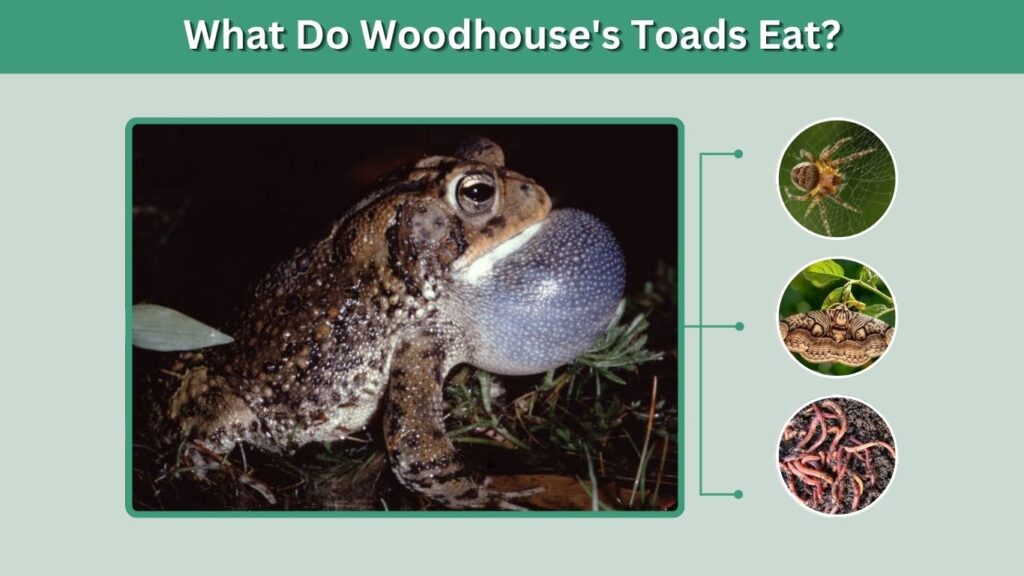
Woodhouse’s toads are opportunistic predators that play an important role in controlling insect populations. Their diet changes slightly depending on age, habitat, and prey availability. Using their sticky tongues and quick reflexes, they capture a wide variety of small invertebrates. This feeding behavior benefits both natural ecosystems and human environments by reducing populations of potentially harmful insects.
Natural Diet
In the wild, Woodhouse’s toads consume numerous invertebrates, including:
- Crickets
- Beetles
- Earwigs
- Ants
- Spiders
- Moths
- Worms
- Small caterpillars
Because they are not picky eaters, they typically consume whatever prey is abundant in their immediate surroundings.
Do Woodhouse’s Toads Eat Earwigs?
Yes, earwigs are commonly eaten by Woodhouse’s toads. These insects are active at night, which coincides with the toad’s feeding schedule. By consuming earwigs and other garden pests, Woodhouse’s toads provide a natural form of pest control that benefits homeowners and gardeners.
Woodhouse’s Toad Care Guide
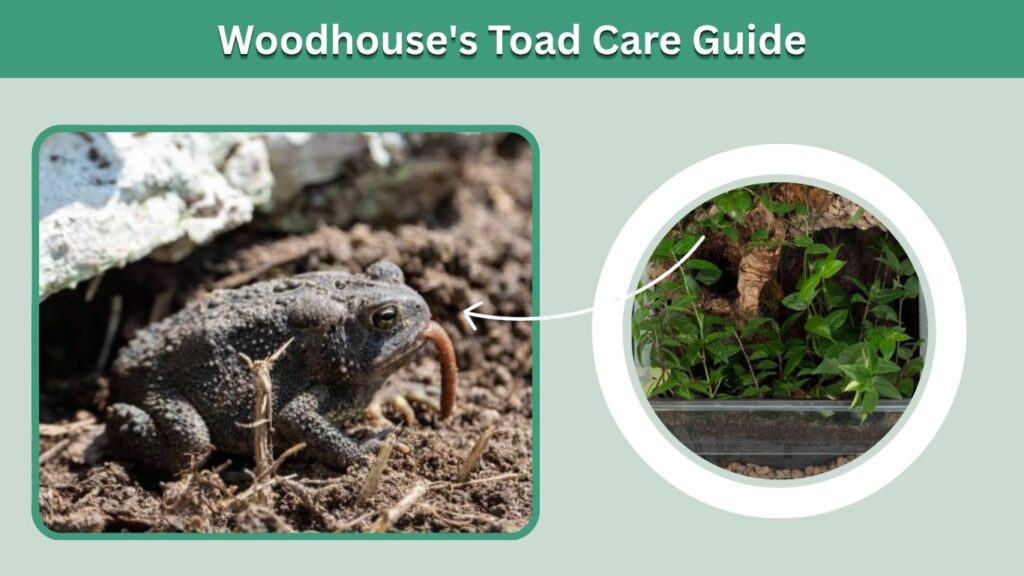
Many amphibian enthusiasts keep Woodhouse’s toads as pets because they are hardy, relatively easy to care for, and tolerant of a variety of environmental conditions. Although they are less demanding than some exotic amphibians, proper housing, temperature management, and nutrition remain essential for long-term health and well-being.
Enclosure Requirements
A secure enclosure should provide enough space for movement while maintaining adequate humidity levels. Most adult Woodhouse’s toads can comfortably live in a 10- to 20-gallon terrarium with proper ventilation.
Suitable enclosure features include:
- Moist substrate for burrowing
- Multiple hiding spots
- A shallow water dish
- Good airflow
- Stable temperature conditions
Temperature and Humidity
Woodhouse’s toads generally do well at temperatures between 65°F and 80°F. They tolerate moderate fluctuations but should not be exposed to prolonged extreme heat or freezing conditions in captivity.
Humidity should remain moderate, with occasional misting to prevent dehydration. Providing both moist and slightly drier areas allows the toad to regulate its comfort level naturally.
Do Woodhouse’s Toads Need UVB?
While Woodhouse’s toads can survive without specialized UVB lighting, low-level UVB exposure may support overall health and natural behaviors. Many keepers successfully maintain healthy individuals using proper supplementation and a balanced diet, though UVB can provide additional benefits in captive environments.
Woodhouse’s Toad Lifespan
Woodhouse’s toads are relatively long-lived amphibians when compared to many other small vertebrates. Their lifespan depends on factors such as habitat quality, food availability, predation pressure, and disease exposure. Individuals living in protected environments often survive longer than those in the wild. Understanding their longevity helps both wildlife observers and pet owners provide suitable conditions for a healthy life.
How Long Do Woodhouse’s Toads Live?
In the wild, Woodhouse’s toads commonly live between 5 and 10 years. However, many do not reach their maximum lifespan due to predators, harsh weather, and habitat loss.
Lifespan in Captivity
With proper care, captive Woodhouse’s toads may live longer than their wild counterparts. Factors that contribute to a longer lifespan include:
- Consistent access to food
- Protection from predators
- Stable environmental conditions
- Proper hydration
- Reduced exposure to disease
Are Woodhouse’s Toads Poisonous?
Like most true toads, Woodhouse’s toads possess specialized glands that secrete defensive chemicals. These secretions help protect them from predators and are not intended to attack humans or pets. Although generally not dangerous to people when handled responsibly, contact with the toxin can cause irritation and should be avoided whenever possible.
Are Woodhouse’s Toads Poisonous to Humans?
Woodhouse’s toads are not considered highly dangerous to humans, but their skin secretions can cause discomfort if transferred to sensitive areas such as the eyes, nose, or mouth. Washing hands after handling a toad is always recommended.
Are Woodhouse’s Toads Poisonous to Dogs?
Dogs are more likely to experience adverse reactions because they may lick, bite, or carry a toad in their mouths. Symptoms may include excessive drooling, pawing at the mouth, and temporary irritation.
If a dog licks a Woodhouse’s toad:
- Rinse the dog’s mouth with clean water.
- Prevent further contact with the toad.
- Monitor for unusual symptoms.
- Contact a veterinarian if symptoms worsen.
Male vs Female Woodhouse’s Toad
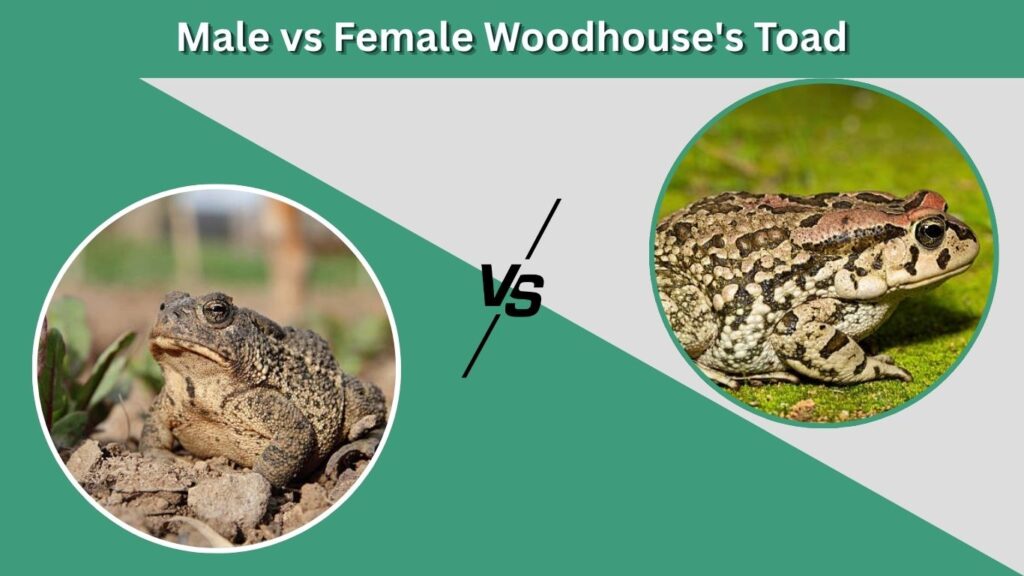
Determining the sex of a Woodhouse’s toad can be difficult outside the breeding season. However, several physical and behavioral characteristics help distinguish males from females. These differences become most noticeable when breeding activity begins in spring and early summer.
Male Woodhouse’s Toad Characteristics
Male Woodhouse’s toads are generally smaller and more vocal than females. During breeding season, males develop darker throats due to frequent calling activity.
Female Woodhouse’s Toad Characteristics
Females tend to be larger and heavier because they carry eggs during the breeding season. They rarely call and often remain silent near breeding ponds.
Key Differences
Common differences between males and females include:
- Females are usually larger.
- Males produce mating calls.
- Males often have darker throats.
- Females have a broader body shape.
- Males develop breeding pads during mating season.
Woodhouse’s Toad Reproduction and Life Cycle
The reproductive cycle of Woodhouse’s toads begins when warmer temperatures and seasonal rains trigger breeding activity. Adults migrate to temporary pools, ponds, and other water sources where courtship and egg-laying occur. The process from egg to adult can occur surprisingly quickly under favorable environmental conditions.
Breeding Season
Breeding typically occurs during spring and summer. Males gather near water and produce distinctive calls to attract females.
Woodhouse’s Toad Call
The call of a Woodhouse’s toad is often described as a long, nasal trill. This sound can continue for several seconds and is most commonly heard during evening hours near breeding sites.
Egg and Tadpole Development
After mating, females deposit long strings of eggs in shallow water. The eggs hatch into tadpoles that feed on algae and organic matter.
The life cycle follows these stages:
- Egg
- Tadpole
- Developing tadpole with legs
- Toadlet
- Juvenile
- Adult
Depending on environmental conditions, metamorphosis may occur within several weeks.
Baby and Juvenile Woodhouse’s Toads
Young Woodhouse’s toads emerge from breeding ponds in large numbers after completing metamorphosis. These tiny toadlets face numerous challenges as they transition to life on land. Predation, dehydration, and food shortages make this period one of the most difficult stages of their lives.
What Do Baby Woodhouse’s Toads Eat?
Juvenile toads require extremely small prey items that fit into their mouths. Common foods include tiny insects, springtails, and small ants. As they grow, they gradually begin consuming larger prey.
Growth and Development
Juveniles continue growing for several years before reaching maturity. Growth rates vary according to food availability, climate, and overall health.
Woodhouse’s Toad vs American Toad
Woodhouse’s toads and American toads are frequently confused because they share similar body shapes and habitats. Despite these similarities, several characteristics can help identify each species accurately.
Appearance Differences
Woodhouse’s toads often display a more pronounced light stripe along the back and have larger cranial crests. American toads typically have fewer warts within each dark body spot.
Habitat and Range Differences
American toads are more common in eastern North America, while Woodhouse’s toads dominate much of the western and central regions. Their ranges overlap in some areas, making identification more challenging.
FAQs
Woodhouse’s toads generate many questions among pet owners and wildlife enthusiasts. The following answers address some of the most common concerns regarding their behavior, care, and ecology.
Do Woodhouse’s Toads Hibernate?
Yes. In colder regions, they enter a dormant state during winter and seek shelter below the frost line.
Can Woodhouse’s Toads Be Kept as Pets?
Yes, they can adapt well to captivity when provided with proper housing, nutrition, and moisture levels.
How Big Do Woodhouse’s Toads Get?
Most adults reach between 2 and 5 inches in length, with females generally being larger.
What Temperatures Can Woodhouse’s Toads Survive In?
They tolerate a wide range of temperatures but thrive best between 65°F and 80°F when kept in captivity.
