
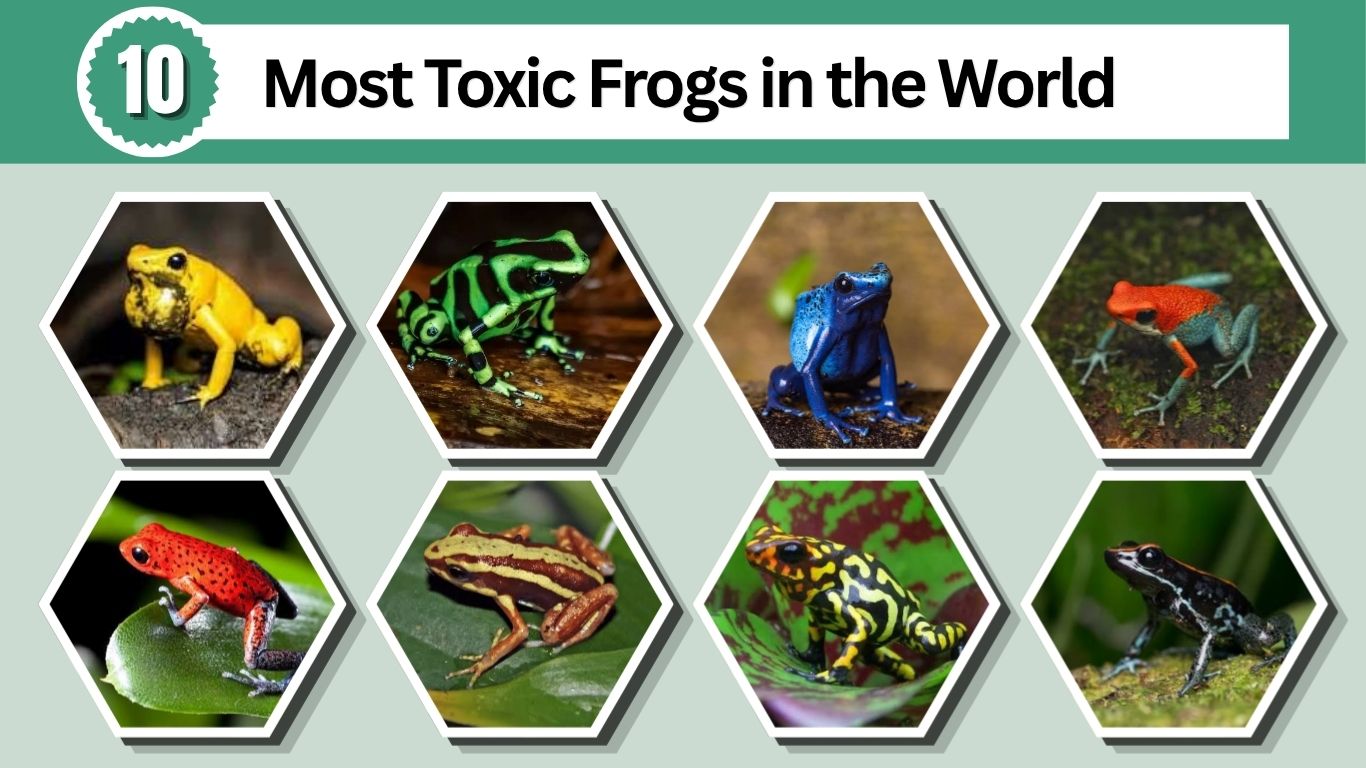
The world’s most toxic frogs are famous for their brilliant warning colors and powerful chemical defenses. Many belong to the poison frog family Dendrobatidae and live in humid forests of Central and South America. Species such as the golden poison frog, black-legged poison frog, and Kokoe poison frog are especially notable for the potent alkaloids found in wild individuals. Their toxicity varies by species, population, and diet, and captive-bred frogs usually lose much of their natural toxicity. Here are 10 of the most remarkable toxic frogs in the world.
1. Golden Poison Frog
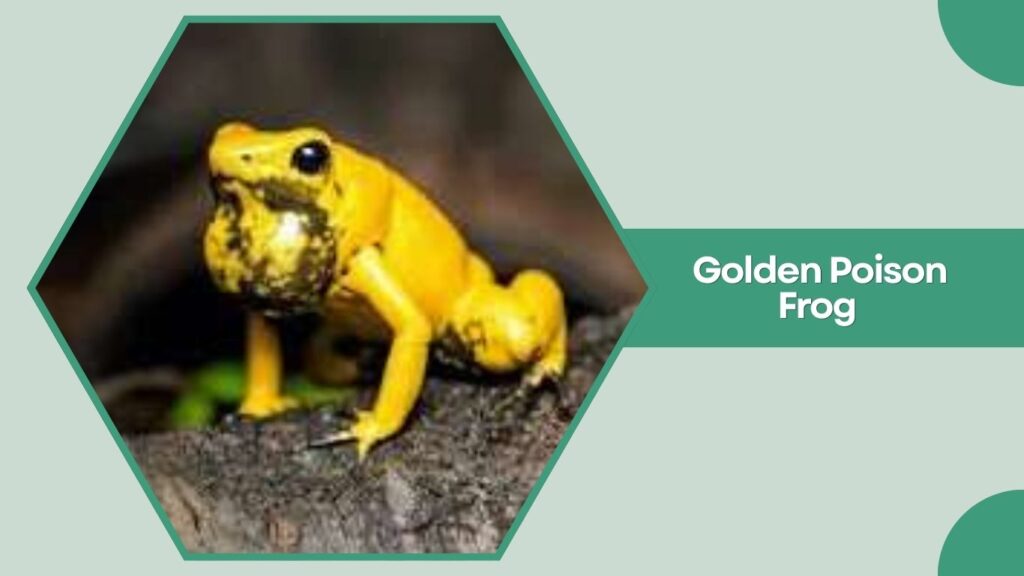
The golden poison frog is widely regarded as the most toxic frog known. Native to the rainforests of western Colombia, Phyllobates terribilis stores extremely potent alkaloids in its skin in the wild. Its brilliant yellow, orange, or greenish coloration acts as a warning to predators. Despite its powerful chemical defenses, this frog is small, active during the day, and strongly dependent on humid rainforest habitat.
Identification
- Scientific name: Phyllobates terribilis
- Usually bright yellow, golden, orange, or mint-green
- Smooth skin and compact body
- Dark eyes
- Adults commonly about 1.5–2 inches long
- Small adhesive toe pads
- Usually lacks prominent dark spotting
- Females are generally slightly larger than males
Habitat and Distribution
Golden poison frogs have a very restricted natural range in the humid lowland forests of Colombia’s Pacific region. They spend most of their time on the forest floor among wet leaf litter, roots, fallen branches, and dense vegetation.
The environment remains warm and extremely humid throughout much of the year. Such conditions are important because amphibians absorb and lose moisture directly through their permeable skin.
Diet and Toxicity
Wild golden poison frogs feed on tiny ants, mites, beetles, and other arthropods. Their extraordinary toxicity is linked to alkaloids obtained through their natural diet.
They can carry batrachotoxins, extremely potent compounds that interfere with normal nerve and muscle function. Captive-bred frogs fed conventional insects generally do not develop the dangerous toxin levels seen in wild individuals.
Behavior and Life Cycle
Golden poison frogs are active mainly during daylight. Males use vocalizations to establish territories and attract females.
Eggs are deposited in protected moist locations. After hatching, tadpoles are transported by an adult to suitable water, where they continue developing until metamorphosis produces small terrestrial frogs.
2. Black-Legged Poison Frog
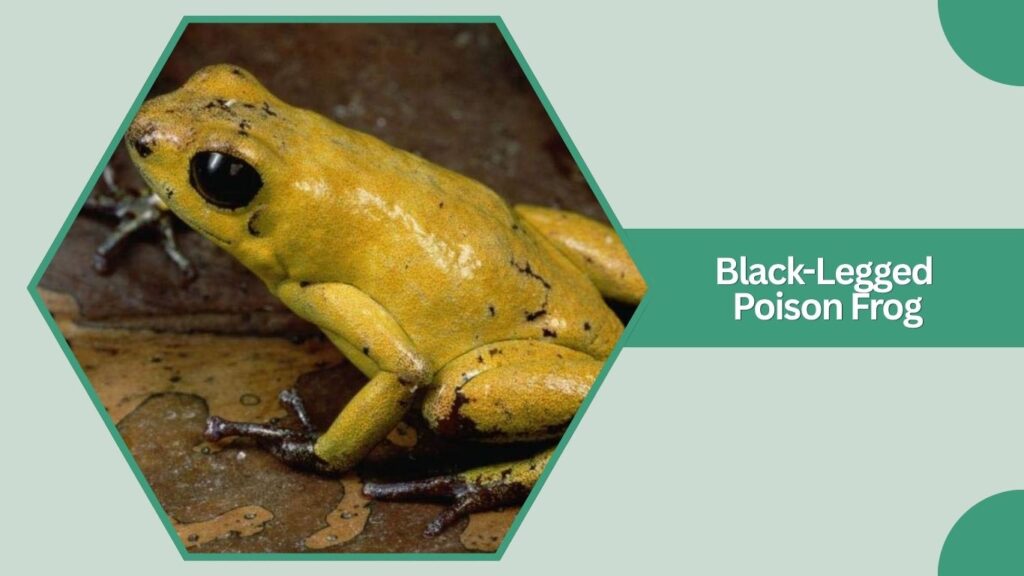
The black-legged poison frog is another highly toxic member of the genus Phyllobates. Scientifically known as Phyllobates bicolor, it is native to western Colombia and resembles the golden poison frog in both appearance and chemical defense. Its yellow or orange upper body contrasts with darker limbs, giving the species its common name. Wild individuals can possess powerful defensive alkaloids, although toxin levels vary.
Identification
- Scientific name: Phyllobates bicolor
- Bright yellow, golden, or orange body
- Legs often darker than the upper body
- Smooth skin
- Dark eyes
- Compact but slightly elongated body
- Adults may approach about 2 inches in length
- Small expanded toe tips
Habitat and Distribution
Black-legged poison frogs occur in humid tropical forests on the western side of Colombia.
They favor wet forest floors containing abundant leaf litter, fallen wood, small streams, and thick vegetation. The frogs generally remain close to moist microhabitats that protect them from dehydration.
Their restricted geographic distribution makes healthy rainforest habitat particularly important to their survival.
Diet and Toxicity
These frogs prey primarily on ants, mites, small beetles, termites, and similar arthropods.
Wild black-legged poison frogs can contain batrachotoxin-related compounds in their skin. These chemicals make them dangerous or unpleasant for many predators.
As with the golden poison frog, diet is crucial. Captive individuals generally lose much of their natural toxicity when their specialized wild prey is absent.
Behavior and Life Cycle
Black-legged poison frogs are diurnal and actively search through leaf litter for small prey. Males communicate using calls during reproduction.
Eggs are laid on damp surfaces outside open water. After they hatch, a parent transports the tadpoles to suitable aquatic habitats. The young remain in water until metamorphosis is complete.
3. Kokoe Poison Frog
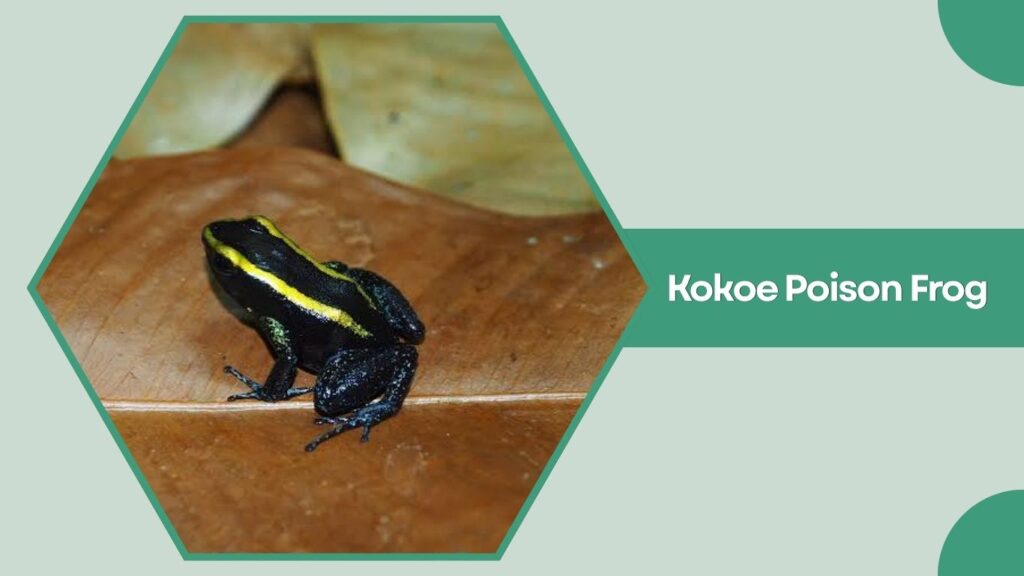
The Kokoe poison frog, Phyllobates aurotaenia, is a striking tropical frog recognized by bright longitudinal stripes against a dark body. It is another member of the highly defended Phyllobates group and occurs mainly in humid forests of western Colombia, with populations extending toward Panama. Its bold coloration serves as an obvious warning that wild individuals possess potent chemical defenses.
Identification
- Scientific name: Phyllobates aurotaenia
- Black or dark brown body
- Yellow, orange, or greenish stripes
- Stripes usually extend along the back
- Dark legs with colored markings
- Slender body
- Smooth skin
- Adults generally around 1–1.5 inches long
- Small adhesive toe pads
Habitat and Distribution
Kokoe poison frogs inhabit extremely humid tropical forests, especially lowland areas with abundant rainfall.
They are usually found close to the forest floor among leaves, moss, roots, fallen branches, and rocks. Streams and consistently wet areas provide important breeding habitat.
Dense vegetation also helps maintain the humid microclimate needed by both adults and developing young.
Diet and Toxicity
Their diet consists largely of ants, mites, termites, small beetles, and other tiny invertebrates.
Wild individuals can accumulate potent alkaloid compounds, including batrachotoxin-related defenses, through their natural food sources.
These skin chemicals discourage many predators. Captive-bred Kokoe poison frogs generally become much less toxic because commonly supplied feeder insects do not contain the same defensive alkaloids.
Behavior and Reproduction
Kokoe poison frogs are active during the day and use visual signals and vocalizations to interact with one another.
During breeding, eggs are placed in damp terrestrial locations. Once they hatch, tadpoles are carried by a parent to water. Development continues there until the young frogs undergo metamorphosis and move onto land.
4. Golfodulcean Poison Frog
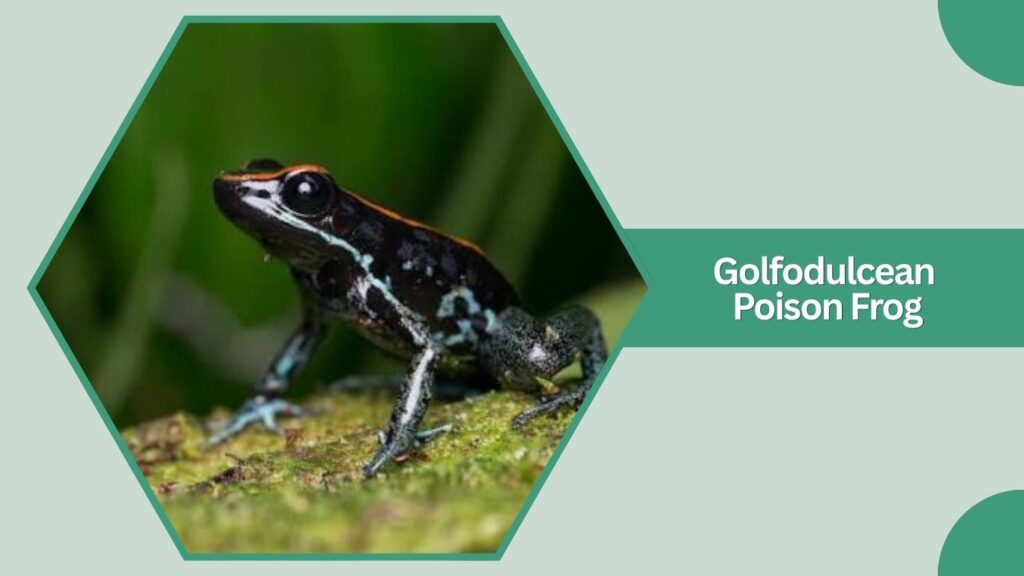
The Golfodulcean poison frog is a colorful species found only in a relatively small part of Costa Rica. Scientifically called Phyllobates vittatus, it has a dark body decorated with bright yellow or orange stripes. Although it belongs to the same genus as some of the world’s most chemically defended frogs, its toxicity is generally less extreme than that of the golden poison frog.
Identification
- Scientific name: Phyllobates vittatus
- Black or dark brown base coloration
- Bright yellow or orange stripes
- Blue-green or turquoise mottling on the limbs
- Slender body
- Smooth skin
- Adults commonly around 1–1.3 inches long
- Distinctive longitudinal markings
Habitat and Distribution
The Golfodulcean poison frog is native to southwestern Costa Rica, particularly around the Golfo Dulce region.
It inhabits humid lowland and foothill rainforest where annual rainfall is high. Adults live close to the forest floor among wet leaves, rocks, exposed roots, and fallen branches.
Streams are particularly important because they provide locations where tadpoles can continue their aquatic development.
Diet and Toxicity
Adults consume ants, mites, beetles, termites, and other small arthropods.
Wild individuals can store defensive alkaloids obtained from their diet. These chemicals make the frogs unpalatable or potentially harmful to predators.
Bright stripes serve as warning coloration, allowing predators to associate their distinctive appearance with chemical defenses.
Captive frogs generally lack substantial toxicity when natural alkaloid-containing prey is absent.
Behavior and Life Cycle
Males call from forest-floor territories to attract females. After mating, eggs are deposited in moist, protected locations.
When the eggs hatch, a parent transports the tadpoles to water. The tadpoles feed and develop there until their limbs form, their tails are absorbed, and they emerge as juvenile terrestrial frogs.
5. Phantasmal Poison Frog
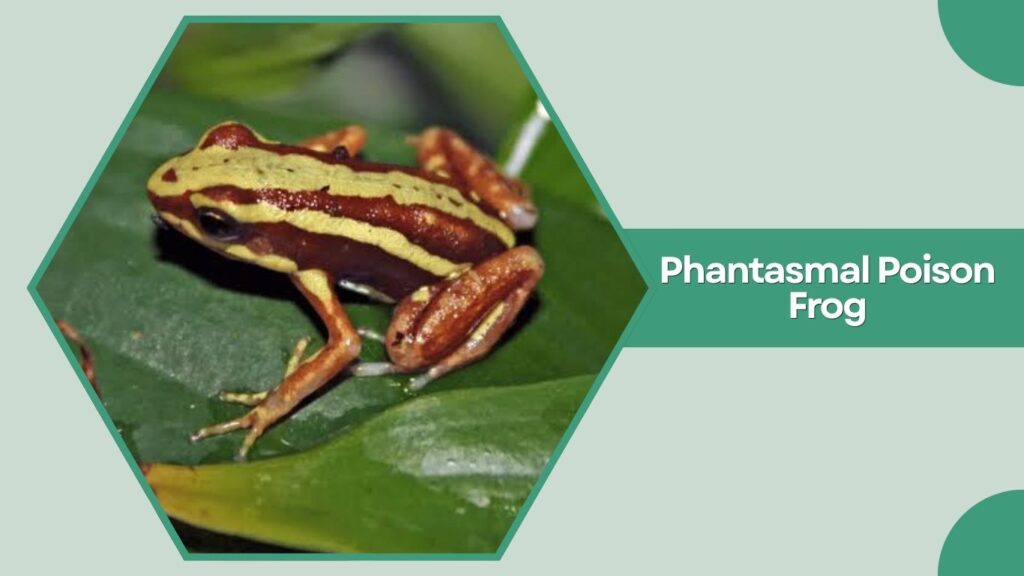
The phantasmal poison frog is a small, brilliantly patterned frog native to western Ecuador. Scientifically known as Epipedobates tricolor, it is especially notable because wild populations have been associated with epibatidine, a powerful alkaloid that attracted scientific attention for its effects on nervous-system receptors. The frog itself uses dietary alkaloids mainly as a defense against predators.
Identification
- Scientific name: Epipedobates tricolor
- Small, slender body
- Reddish, reddish-brown, or orange coloration
- Pale cream, white, or turquoise longitudinal stripes
- Darker legs
- Smooth skin
- Adults commonly around 0.8–1 inch long
- Small rounded toe pads
Habitat and Distribution
Phantasmal poison frogs occur in western Ecuador, where they inhabit humid forests, stream valleys, and moist vegetation.
They frequently remain near the ground but may climb onto low plants. Moisture is particularly important because both adults and eggs are vulnerable to drying.
Populations can occur near streams and other environments that provide suitable aquatic habitat for tadpoles.
Diet and Toxicity
The frogs eat ants, mites, flies, beetles, and other very small invertebrates.
Wild individuals can accumulate alkaloids through their diet. Epibatidine became especially well known because of its powerful biological activity, although toxin profiles can vary between populations and environments.
Captive-bred frogs generally do not retain the same natural chemical defenses when maintained on conventional feeder insects.
Behavior and Reproduction
Males are active vocalizers and call to attract females and advertise breeding territories.
Eggs are deposited on moist land rather than directly in open water. After hatching, a parent carries the tadpoles to suitable aquatic sites.
The tadpoles continue developing until metamorphosis, eventually leaving the water as miniature versions of the adults.
6. Strawberry Poison Dart Frog
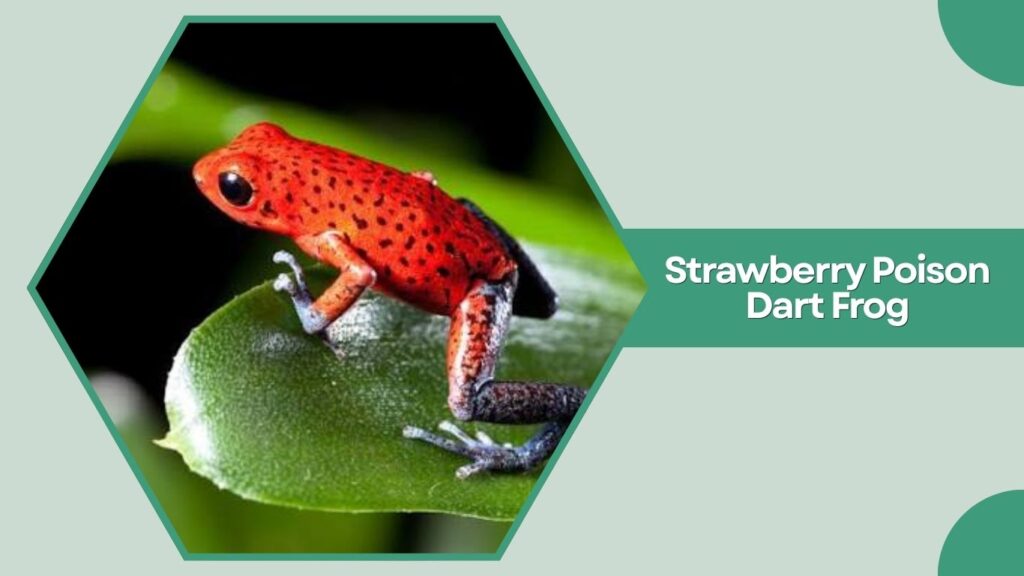
The strawberry poison dart frog is a small but remarkably colorful species native to Central America. Scientifically known as Oophaga pumilio, it is famous for extreme variation in color among different populations. Although bright red with blue or dark legs is one of the best-known forms, individuals may also be orange, yellow, green, blue, or patterned. Wild frogs obtain defensive alkaloids from their natural diet.
Identification
- Scientific name: Oophaga pumilio
- Usually about 0.7–1 inch long
- Bright red, orange, yellow, green, or blue coloration
- Some populations have blue or black legs
- Smooth skin
- Compact body
- Prominent eyes
- Small adhesive toe pads
Habitat and Distribution
Strawberry poison dart frogs occur from Nicaragua through Costa Rica into Panama. They primarily inhabit humid lowland rainforests, although some populations also occupy plantations, secondary forests, and other moist habitats.
Adults spend considerable time among leaf litter and low vegetation. Bromeliads and other plants capable of holding rainwater are particularly important because females use these tiny pools as nurseries for tadpoles.
Diet and Toxicity
Their diet consists largely of tiny ants and mites, along with other small arthropods. Certain prey provide alkaloids that wild frogs store in their skin.
These chemical defenses vary geographically because different populations have access to different prey.
Captive-bred strawberry poison frogs typically lose their natural toxicity when fed ordinary fruit flies and other feeder insects.
Reproduction and Parental Care
The species has remarkable maternal care. After eggs hatch, the female carries tadpoles individually to water-filled plant cavities.
She later returns periodically to lay unfertilized eggs, which the tadpoles consume as their primary food. This specialized behavior allows the young to develop in very small pools with relatively few predators.
7. Harlequin Poison Frog
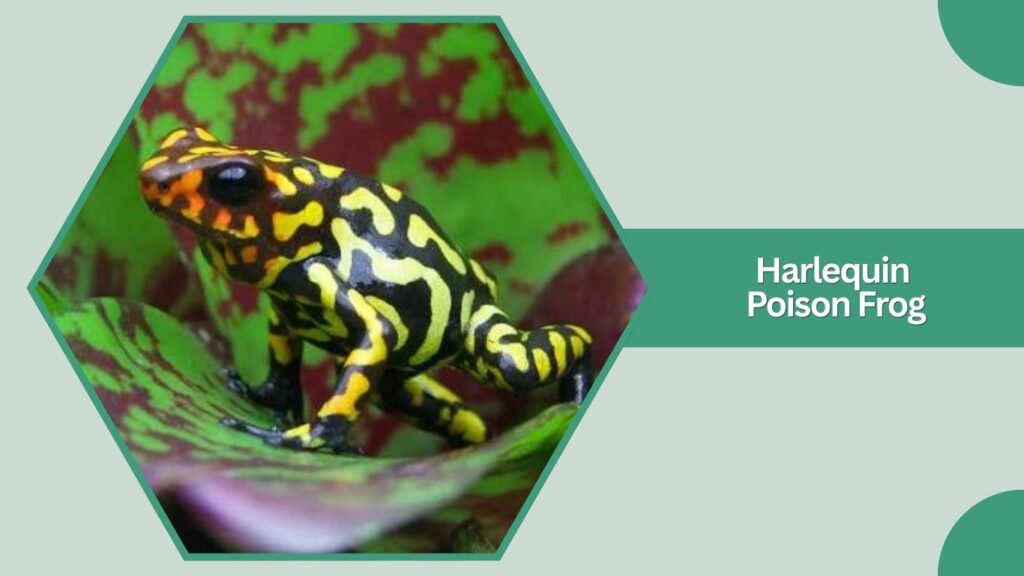
The harlequin poison frog, Oophaga histrionica, is a striking Colombian species known for its dramatic and highly variable warning colors. Individuals may display combinations of black, red, orange, yellow, or cream. Different populations can look so unlike one another that they may appear to be separate species at first glance. Wild frogs use skin alkaloids as an effective chemical defense.
Identification
- Scientific name: Oophaga histrionica
- Dark brown or black base coloration
- Bright red, yellow, orange, or cream markings
- Highly variable patterns
- Compact body
- Strong hind legs
- Smooth to slightly textured skin
- Adults commonly around 1–1.5 inches long
Habitat and Distribution
Harlequin poison frogs are native to humid forests of western Colombia.
They usually live close to the forest floor among wet leaves, exposed roots, fallen branches, and low vegetation. High humidity is essential because both adults and developing eggs depend on consistently moist conditions.
Small water-filled plants provide important breeding sites for their tadpoles.
Diet and Toxicity
Adults eat ants, mites, beetles, and other tiny forest arthropods. Their prey provides many of the alkaloids responsible for the frogs’ chemical defense.
Bright body patterns serve as warning coloration to potential predators.
Captive animals generally become far less toxic because commercially raised feeder insects do not contain the same alkaloids found in their natural diet.
Reproduction and Parental Care
Females provide substantial care to their offspring. Tadpoles are transported to small pools, often inside plants.
The mother later returns and deposits unfertilized eggs for the tadpoles to eat. This specialized egg-feeding behavior is characteristic of several Oophaga species.
8. Granular Poison Frog
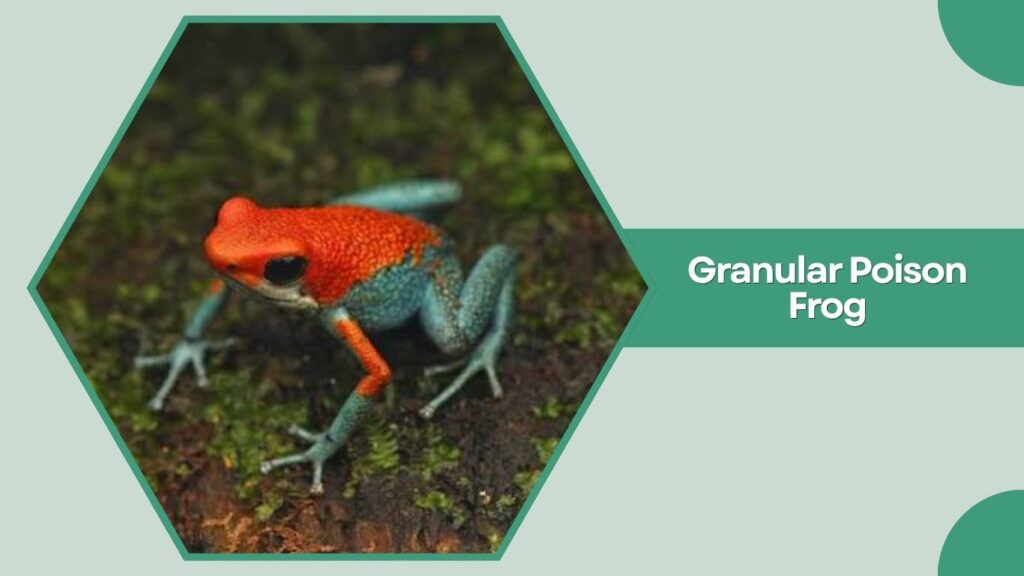
The granular poison frog is a small species scientifically known as Oophaga granulifera. It gets its name from the slightly granular texture of its skin. Populations can vary dramatically in color, ranging from vivid red and orange to greenish forms. Native to southern Central America, this frog uses bright coloration and dietary alkaloids to discourage predators.
Identification
- Scientific name: Oophaga granulifera
- Usually around 0.7–1 inch long
- Red, orange, or green upper coloration
- Darker legs and lower body
- Slightly granular skin texture
- Rounded snout
- Small compact body
- Enlarged toe pads
Habitat and Distribution
Granular poison frogs occur primarily in southwestern Costa Rica and neighboring western Panama.
They inhabit humid lowland and foothill forests where moisture remains high. Adults can be found among leaf litter, roots, low plants, and areas near small streams.
The frogs depend on intact humid microhabitats because prolonged dry conditions can interfere with activity and reproduction.
Diet and Toxicity
Their diet primarily includes ants, mites, springtails, and other tiny arthropods.
Wild individuals accumulate defensive alkaloids from their food. These compounds, combined with bright warning colors, discourage many predators from attempting to eat them.
As with other poison frogs, captive individuals generally lose most of their natural toxicity when the alkaloid-rich prey is removed from their diet.
Reproduction and Behavior
Males call to attract females and may defend small breeding territories.
After eggs hatch, females carry tadpoles to small pools of water held in plants. Mothers later return to provide unfertilized eggs as food.
This high level of parental investment improves the survival of tadpoles developing in nutrient-poor pools.
9. Dyeing Poison Dart Frog
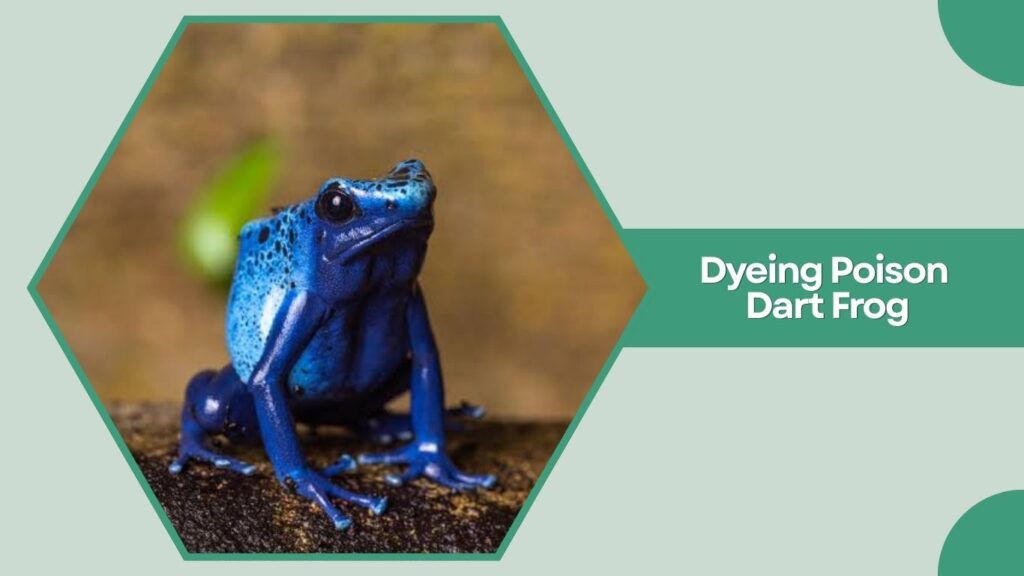
The dyeing poison dart frog, Dendrobates tinctorius, is one of the largest and most visually diverse poison frogs. Its coloration may combine black with blue, yellow, white, or cream. Numerous geographically distinct forms exist, producing extraordinary variation in appearance. The famous blue poison dart frog is generally regarded as a color form within this species.
Identification
- Scientific name: Dendrobates tinctorius
- Usually around 1.2–2 inches long
- Black base coloration
- Yellow, blue, white, or cream markings
- Strong hind legs
- Smooth skin
- Large body compared with many poison frogs
- Prominent adhesive toe pads
Habitat and Distribution
Dyeing poison dart frogs inhabit northeastern South America, including areas of Suriname, French Guiana, Guyana, and northern Brazil.
They live mainly in humid tropical rainforest and spend considerable time on the forest floor.
Leaf litter, fallen logs, roots, rocky areas, and small water sources provide shelter, hunting grounds, and breeding sites.
Diet and Toxicity
Wild frogs consume ants, mites, termites, beetles, and other tiny arthropods. Some prey species provide alkaloids that are accumulated in the frogs’ skin.
Their dramatic coloration advertises these chemical defenses.
Captive-bred dyeing poison dart frogs are generally considered effectively non-toxic because their feeder diet does not contain the necessary alkaloids.
Behavior and Reproduction
Adults are active during daylight and may defend feeding or breeding territories.
Eggs are laid in moist protected places. After hatching, one parent transports tadpoles to small pools where they develop.
Males and females may occasionally show territorial aggression toward other frogs of the same species.
10. Green-and-Black Poison Dart Frog
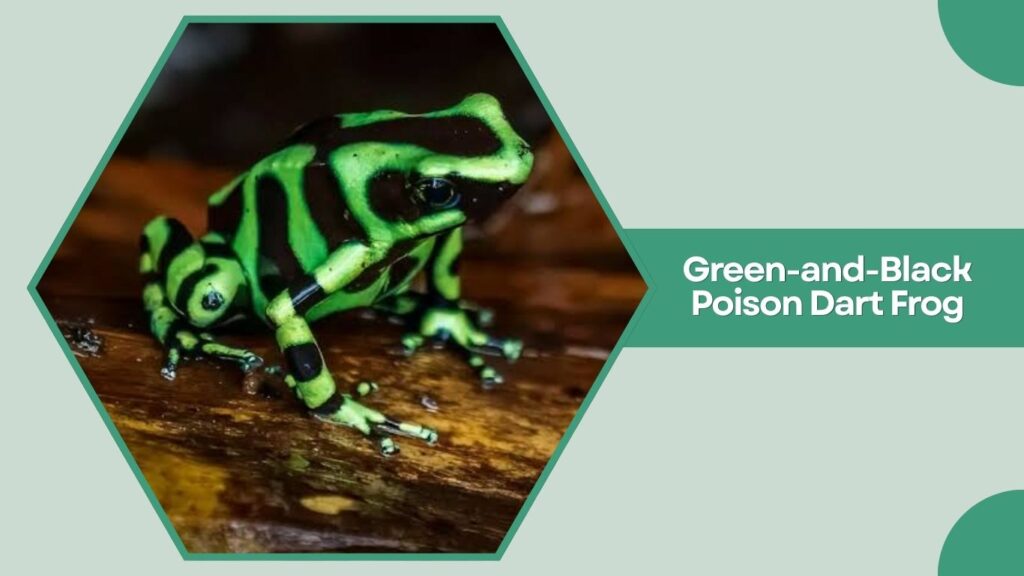
The green-and-black poison dart frog is a widespread and easily recognized species scientifically known as Dendrobates auratus. Its dark body is covered with bright green, turquoise, blue, or occasionally yellow markings. Native to Central America and northwestern South America, it has also been introduced to some areas outside its original range. Wild individuals possess dietary alkaloids that provide protection against predators.
Identification
- Scientific name: Dendrobates auratus
- Black or dark brown base coloration
- Green, turquoise, blue, or yellow markings
- Irregular bands, spots, or patches
- Smooth skin
- Compact body
- Adults commonly around 1–1.7 inches long
- Small adhesive toe pads
Habitat and Distribution
Green-and-black poison dart frogs naturally occur from Nicaragua and Costa Rica through Panama into parts of Colombia.
They favor humid tropical forests but may also survive in disturbed forest environments where sufficient shade and moisture remain.
Adults spend much of their time near the forest floor among leaf litter, rocks, fallen trees, and low-growing plants.
Diet and Toxicity
They feed on tiny ants, mites, termites, beetles, and other small invertebrates.
Wild individuals obtain defensive alkaloids through their diet, making their skin unpleasant or harmful to some predators.
Captive-bred frogs generally lack these significant defensive chemicals even though they retain their striking warning coloration.
Behavior and Life Cycle
These frogs are mainly diurnal. Males produce calls during breeding periods and may defend small territories.
Eggs are deposited in moist locations outside open water. Once tadpoles hatch, a parent transports them to small water sources where they continue developing.
After metamorphosis, juveniles leave the water and begin hunting small terrestrial arthropods.
FAQs
What is the most toxic frog in the world?
The golden poison frog, Phyllobates terribilis, is widely considered the most toxic known frog. Wild individuals can contain exceptionally powerful batrachotoxins in their skin.
Are poison dart frogs poisonous to touch?
Some wild species can carry potent skin toxins, so wild poison frogs should never be handled unnecessarily. Captive-bred individuals generally lack dangerous toxin levels because their diets do not contain the same alkaloid-rich prey.
Why are toxic frogs brightly colored?
Their bright coloration is known as aposematism. It warns predators that the frog may be toxic, distasteful, or otherwise dangerous to eat.
Do poison frogs make their own toxins?
Many poison frogs obtain important defensive alkaloids from ants, mites, and other arthropods in their natural diet. They then store or modify these compounds in their skin.
Are all poison dart frogs equally toxic?
No. Toxicity differs greatly among species, populations, locations, and diets. Members of Phyllobates, particularly the golden poison frog, are associated with some of the strongest toxins, while many other species possess considerably weaker chemical defenses.
