
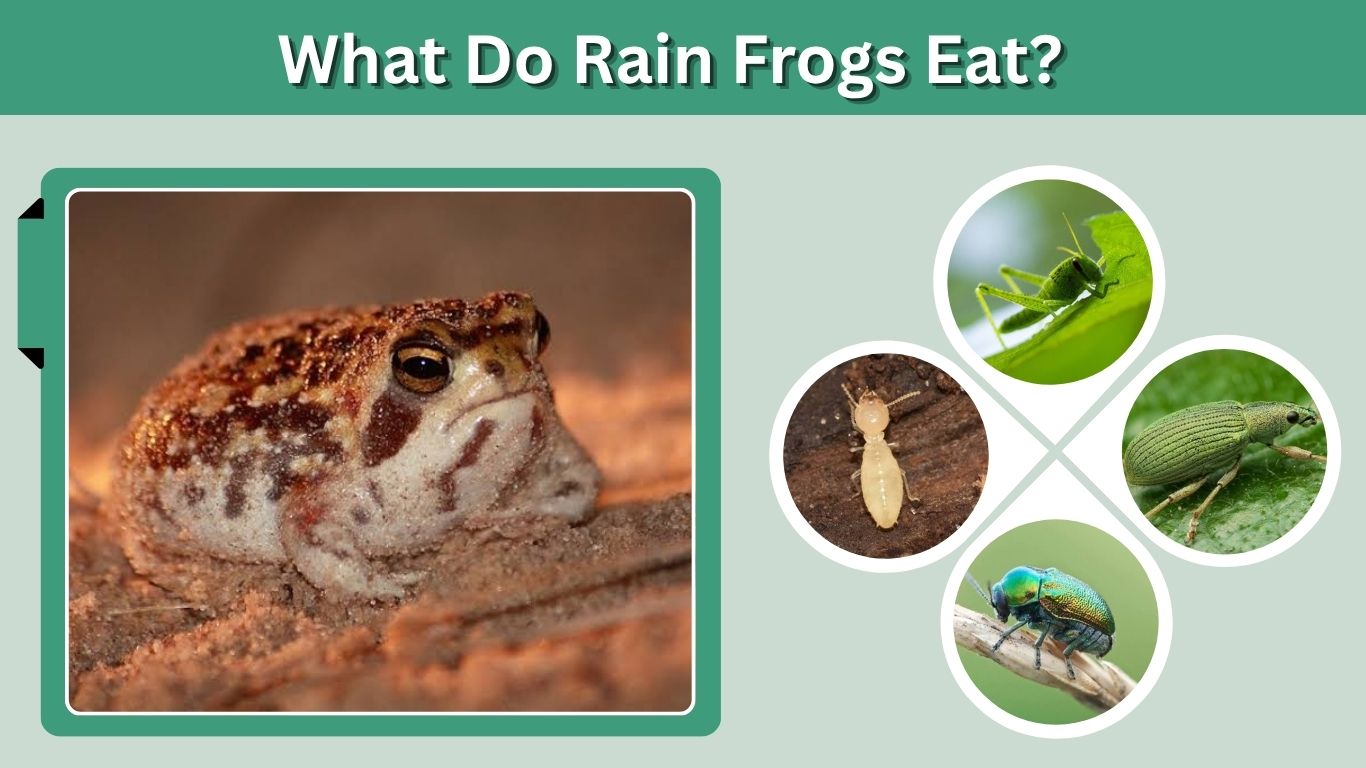
Rain frogs are small, burrowing African frogs that mainly eat insects and other tiny invertebrates. Ants and termites are especially important for several species, while beetles, caterpillars, worms, woodlice, and other arthropods add variety to their diet. Because rain frogs spend much of the year underground, they often emerge after rainfall to take advantage of abundant surface prey. Diet varies between species and habitats: Common Rain Frogs favor ants and termites, while forest-dwelling species may consume a wider assortment of soil and leaf-litter animals.
What Do Rain Frogs Eat?
True rain frogs in the genus Breviceps are primarily insectivores. They hunt small animals found on the soil surface, among leaf litter, or close to their burrows.
Studies of Breviceps diets have recorded ants, termites, beetles, caterpillars, amphipods, isopods, juvenile millipedes, and other small arthropods. Common Rain Frogs can consume particularly large numbers of ants and termites when these insects are abundant.
How Do Rain Frogs Find Food?
Rain frogs usually spend dry periods underground. After rainfall raises humidity and softens the soil, they emerge to forage.
Rather than chasing prey over long distances, they search near ground level and take small invertebrates that they can swallow whole. Seasonal insect activity can strongly influence what they eat.
10 Best Foods Rain Frogs Eat
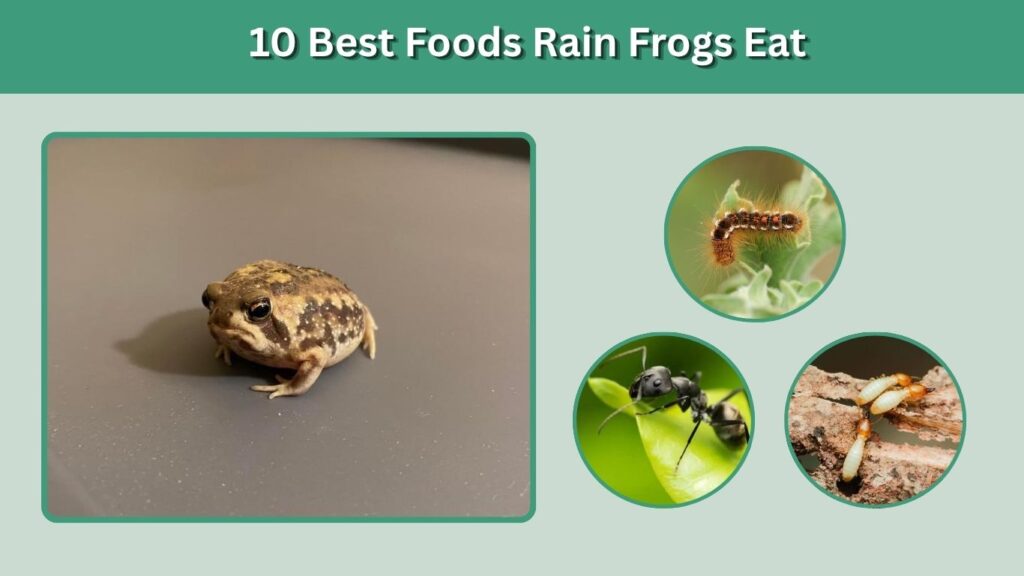
These are among the most important natural foods recorded for rain frogs. Individual species do not necessarily eat all ten equally often.
1. Termites
Termites are one of the most important foods for several rain frog species, particularly the Common Rain Frog (Breviceps adspersus).
A study examining 96 Common Rain Frogs found that recognizable stomach contents were dominated by termites and ants. Winged termites alone accounted for about 48% of identified prey, while worker and soldier termites contributed another 19%.
Rain frog emergence can coincide with seasonal termite activity, providing an abundant food supply.
2. Ants
Ants are another staple prey. Common Rain Frogs consume large numbers of small and medium-sized ants, including worker ants.
They are particularly well suited for frogs because they are abundant at ground level and can occur close to burrows. Desert Rain Frog scat analysis has also confirmed ants in the diet.
3. Beetles
Beetles provide a larger, protein-rich meal.
Beetles have been recorded in several Breviceps diets. Research on Desert Rain Frogs identified at least four beetle species among their prey, demonstrating that the species does more than simply feed on termites.
Smaller beetles and soft-bodied stages are likely easier for compact rain frogs to swallow.
4. Caterpillars
Caterpillars are soft-bodied insect larvae that some rain frogs consume when they encounter them.
Research examining forest-associated Breviceps verrucosus found caterpillars among a broad range of stomach contents. Because caterpillars are relatively soft and energy-rich, they can provide substantial food compared with very tiny prey.
5. Moths
Adult moths are another potential food source when they rest or move close to ground level.
Broader biological work on the genus Breviceps lists moths among the small arthropods these frogs consume after emerging during favorable wet conditions.
6. Woodlice
Woodlice, or terrestrial isopods, live in damp soil, beneath logs, and among decomposing leaves—the same environments used by many rain frogs.
Isopods have been recorded in the stomachs of forest-dwelling rain frogs. Their abundance in moist leaf litter makes them readily available prey.
7. Amphipods
Small terrestrial amphipods can form part of the diet of rain frogs living in moist forest environments.
Studies of Breviceps verrucosus found amphipods among the most commonly represented arthropods in examined stomachs. This shows how habitat affects diet: a forest rain frog may eat quite differently from a savanna species dominated by termites.
8. Juvenile Millipedes
Small, young millipedes are occasionally eaten by rain frogs.
These slow-moving soil animals share the humid leaf-litter environment favored by several Breviceps species. Juvenile myriapods have been identified in stomach-content studies of forest rain frogs.
Large millipedes, however, would generally be unsuitable because rain frogs swallow their food rather than tearing it apart.
9. Worms
Earthworms and other small worms can also become prey.
SANBI describes the Cape Rain Frog’s diet as consisting mainly of worms, termites, and other insects. Worms are particularly accessible when rainfall brings them closer to the soil surface.
10. Other Small Arthropods
Rain frogs are capable of taking additional tiny soil animals when available. Records for the genus include various small arthropods, and Common Rain Frogs have even been documented consuming pseudoscorpions.
Their diet should therefore be viewed as insect- and arthropod-focused but flexible according to habitat and seasonal availability.
What Do Desert Rain Frogs Eat?
The Desert Rain Frog (Breviceps macrops) lives in coastal dunes of Namibia and South Africa, where food availability differs from forest and savanna habitats.
Desert Rain Frog Diet
Direct analysis of scat has confirmed beetles and ants in its diet. At night, Desert Rain Frogs emerge from their burrows and travel over the sand searching for food. Their tracks have been observed around dung heaps, probably because these areas attract numerous insects.
This species should therefore be described as a small-invertebrate predator rather than strictly a termite specialist.
What Do Black Rain Frogs Eat?
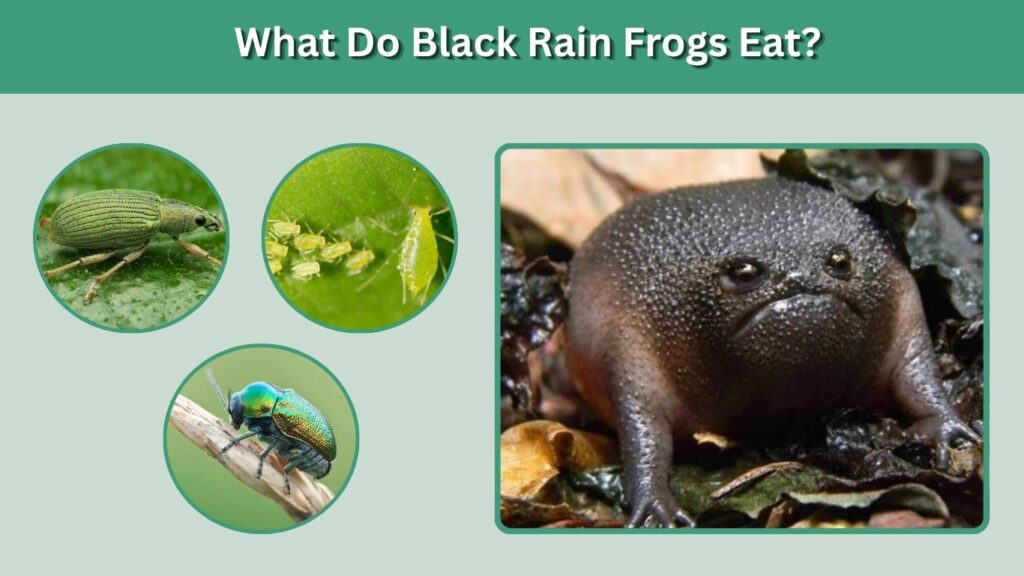
The Black Rain Frog (Breviceps fuscus) lives in South African forest habitats rather than coastal desert dunes. Like related species, it is an insectivore that hunts small animals associated with soil and leaf litter.
Black Rain Frog Diet
Its likely diet includes small insects and other appropriately sized invertebrates. Because detailed species-specific feeding studies are limited, it is safer not to claim that one particular prey item dominates the Black Rain Frog’s diet.
Its forest environment provides beetles, ants, larvae, worms, isopods, and numerous other possible prey animals.
What Do Cape Rain Frogs Eat?
The Cape Rain Frog (Breviceps gibbosus) has one of the better-described diets among rain frogs.
Main Foods
SANBI reports that Cape Rain Frogs eat mainly worms, termites, and other insects. They emerge during wet conditions to feed and then spend much of their time underground.
By consuming soil-dwelling insects, they contribute to the ecological food web while also serving as prey for larger animals.
What Do Common Rain Frogs Eat?
The Common or Bushveld Rain Frog (Breviceps adspersus) is particularly strongly associated with ants and termites.
Ant and Termite Specialist
In one stomach-content study:
- 48% of recognizable prey were winged termites
- 27% were worker ants
- 19% were worker and soldier termites
The frogs shifted toward different termite and ant types as seasonal availability changed.
This makes termites and ants the best-documented foods for this species.
Do Rain Frogs Eat Crickets?
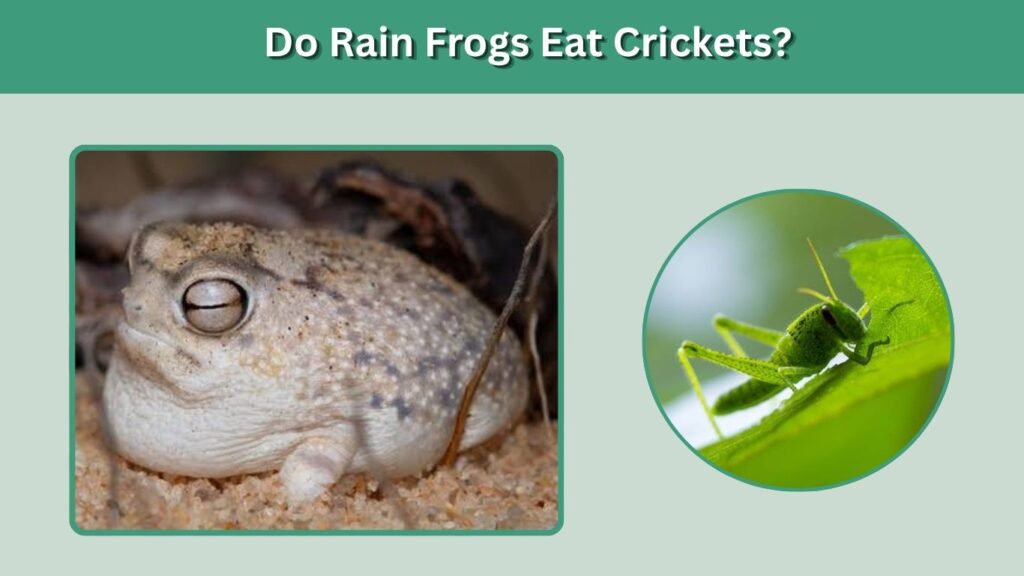
Rain frogs are capable of eating appropriately sized insects, so a small cricket falls within the general type of prey they can capture.
However, wild rain frog diets are much better documented for ants, termites, beetles, and other naturally occurring soil arthropods. Their nutritional needs should not be simplified to a cricket-only diet.
How Much Do Rain Frogs Eat?
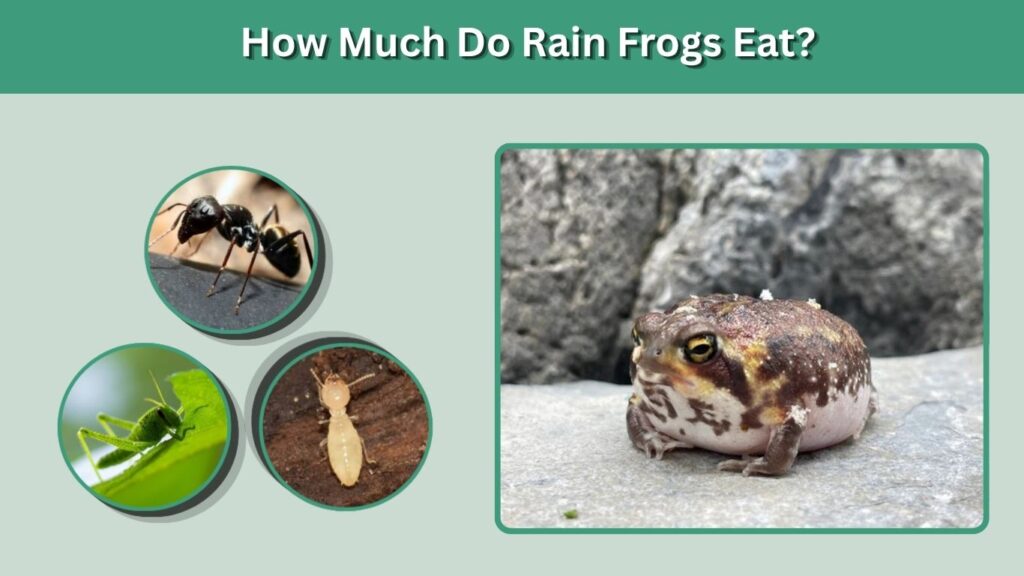
Rain frogs can take advantage of short periods when insects are extremely abundant.
Common Rain Frogs have surprisingly expandable stomachs. Research found that some individuals consumed enormous quantities of ants and termites during favorable feeding periods. One analysis measured a full stomach volume more than ten times its empty volume.
This feeding strategy makes sense for an animal that may spend long dry periods underground.
What Eats Rain Frogs?
Rain frogs are predators of insects, but they also form part of the diet of larger animals.
Rain Frog Predators
Known or likely predators include snakes, lizards, birds, and some mammals. SANBI specifically reports lizards, snakes, and bush pigs among predators of Cape Rain Frogs.
Rain frogs defend themselves partly by inflating their rounded bodies, making themselves appear larger and more difficult for predators to swallow.
Burrowing is another major defense. Spending most of the day underground greatly reduces exposure to predators.
FAQs
1. What is a rain frog’s favorite food?
There is no universal favorite for every species, but ants and termites are especially important for several Breviceps rain frogs. Common Rain Frogs consume particularly large quantities of both.
2. Do rain frogs eat termites?
Yes. Termites are among the best-documented rain frog foods. They make up a major portion of the Common Rain Frog’s natural diet.
3. What does a Desert Rain Frog eat?
Direct dietary evidence shows that Desert Rain Frogs eat ants and several types of beetles, along with other small invertebrates encountered while foraging.
4. What does a Black Rain Frog eat?
Black Rain Frogs are insectivorous and feed on small terrestrial invertebrates associated with forest soil and leaf litter.
5. Do snakes eat rain frogs?
Yes, some snakes prey on rain frogs. Snakes, lizards, and certain mammals are documented predators of Cape Rain Frogs and likely represent important threats to other rain frog species as well.
