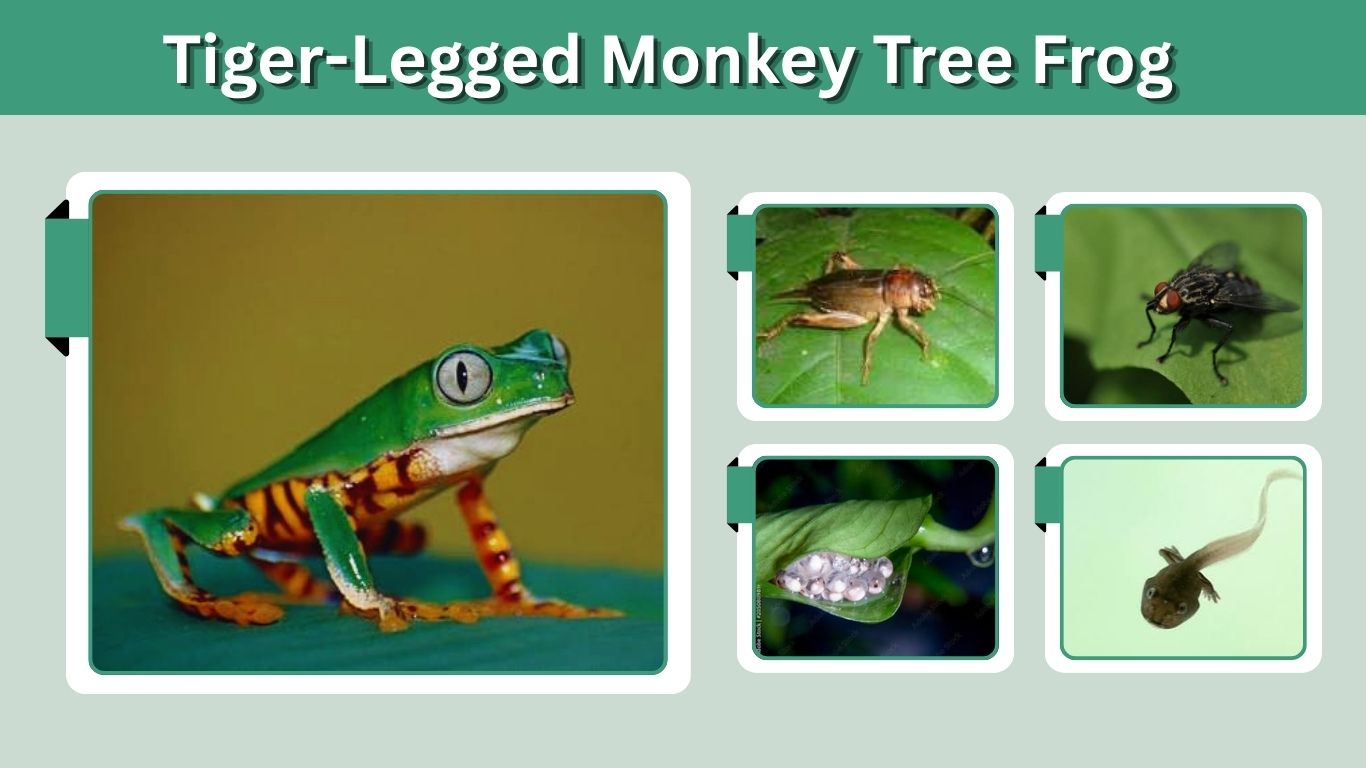
The tiger-legged monkey tree frog is a fascinating amphibian recognized for its bright green body, orange-and-black striped legs, and unusual climbing behavior. Native to South America, this colorful frog spends much of its life among branches and tropical vegetation. Unlike many frogs that primarily jump, tiger-legged monkey frogs often move slowly by grasping branches with their specialized feet. Their striking appearance makes them popular among amphibian enthusiasts. Understanding their natural habitat, size, diet, lifespan, breeding behavior, and care requirements is essential for keeping these remarkable frogs healthy.
What Is a Tiger-Legged Monkey Tree Frog?
The tiger-legged monkey tree frog (Pithecopus hypochondrialis) is a small, arboreal amphibian belonging to the monkey frog group. It is also commonly known as the orange-legged leaf frog or tiger-leg monkey frog.
These frogs are recognized by their bright coloration, slow climbing movements, and remarkable adaptations for living in vegetation.
Identification and Physical Characteristics
Tiger-legged monkey tree frogs possess several distinctive physical characteristics that make identification relatively straightforward.
- Body color: Bright green to olive-green upper body, sometimes with a bluish tint.
- Leg markings: Orange or yellow-orange inner legs featuring dark, tiger-like bands.
- Eyes: Large, prominent eyes with vertical pupils.
- Feet: Specialized grasping digits that help them climb vegetation.
- Skin: Smooth skin with protective secretions that help reduce water loss.
- Body shape: Slender limbs, a relatively compact body, and a narrow head.
Their colorful leg markings are often concealed when resting. These contrasting patterns become more visible as the frogs move through vegetation.
Tiger-Legged Monkey Tree Frog Size and Lifespan
Adult males generally measure approximately 1.5–2 inches, while females can reach 2–2.5 inches in length.
Under suitable captive conditions, these frogs may live around 6–10 years or longer. Lifespan varies with genetics, feeding, habitat maintenance, and overall health.
Where Do Tiger-Legged Monkey Tree Frogs Live?
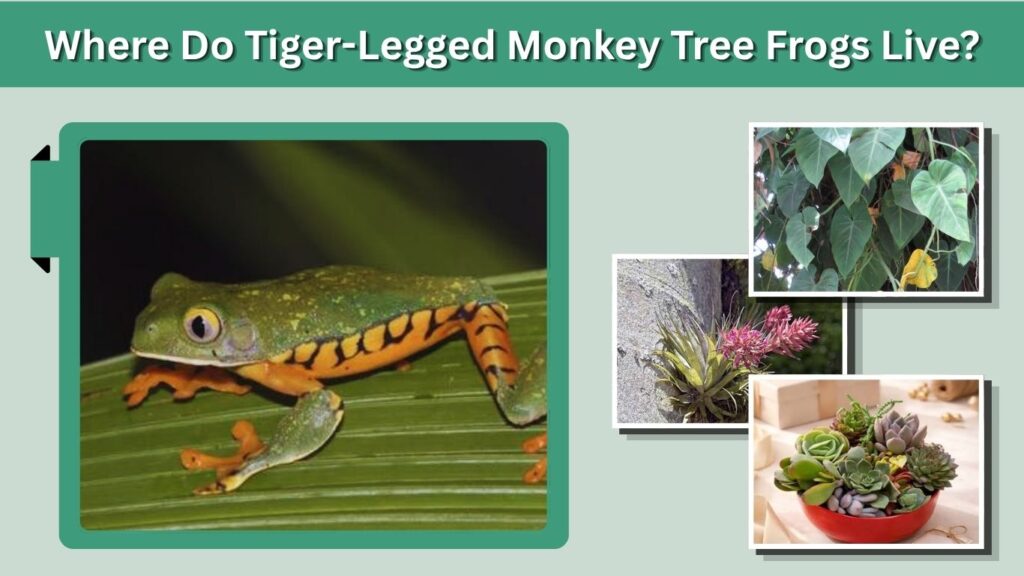
Tiger-legged monkey tree frogs originate from tropical and subtropical regions of South America. They inhabit forests, shrublands, and areas with seasonal rainfall.
Their natural environments contain climbing vegetation, sheltered resting places, and suitable breeding sites near temporary freshwater pools.
Natural Habitat and Geographic Distribution
Pithecopus hypochondrialis occurs in countries including Brazil, Colombia, Venezuela, Guyana, Suriname, and French Guiana.
These frogs often occupy shrubs, trees, and vegetation near seasonal wetlands. They can survive in habitats with varying rainfall conditions, provided moisture and suitable shelter remain available.
Their ability to reduce moisture loss through skin secretions helps them tolerate conditions that would be challenging for some other tree frogs.
Behavior and Daily Activity
Tiger-legged monkey tree frogs are primarily nocturnal. They generally remain motionless during daylight hours and become active after sunset.
Instead of constantly jumping, they use deliberate walking and climbing movements. Their grasping feet allow them to move between branches with remarkable control.
Males also produce vocalizations during breeding periods, particularly when environmental conditions become favorable.
Tiger-Legged Monkey Tree Frog Care Guide
Proper tiger-legged monkey tree frog care requires a suitable enclosure, stable temperature, balanced humidity, and a nutritious diet.
Although these amphibians can adapt to captivity, they are sensitive to poor ventilation, dehydration, excessive heat, and unsanitary conditions. Creating a naturalistic environment supports their normal behaviors and general well-being.
Best Vivarium Setup
A vertically oriented terrarium provides essential climbing opportunities. An enclosure measuring approximately 18 × 18 × 24 inches is a practical starting point for one or two adult frogs.
Essential enclosure features include:
- Climbing branches: Provide secure branches and natural cork bark.
- Live plants: Include pothos, philodendrons, and other amphibian-safe vegetation.
- Substrate: Use suitable moisture-retaining substrate or damp paper towels.
- Water dish: Provide fresh, shallow, dechlorinated water.
- Ventilation: Maintain good airflow with a secure screen-covered section.
- Hiding areas: Include dense foliage and protected resting spaces.
Provide sufficient room for each animal, especially when keeping several frogs together.
Temperature, Humidity, and Lighting
Tiger-legged monkey tree frogs require warm temperatures, moderate-to-high humidity, and a consistent day-night lighting cycle.
| Care Requirement | Recommended Range |
| Daytime temperature | 74–82°F (23–28°C) |
| Nighttime temperature | 68–75°F (20–24°C) |
| General humidity | 60–70% |
| Temporary humidity after misting | Up to approximately 90% |
| Light cycle | 10–12 hours daily |
| UVB lighting | Appropriate low-level UVB |
Keep the enclosure well ventilated and avoid prolonged temperatures above 85°F. A thermostat and digital hygrometer make environmental monitoring easier.
Occasional misting helps maintain humidity, but the enclosure should not remain continuously saturated.
What Do Tiger-Legged Monkey Tree Frogs Eat?
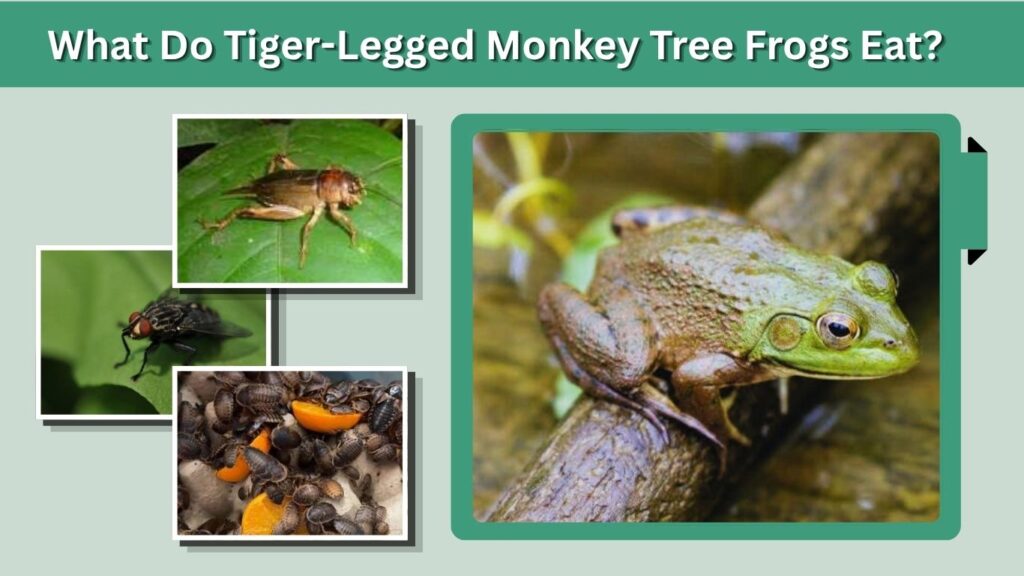
Tiger-legged monkey tree frogs are insectivorous amphibians that consume various small invertebrates.
In the wild, they search vegetation for moving prey, primarily during nighttime activity. Captive frogs benefit from a varied selection of appropriately sized insects supplemented with essential vitamins and minerals.
Best Foods for Tiger-Legged Monkey Tree Frogs
Suitable feeder insects include:
- Small crickets: A practical staple when appropriately gut-loaded.
- Dubia roaches: Provide nutritional variety and useful protein.
- Houseflies: Encourage natural hunting and climbing behavior.
- Small moths: Can be offered when safely captive-raised.
- Fruit flies: Suitable for young frogs and particularly small individuals.
- Waxworms: Occasional treats rather than regular staple foods.
Avoid wild-caught insects because they may contain pesticides, parasites, or other harmful substances.
Feeding Schedule and Supplements
Young tiger-legged monkey frogs generally require frequent feeding, often daily. Healthy adults may eat approximately three or four times weekly.
Offer prey after sunset when the frogs naturally become active. Use appropriate calcium and vitamin supplements based on UVB exposure and veterinary guidance.
Monitor body condition because overfeeding and nutritional deficiencies can cause health problems.
Tiger-Legged vs. Super Tiger-Legged Monkey Tree Frogs
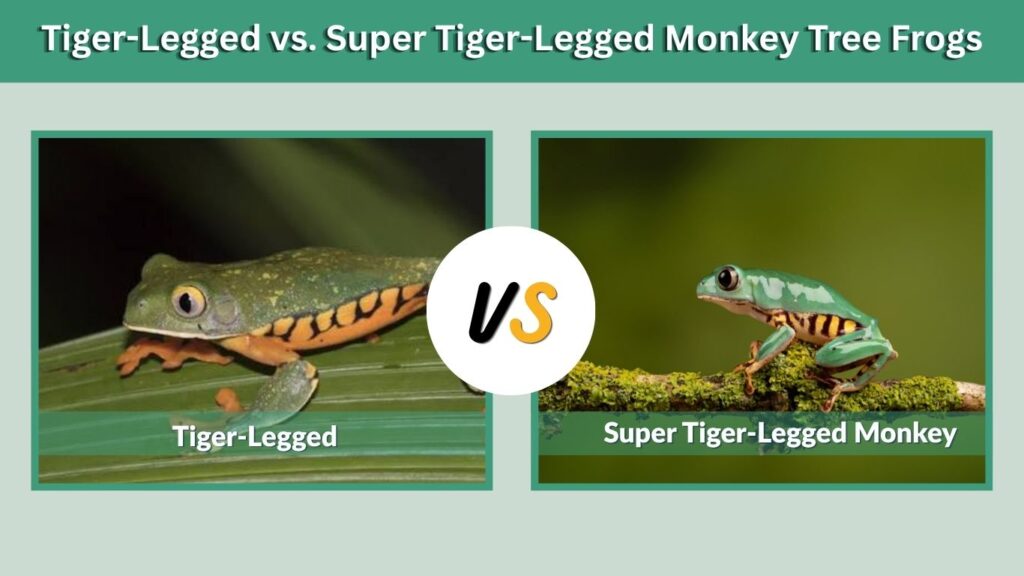
Tiger-legged and super tiger-legged monkey tree frogs look similar, but they are generally different species.
The super tiger-legged monkey tree frog, Callimedusa tomopterna, is especially known for its extensive orange-and-black markings. Both species belong to the leaf and monkey frog group, but their physical characteristics and habitat preferences differ.
Main Differences Between the Two Species
| Feature | Tiger-Legged Monkey Frog | Super Tiger-Legged Monkey Frog |
| Scientific name | Pithecopus hypochondrialis | Callimedusa tomopterna |
| Average adult size | About 1.5–2.5 inches | About 1.5–2.4 inches |
| Body appearance | Relatively compact | More angular and streamlined |
| Stripe pattern | Often interrupted along the sides | Extensive, continuous flank bands |
| Heels | Generally rounded | Distinctive angular projections |
| Habitat | Forests and seasonally wet areas | Humid tropical forest |
The super tiger-legged monkey tree frog often displays more extensive orange-and-black striping across its flanks.
Scientific identification is important because common names are inconsistent in the pet trade.
Tiger-Legged Monkey Tree Frog Breeding
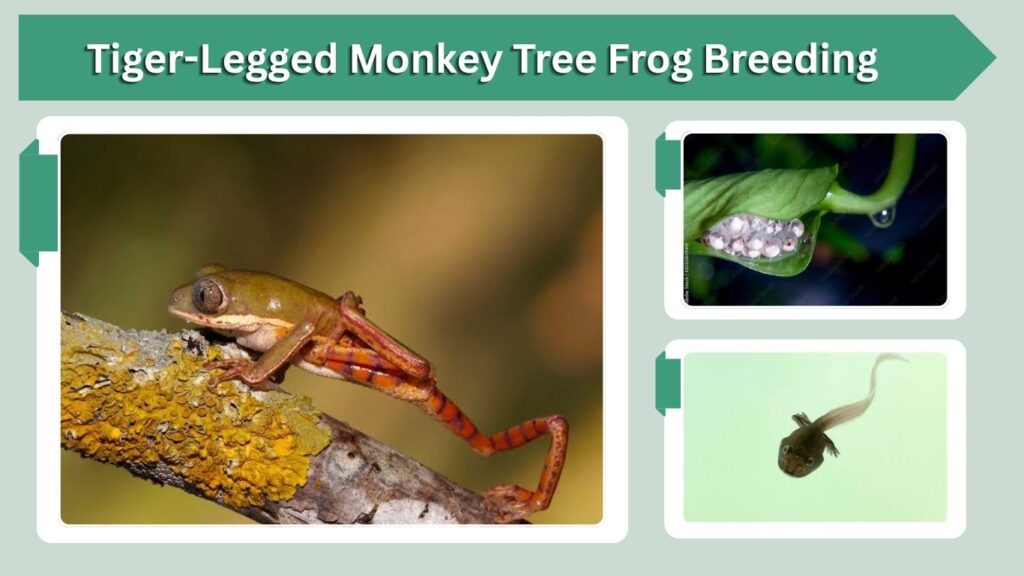
Tiger-legged monkey tree frogs typically breed during rainy periods when temporary water bodies become available.
Males produce calls to attract females. After mating, females deposit eggs on leaves above water, where the developing embryos remain protected until hatching.
Egg-Laying and Tadpole Development
During reproduction, frogs fold leaves around their eggs to create a protected structure. The eggs develop inside this moist enclosure.
After hatching, tadpoles fall into the water below and begin aquatic development. They eventually undergo metamorphosis, developing legs and transitioning into small froglets.
Captive breeding requires carefully controlled seasonal conditions and appropriate aquatic facilities. It is best attempted by experienced amphibian keepers.
Tiger-Legged Monkey Tree Frog Health and Safety
Tiger-legged monkey tree frogs have delicate skin that absorbs moisture and can also absorb harmful substances.
They are primarily display animals rather than pets suited to regular handling. Excessive contact, dehydration, and poor enclosure hygiene can cause significant stress and health complications.
Essential Health and Handling Tips
- Minimize handling: Use clean, damp, powder-free gloves when necessary.
- Maintain clean water: Replace contaminated soaking water promptly.
- Monitor appetite: Investigate persistent refusal to eat.
- Observe skin condition: Watch for lesions, discoloration, or unusual dryness.
- Prevent overheating: Keep heating equipment properly controlled.
- Consult a veterinarian: Seek amphibian-experienced care when illness is suspected.
FAQs
1. Are Tiger-Legged Monkey Tree Frogs Poisonous?
Yes, tiger-legged monkey frogs produce defensive skin secretions containing biologically active compounds. They are not venomous in the sense of injecting venom through a bite. Avoid contact with eyes, mouth, or broken skin, and wash thoroughly after enclosure maintenance.
2. How Do You Tell Male and Female Monkey Tree Frogs Apart?
Female tiger-legged monkey tree frogs are generally larger and fuller-bodied than males. Mature males produce breeding calls and may develop reproductive features such as nuptial pads. Size alone is unreliable, particularly when comparing younger frogs.
3. What Does a Tiger-Leg Monkey Tree Frog Sound Like?
Male tiger-legged monkey tree frogs produce short vocal calls, particularly during the breeding season. Their calls help attract females and communicate with other males. Calling activity usually increases during warm, rainy conditions or after environmental changes resembling rainfall.
4. Are Tiger-Legged Monkey Tree Frogs Good Pets?
They can be rewarding pets for dedicated amphibian enthusiasts. However, their specialized humidity requirements, sensitive skin, and need for live insects make them better suited to careful observation. Beginners should establish a stable enclosure before purchasing one.
5. Where Can You Buy Tiger-Legged Monkey Tree Frogs?
Captive-bred tiger-legged monkey tree frogs may be available through specialist amphibian breeders and reptile expos. Confirm the scientific name before purchasing because closely related species are sometimes mislabeled. Choose healthy, captive-bred individuals and verify applicable wildlife regulations.
